Seahawks Still Failing to Fully Unlock Rashid Shaheed's Talents on Offense
Rashid Shaheed has made his share of big plays since joining the Seahawks last October, particularly on special teams. But the decision to sign him instead of the Super Bowl MVP to a new deal this offseason sits under increasing scrutiny for a reason.

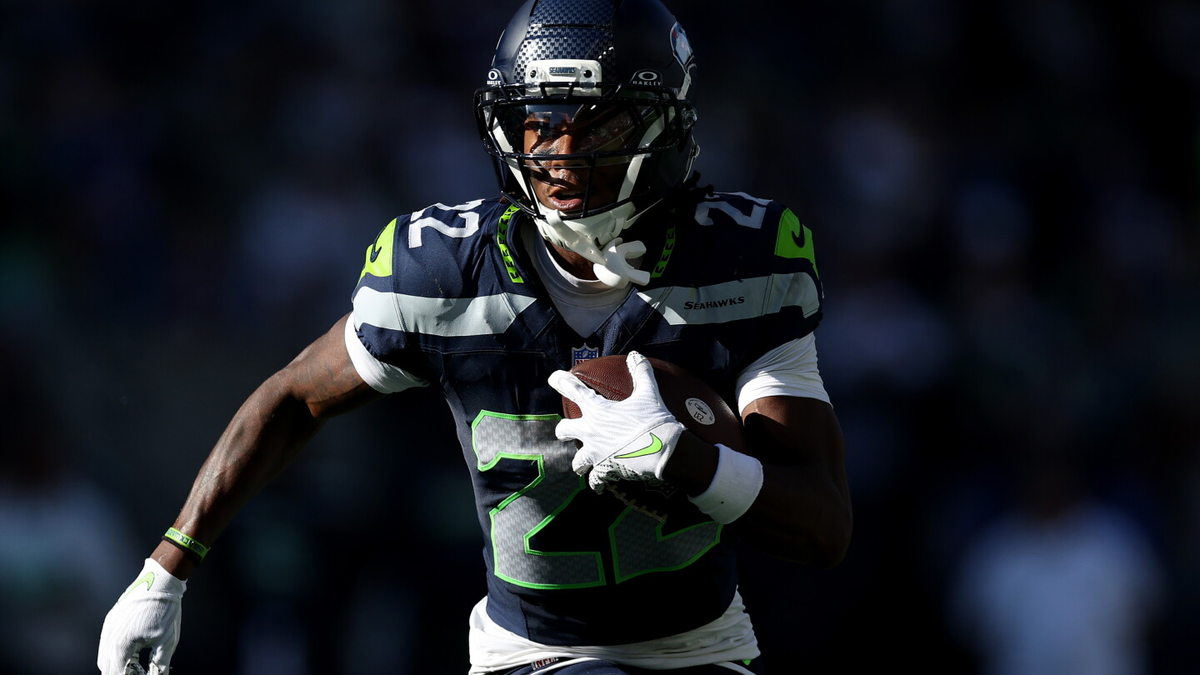
In the salary cap era, the best NFL teams face the reality that they won't be able to re-sign everyone. Coming off their second Super Bowl victory, the Seattle Seahawks weren't exempt from this rule.
Tasked with trying to keep as much of his championship roster intact as possible, Seahawks general manager John Schneider fared quite well achieving that goal, as the team only lost five free agents in the offseason. Still, that didn't mean the reigning Executive of the Year skated through the spring without difficult decisions or significant departures, with no choice drawing more scrutiny outside the organization than opting to re-sign receiver Rashid Shaheed to a long-term deal instead of Super Bowl MVP running back Ken Walker III.
One of the first players to come off the board once the tampering period opened in March, Walker bolted to Kansas City on a record-breaking three-year, $43.5 million contract, and so far, he's been worth every penny to the Chiefs. After scanning the market for a few days, Shaheed came back to the Seahawks on a three-year, $51 million deal, and early results have not been encouraging.
Reigniting a Kansas City offense that had become too one-dimensional in recent seasons, Walker has emerged as an early Offensive Player of the Year contender, already rushing for 537 yards and four touchdowns in just four games. Meanwhile, Shaheed hasn't even hit double digit receptions (nine) or 100 total receiving yards (96) in five games, with his greatest contribution being a 28-yard rushing touchdown in a win over the Chargers in Week 4.
It's still far too early to be making a claim for buyer's remorse, but so far, Schneider's decision to pay Shaheed $17 million per season instead of retaining Walker at a slightly smaller price point has been suboptimal, if not bordering on the brink of being disastrous.