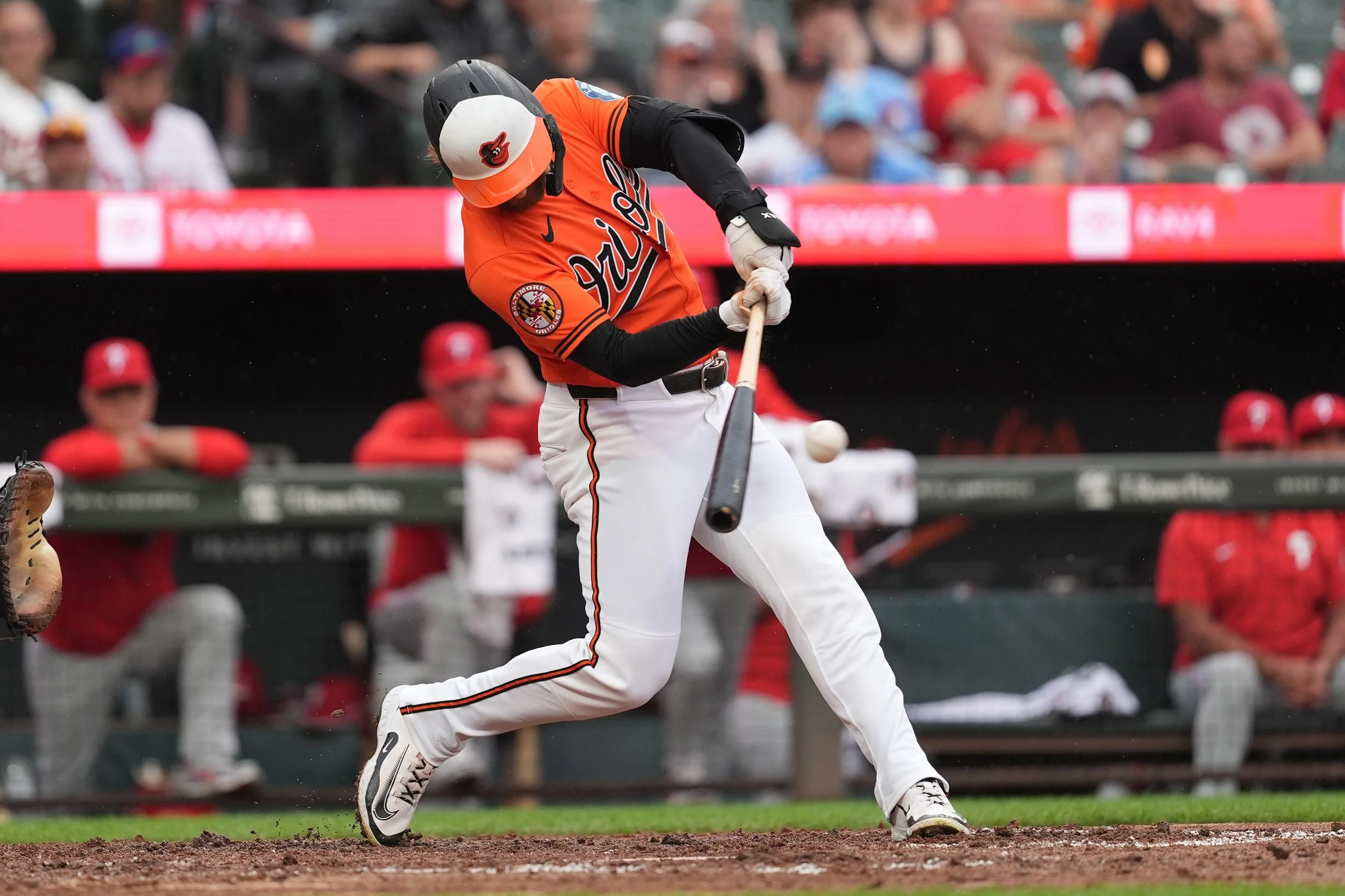
Will Taylor Ward Be What M’s Offense Needs? 2026 Trade Deadline Analysis Part II
The Mariners’ 2026 trade deadline, all told, could be described as a “soft buy”. They didn’t make any big lunges for a true star (with the Padres on a roll and with a high asking price for Mason Miller, they didn’t go for him, and other teams snatched up other potential high-end reliever pickups) and they shed the Luis Castillo contract for a largely unremarkable return.
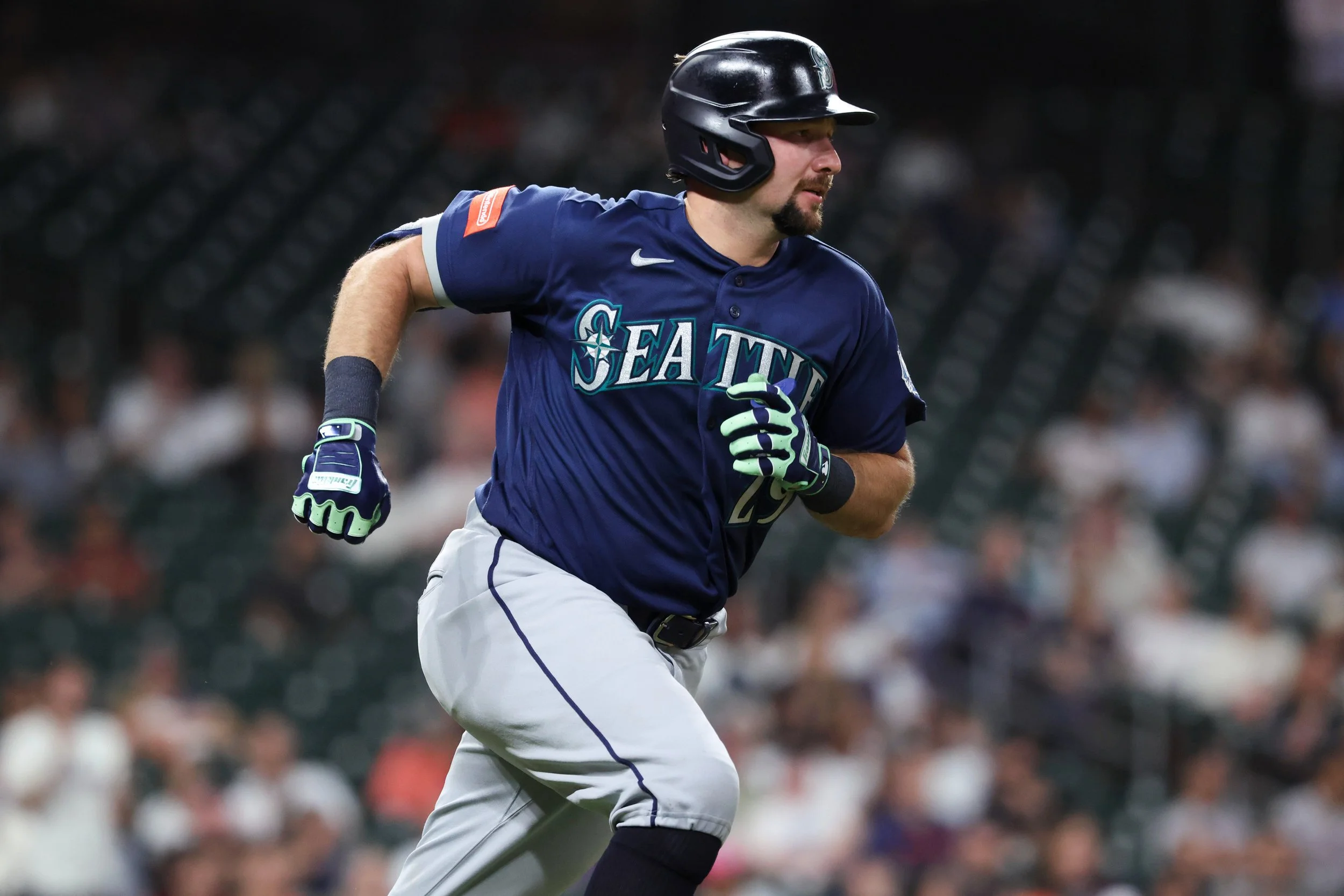
Seattle’s only true buy ended up being a rental, confirmed on the day of the deadline: right-handed outfielder Taylor Ward for Alex Hoppe, Brock Moore, and Harrison Kreiling. The return to the Baltimore Orioles was fairly light: Hoppe is a struggling rookie reliever with real future upside, Moore is about as intriguing a reliever as Boston Smith is a catcher, and Kreiling is a Low-A arm with little pedigree but solid numbers.
Ward fills out a niche that the Mariners had tried to occupy somewhat with Rob Refsnyder - who the Mariners gave an outright release in a corresponding move on Tuesday - that of a right-handed outfield bat. But where Refsnyder was incredibly platoony even before his horrid down year in 2026, Ward performs solidly against each side of the mound, though there is a platoon difference: he has a career .827 OPS against lefties and .739 OPS against righties.
But is Ward going to be the fix the struggling Mariners offense needs?
Taylor Ward has been a solid hitter in 2026, but for the M’s, there is a catch.
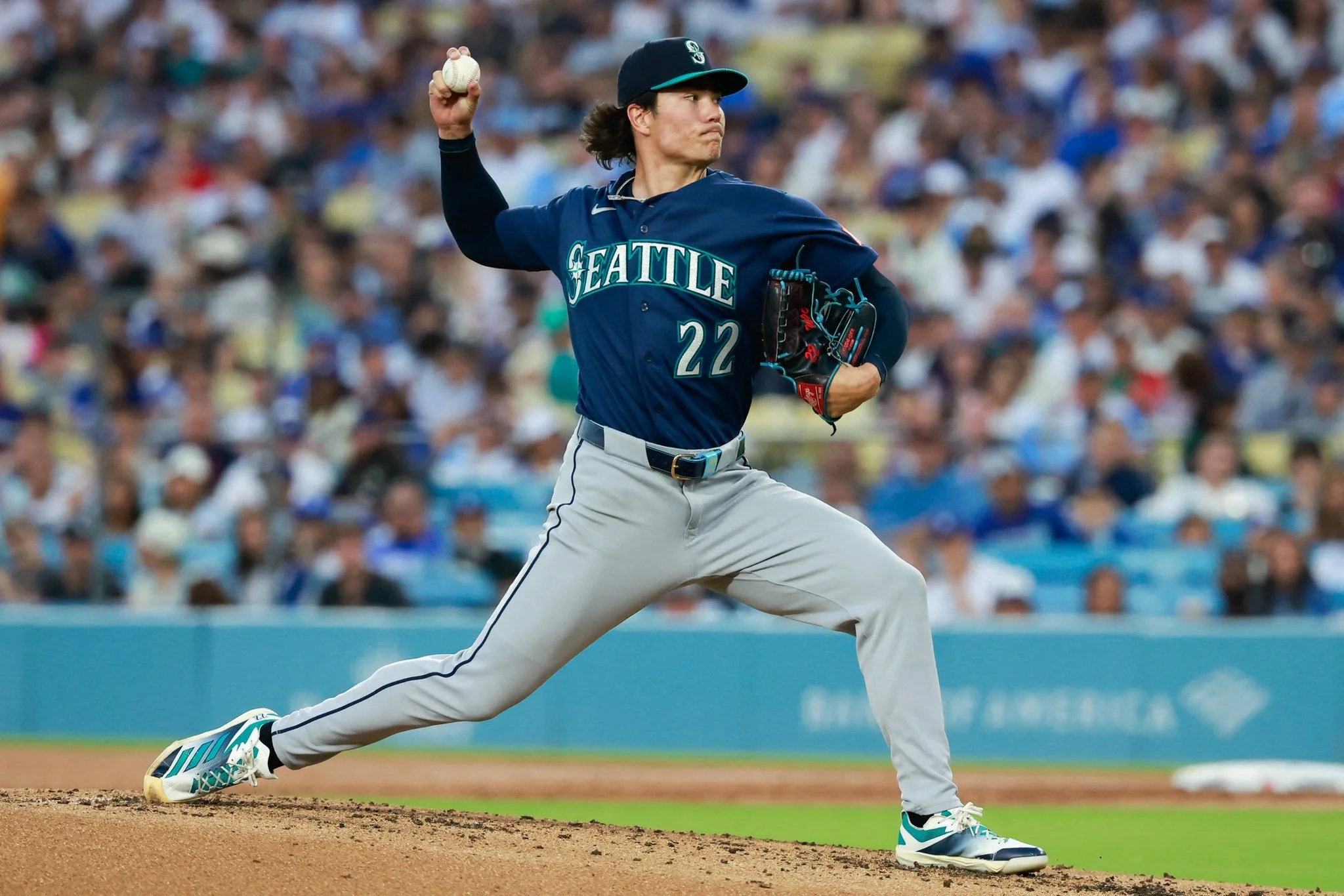
How Should Mariners Approach Deadline Four Games Under .500 Yet Still in Playoff Hunt?
The Mariners certainly know what they’re doing wrong after they dropped their latest series to the Los Angeles Dodgers on Thursday with a 6-2 loss.
“Yeah, it’s up to us,” Bryan Woo said after his five-run, five-inning losing outing. “The front office and coaches and everybody has put enough into the product on the field. It’s time for us to do something about it.”
But they don’t quite know how. The team has a consistent discipline issue, careening between lethargic defeatism and frantic efforts to arrest their decline. The failures of the latter cause the team to return to lethargy, and the cycle repeats on a near-nightly basis.
With this in mind, how should the Mariners approach the upcoming 2026 trade deadline? They have a few more days than they would otherwise have most years - with the deadline set for Aug. 3 - but the hour is fast approaching when they have to decide on tune-ups, changes, and deals.
The team is in an odd spot. It’s not a situation where they can reasonably go out and get one-year rentals like they did in 2025, but it’s also not a sell situation, either; they could very well still go on a run and make a splash in the playoffs. An intuitive approach for Seattle is to deal away upcoming free agents in exchange for longer-term options, but those sort of minor sales would have to be augmented by long-term options for the relevant team (say, a prospect). The M’s also have a bunch of starting pitchers, including near-MLB prospects, allowing them to trade from that pool to deepen other areas of the team.
One thing they cannot do is stand completely pat. Beyond that, however, it’s prudent to examine the attitudes that the Mariners might have about their trade deadline situation; there are lots of ways to skin a catfish, after all.
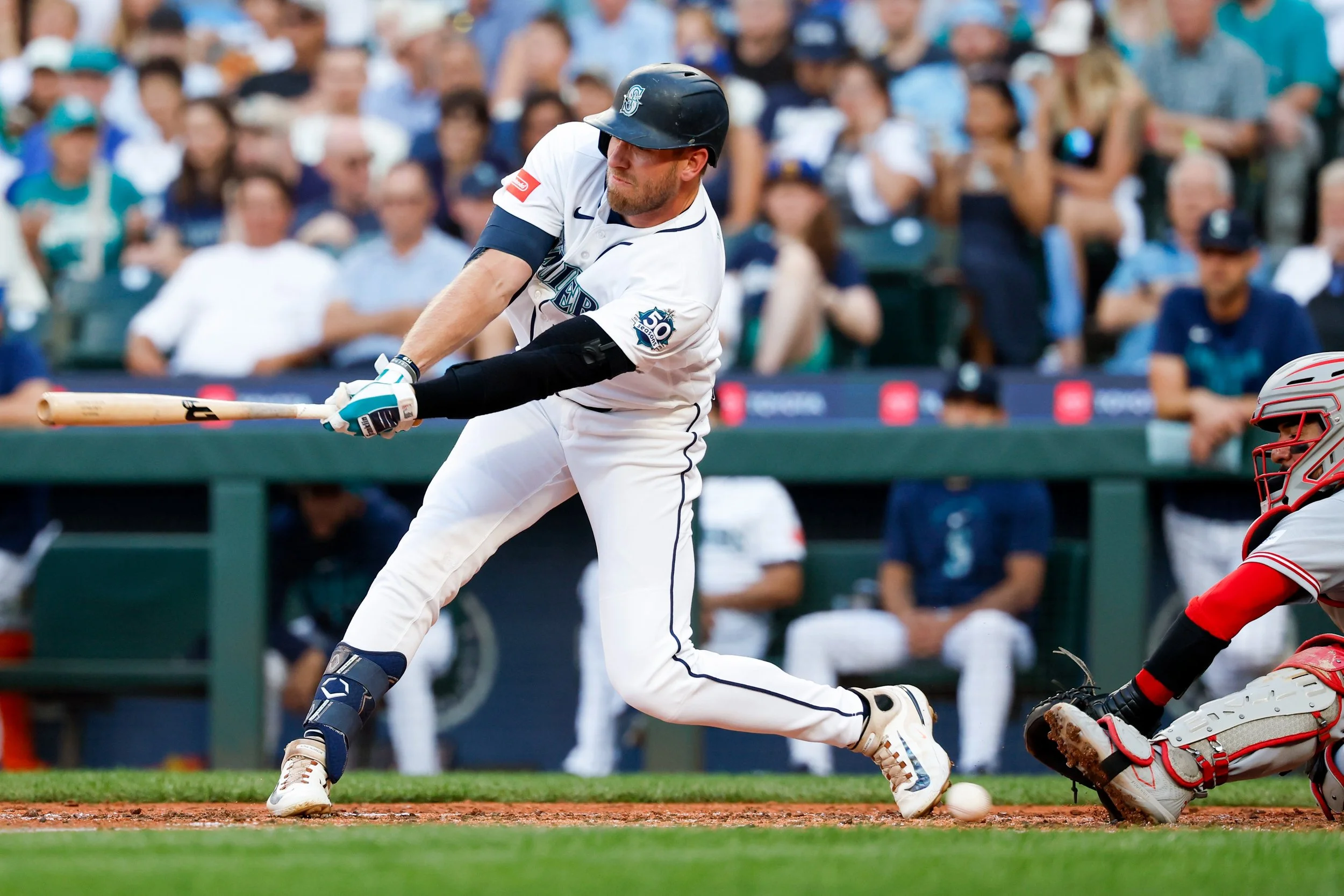
Mariners’ Meandering Losses to Reds Leave Team Shrinking Breathing Room
On March 31, 2026, the Mariners lost their sixth game of the season and fell to a .500 record. The team did so again on July 21, and in the 111 days between, they performed that same act thrice (June 20 and 25, July 9). Five times in between those days (April 3 and 29, May 29, June 29, and July 19), the M’s did the opposite, winning a game to get back to an even record.
Before the season, the team was held as one of the best squads in the American League. According to FanGraphs, they went into Wednesday’s matinee with the second-highest chance to win the World Series of any American League team, only behind the Yankees.
But the experience for the Mariners in 2026 has been a dreary cycle of drought and drenching. They get a set of wins and then the foot goes off the gas. They lose a bunch, struggle a bunch, and then get a cathartic burst of energy that sets them off for some wins. Rinse and repeat: 63% of the way through the season, they won half and lost half.
Wednesday wasn’t encouraging. Once again - this time by a score of 5-3 - the Mariners fell below .500, having lost the following two games of their series against the Reds to turn what could have been a momentum-bringing homestand into yet more water-treading.
Tuesday’s loss had been a little more of an encouraging one, with good at-bats during most of the game - other than clutch situations, as has been depressingly common with the team - and some good defensive plays by the Reds keeping Mariners runs off the board. But a mystifying decision by skipper Dan Wilson to put Michael Rucker in ended in a ninth-inning homer for Cincinnati and the complete dissipation of the team’s energy.
Both games were winnable, but the team plainly lacked the killer instinct to put the Reds away. Seattle is now 52-53; they would have to go 38-19 over the rest of the year just to match their win total from 2025. In more immediate terms, the losses continue their gradual, brick-by-brick immurement in the divisional race.
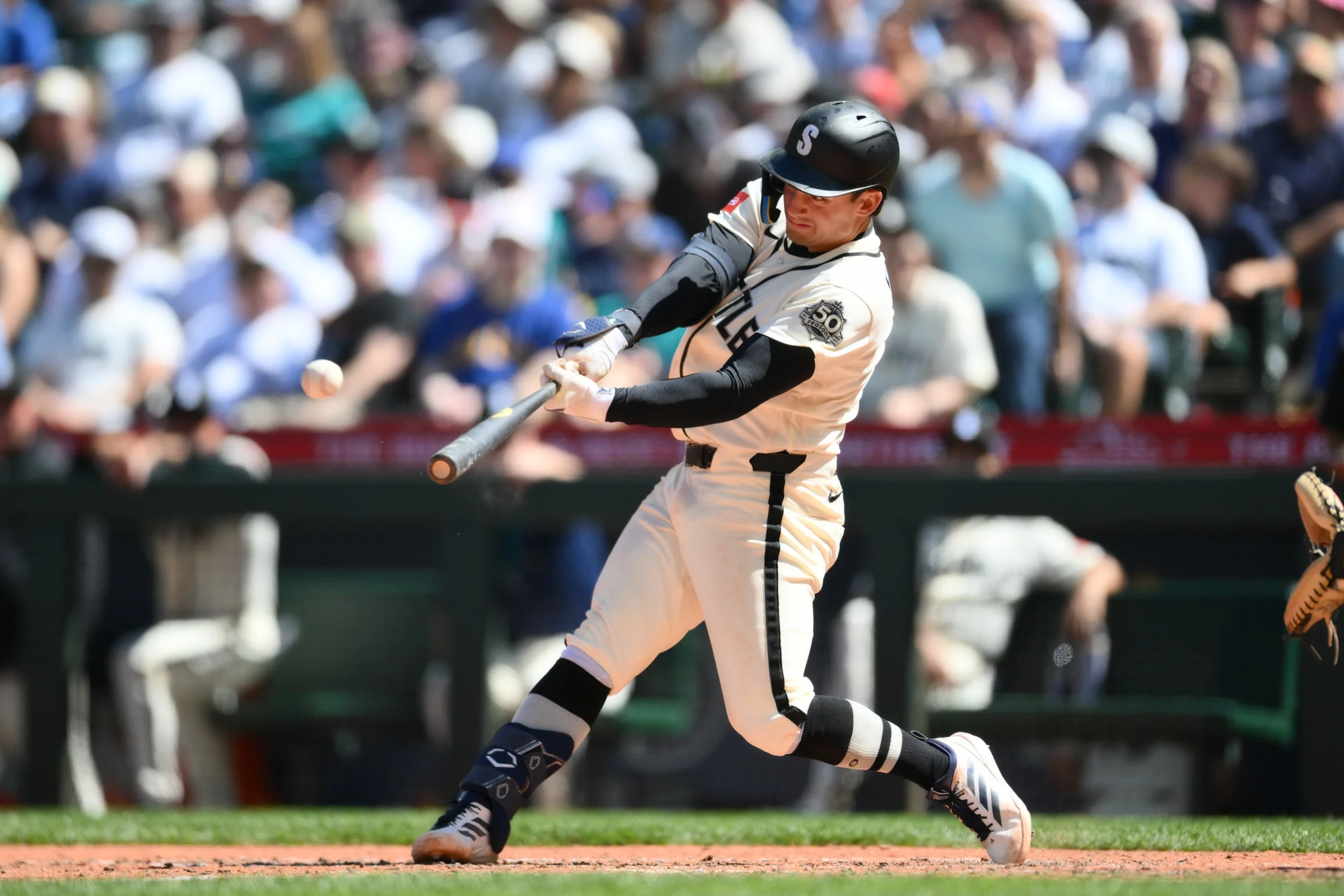
Mariners Build Momentum Ahead of Trade Deadline, Clinch Series Win With 6-3 Win vs. Giants
Seattle won their second straight game against the lowly Giants 6-3. Behind six strong innings from starter Logan Gilbert, a shutdown bullpen, and timely hitting, the Mariners looked primed to go on a run to put their first-half struggles in the rearview mirror.
With two weeks remaining until the trade deadline, Seattle needed to come out of the All-Star break with some urgency. After getting throttled in the first game of the series 7-0, it looked like the team had not used their time off to reset well. But after two satisfying victories, and the struggling Cincinnati Reds coming into town, Seattle is one more series win away from cementing itself as a buyer in the wide-open American League.
Dan Wilson pushed all the right buttons Sunday, a rare sentence for this Mariners club. His timely deployment of pinch-hitters and bullpen usage showcased what this ballclub can look like at its best. Yet there are still some things to work on as with any baseball team.
Bats Take Nine-Inning Nap as Giants Pummel Mariners 7-0
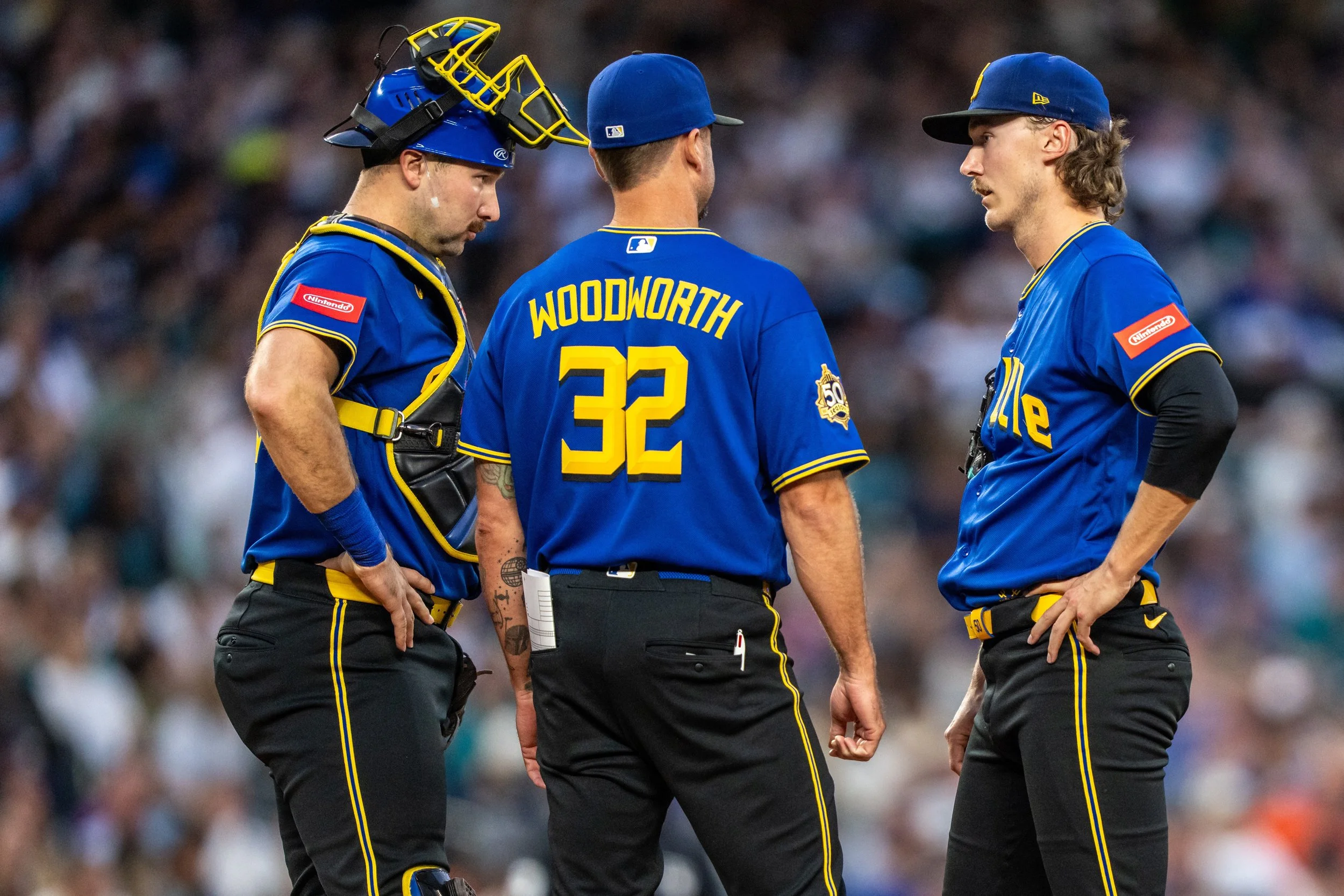
A little over a year before Friday night, Julio Rodríguez announced that he would not participate in an All-Star Game he had been selected for, noting he would rather focus on improving his own game to a better standard.
Rodríguez wasn’t on the field on Friday, recovering from a concussion sustained earlier that month when a Nolan Schanuel throw bounced off the back of his head. Concussions are a case of needing however much time he needs in order to recover from the knock. But it means he can’t lead by example as he did after the Mariners’ horrific loss in the Bronx last year.
And it seems no other hitter is willing to put himself forward in such a way. The starting pitchers have borne the brunt of the blame when they’ve let the team down, especially Bryan Woo. But aside from some strong words from Cal Raleigh after a pungent loss in Cleveland - words that seemingly only went heeded for a six-game stretch - it has been crickets from the team leaders and an utter lack of urgency from the manager.
“It’s the first one back, and I think guys got back in the groove today and looking for us to come out tomorrow and have different results,” said M’s skipper Dan Wilson, “Obviously, you want to get off on the second half with a win, but just weren’t able to get anything going offensively and tomorrow we get a chance to turn that around.”
Those may have been Wilson’s strongest words after his team lost 7-0 to a shambolic San Francisco Giants squad that entered the game 41-55, second only to the Colorado Rockies in NL West helplessness. Sure, one of their few bright spots, a 21-year-old masher named Bryce Eldrige, did some of the damage. But the M’s made visiting starter Landen Roupp, a C-list pitcher on a good day, look like a veritable barnburner.
It can’t go on like this - well, in the immortal words of Mick McCarthy, it can - but the M’s won’t be a playoff team or even a .500 team if it does.
Bullpen Rises to Occasion as Mariners Snap Five-Game Skid, Take Series Finale From Rays
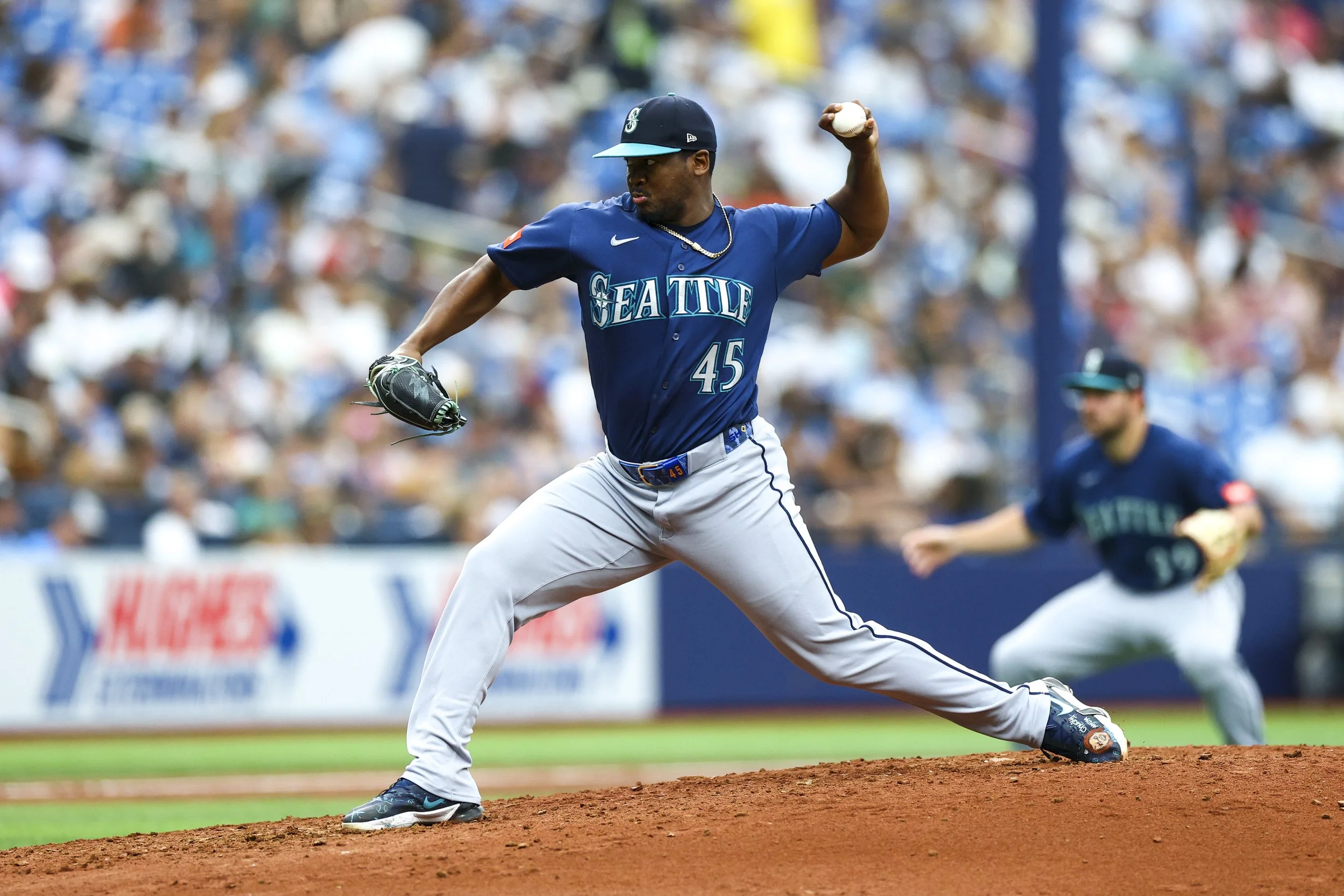
Finally putting an end to their losing ways, the Seattle Mariners’ offense showed up early and the bullpen delivered a brilliant performance in a resounding 8-2 rout of the Tampa Bay Rays, salvaging the series finale to avoid the sweep going into the All-Star break.
The Mariners needed to use seven pitchers to secure the win due to a scary first inning injury to starter Emerson Hancock that resulted in him exiting the contest an inning later. The offense picked the ‘pen up, however, plating seven runs by the fourth inning, and eight runs overall.
It was a rare complete team performance by Seattle, and manager Dan Wilson hopes to get some key players back from injury coming out of the break while building off his team’s lights-out execution as the season marches towards the playoffs.
“Talk about a team effort from top to bottom today,” Wilson said afterward.
Mariners Lose Batting Fight in Spite of Strong Glovework, Drop Series to Marlins
“It’s not the size of the dog in the fight, but the size of the fight in the dog.” It’s one of those quotes that is older than its normal attribution (in this case, Dwight Eisenhower). Today’s common formulation of the phrase may indeed trace back to a coach at the University of Washington back in the late 1920s, but as with so many things that are said before they are written, its true origin lies somewhere in the primordial mud of history.
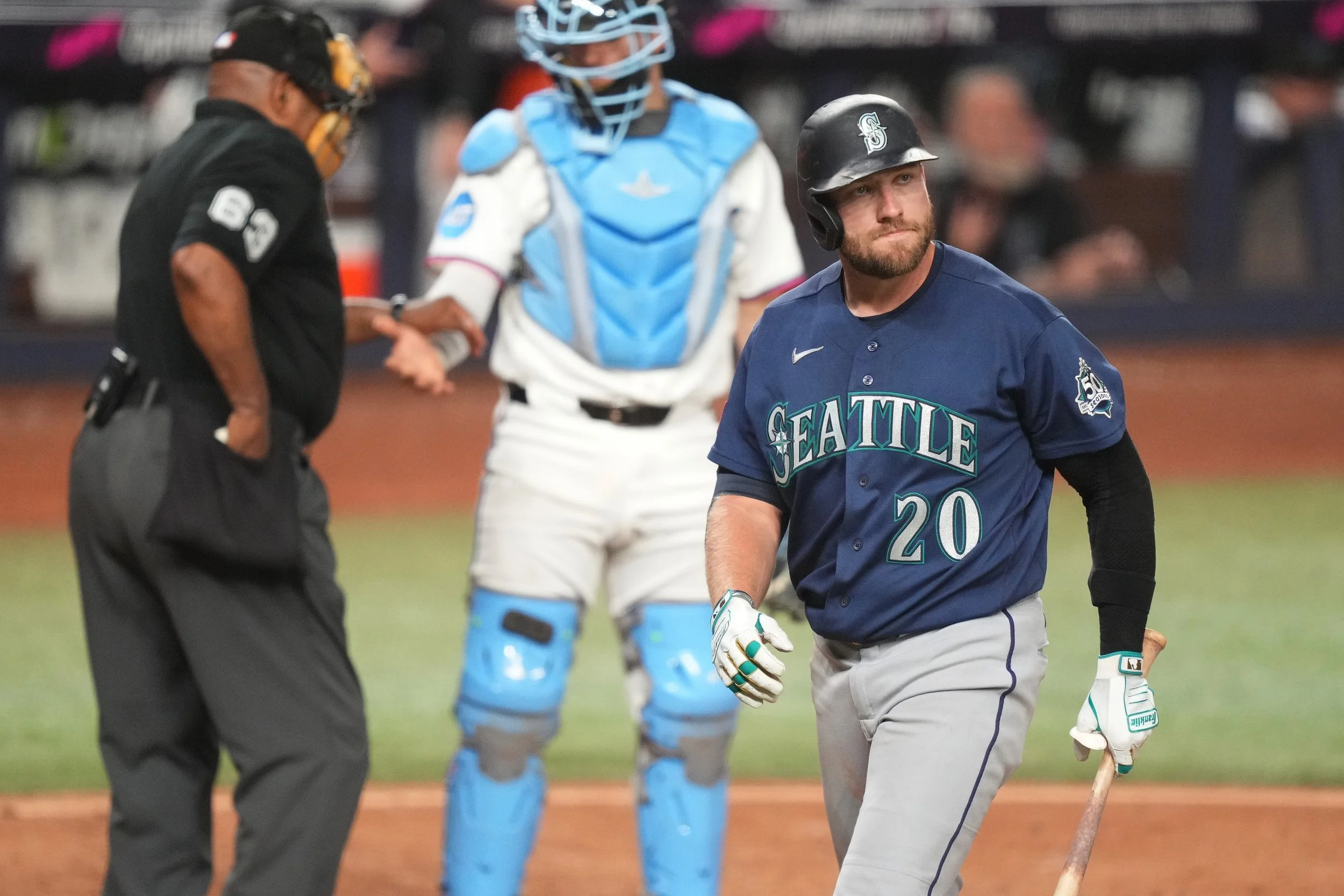
Many on the Mariners - especially skipper Dan Wilson - often discuss the team’s fight and willingness to claw back from adversity. But the defining moment of the team’s 2-0 loss to the Miami Marlins on Wednesday was its very end: with both ABS challenges available and two outs in the top of the ninth, Cole Young watched a 2-2 pitch outside get called strike three to end the game. He did not issue a challenge, simply hanging his head in shame as he walked back to the dugout. The brief window of time to get his team a lifeline passed quickly.
“I think sometimes that's not the first thing that pops into your head in that kind of a situation,” Wilson said, “but you still have to remind yourself sometimes about the ABS.”
But as they say - once is a happenstance, twice is a coincidence, and thrice is a pattern. The Mariners have had games like Wednesday’s, where players across the lineup leave things on the table, plenty more times than that in 2026. If the players aren’t clawing and biting and fighting for every inch, if that aspect of the game is not a habit, then how deep of a well of resolve do the M’s really have? If the guy up at the plate with two outs in the ninth inning isn’t aware that the team has both challenges, how much water is this ship leaking?
The fight didn’t show up on offense, at least, though the M’s defense bailed themselves out of worse trouble. In a way, it was an inverse of Tuesday’s series opener when late action from the Mariners bats wasn’t enough to counteract the team’s defensive sluggishness. It was a loss all the same.
Analysis: Why Seiya Suzuki Could Be Missing Piece for Mariners
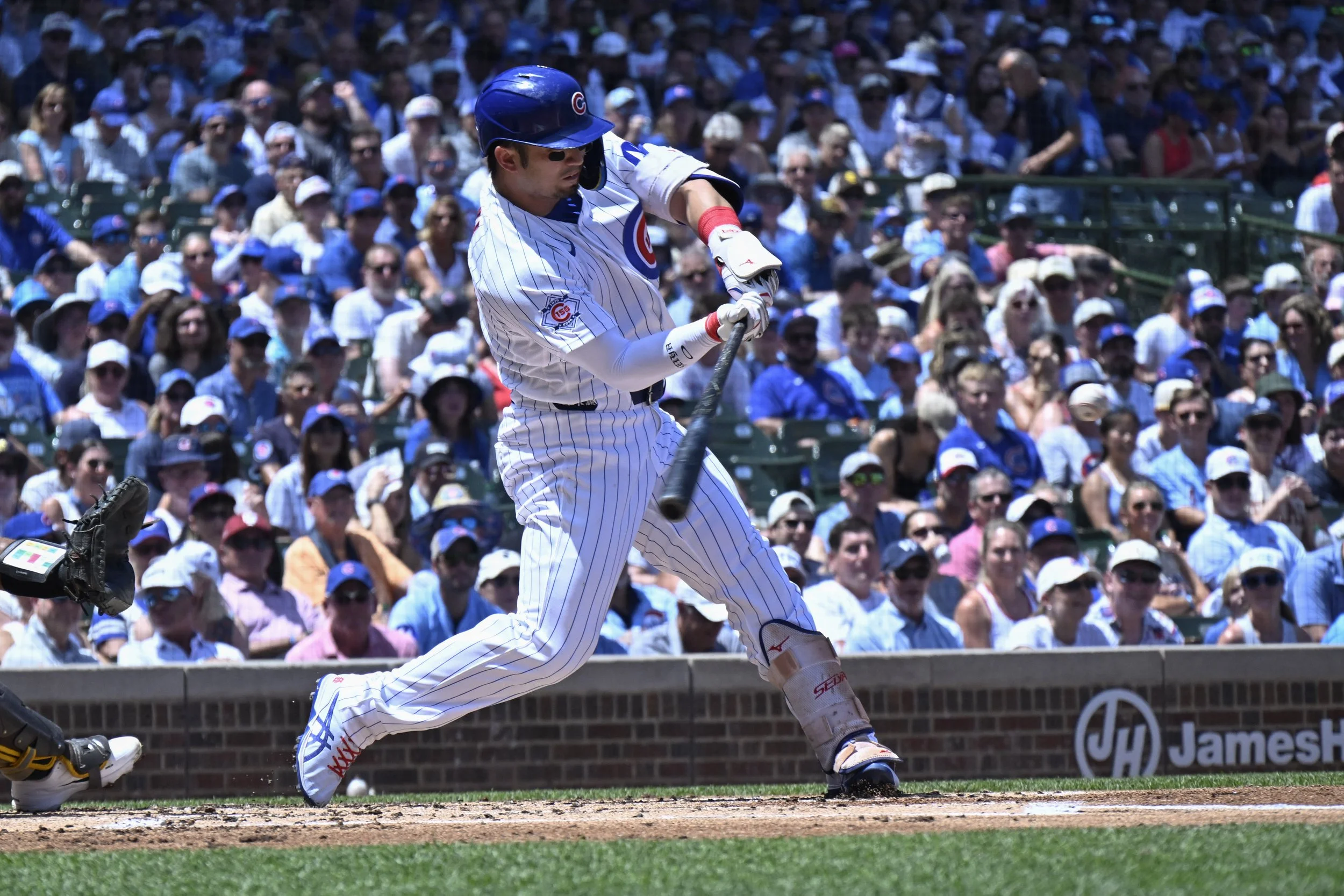
After coming up a few innings short of making the fall classic last October, the Seattle Mariners came into the season as one of the favorites to represent the American League in the World Series. Yet, even after winning five of its past six games, Seattle sits hovering just above the .500 mark.
Injuries and inconsistency have been the main culprits for not being able to pull away just yet in a pedestrian AL West division, but the inability to hit lefties has proven to be the M’s Achilles’ heel. During the offseason, the team added outfielder Rob Refsynder with the hopes he would help in that department, but he has been abysmal all season and recently landed on the disabled list with a knee injury, creating even more questions against southpaws.
Some improvement needs to come from current star players such as Cal Raleigh and Julio Rodriguez on this front, but outside additions are needed for a second half surge and a shot to get to the World Series for the first time. Of all the realistic options potentially out there, one stands out as a win/win for both teams with the pitcher-needy Cubs and outfielder Seiya Suzuki, who would be the ideal deadline addition for the M’s for a variety of reasons.
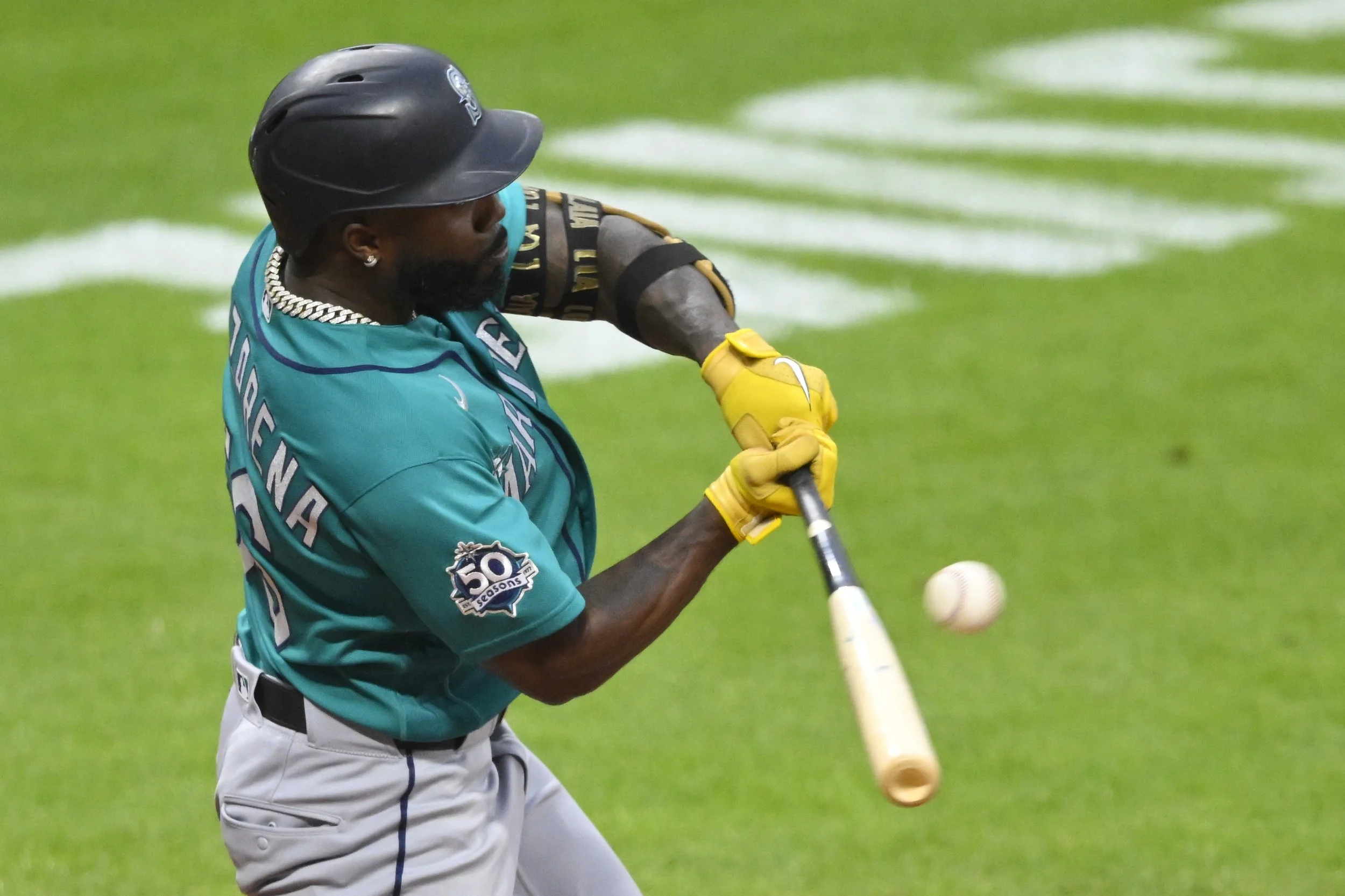
Four Runs Still Out of Reach as Mariners Fall 4-3 to Guardians
The Seattle Mariners continue to eye franchise history - for the wrong reasons - as they tied the team record with 13 games in a row while scoring three or fewer runs in a 4-3 loss to the Cleveland Guardians on Saturday. Holding onto a half-game lead in the middling American League West, the Mariners need to decide if they want to build on last year's success or drift sheepishly back into mediocrity.
Even the most optimistic Seattle fans know the phrase “Same old Mariners.” It encompasses the feelings of a downtrodden fanbase that has only made the playoffs six times in their 50 years of existence. Despite having the greatest season in team history last year by reaching Game 7 of the American League Championship Series, most fans are already ready to chalk it up as a fluke given their team’s struggles this year.
The roster is not devoid of talent; quite the opposite actually. FanGraphs Playoff Odds still gives the M’s an 80.3% chance of making the postseason. The lineup still needs to wake up though, as this roster has shown that it cannot sleepwalk its way to winning the division.
The trade deadline is approaching. Changes need to be made. What can this SoDo squad do to get back on track?
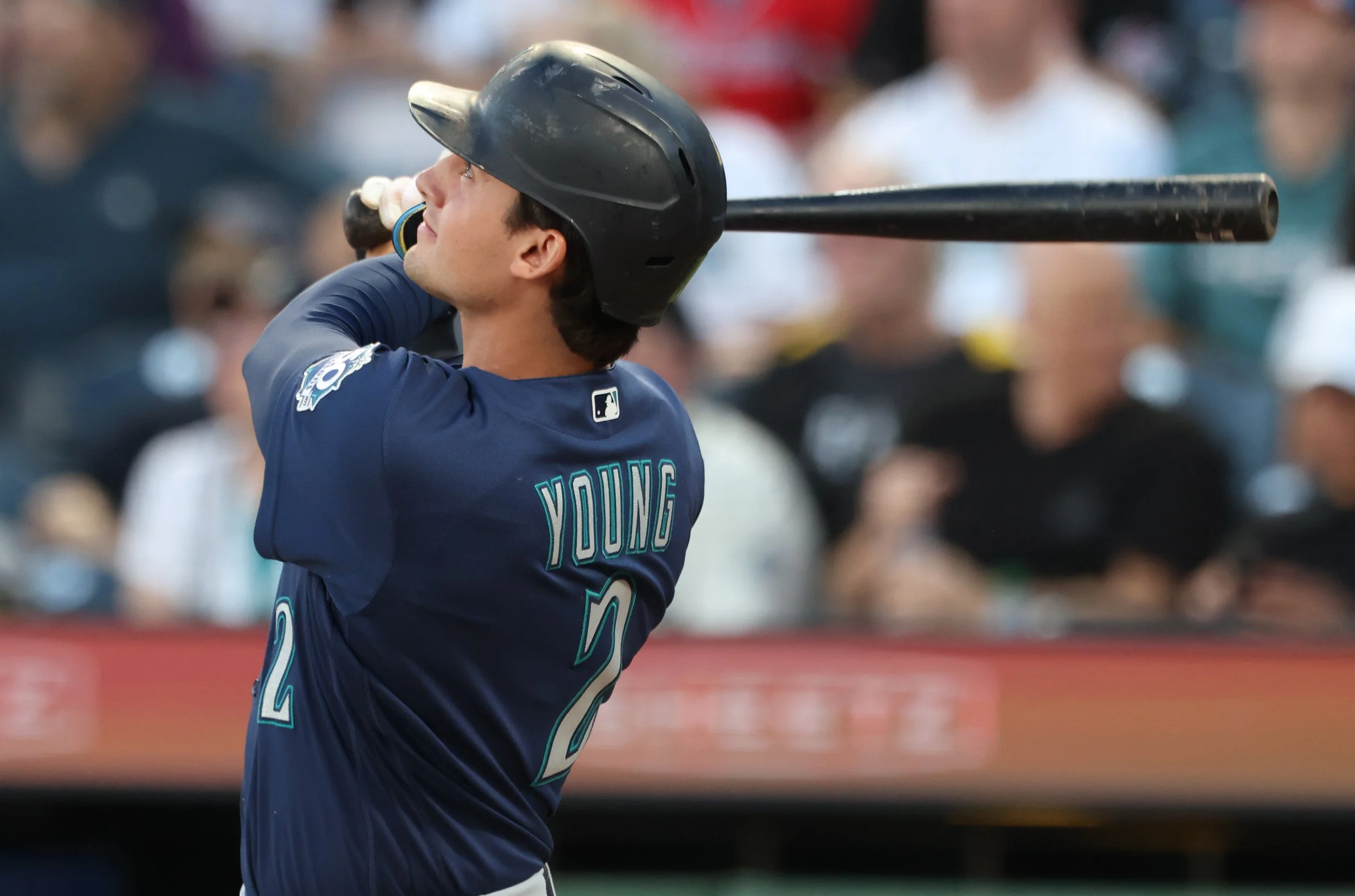
Cole Young’s Hometown Game-Winner Marks Early Career Highlight, M’s Win 3-2
Neither Pittsburgh nor Seattle sit directly beside an ocean (though Puget Sound of course connects quite nicely to the Pacific and gives the Emerald City a strong oceangoing port), yet these teams cleared the decks for their first of three sea battles on Tuesday night.
It was a low-scoring affair, but the Mariners’ two cannonballs were enough to seal the deal as they came out ahead 3-2. The one homer had special significance for Cal Raleigh, as it was his first big fly since returning from the IL, but it was the second that shone brightest: Seattle’s own Yinzer flipped the score from a Mariners deficit to a Mariners lead.
Triumphant homecoming is one of humanity’s oldest seagoing motifs, but with a 22-year-old hitting three homers in a month for the second time in his career, the game had more to do with the beginning of Young’s odyssey than its end.
Cole Young blasted a go-ahead homer in his Pittsburgh homecoming.
Going into Tuesday, the Mariners were tied with the Twins for the second-worst winning percentage (.094) when trailing a game at the beginning of the seventh inning, having won three of 32 such contests. The only teams worse in this regard (the Giants, Angels, Guardians, Astros, Rangers, and Royals) had a combined 212-261 record and .448 winning percentage.
For comparison, the two teams FanGraphs projects as more likely than the Mariners to win it all (the Yankees and Dodgers) have a combined .196 winning percentage when entering the seventh inning in a deficit. The Brewers, Braves, Phillies, and Rays - the next four teams down after the M’s on FanGraphs’ projections - had a combined .227 winning percentage in games where they entered the seventh inning losing.
And when the top of the seventh began on Tuesday, the M’s trailed 2-1, marking the 33rd time they had entered that inning with a deficit in the season. Pirates starting pitcher Mitch Keller had thrown just 72 pitches, the M’s struggles continuing with the bat as they didn’t break up his efficiency or get many runs across.
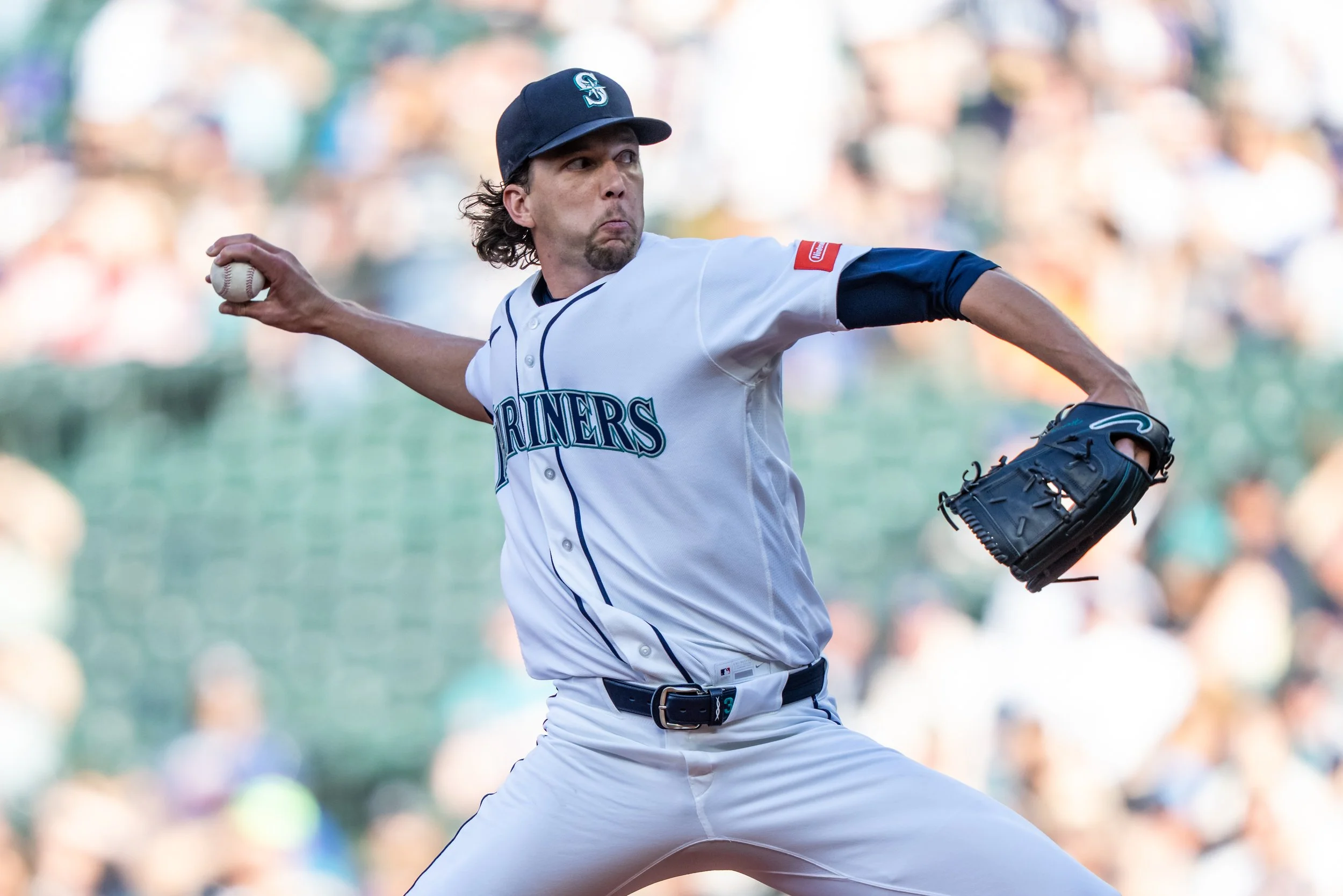
Mariners Right Road-Trip Wrongs, Start Homestand With Gritty 3-1 vs. Orioles
Back in tandem for the first time in nearly a month, Logan Gilbert dazzled and Cal Raleigh stole the show as the Seattle Mariners sidestepped a recent myriad of injuries to start off their latest homestand on the right foot, earning a late 3-1 win over the Baltimore Orioles at T-Mobile Park on Tuesday night.
The Mariners returned home for a six-game set still on the wrong side of the injury report. Three lineup mainstays were unavailable, even with Raleigh and J.P. Crawford returning, putting more pressure on Dan Wilson’s stars to show up. And boy did they ever.
Happily firing darts to Raleigh in his first game off the injured list, Gilbert tossed seven innings of one-run ball while striking out a season-high 10 batters. Making an immediate impact with his bat after a long rehab stint in Everett and Tacoma, Raleigh came through in the clutch, scorching a go-ahead RBI single that plated the winning two runs in the seventh inning.
What stood out in Tuesday’s series-opening win?
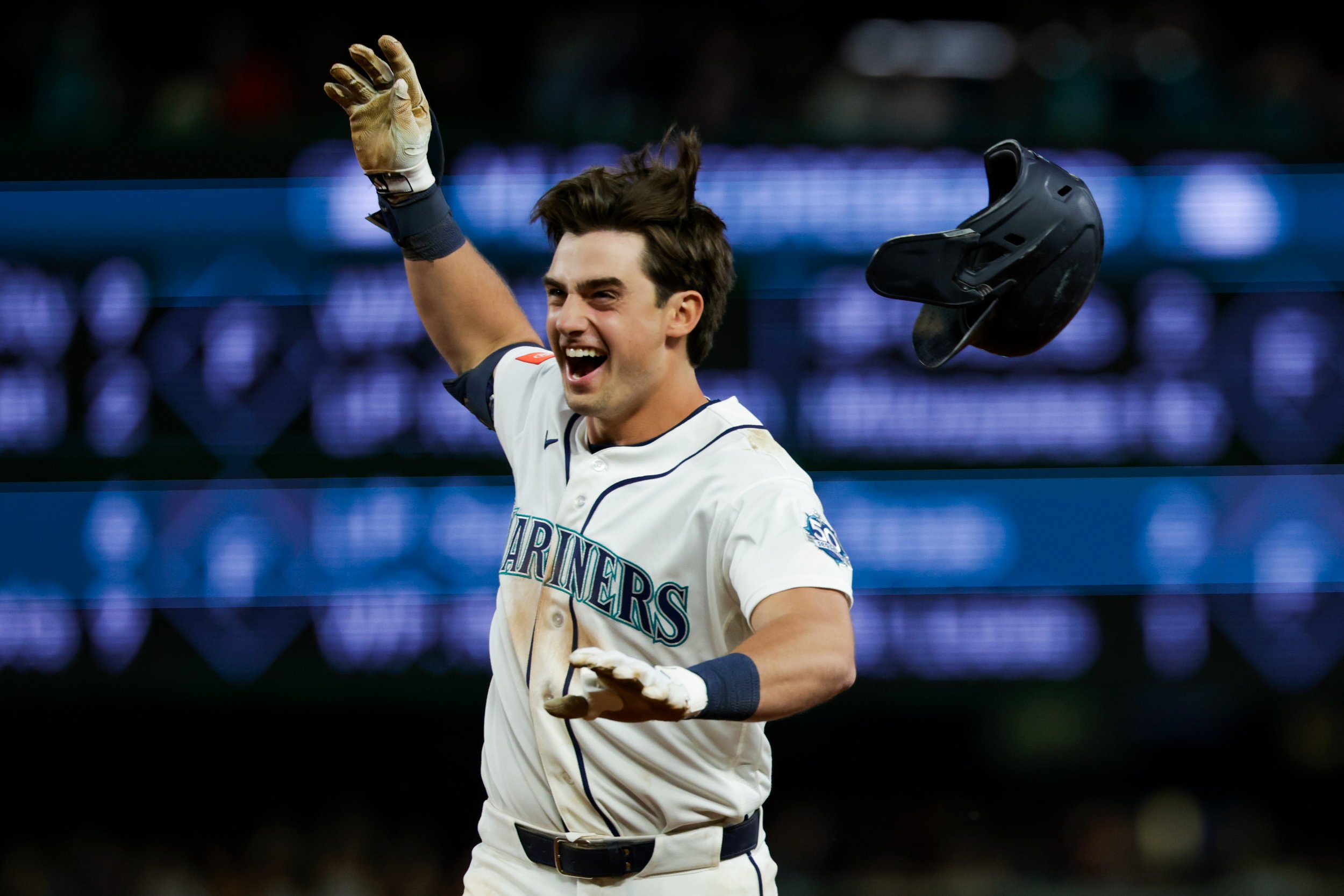
Cole Young Walks Mets Off; Mariners Win Seventh Straight
A baseball club in Seattle is showing that when it rains, it pours. Through May 24, the team went 7-12 in one-run games and lost four out of five extra-innings contests. Since then, the M’s have won three of each, with all the luck falling their way even in games where they leave quite a lot on the table.
All three of those have been walk-off wins, each from the bat of a different Mariner. Monday’s hero in the end was Cole Young, but unlike the others, there was a notable uniqueness to his hit. During the game, 22 players had plate appearances on Monday night. Four had hit home runs, but other than Young, no hitter had found a patch of green grass or evaded the waiting glove of an opponent.
Mariners manager Dan Wilson smirked as he described his team’s “flair for the dramatic” after the game, the team’s second straight 3-2 10-inning victory. That was certainly an understatement, though the drama started with dueling lineup card moves between the managers.
Seattle tried to play coy with the lineup against the Mets opener, but the visitors got the hurling they sought.
For the first time all year, the Mariners faced a team going with the fabled “opener” strategy, with listed starter Austin Warren being a bullpen arm tasked with beginning the game. That setup has its issues, but so had Manaea; the once-blockbuster signing entered the game with a 5.56 ERA entirely as a relief arm.
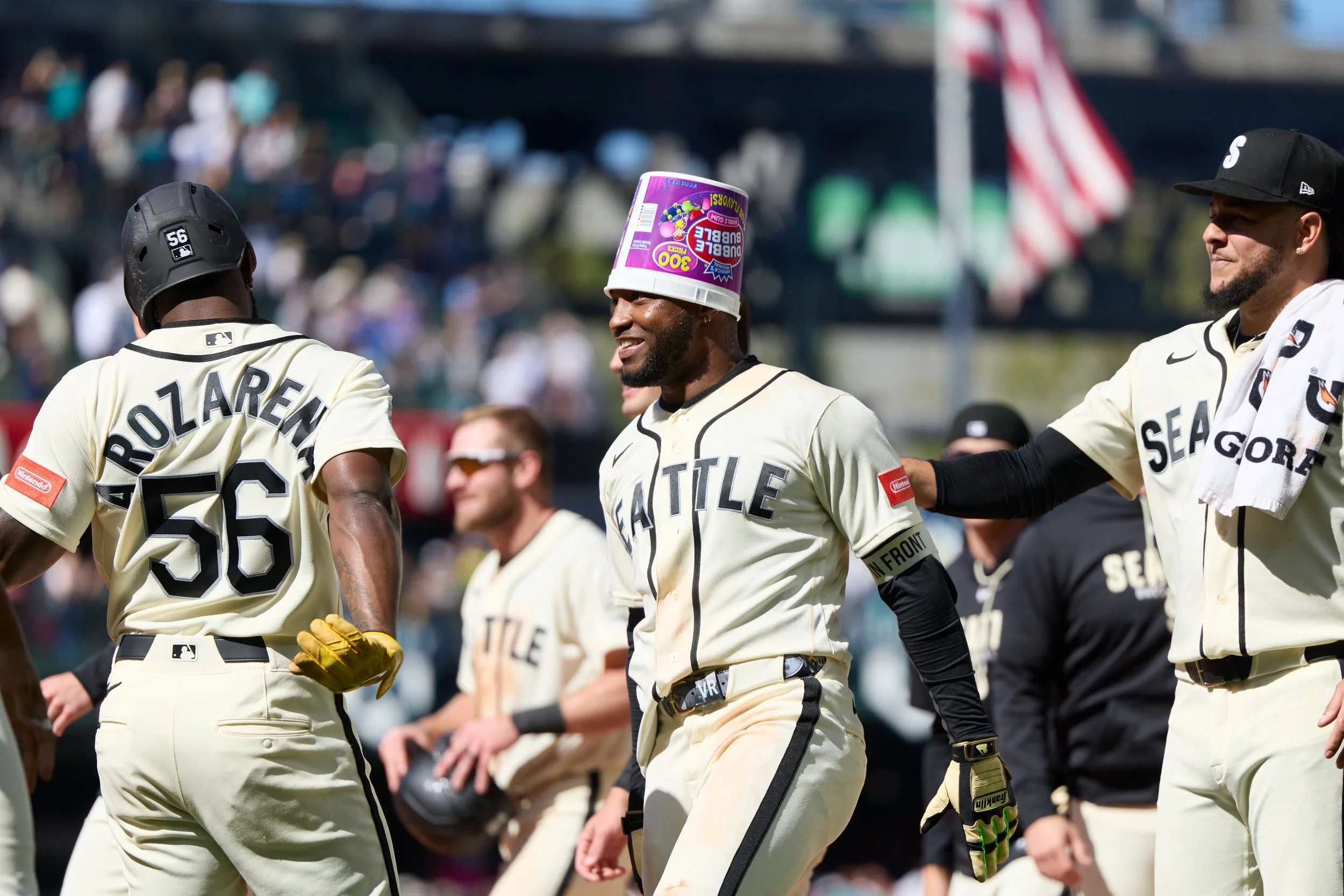
Winning Fixes Everything: Mariners Enter June in Excellent Shape
Rarely does a 2 ½ game lead seem so wide. Yet with the way the Mariners are playing and the roster they have, there is a very real possibility that the third month of the season cements them as clear AL West leaders. They do, after all, play in the game’s weakest division this year.
FanGraphs’ projections are often seen as the gold standard for playoff chances, often given without comparison as the stone cold definitive odds. According to FanGraphs’ default projections, the M’s have a 67.7% chance to win the division.
Baseball Prospectus’ PECOTA has been even more bullish on the M’s from the jump, and their current figure is 78.9%. Even models that weight games played more heavily than preseason projections have the M’s at a greater than 50/50 chance to keep the crown: Neil Paine’s Elo model gives Seattle a 57.7% chance to win the West while FanGraphs’ season-to-date projections give the M’s a 56.3% chance.
But the thing about streaks is that they end. After all, this is a game where a team can throw eight no-hit innings and lose 13-8. Where do the M’s need to see improvement in June, and what has to happen to keep their hot players going?
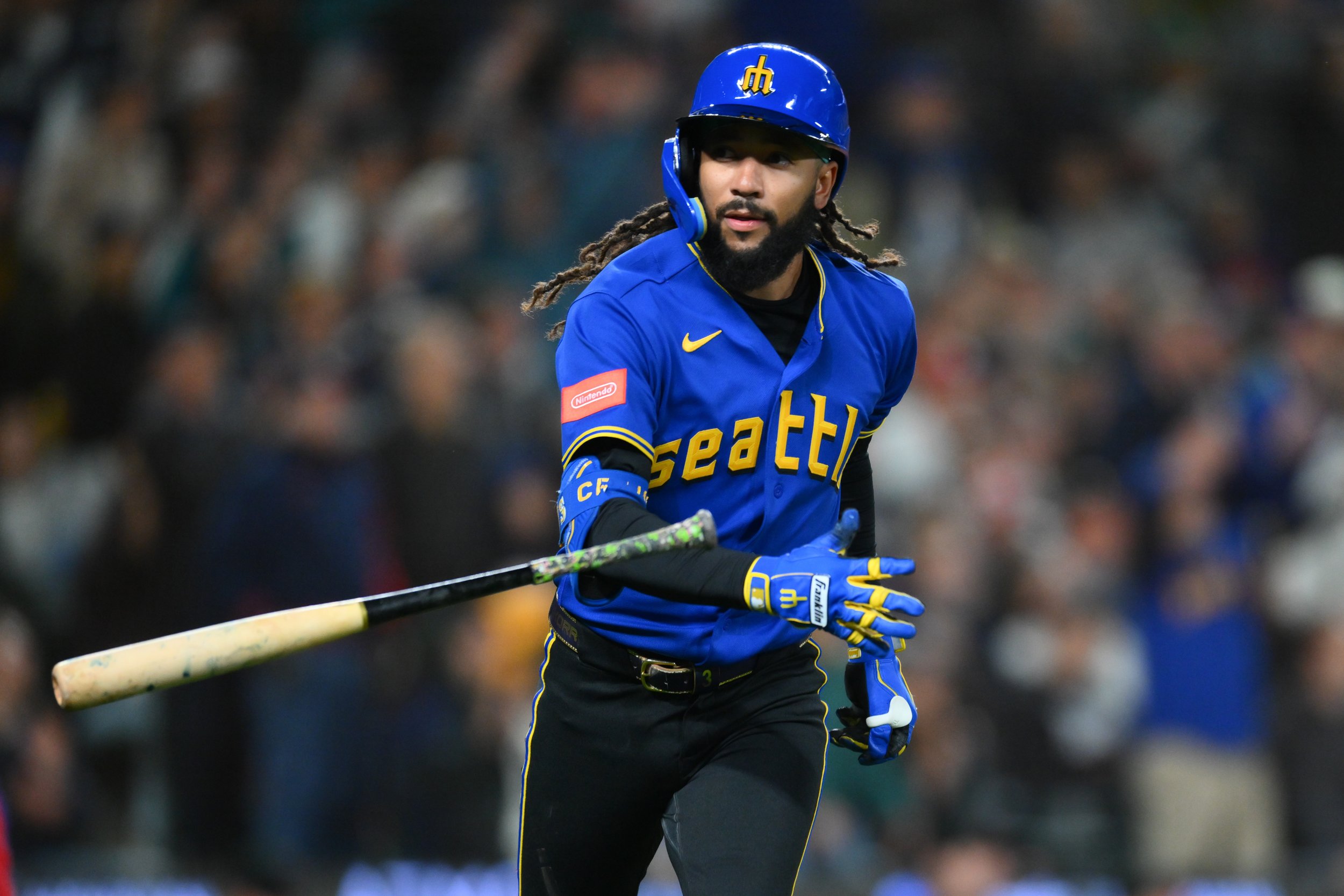
Crawford, Rodríguez Log Firsts; Mariners Walk Off Diamondbacks
Friday night began as a game of firsts and ended as such, even if, for a few frames, an uneasy familiarity washed over T-Mobile park.
The Mariners had to scrape, scratch, and battle just to get back to an even .500 record, 29-29. But a win is a win is a win, and the team’s 7-6 extra innings victory was just the same as if it had been the easy ordeal it initially appeared. For five innings, home runs from historic places were putting players in great positions and George Kirby was apparently grooving.
In truth, Kirby was missing danger by the thinnest of margins, and once that tiny bit of tricksy pixie dust dissipated, Arizona’s high-contact bats and eagle eye for the strike zone made Seattle pitchers fight for every blade of grass. One after another fell before the onslaught, conducting an ordered retreat by the skin of their teeth until the tide turned at a most unlikely Mariner with the proverbial morningstar upon his brow.
Homering Mariners set their own records as Seattle powered out to an early lead.
As befits this Mariners team as much as those of other years, all runs scored in regulation innings came on the longball. But these homers - at least those powered before the game became a nailbiter - set personal records for multiple guys on the team. In the end, all three M’s leading the team in homers added to their edge on Friday.
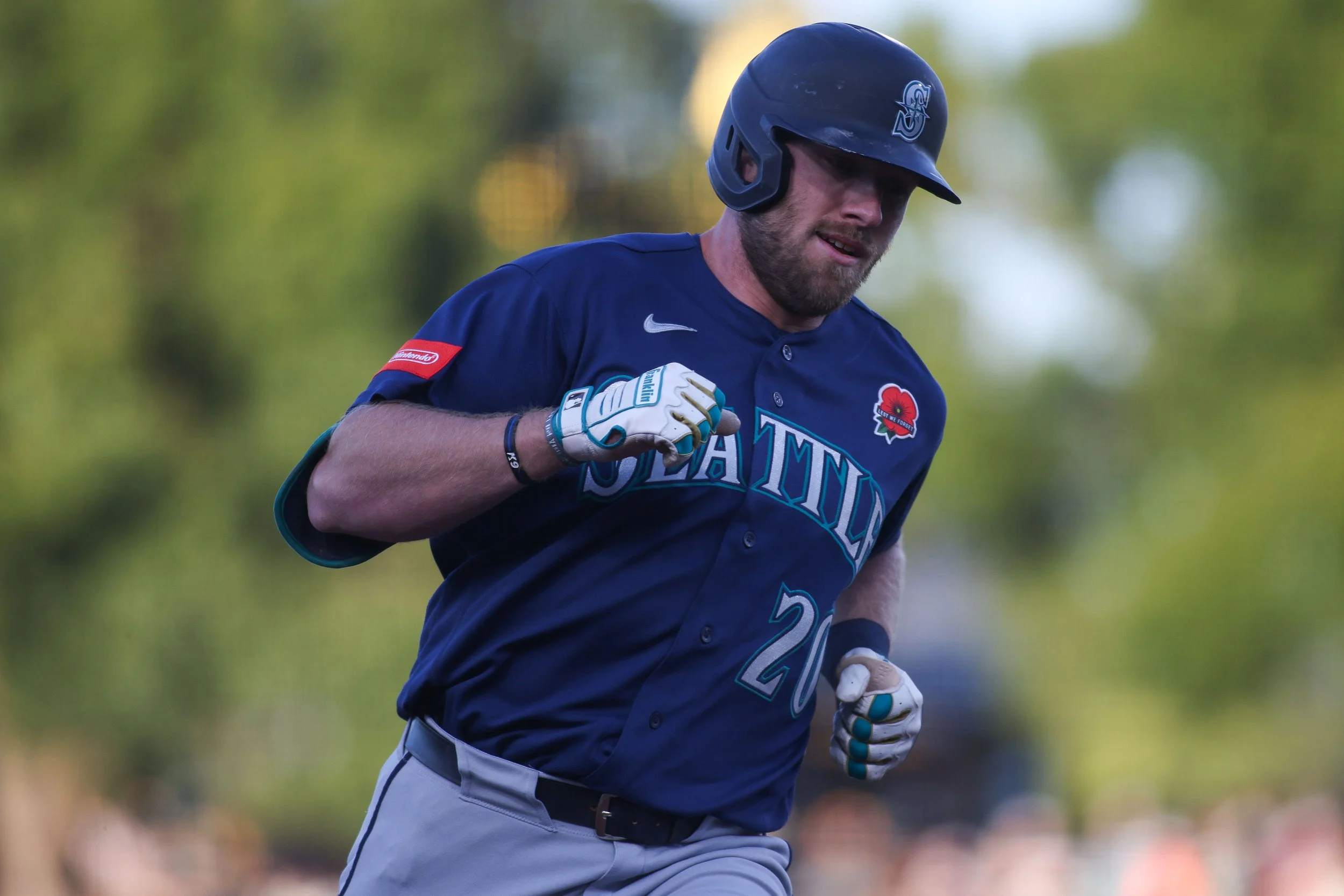
It’s Time for Dan Wilson, Mariners to End Platoon Obsession
The Seattle Mariners began this season with a clear plan to cycle through several players. A “platoon” in baseball is defined as a “a managerial strategy where two players share a single defensive position, alternating starts based on the handedness of the opposing starting pitcher.”
For example, the Mariners signed Rob Refsnyder this offseason to mash against left-handed pitching. When Seattle faced a right-handed starter, Dominic Canzone and Luke Raley would be in the lineup with Refsnyder on the bench.
But after 55 games, now closer to the halfway point of the season than the season opener, it’s time to ditch this approach.
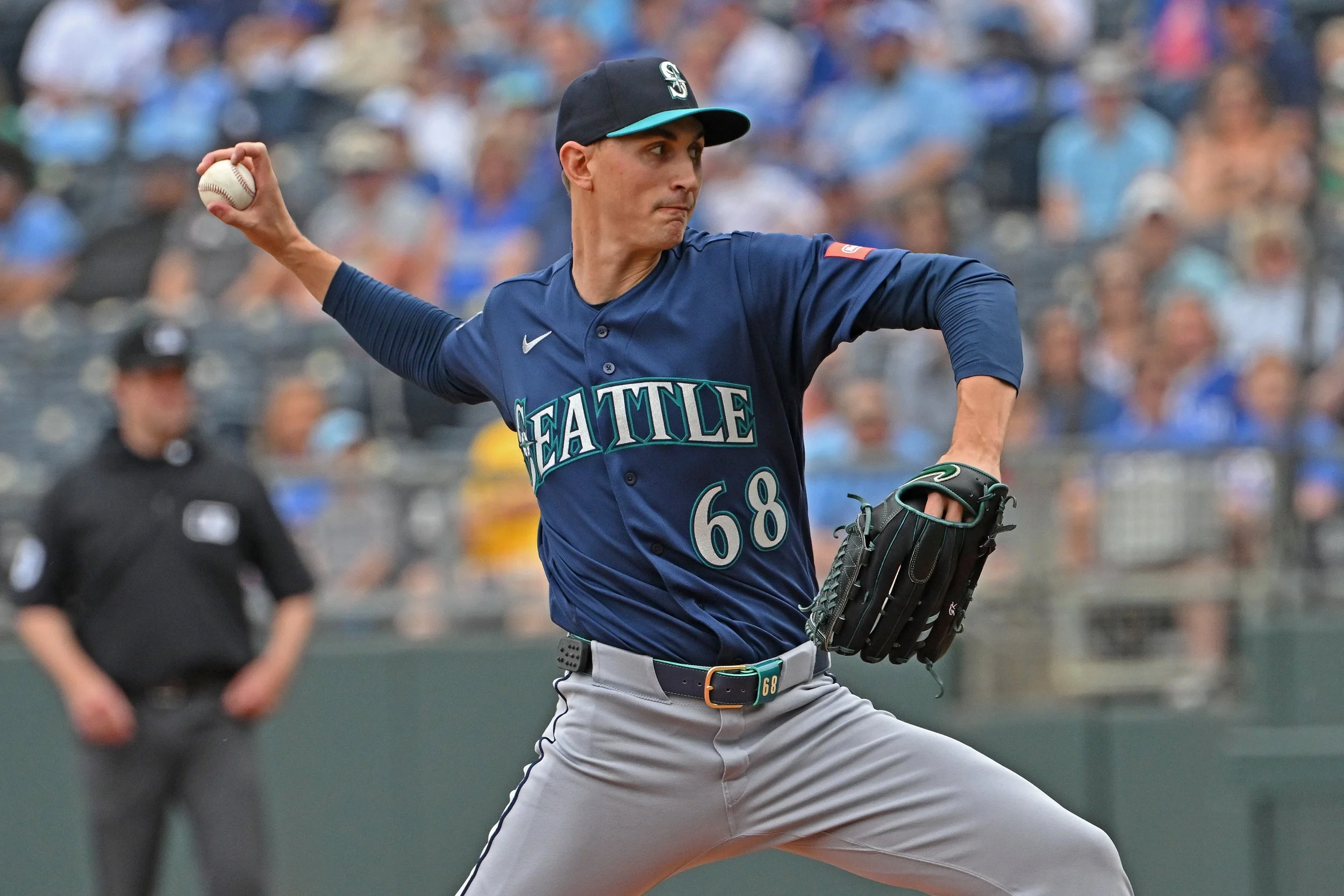
Mariners Show Mediocre Makeup, Roll Over Dead in 5-0 Defeat to Royals
Friday’s game, a 5-0 loss for the Mariners, was over in the first inning. It didn’t matter how many ostensibly good hitters were in the lineup, and it wouldn’t have mattered if Cal Raleigh had been healthy and swinging. George Kirby got the benefit of the baseball world’s decision in eons past to go with ERA instead of RA/9, therefore getting the quality start. In fairness to him, an error (this time J.P. Crawford quite literally dropping the ball while standing on second base when Cole Young sent him a toss for a force out, rather hilariously charged as a throwing error on Young) directly led to that first inning becoming a three-run frame instead of a one-run frame, but Kirby didn’t do well to avoid contact in those situations, with far too much tilted chucking down the pipe.
Royals starter Stephen Kolek cruised from the first inning to the last, becoming the fourth pitcher league-wide to log a complete game shutout. Simply by throwing strikes and forcing the Mariners to make contact, the hurler broke them down as a light touch breaks a rust-ridden nail. Despite striking out only two batters, the Mariners got just four hits in 32 at-bats. Outside of Luke Raley and Cole Young, they got none. The team barely even looked sharp enough to be in the defending-everything-means-defending-nothing zone of bad hitting; they simply appeared to give up right off the rip.
Perhaps that is a little inaccurate. After all, when Raley and Young knocked a pair of one-out singles in the top of the second, the M’s had the beginnings of some sort of rally. It was quickly snuffed out as Dominic Canzone swung at a changeup in the dirt and grounded into a double play.

Mariners Win Series in Houston, Set Sail for Uncharted Waters with Raleigh Out
After their 8-3 victory against the Astros on Thursday, the Mariners are 7-1 with a +26 run differential against that team in 2026. They’re also 15-22 with a -7 run differential against every other team.
Thursday was something of a fulcrum for Seattle. It was the day the M’s officially sent Cal Raleigh to the 10-day IL, though this was an obvious development after his exit from Wednesday’s game with clear discomfort on the same oblique he had tweaked earlier. Mitch Garver caught Luis Castillo in the latter’s final full start for some time as the piggyback plan goes into effect the next time through the rotation. The cloud of these changes hung over the game’s activities, which saw the M’s take the bad Astros pitchers to task once more.
Brendan Donovan and Mitch Garver stood out on both sides of the ball on the day Cal Raleigh went to the IL.
There were two individual performances in particular that echoed Raleigh’s absence in a way. Garver, obviously, moved into the primary catching role upon his addition to the IL, while for Brendan Donovan, his performance was a lesson in the virtues of caution around early injuries.
Arozarena, Canzone Crush Stros Pitching, Raleigh Breaks Slump in 10-2 Mariner Win
Monday night and Tuesday night represented two very different kinds of Mariners victories. In the bottom of the ninth on the first night, the M’s got a win by the skin of their teeth, with Andrés Muñoz getting the better of Yordan Alvarez to finish out a badly-needed win for the M’s.
When Domingo González wrapped up the bottom of the ninth on Tuesday, things were far less tense. Although the Astros had runners on first and third, the M’s were already up 10-2, and with the final out, that was the final score. It was sublimely special for González, who had just completed his very first inning, but the Mariners’ offensive explosion had long since shattered all but the slightest chance of even the mighty Astros offense clawing back into the match.
Against the whole gamut of Houston hurlers they faced on Tuesday, the Mariners put up numbers. They scored 10 runs on 11 hits, six walks, and two batters hit by a pitch; they got hard hits on 57.6% of their batted balls. With runners in scoring position, the M’s went 2-for-8, but one of those hits was Dominic Canzone’s first career grand slam, which he slammed on the first pitch Astros starter Tatsuya Imai sent his way in the fourth inning.
Seattle took Tatsuya Imai to Randyland and the Can-zone.
The Astros’ big pitching signing of the offseason, Tatsuya Imai, hasn’t turned out how Houston had hoped in the first month and a half of the season. The last time he faced Seattle, he had to be pulled with one out in the first inning due to four walks and one hit batsman, then he wound up on the IL with right arm fatigue. He did better on his return start on Tuesday on account of the fact he went four innings. That’s about the only positive Joe Espada’s club got out of the outing.
Bullpen Locks Down Four Frames, Mariners Eke Out 3-1 Win in Houston
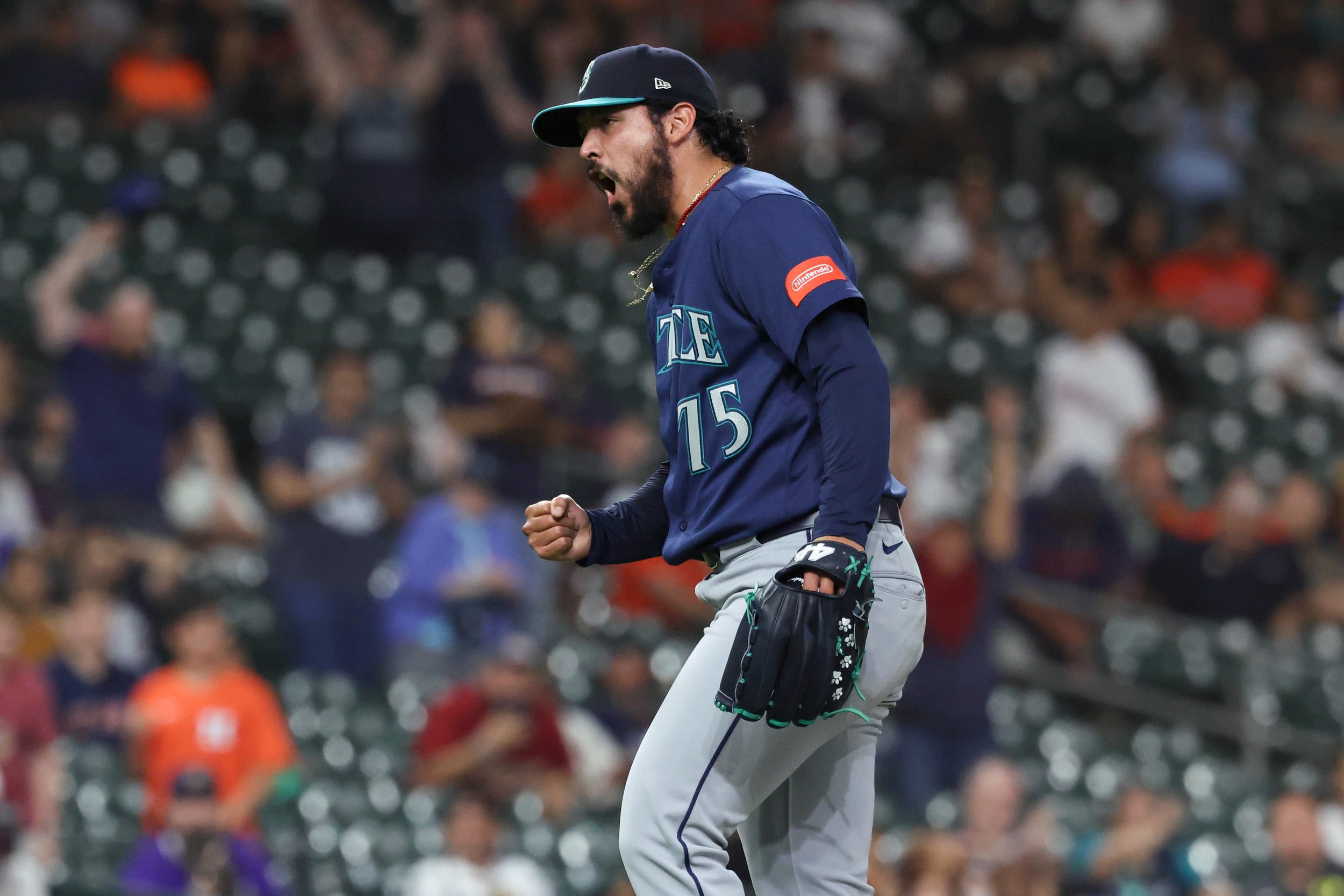
It was power on power in the bottom of the ninth. Mariners closer Andrés Muñoz, who had reached 101.3 miles an hour two pitches earlier, had a 2-2 count against Yordan Alvarez himself. Alvarez represented the tying run, and with 13 home runs already this season, he was a real threat to knot the game.
Muñoz tossed his rarest pitch, a 93.2 mile an hour changeup that tailed away from Alvarez. Expecting either a roaring fastball up or a slider along the lower edges, he was completely flummoxed; the Mariners won 3-1 as Alvarez struck out.
For a team desperately in need of a hot streak, getting any win on the board against Houston was a plus. George Kirby didn’t go as deep into the game as the M’s would have hoped and the bats fell silent for nearly the entire game, but they got just enough production while Kirby and every other arm stepped up enough run-prevention wise to notch Seattle’s 20th victory.
Mariners hitters put three early runs on the board but fell familiarly silent as the game wore on.
The second inning was fruitful for Seattle. Randy Arozarena knocked a one-out single into right and Luke Raley walked to set a two-runner table, and with two outs, both Dominic Canzone and Cole Young found the outfield for an RBI each. Julio Rodríguez rocked a towering homer to begin the third.
And then 20 of the next 23 batters made outs.

Jacks Full of Threes: Raley Clubs Seven RBIs, M’s Bash White Sox 12-8
Things go a lot more easily for a baseball team when they hit three home runs to score three or more men each. Good offense over nine innings can more than smooth out a bad inning on the other side, though the Mariners’ 12-8 win on Friday night against the White Sox took a while to get to the coasting stage.
In a sense, it wasn’t nearly as close as the score said; most of the high-end relievers were able to rest as Chicago scored three runs in the final two innings to turn a giant lead into a respectable one.
But in another sense (it was a one-run game until the seventh), the game was closer than its final score. M’s starter Emerson Hancock slipped quite a bit in the third inning and gave up five runs on the night, but recovered enough to go six innings and preserve the bullpen. Seattle’s first chance with the bases loaded didn’t produce anything else, but they broke the gates later on.
The big hero of the night was the still-mashing Luke Raley, who upped his season line to .258/.314/.567 with eight homers and 23 RBIs.
Luke Raley began the barrage with the first grand slam of his career.
The Mariners gave White Sox starter Sean Burke a couple of easy innings on Friday, falling in seven pitches in the first and 11 in the fourth. But crucially, they also put tons of traffic on the bags in the second and third, and though the second was underwhelming, things came together in the following frame.

Explore our latest Seattle sports content by clicking on your favorite team(s) below!