
Under Renovation, Seawolves Potentially Interested in Memorial Stadium
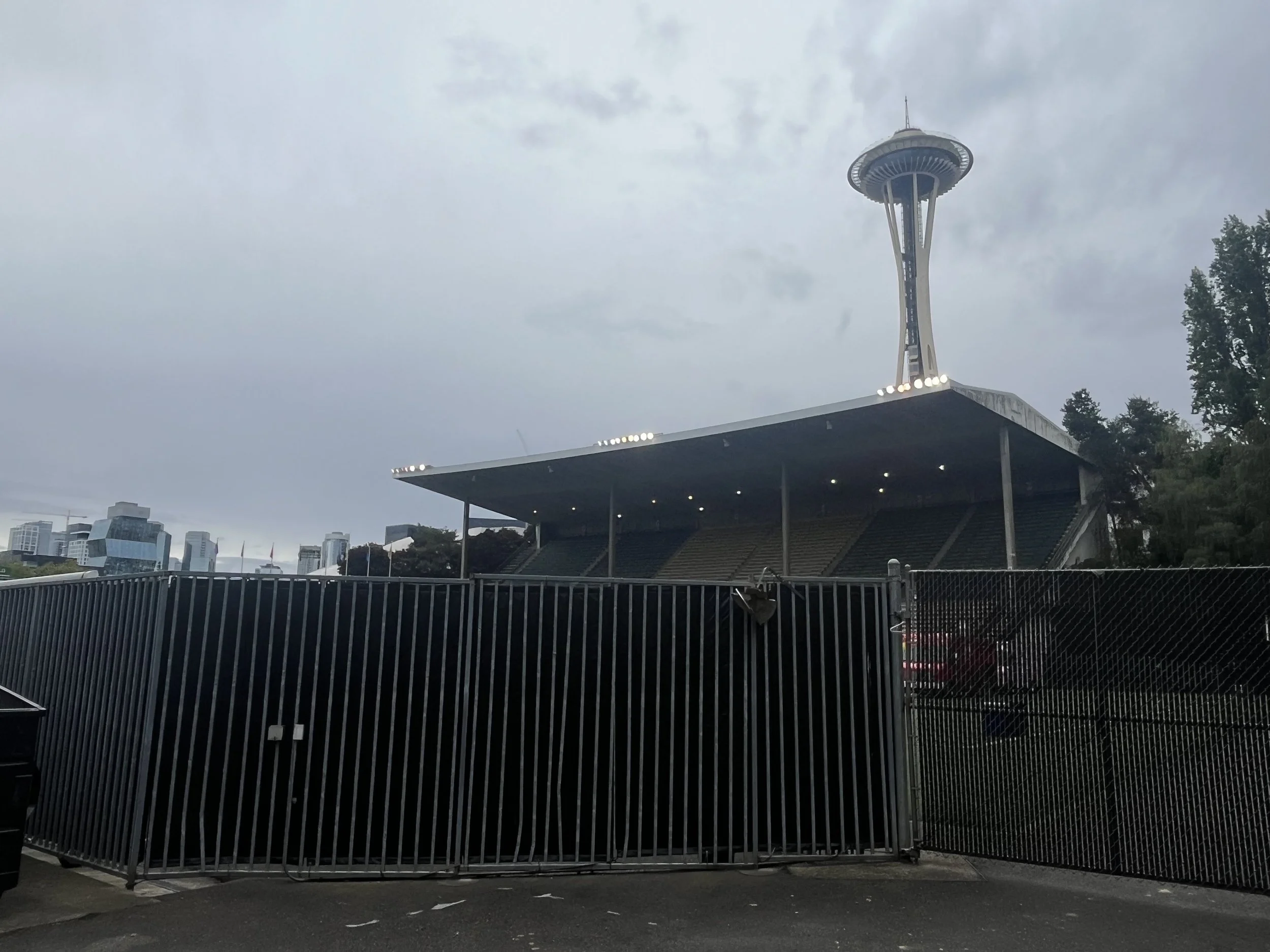
Memorial Stadium from the northwest end on June 26, 2025, a few minutes before the venue’s open house to celebrate the beginning of renovations. Credit: Callaghan Bluechel/Emerald City Spectrum.
SEATTLE, Wash. – The oldest sports venue in Seattle is finally undergoing renovations. On June 26, 2025, Memorial Stadium held an open house to mark its closing to make way for a $140 million near-complete renovation project set to finish sometime in 2027.
It’s potentially big news for the Seattle Seawolves, who have tentative plans to move to Memorial once the renovations are done, likely for the 2028 Major League Rugby season. The Ackerley brothers, Chris and Ted – who have investments in the Seawolves as well as the Seattle Center-based Storm and Kraken – are the ones handling the details of the potential move, according to One Roof Stadium Partnership Communications Director Katie Townsend. But there is not yet an official operating agreement.
One Roof Stadium Partnership (ORSP), which is a consortium of the Seattle Kraken, One Roof Foundation, and Climate Pledge Arena, was brought on in 2023 to partner with the City of Seattle and Seattle Public Schools to renovate the aging Memorial Stadium. Of the total cost of the renovation, ORSP is providing $30 million and the City of Seattle $40 million, with most of the rest of the cost paid by the SPS capital levy alongside a comparatively minor amount of state funds.
According to David Kunselman, the Director of Planning and Capital Development for Seattle Center, the decision to finally write a request for a private partner in October 2022 was a big turning point in turning what had been a long-held outside dream of the City of Seattle – renovating a stadium opened in 1947 – into a reality.
That private partner, which ended up being One Roof Stadium Partnership, will handle the day-to-day operations of the stadium, including re-painting the turf surface for each event and scheduling all the events. High school events – football, soccer, band performances, and graduations – will take priority over any other events, due to Memorial Stadium’s history as a high school stadium and the continued partnership with Seattle Public Schools, who intend to utilize the revamped facility as a “living classroom,” according to Townsend.
If the Seawolves go through with moving to Memorial, this is something they would have to work around. But the team is more than interested in moving to Memorial Stadium, according to Seawolves Chief Operating Officer Drew Dambreville.
“Is it our goal to move to Memorial? Absolutely,” Dambreville said. “But until I see a signature on the dotted line, nothing is set in stone.”
The Seawolves organization itself has made no official comments at this time. However, a move to Memorial, according to multiple people I spoke to within the Seawolves organization, would have multiple benefits for the team. The team likes the central location of the facility – with far more city life and transit options nearby than Starfire – and the Seawolves would be able to make money from the concessions, which is something that is restricted in their current deal with Starfire.
Because the current plans are to finish renovations on the stadium by the beginning of the 2027-2028 school year, any move into Memorial would take place for the 2028 season.
Memorial Stadium’s current capacity is unknown, but Kunselman estimates it at around 12,000, though noting that some sources list it as 20,000. The new stadium will have a reduced capacity of 8,000, with 6,500 seats and a standing room area that Kunselman calls the “Picnic Hill” on the west end of the field with capacity for 1,500 spectators.
This reduction in capacity is due to the new stadium – designed by Generator Studio, a Kansas City-based company that designed CPKC Stadium for the NWSL’s Kansas City Current – lowering the profile of the grandstands, which currently rise at a steep angle 42 rows deep on both the north and south sides, with the back 26 rows on each side blocked by the four concrete columns that hold up each overhang.
The new design strips down the upper rows to make room for a concourse that circles the stadium, with concession booths in each of the four corners and a space for food trucks on the south side. The latter is a design feature that allows the Seawolves to keep one of their gameday staples – the food trucks – a part of the fan experience.
Architectural plans and artists’ renditions of the renovated stadium can be viewed on this PDF. Renovations on Memorial Stadium will start in the coming months.