

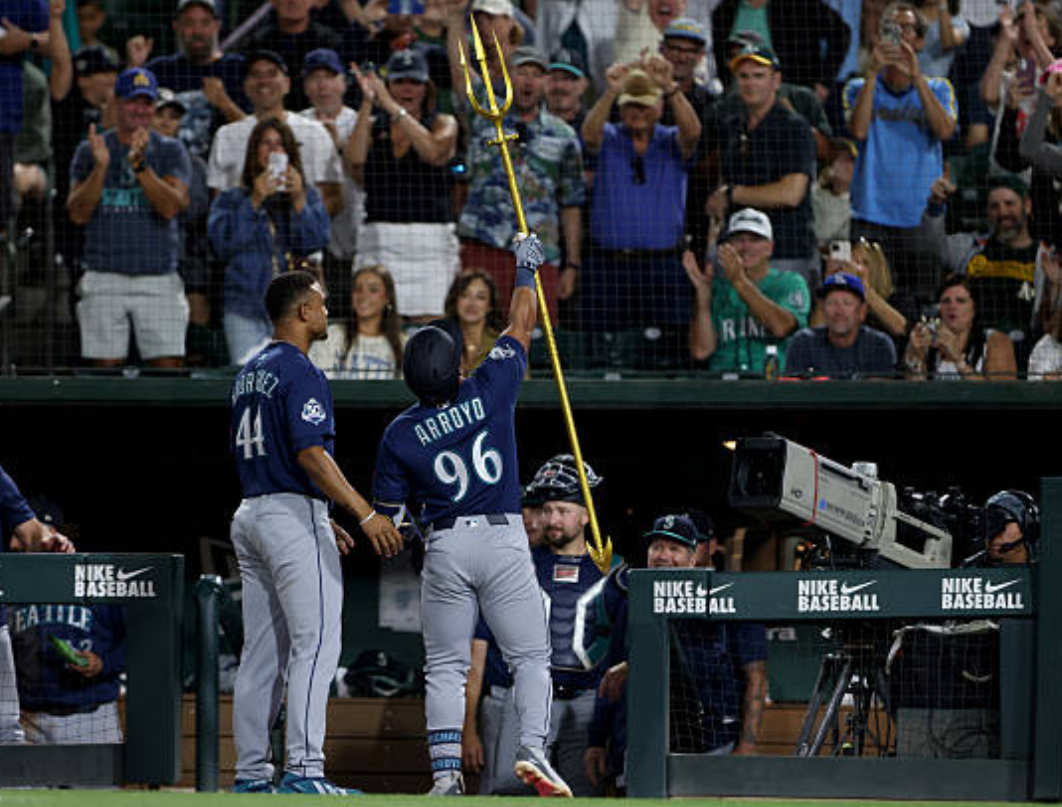
While not mathematically eliminated from the playoffs, the Mariners are on the edge of despair. Needing to win almost every game from here on out, Seattle got off to a great start with a 19-1 smackdown against the Athletics
For an offense that has been up and down (but mostly down) all year, the Mariners put together their highest-scoring game of the season and recorded the largest margin of victory in franchise history. On the other side of the historic night, starting pitcher Bryan Woo continued his streak of scoreless baseball, dealing six shutout innings.
The bullpen came in and did its part as well, allowing zero earned runs to complete the record-breaking night.
It may have been rather hollow on the whole considering the greater circumstances, but just looking at the score from the 10-foot view, it was the biggest win in team history.
And for rookie Michael Arroyo, there was nothing close to hollow about his trio of firsts.
Offensive Explosion

At least the Mariners can play spoiler.
That is hardly where anyone on the team wanted them to end up when the season began. But the autopsy of the year - where three guys the Szymborski Projection System (ZiPS) had putting up a combined 15.2 FanGraphs wins above replacement (fWAR) only accrued 4.9 fWAR with 15 contests left in the season - is already written in the oft-surprised and oft-sullen faces of those in T-Mobile Park’s home dugout.
Going into their series against the Texas Rangers, the M’s had already squandered their last chance to jump back into the fray with a somewhat robust series loss to the Athletics over their previous four games. Things had already been dire for Seattle since at least the end of July if not earlier, but that set of games was the moment that the players on the team fully realized they had to stare down the music.
Perhaps there was a new attitude that arose a few hours, give or take, after rookie Lazaro Montes sent a Cal Quantrill meat and cheese sub to Saturn on Tuesday. If the M’s can’t make the playoffs for themselves, perhaps they can use one of their last remaining series against a contender to ruin someone else’s day.
Kade Anderson and Logan Gilbert went 13 combined innings with four runs allowed total.
Both the least experienced and most experienced starting pitchers did what the team needed of them on Wednesday and Thursday. That in and of itself was a departure from the muddy record of M’s hurlers since the All-Star Break, when the staff has suffered one of the worst stretches in recent memory up and down its roster. Before Anderson’s first career win on Wednesday, Seattle starters had logged a 4.99 ERA and 5.04 FIP in the second half, and the youngest had struggled with a 5.40 ERA and 5.63 FIP in his first three starts.
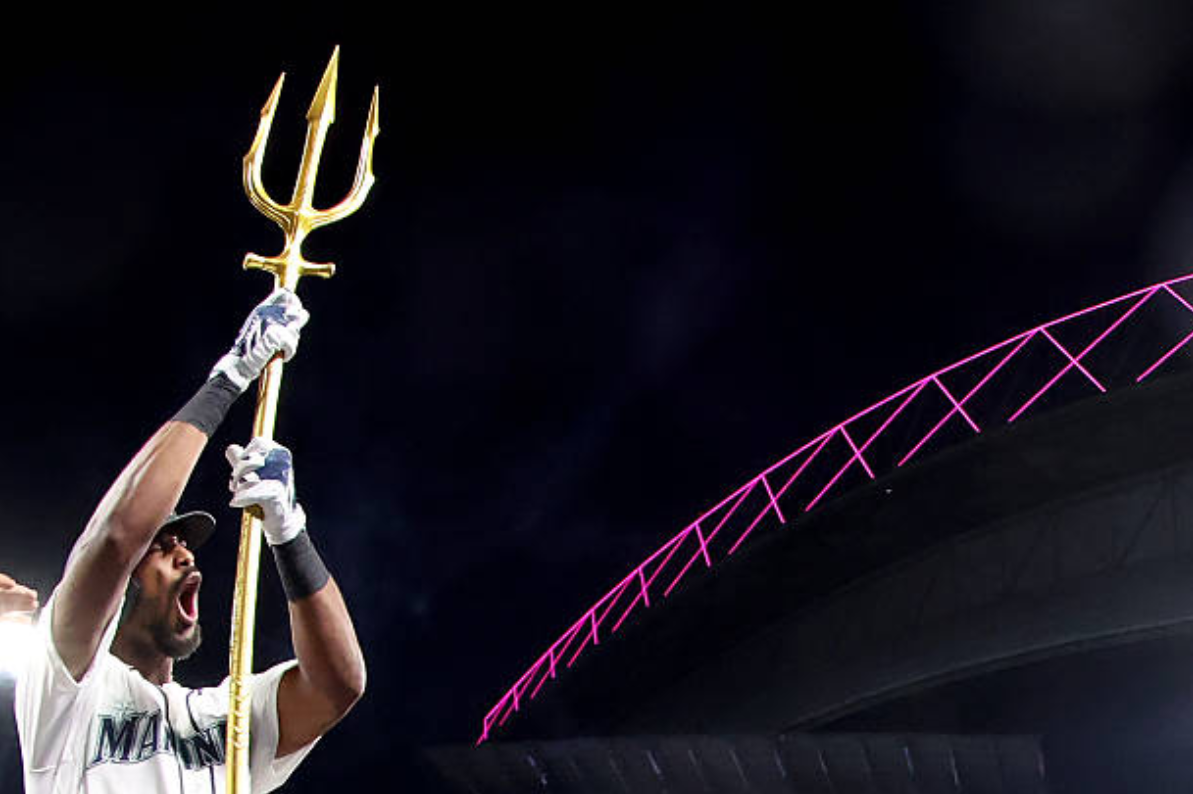
For the first time in a half decade, September baseball in Seattle does not mean the tension of a playoff chase. Those chases were vain and doomed more often than not, but the exhilaration and anticipation of the first month of fall is not something that shall grace the cooling confines of T-Mobile Park. With the Mariners seven games back of the division lead after their 10-5 loss on Tuesday with 17 left to go, a team who had once been World Series aspirations now looks upon a wholly lost season.
Just as that fact once again became clear on Tuesday, so did another: Lazaro Montes is one of the strongest batsmen on Earth.
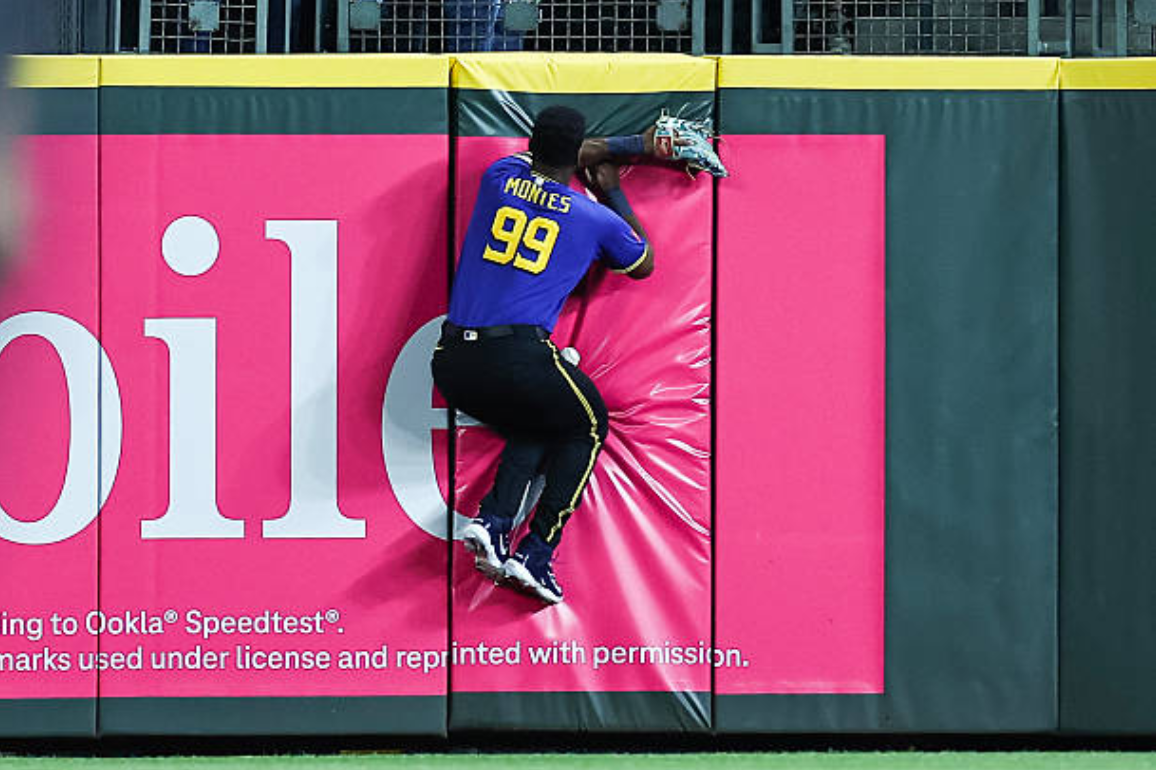
The rookie right fielder hit one of the longest homers in Mariners history in the bottom of the fourth against Rangers starter Cal Quantrill, the second of Montes’ career and the first at T-Mobile Park. The 474-footer was the biggest nuke most of those in attendance had ever witnessed - landing on the concourse beyond center field - but for Montes, it was another Tuesday.
“I got a couple, I think in the Dominican Republic, I have one of the long, long, long, long - more than 500 feet, easy,” Montes said. “This is not the only one; I need to now get another one.”
That moment was the sole consolation for a team that had near everything else go wrong in myriad possible ways.
Bryce Miller fell apart early and left before the end of the fourth.
Before Emerson Hancock sustained an injury late in the year, the team had planned to move Bryce Miller to the bullpen and sport a five-man rotation involving the newly-promoted Kade Anderson.
Ask not for whom the bell tolls.
Friday saw the Mariners place one more stone on their own immurement, falling to 66-76 and seven games back of the division. In truth, they had long sealed themselves off from any reasonable chance of wriggling themselves out of their predicament, but they had still been in the twilight of the possible as they returned home from a series win against the Red Sox and began their first of four games against the Athletics.
Losing the first two games of that series should put any remaining embers of hope to bed. The long odds of late August have become near-impossible ones with only a few days gone in September, as the team must make up a seven-game deficit with 20 contests left to go.
The word Mariners manager Dan Wilson used after Friday’s 7-6 defeat wasn’t “tough”; it was “difficult” as he began his immediate recap postgame and “frustrating” as he concluded it. But the sentiment was identical, seemingly homologous to the great gray mass of clouds over T-Mobile Park as summer turns to autumn. Such has been the season in 2026.
Not to mention the fact that Lazaro Montes left the game early.
Logan Gilbert gave up five runs on four homers in the third as his heaters went south.
The MLB regular season is heading into a sprint to the finish. There are roughly four weeks left until the playoff picture is set. The Seattle Mariners still have a chance to be in the dance, though those hopes are fading with each loss, including a series-opening defeat at the hands of the lowly Athletics on Thursday.
The Mariners certainly made moves over the offseason to try and capitalize on their trip to the ALCS last year. But fans definitely felt like they could’ve done even more, and the results on the field only have provided more evidence for that argument.
Let’s revisit some of the biggest moves the Mariners made last offseason and see how things played out. Certainly, the benefit of hindsight makes this a little unfair. Some moves that aren’t exactly looking like “A-plus” moves now felt like it back then, in the moment.

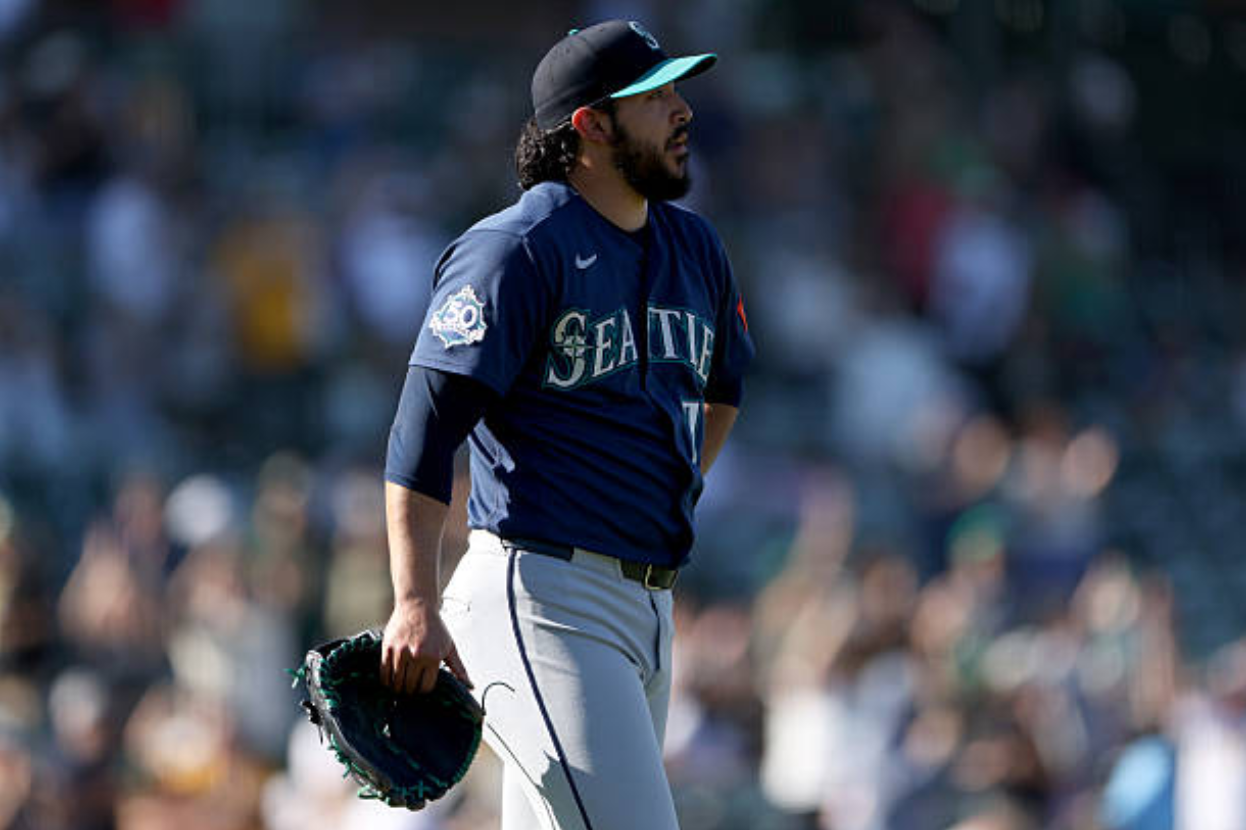
For years, the Mariners have relied on an ability to churn out relievers for pennies on the dollar, filling out a bullpen with just enough arms that are viable in a given year for the team to manage the innings required of a strong starting staff.
But the lack of relatively surefire options made the M’s weak to the impacts of a serious amount of injuries. The team lost Matt Brash, Cooper Criswell, and Carlos Vargas for extended periods of time, and the strain hence put on Eduard Bazardo and Jose Ferrer has turned what started as great seasons for both of them into second half catastrophes. The buck has thus fallen to lesser arms who have only inconsistently held up the bullpen’s standards, and with Sunday’s 8-7 loss, the final fruits of this were borne out in full.
The final deciding blow may have been Lawrence Butler’s walk-off two-run homer, but the fulcrum point of the game was the seventh inning. Had Carlos Vargas, who had already pitched a frame, managed to get one of the first two batters out, the A’s wouldn’t have approached Seattle’s tally. Had Gabe Speier, whose effectiveness as a reliever had been closer to his then-4.22 fielding independent pitching (FIP) and 4.36 expected FIP (xFIP) than his then-2.61 ERA, put out the fire with runners on, the A’s would have been down by three when the ninth began. And had Seranthony Domínguez either let Shea Langeliers’ grounder go to second or made a clean grab on the ball, a one-run lead would have continued apace.
“They’re all tough,” said Mariners manager Dan Wilson after the media pre-empted his usual “tough one” stock phrase.
This late in the season, and with more smoke than ever that this will be Wilson’s last as the M’s skipper, that phrase has ascended from being a verbal display of a manager going through the motions and become something of a meme, in both the Dawkinsian and Millennial senses of the word.
It’s tough because it’s a loss. It’s tough because of how avoidable this loss was. It’s tough because it is the final reminder that the Mariners did not do enough, whether in terms of the owners or the front office or the players themselves, to avenge their fallen selves from a year prior. And it’s tough because that word might be the only one given by the other 29 teams to Seattle’s self-sabotage.
Tough.
While not mathematically eliminated from the playoffs, the Mariners are on the edge of despair. Needing to win almost every game from here on out, Seattle got off to a great start with a 19-1 smackdown against the Athletics
For an offense that has been up and down (but mostly down) all year, the Mariners put together their highest-scoring game of the season and recorded the largest margin of victory in franchise history. On the other side of the historic night, starting pitcher Bryan Woo continued his streak of scoreless baseball, dealing six shutout innings.
The bullpen came in and did its part as well, allowing zero earned runs to complete the record-breaking night.
It may have been rather hollow on the whole considering the greater circumstances, but just looking at the score from the 10-foot view, it was the biggest win in team history.
And for rookie Michael Arroyo, there was nothing close to hollow about his trio of firsts.
Offensive Explosion
At least the Mariners can play spoiler.
That is hardly where anyone on the team wanted them to end up when the season began. But the autopsy of the year - where three guys the Szymborski Projection System (ZiPS) had putting up a combined 15.2 FanGraphs wins above replacement (fWAR) only accrued 4.9 fWAR with 15 contests left in the season - is already written in the oft-surprised and oft-sullen faces of those in T-Mobile Park’s home dugout.
Going into their series against the Texas Rangers, the M’s had already squandered their last chance to jump back into the fray with a somewhat robust series loss to the Athletics over their previous four games. Things had already been dire for Seattle since at least the end of July if not earlier, but that set of games was the moment that the players on the team fully realized they had to stare down the music.
Perhaps there was a new attitude that arose a few hours, give or take, after rookie Lazaro Montes sent a Cal Quantrill meat and cheese sub to Saturn on Tuesday. If the M’s can’t make the playoffs for themselves, perhaps they can use one of their last remaining series against a contender to ruin someone else’s day.
Kade Anderson and Logan Gilbert went 13 combined innings with four runs allowed total.
Both the least experienced and most experienced starting pitchers did what the team needed of them on Wednesday and Thursday. That in and of itself was a departure from the muddy record of M’s hurlers since the All-Star Break, when the staff has suffered one of the worst stretches in recent memory up and down its roster. Before Anderson’s first career win on Wednesday, Seattle starters had logged a 4.99 ERA and 5.04 FIP in the second half, and the youngest had struggled with a 5.40 ERA and 5.63 FIP in his first three starts.
For the first time in a half decade, September baseball in Seattle does not mean the tension of a playoff chase. Those chases were vain and doomed more often than not, but the exhilaration and anticipation of the first month of fall is not something that shall grace the cooling confines of T-Mobile Park. With the Mariners seven games back of the division lead after their 10-5 loss on Tuesday with 17 left to go, a team who had once been World Series aspirations now looks upon a wholly lost season.
Just as that fact once again became clear on Tuesday, so did another: Lazaro Montes is one of the strongest batsmen on Earth.
The rookie right fielder hit one of the longest homers in Mariners history in the bottom of the fourth against Rangers starter Cal Quantrill, the second of Montes’ career and the first at T-Mobile Park. The 474-footer was the biggest nuke most of those in attendance had ever witnessed - landing on the concourse beyond center field - but for Montes, it was another Tuesday.
“I got a couple, I think in the Dominican Republic, I have one of the long, long, long, long - more than 500 feet, easy,” Montes said. “This is not the only one; I need to now get another one.”
That moment was the sole consolation for a team that had near everything else go wrong in myriad possible ways.
Bryce Miller fell apart early and left before the end of the fourth.
Before Emerson Hancock sustained an injury late in the year, the team had planned to move Bryce Miller to the bullpen and sport a five-man rotation involving the newly-promoted Kade Anderson.
Ask not for whom the bell tolls.
Friday saw the Mariners place one more stone on their own immurement, falling to 66-76 and seven games back of the division. In truth, they had long sealed themselves off from any reasonable chance of wriggling themselves out of their predicament, but they had still been in the twilight of the possible as they returned home from a series win against the Red Sox and began their first of four games against the Athletics.
Losing the first two games of that series should put any remaining embers of hope to bed. The long odds of late August have become near-impossible ones with only a few days gone in September, as the team must make up a seven-game deficit with 20 contests left to go.
The word Mariners manager Dan Wilson used after Friday’s 7-6 defeat wasn’t “tough”; it was “difficult” as he began his immediate recap postgame and “frustrating” as he concluded it. But the sentiment was identical, seemingly homologous to the great gray mass of clouds over T-Mobile Park as summer turns to autumn. Such has been the season in 2026.
Not to mention the fact that Lazaro Montes left the game early.
Logan Gilbert gave up five runs on four homers in the third as his heaters went south.
The MLB regular season is heading into a sprint to the finish. There are roughly four weeks left until the playoff picture is set. The Seattle Mariners still have a chance to be in the dance, though those hopes are fading with each loss, including a series-opening defeat at the hands of the lowly Athletics on Thursday.
The Mariners certainly made moves over the offseason to try and capitalize on their trip to the ALCS last year. But fans definitely felt like they could’ve done even more, and the results on the field only have provided more evidence for that argument.
Let’s revisit some of the biggest moves the Mariners made last offseason and see how things played out. Certainly, the benefit of hindsight makes this a little unfair. Some moves that aren’t exactly looking like “A-plus” moves now felt like it back then, in the moment.

Heading into the 2026 season, the Seattle Mariners were the odds-on favorite to represent the American League in the World Series. The Mariners have drastically underperformed those expectations, however, limping to the final month of the season barely clinging to playoff life.
Many fans want to clean house. Since ownership can’t be fired, Jerry Dipoto and Dan Wilson are on the chopping block. While nobody believes Wilson will survive the offseason, Dipoto deserves to keep his job, and Seattle fans should hope he sticks around for the long haul.
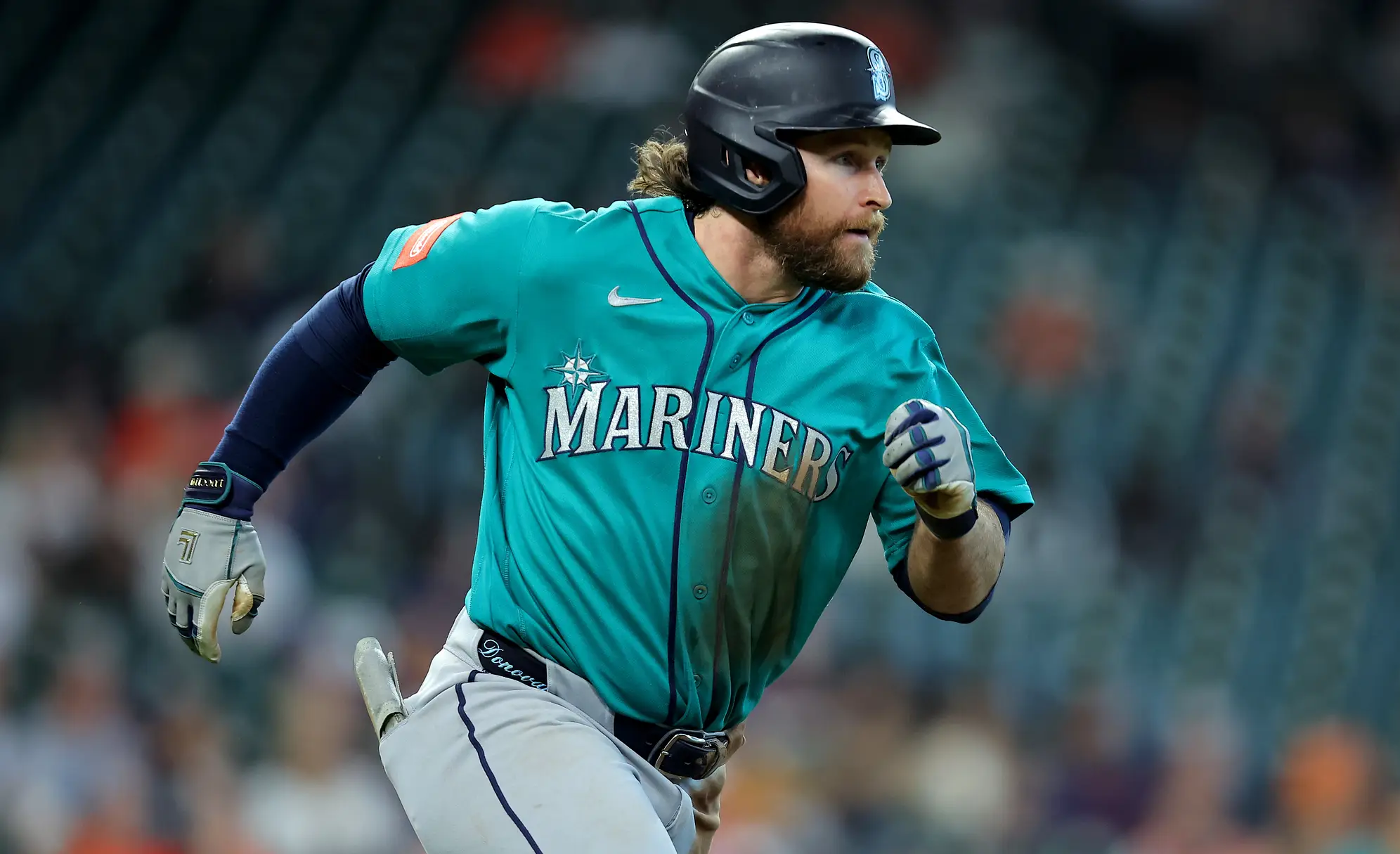
One of Dipoto’s big offseason swings might be viewed as a failure by the average fan, as Brendan Donovan has had an injury-plagued season and, like the entire team, has performed below expectations.
Hindsight is 20-20, but let’s revisit the offseason blockbuster to see who came out on top almost a season later
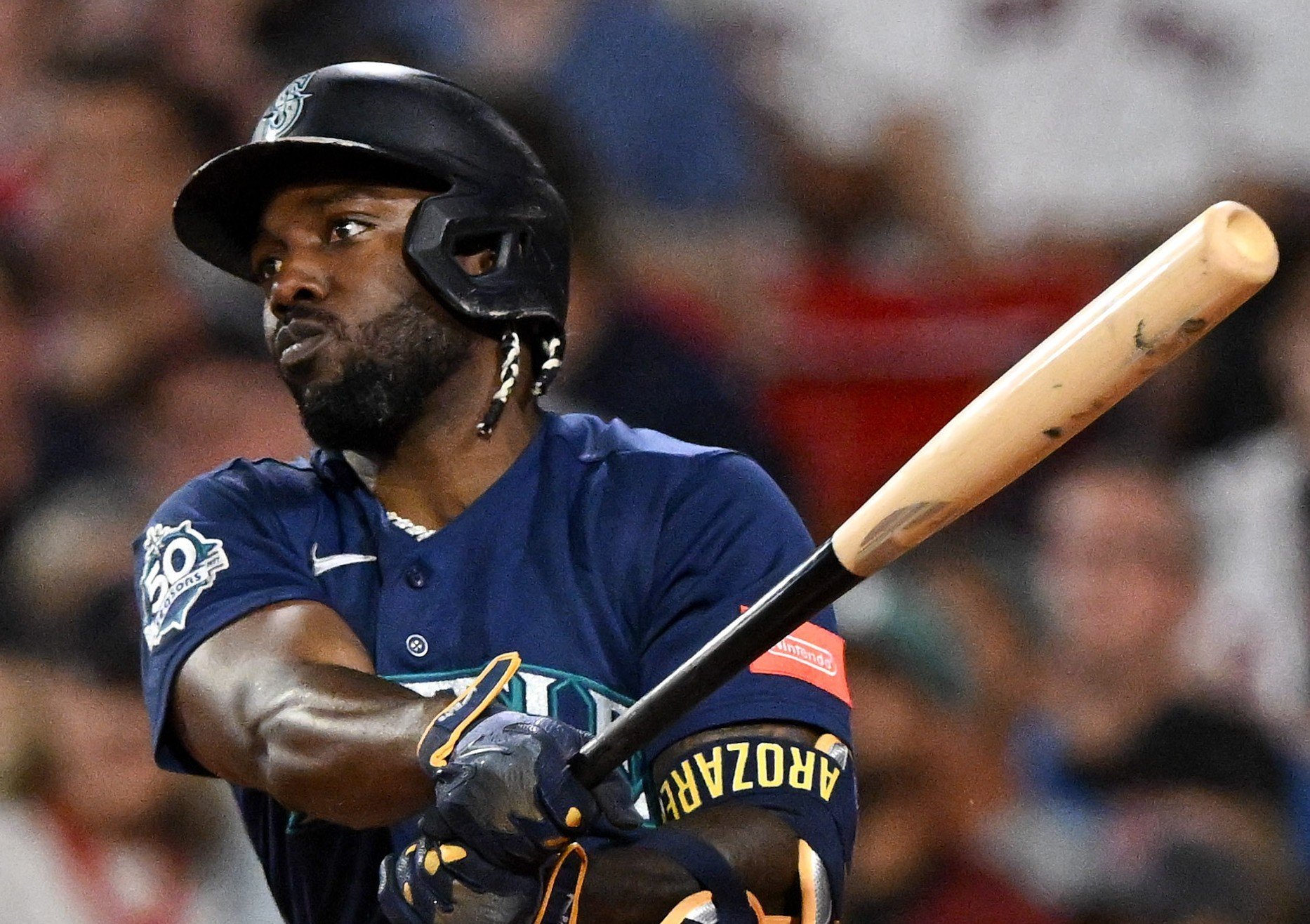
Still eight games under .500, Randy Arozarena and the Seattle Mariners somehow have plenty of life left in the dreadful AL West with one month to play after taking two out of three from the Red Sox in Boston.
Emerald City Spectrum writer Nick Lee breaks down the Mariners' remaining schedule for the rest of the 2026 regular season. Could a soft underbelly to wrap up the schedule be Seattle's saving grace? Or is it too little, too late?
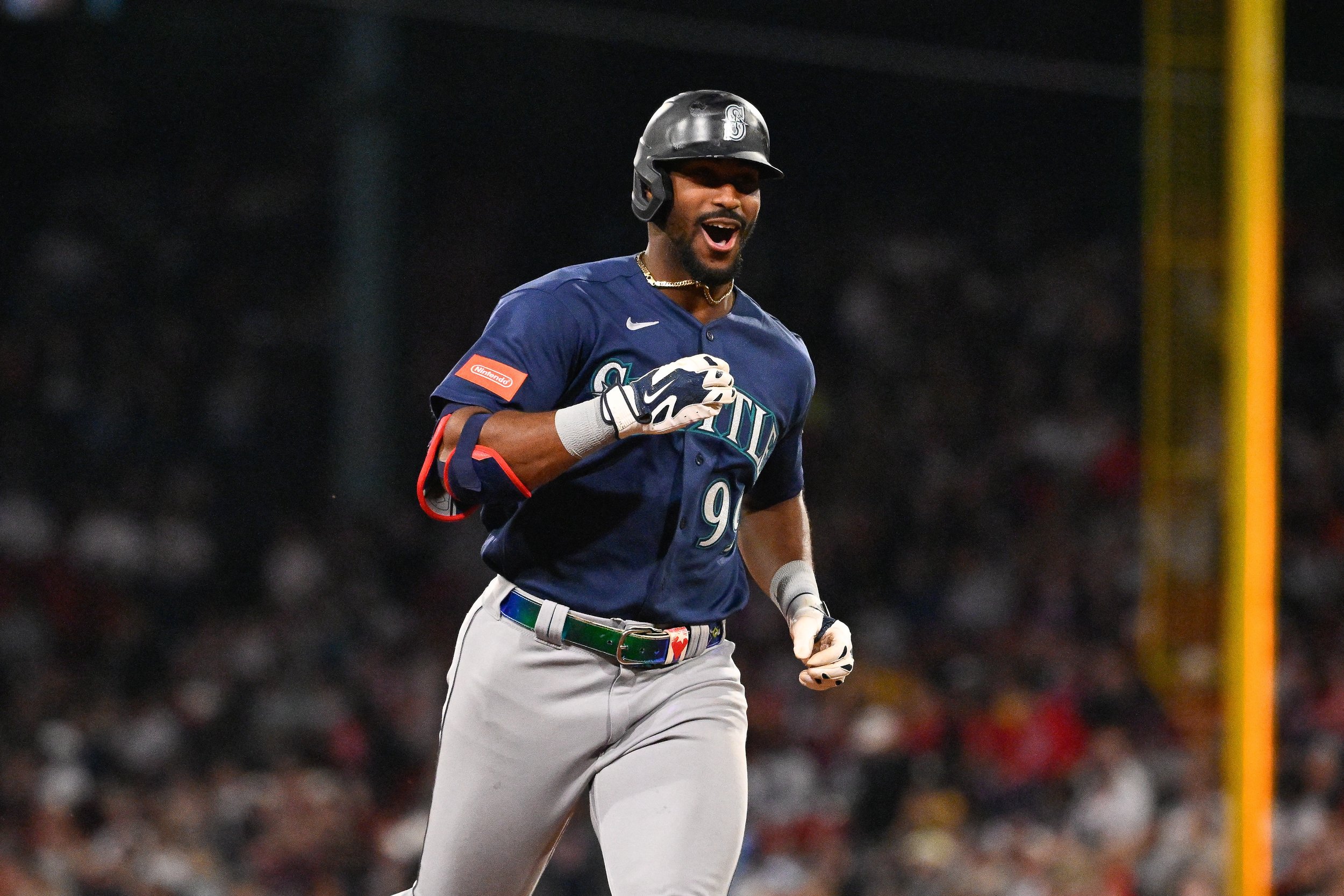
Yordan Alvarez comparisons had long since fallen out of favor for Lazaro Montes, at least in neutral outlets. Although his power was palpable throughout his minor league tenure (he had 38 homers between Double-A and Triple-A between the beginning of the year and his promotion on Sept. 1), his swing-and-miss proclivities were a sharp departure from the imposing contact rates of perhaps the most complete hitter among the current generation.
The jury still doubts that Montes will be sterling Alvarez, while he still has more work to do to prove whether he was called up at the right time. But there’s no disputing that the Mariners’ most recent call-up had one of the best debuts anyone could possibly ask for.
When a slicing fly ball to dead center disappeared into the triangular mass of fans in that particular nook of Fenway Park’s iconic grandstands, Montes became the first Cuban player since Alvarez to homer in his MLB debut. He became the 38th debutant in baseball history to log a least a homer, walk, and two total hits, joining a club inaugurated by “Frosty Bill” Duggleby in 1898 [1].
“I was trying to be me, be myself like they told me and like I learned,” Montes said after the game. “And giving 100% no matter what happens.”
For years, the Mariners have relied on an ability to churn out relievers for pennies on the dollar, filling out a bullpen with just enough arms that are viable in a given year for the team to manage the innings required of a strong starting staff.
But the lack of relatively surefire options made the M’s weak to the impacts of a serious amount of injuries. The team lost Matt Brash, Cooper Criswell, and Carlos Vargas for extended periods of time, and the strain hence put on Eduard Bazardo and Jose Ferrer has turned what started as great seasons for both of them into second half catastrophes. The buck has thus fallen to lesser arms who have only inconsistently held up the bullpen’s standards, and with Sunday’s 8-7 loss, the final fruits of this were borne out in full.
The final deciding blow may have been Lawrence Butler’s walk-off two-run homer, but the fulcrum point of the game was the seventh inning. Had Carlos Vargas, who had already pitched a frame, managed to get one of the first two batters out, the A’s wouldn’t have approached Seattle’s tally. Had Gabe Speier, whose effectiveness as a reliever had been closer to his then-4.22 fielding independent pitching (FIP) and 4.36 expected FIP (xFIP) than his then-2.61 ERA, put out the fire with runners on, the A’s would have been down by three when the ninth began. And had Seranthony Domínguez either let Shea Langeliers’ grounder go to second or made a clean grab on the ball, a one-run lead would have continued apace.
“They’re all tough,” said Mariners manager Dan Wilson after the media pre-empted his usual “tough one” stock phrase.
This late in the season, and with more smoke than ever that this will be Wilson’s last as the M’s skipper, that phrase has ascended from being a verbal display of a manager going through the motions and become something of a meme, in both the Dawkinsian and Millennial senses of the word.
It’s tough because it’s a loss. It’s tough because of how avoidable this loss was. It’s tough because it is the final reminder that the Mariners did not do enough, whether in terms of the owners or the front office or the players themselves, to avenge their fallen selves from a year prior. And it’s tough because that word might be the only one given by the other 29 teams to Seattle’s self-sabotage.
Tough.