Mariners Repeat or Astros Return; Who is AL West’s Deadliest Warrior? Analyzing Division as 2026 Season Approaches

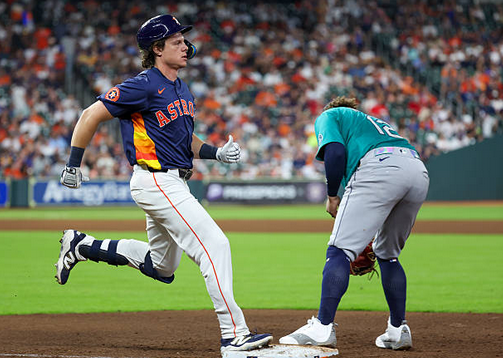
For nearly the entire StatCast era, the American League Championship Series saw the Astros compete year in and year out. Akin to the mighty Patriots’ dynasty years with Tom Brady under center, when the AFC Championship Game was known as the “Foxborough Invitational”, one might as well have called that seven-game set the “Minute Maid Invitational”. The Yankees fell before the feet of the King of Kings in 2017, 2019, and 2022; the Red Sox beat Houston in 2018 but lost in 2021; the Rays scraped by in 2020; and Houston’s heretofore last appearance in that dance saw the Rangers go to (and win) the Fall Classic in 2023.
But if the Astros from 2017 through 2022 were the Persian Empire of Darius I, they have since fallen quite a bit closer to earth. They still have the expectations of yesteryear on their shoulders, but each race to the top of the division has been a fight, and after falling in the 2023 ALCS and the 2024 ALDS, they failed to make the dance entirely in 2025. Just as the Persians took significant losses from Egyptian rebellion and the March of the Ten Thousand almost a century after Plataea and Mycale, the Astros have taken some big hits since their last 100-win season.
Houston is not down for the count, however, and they have retooled themselves as a rematch with the Mariners lines up for this upcoming season. Let’s go down the list of roles and positions and see which team is more apt to come out on top of the 2026 AL West. Who is deadliest?
Ace: Hunter Brown (HOU) vs. Bryan Woo (SEA).
Edge: Astros
Bryan Woo and Hunter Brown are similar in the fact that they’re both really good pitchers. Their styles, however, have a world of difference. Woo’s bread and butter is a zippy fastball that enters at one of the flattest angles in the game, seeming to rise as it vexes hitters who already have to deal with T-Mobile Park’s unfriendliness. Brown, meanwhile, bases the fundamentals of his arsenal on the mix of his heater and hook, sporting a 12-6 curveball and a sky-high arm angle, but augments his game with a strong change and sinker.
Despite Woo’s 2.93 ERA in 2025, he had nearly all his chips on one horse. He has the heater equivalent of Secretariat, sure, but a better year for his sweeper (and some improvement to the rest of his arsenal) might be needed for a repeat performance. Brown has a more diversified set of proven investments, even if they’re 60- or 65-grade as opposed to Woo’s 80-grade four-seamer. I’d rate Woo’s ceiling as higher than Brown’s, but if you ran the 2026 season 100 times over, Brown’s average year would be better than Woo’s. Part of this is due to the higher floor Brown’s grounder-heavy profile generates, while Woo will always have the home run danger present due to his reliance on weak flyouts - though T-Mobile Park neutralizes this to some degree.
Dan Szymborski’s projection system (ZiPS) estimates that Brown will produce 4.5 FanGraphs wins above replacement (fWAR) and Woo 4.0, though Szymborski doesn’t think Woo quite has the higher ceiling.
Rest of the rotation: Christian Javier, Tatsuya Imai, Michael Burrows, and Lance McCullers (HOU) vs. Luis Castillo, George Kirby, Logan Gilbert, and Bryce Miller (SEA).
Edge: Mariners
The Astros made the biggest splash in this arena during the offseason, signing Tatsuya Imai from NPB, but they lost Framber Valdez - and the M’s still have one of the best overall rotations in the Junior Circuit. Logan Gilbert is probably the number two guy for 2026, but both George Kirby and Luis Castillo could fill that role on the vast majority of MLB teams. Bryce Miller, Seattle’s fifth starter, had one year with a big overperformance and another with injury-laden struggles, but the midpoint of his (evidently quite wide) range is still a whole lot better than Lance McCullers.
That’s not to say you should underestimate Houston’s rotation, but I’m pretty confident that Seattle’s staff will put up a better year on the whole than Houston’s.
Bullpen: Josh Hader, Bryan Abreu et al. (HOU) vs. Andrés Muñoz, Matt Brash et al. (SEA).
Edge: Even
Both AL West contenders have some of the best bullpens in the game, but on the balance, Jerry Dipoto and company could very well still end up an arm short if the development curve doesn’t pan out for Carlos Vargas or none of the dark horse arms kick up any dirt. While Matt Brash, Jose A. Ferrer, and Andrés Muñoz are almost certainly all going to be some of the best bullpen arms in the game, there is always the possibility of the odd down year for Gabe Speier or Eduard Bazardo.
Josh Hader is probably a tad worse than Muñoz as a closer, but the difference isn’t too great. Steven Okert, Bryan Abreu, and Bennett Sousa all had sub-three FIPs, while Abreu, Sousa, and Bryan King all had sub-three ERAs, making for five top-end relievers, and Houston has a few development projects of its own, such as Roddery Muñoz and Nate Pearson from around MLB, Miguel Ullola from the farm system, and Ryan Weiss, who had a 2.87 ERA and 3.22 FIP in Korea last year.
While I’d give a slight edge to Houston’s top five over Seattle’s top five - and there are more lefties in the Astros’ pen than in the Mariners’ - I do think that Seattle has more dark horse potential in their peripheral relievers, and that evens out the bullpen assessment.
Catcher: Yainer Diaz and César Salazar (HOU) vs. Cal Raleigh and Andrew Knizner (SEA).
Edge: Mariners
There’s not much to be said here; Cal Raleigh takes the battle by himself. Diaz is a solid blocker with a good arm - and while below average with the bat, he isn’t a complete black hole - but Raleigh is a 40 home run threat every year with defense ranging from good to elite and was three first-place votes away from being the AL MVP in 2025.
DH: Yordan Alvarez (HOU) vs. Dominic Canzone and Rob Refsnyder (SEA).
Edge: Astros
This is a no-brainer that goes in the other direction. As long as Alvarez stays healthy, he is going to be one of the most fearsome pure hitters out there, and a vaunted Mariner-killer to boot. While Canzone had an interesting year and Refsnyder stacks up well against southpaws, they almost certainly won’t hold a candle to Alvarez.
Infield: Christian Walker, Jose Altuve, Carlos Correa, Jeremy Peña, and Isaac Paredes (HOU) vs. Josh Naylor, Cole Young, Ben Williamson, J.P. Crawford, and Colt Emerson (SEA).
Edge: Astros
Houston currently has the edge at three of the four infield positions, though there is obviously some room for improvement among Seattle’s prospect core that could neutralize the Astros’ advantage. At present, however, either Jose Altuve or Isaac Paredes at second can probably be expected to have a better year than Cole Young, and Carlos Correa projects better than Ben Williamson or Colt Emerson at third. Jeremy Peña, meanwhile, is one of the best shortstops in the game, and even if Seattle’s prospects develop at third and second, he will probably have a better year than J.P. Crawford.
But Seattle does have a better outlook at first base, where Josh Naylor has a distinct advantage over the aging Christian Walker. It’s not completely out of the question that Walker has a resurgent year and the two end up more or less even, but I’d give the edge to Naylor at this point.
Outfield: Jesús Sánchez, Jake Meyers, Cam Smith, and Zach Cole (HOU) vs. Randy Arozarena, Julio Rodríguez, Víctor Robles, and Luke Raley (SEA).
Edge: Even
The situation here mirrors the one in the infield, in that a big aspect of it hinges on prospect development. In this case, Astros outfielder Zach Cole is coming up on his first full major league season after making his debut late last year, when he slashed .255/.327/.553 in 52 plate appearances and did very well as the “next man up” in Houston’s injury-laden year. For this reason - and given Houston’s generally good track record of developing hitters - I’m more confident that Cole will live up to his potential in 2026, but Seattle does have a pretty good edge in the rest of the outfield.
Julio Rodríguez is the clear standout for the Mariners here, projecting as a five-win shoo-in for the All-Star Game and likely to be a fair bit better than Jake Meyers, whose elite batting average and defense are offset by low walks and low power. Randy Arozarena and either Jesús Sánchez, Jose Altuve, or both will probably have somewhat similar years value-wise, though I might give a slight edge to Houston there because of depth.
Cam Smith in Houston’s right field is in a somewhat similar position to Cole Young on the Mariners, having played a fairly large amount in 2025 but with a slump at the plate toward the end of the season generating questions to his future usability. Both Robles and Raley in the Mariners’ right field are also big question marks, so it’s a similar situation for both teams there.
Overall edge: Even
Both of these teams look like they could potentially bag 90 wins or so, and while each team has some notable edges, they all add up to something of a wash. From Seattle’s perspective, they can cement a divisional edge with a utility infielder such as Brendan Donovan or even a return of Eugenio Suárez, while Houston could do so with an extra top-tier starter.
There’s also the chance that the Athletics or Rangers have a dark horse run for the division, but as it stands right now, it’s a pretty outside chance for those two squads. Still, if either the M’s or Astros underperform and are forced to settle for a wild card spot, they could bump against them on the road to October.
Ultimately, the only way to tell is to play the games.