Newly-Added Cooper Criswell Leads Pack of Mariners Arm Development Projects, But Several More Dot System

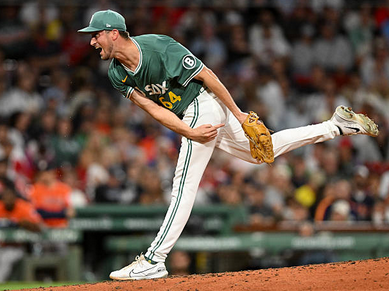
It’s not high-profile when a player gets dealt for a lump sum of cash, but there’s a reason teams make these sorts of deals. For the Mariners, Criswell is the latest in a series of generally minor moves to fill out organizational depth - and maybe just find a breakout arm or two.
There is good reason why “relievers are fickle” is repeated like a mantra across the baseball world. Aside from the very best of bullpen arms, relievers are prone to having quite dramatic swings in production year-over-year. Teams look for underlying abilities in the great mound of subpar relief pitchers, diamonds in the rough aplenty for the taking if an organization has the tools to refine them.
[caption id="" align="alignnone" width="1465"]
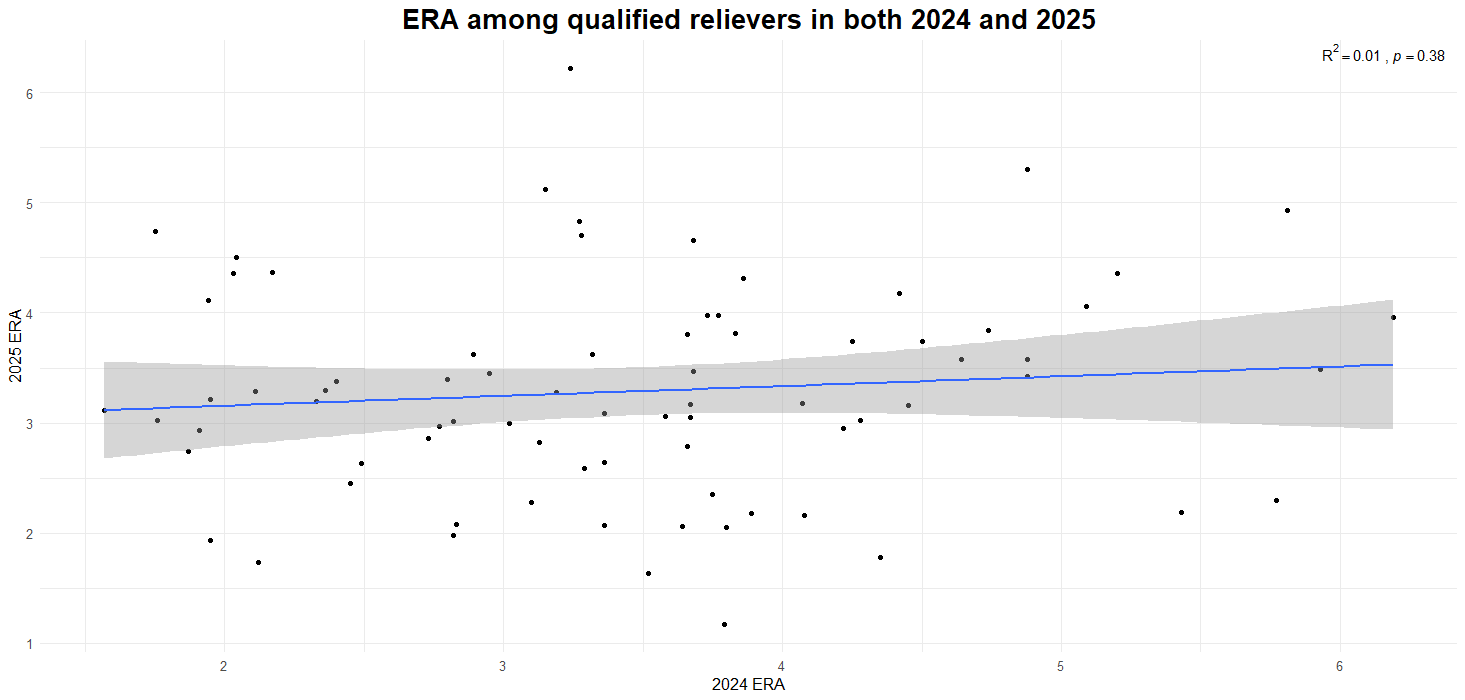
Even among those who pitched enough to qualify in both 2024 and 2025, there was basically no correlation in ERA over those two years. [/caption]
Still, some reclamation projects are more promising than others. Eduard Bazardo, for instance, had a sky-high FIP (fielding independent pitching, generally considered a more predictive measure than ERA) over 12 appearances in 2022, but his ERA and WHIP were both low - and behold, though his ERA jumped in the next two years, his FIP decreased, and he ended up putting it all together in 2025 with an excellent year for Seattle.
Cooper Criswell is less promising than Bazardo was (there is a reason the Mets sent him over for cash), with a career 4.48 ERA, 4.46 FIP, and 1.435 WHIP. But there’s a reason for Seattle’s interest. As I’ve noted before this off-season, the Mariners are looking towards ground ball rate as a lodestone for newcoming arms, and Criswell has consistenly put up solid ground ball rates despite rarely seeing consistent playing time. In fact, his ground ball rate has increased in each of his past two seasons as his line drive rate has decreased, both good things for the defenses behind him even as he suffered a .311 opposing batting average and gave up 11.7 hits per nine innings over his 17 ⅔ innings in 2025.
Criswell’s last season with consistent appearances was 2024, where he pitched 99 ⅓ innings with a 4.08 ERA, 4.15 FIP, and 1.349 WHIP. He walked less batters than average and gave up somewhat weaker contact than average, but not exceptionally so in either category.
The good news about Criswell is that he is unusual off the mound. He is a sidearm pitcher (with a nine degree arm angle in 2025) and a four-pitch arsenal consisting of a cutter, sinker, sweeper, and changeup, but I do expect this to be tweaked in Seattle.
His cutter’s 4.8 degree vertical approach angle (VAA) was well flatter than the 6.1 degree average for cutters and in fact flatter than 96% of cutters thrown 75 or more times in 2025. While this does mean that it differentiates itself from a lot of the other pitches in his arsenal, it also generates less grounders (29% ground ball rate over his career) than the rest of his pitches (52.2% over his career). On the balance, I’d suggest keeping this pitch in the mix (as even though it tends not to generate ground balls, it still gets weak contact and has the lowest expected opposing production of any of his pitches over the past three years), but given that the Mariners tend to mold their relievers into sinker/slider types, I’d expect him to throw this less in 2026.
Seattle would do well to remember, however, that Criswell’s biggest grounder-grabber isn’t actually his sinker (51.3% career grounder rate) as you would normally expect, but his changeup (68.9% career grounder rate). Over his career, it has only been around four miles an hour slower than his sinker and a couple miles an hour slower than his cutter - and so doesn’t get much swing and miss - but it drops several inches more than most changeups in the game, producing that ground ball profile.
The sinker itself has a career average velocity of 88.9 miles per hour and 89.4 miles an hour in 2025, definitely not much to write home about. However, his well above average extension shows that there is good potential for velocity improvement, and while that won’t bring him anywhere near league average, it could help get more whiffs all his pitches by differentiating them more from his sinker. It already drops quite a bit due to Criswell’s unique arm angle, helping its grounder rate in a similar way to his changeup.
Perhaps the most normal pitch in Criswell’s arsenal is his sweeper, which does similar things to other sweepers around the league and even has a decent strikeout rate during his career, though it is quite a bit slower than the average sweeper.
Criswell doesn’t issue many walks, another solid part of his profile, but even when he gets plenty of chase, he simply struggles to generate the swing and miss to make it likely that he’ll improve to a true top-line reliever. However, there is definitely something there for an unexpected surge in Seattle’s bullpen, so Criswell is someone to keep an eye on - especially if he speeds up the sinker to somewhere in the 90-91 mile an hour range.
The lack of velocity, however, does give Criswell a longevity that allows him to pitch in long relief or make a start here and there if injury trouble piles up. This flexibility in depth is good to have, although the team might want to have a more sure arm in that role. After all, while there are many reclamation projects that have gone well for Seattle’s pitching lab, there are plenty others the team simply couldn’t fix.
I’ve already written about Yosver Zulueta here, but there are several more offseason arm acquisitions to look at.
Robinson Ortiz, potential lefty specialist?
Ortiz hasn’t pitched an inning of major league ball, spending almost a decade in the Dodgers’ organization as he enters his age-26 season in 2026. But in 2025, Ortiz finally reached Triple-A, pitching quite well there to a 2.76 ERA, 4.70 FIP, and 1.224 WHIP. He had solid whiff on his four-seamer, sinker, and slurve-like slider, with the latter pitch having special effectiveness against left-handed batters (their .400 OPS against his slider amounted to an OPS+ of -3 in the Pacific Coast League, where 100 is league average).
There’s more than the makings of a varsity athlete here; in fact, this bodes well for a future as a lefty specialist in a Mariners organization that doesn’t have a whole lot of them. Seattle works well with heater/slider guys like Ortiz, and so we could see an improvement in control that leads to more strikeouts and less walks. Seattle isn’t banking on Ortiz to develop, more than happy to use him as organizational depth if there isn’t any improvement.
Unlike Criswell or Jose A. Ferrer, however, Ortiz doesn’t tend to get many ground balls, perhaps limiting him in the eyes of Mariners brass.
Alex Hoppe can spin some flames and is liked by stuff models.
Hopping over to an earlier offseason acquisition, right-hander Alex Hoppe is also someone that has some notable potential. Bringing in his pitches from a high arm angle (averaging 52.3 degrees in Triple-A in 2025), his four-seamer averaged 98.1 miles per hour last year, a level of velocity that will make a whole lot of teams be willing to wait out any lingering issues. The 27-year-old had a 4.76 ERA, 3.83 FIP, and 1.516 WHIP over his 61 ⅓ innings in Triple-A Worcester - not terrible stats in the Triple-A International League, but not great either - and had quite solid whiff, chase, and strikeout rates.
Hitters were still able to hit Hoppe’s slider hard more than half the time and his four-seamer almost as much, but there was a whole lot of contact that wasn’t made as his 31.3% overall whiff rate was fairly well spread between his different pitches. Although he didn’t throw his changeup that much, that was the pitch that generated the most swing and miss, though his slider and cutter weren’t too far behind. Prospect Savant’s Stuff+, metrics where 100 is average, had his fastball and changeup and 106, his cutter at 103, and his slider at 100.
And when it comes to grounders, Hoppe more than did the trick, with a 57.4% ground ball rate in Triple-A last year. The team clearly sees potential in Hoppe because of these things, but whether he will pan out is a story yet unwritten.
Dane Dunning and Ryan Loutos appear to be more geared towards organizational depth at the moment.
The 31-year-old Dane Dunning is much less of this kind of breakout pick. Over six years in the bigs, Dunning has a career 4.44 ERA, 4.41 FIP, and 1.370 WHIP, but that has been trending in the wrong direction as of late (with a 5.60 ERA, 5.15 FIP, and 1.452 WHIP in the past two years), and doesn’t appear to have a particular standout trait that Seattle could build a profile around. He does have decent control, but he doesn’t strike many batters out, suffers some hard contact, and once-strong ground ball rates have declined over the years. Hence, likely, why he was only signed to a minor league deal.
Ryan Loutos, who the M’s picked up on waivers from the Nats, has only appeared in 14 ⅓ innings, but like Dunning, there isn’t a standout feature that screams potential in his profile. During his time in Triple-A, he has been fairly solid but otherwise unremarkable at just about everything, and he could very well end up being a Four-A player. Granted, if Loutos is able to make small but definite improvements in stuff quality and control, he could become something of a dark horse.