M’s Fall Back to Fallen Bats, Offense Goes Limp in 4-1 Loss to Padres

[caption id="" align="alignnone" width="3308"]
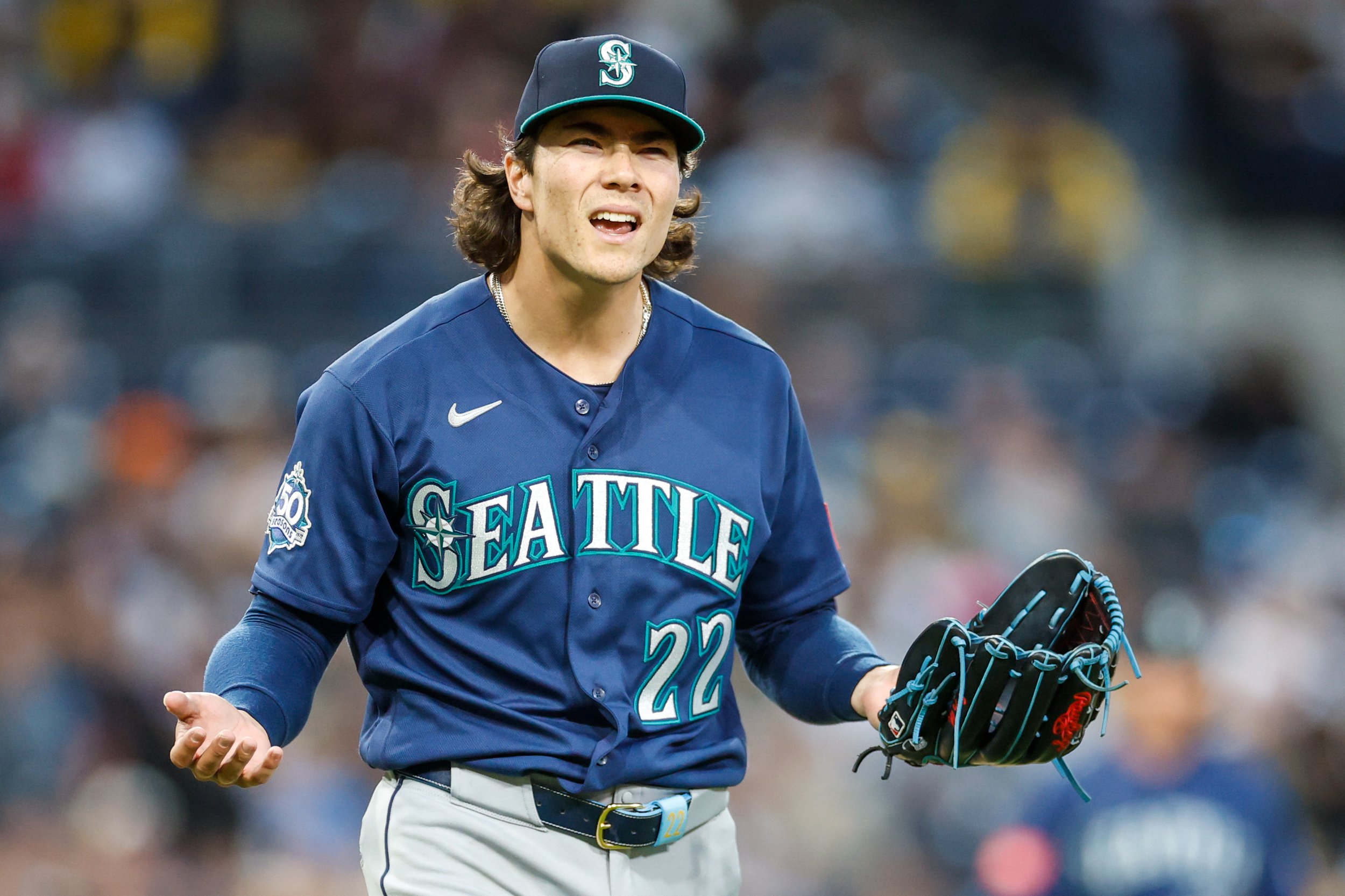
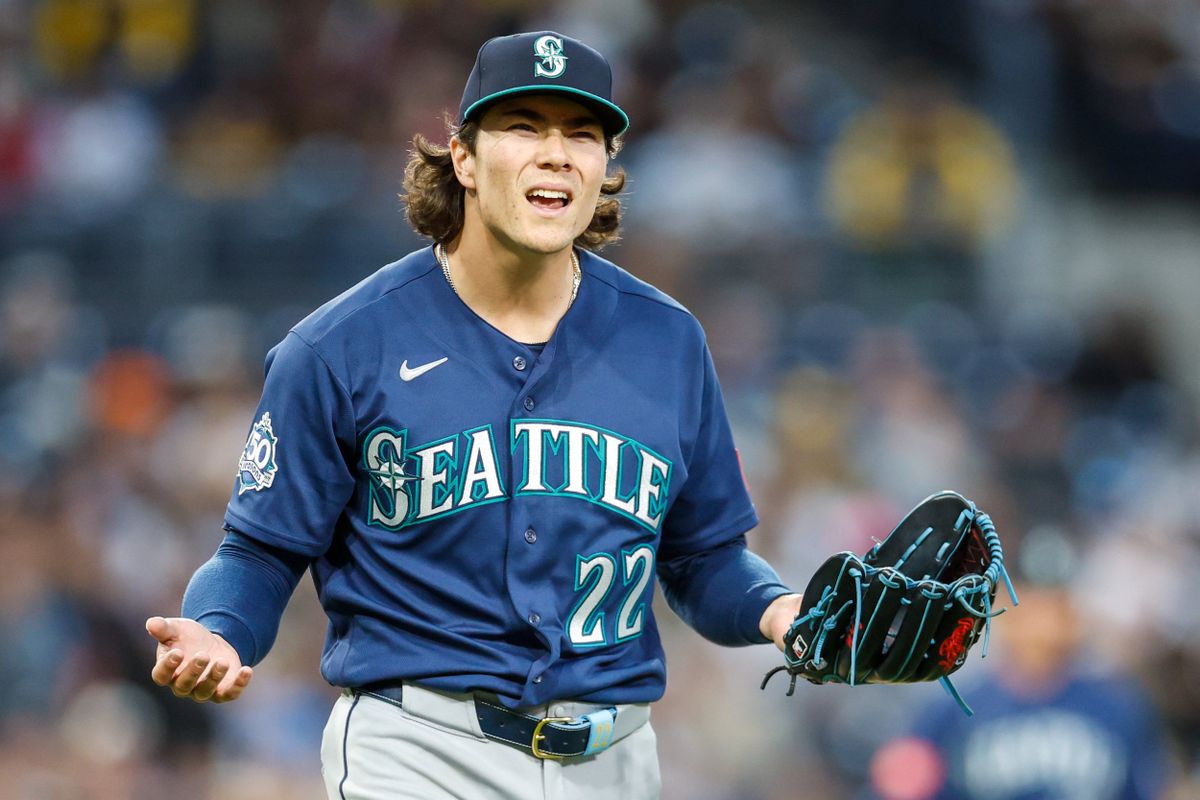
Seattle Mariners starting pitcher Bryan Woo (22) reacts after being called with a balk during the second inning against the San Diego Padres at Petco Park. Mandatory Credit: David Frerker-Imagn Images [/caption]
Seattle took full advantage of a get-right series in the standings, at least, but when it came to resetting the hitters, the lessons evidently didn’t stick. The lone run of the Mariners’ 4-1 loss to the Padres on Tuesday was a bases-loaded sacrifice fly, with no other sources of production. Bryan Woo got handed his second loss of the season thanks to the resurgent incapability of his hitters and a little bit of poor defense to boot.
It’s beginning to seem like this is what the 2026 Mariners offense really is.
The Mariners offense took a big step back against healthy MLB pitching, failing to capitalize on some early opportunities.
On Friday, the Mariners had begun a series of cold versus cold, taking on a skidding Astros club and spitting out their rivals with a four-game sweep. From near-disaster to near-.500 was one thing, but Tuesday’s game presented a contest of hot versus hot. The Padres entered the series coming off a four-game sweep of the Colorado Rockies and with a five game winning streak, though the Dodgers’ hot start meant that the Dads were further behind first in the NL West (two games) than the M’s were in the AL West (one and a half games).
But against Petco Park’s perennial playoff contenders rather than a banged-up (in the understatement of the century) Astros hurling staff, the M’s had to deal with good starters and elite relievers.
Things didn’t look promising in the first inning, as Cal Raleigh was overeager for a full count backdoor slider from Padres starter Michael King and Julio Rodríguez chased a 1-2 sweeper below the plate to end the frame.
The M’s crafted something together in the second. Randy Arozarena grounded a one-out infield base hit and Luke Raley, taking advantage of a drawn-back Manny Machado at third, dropped a bunt single to the left side. J.P. Crawford got a free pass as King nicked him with a full count sinker, but now it was crunch time for Dominic Canzone.
Despite going down 0-2, the M’s designated hitter managed to get one in play, knocking home Arozarena and getting Raley to third.
Against Cole Young, King’s assignment was simple: throw changeups. Young came into the game with a 38.5% whiff rate, .071 batting average, and .204 OPS against the change, much worse than his work against most other pitch types. Still, some early misses dug King into a hole and the count grew full.
King made probably his best pitch of the game at that point, running a sinker onto the inner edge of the plate to catch the zone by an inch. Young should have at least fouled it off (or even tried to turn on it), but he took the pitch for strike three. Challenging in the first-and-third, two out, full count situation had so much potential fruit that he only needed to expect a one-fifth chance of succeeding in order for challenging to be the correct move - and Young did so - but the pitch caught plenty of zone.
Seattle put together a decent chance in the third, as Brendan Donovan got hit by a pitch, Rodríguez saw a 3-2 pitch in the dirt, and Naylor dropped a single into right to send Rodríguez to third and … he was the only runner on, since he swung at the junk sweeper and sent a weak grounder that became a force at second. Arozarena, otherwise with a solid 2-4 night, struck out to end the inning.
Bryan Woo gritted out seven innings thanks to a set of mid-game adjustments, but the Padres tagged him for a trio of runs in the third.
Mariners starter Bryan Woo didn’t look amazing right out of the gate, dipping his toes into some sinkers to try get quick outs due to his four-seam fastball seeming to have a little something off with it. The physical characteristics of the pitch weren’t meaningfully different from what they usually are, so it was probably more of a feel thing.
Unlike the Mariners, who seemed to leave quite a bit of their fleeting newfound offense in the hotel, the Padres had a solid beat on Woo’s process from the first inning, only kept off the board by some bad luck. Where plenty of Seattle hitters (especially in the middle of the lineup, but much of the order was trying to over-pull pitches quite a bit towards the outer half) had returned to over-aggressiveness against the ball-happy King, San Diego’s bats found it quite trivial to lay off even close sweepers and fastballs a couple inches above the plate, effectively neutralizing both of Woo’s best options.
A bit of notable action came in the second, as the Dads got a man halfway home on a balk. Josh Naylor moved a bit inwards with Xander Bogaerts on first, and Woo fired over. Apparently, Naylor was too far off the bag for a pickoff to be attempted, and Bogaerts got second base. Woo walked over to first in confusion (and M’s manager Dan Wilson trotted onto the field for a brief moment as well), but ultimately Woo chalked it up to being one of those things and went back to pitching.
“I understand what he [first base umpire Bill Miller] was trying to say,” Woo said. “I didn’t really think the parameters in which he said (Naylor) was too far off the bag for when I picked over … I understand the rule, but I just didn’t think he was far enough off for it to equate to that.”
San Diego found a groove in the third, helped out by some bad Mariners defense. Ramón Laureano sent a fly ball to right field, definitely catchable for Luke Raley, but he second-guessed himself as he went for the wall and was in the exact worst location to respond to the carom. Laureano ended up at third base. Tatis cracked one through the drawn-in infield to tie the game, Merrill expertly hunted the fastball to produce a hit, and after Merrill advanced to second against a (clearly somewhat tilted) Woo who wasn’t paying attention, it was Bogaerts’ turn to get the better of the Mariners hurler, this time with two outs.
Woo kept stuff low in the zone against Bogaerts, who laid off an excellent 2-2 sweeper just an inch away from the plate. Woo attempted the same thing on the next pitch, but with no eye level change and an early release point, Bogaerts was on the pitch from the get-go. He drilled it into center field to easily score the two runners, putting San Diego ahead 3-1.
A lot of this clear beat had to do with sequencing. Early in the game, Woo threw fastballs high about when the batter would expect and sweepers low about when the batter would expect, with sinkers going right over the middle of the plate as a sort of “hope for bad contact” tertiary plan.
Going into the fourth inning, however, Woo began mixing it up. He started putting some sweepers up in the zone and changing the sequencing significantly, but the real sneaky weapon he introduced was the sinker two inches inside to a right-hander, about belt-high. The pitch’s extensive run would fool some Padres into thinking it was a strike and get plenty of weak jammed contact - with these adjustments in tow, Woo went through seven full innings without giving up another run.
Seattle’s offense went from sleepy to lifeless on their first day in San Diego.
With the way the M’s were hitting, though, it was over the moment they lost the lead. It seems the Astros series was a mirage against what was for all intents and purposes a Triple-A rotation (and that’s being generous to the absolute state Astros pitching is in); once against a team with even barely enough arms to fill a Little League bullpen, the M’s went right back to looking just as lost as they had against Texas, against the Angels before them, and against the Yankees before them.
Seattle didn’t manage to get a batter to second for the rest of the game. Now, three of those innings were against the human bulldozers of Adrian Morejón, Jason Adam, and Mason Miller, but a very pedestrian outing the rest of the way from the starter King went completely unpunished as the M’s chased changeups well off the plate and went between total passivity and undiscerning aggression.
It depended on the player: Josh Naylor, for example, was trying to pull everything and rolling over grounder after grounder to the right side. Cole Young was going after junk on the edges and continuing to rattle off weak batted balls (so much for a Spring Training jump in hard hits, though he only really needs to get his hard hit rate to around league average to start becoming a real pull-air merchant), a lot of it stemming from a real reluctance to attack early strikes over the heart of the plate. It’s clear what he can do when he puts his A-swing on a pitch, he just needs to deploy it more effectively.
Raleigh, by this point, is the most worrying. Even though Rodríguez didn’t get a hit and took a run off the board with his missed walk in the third, he still took two free passes later in the game, but Raleigh’s .492 OPS through 18 games matches a level of slumping he last reached in late May 2024.
The way the game unfolded had shades of Kirby’s complete game in Arlington, down to the production coming on one three-run inning where the action got started by some bad M’s defense and the team’s inability to respond to even a mild deficit. Casey Legumina came on for the eighth - Woo did not go a complete eight, on 92 pitches to end the seventh - and the Dads worked another run out of it, but the presence of Miller likely made Wilson go for the low-leverage guy and try to save his arms for the next game.
Mariners middle infielders showed limitations, despite Cole Young’s strong range.
Defensive Runs Saved (DRS) is quite high on Young, with three above average already and a defensive wins above replacement (dWAR) pace of somewhere in the 3.5-4 range, at least using Baseball-Reference’s version of WAR, which taps DRS for its defensive element.
That might go down a bit after Tuesday night, as the Mariners second baseman showed his big defensive limitation: the arm. Although Young has incredible range, his fourth percentile arm strength means that he doesn’t have a lot of time to throw runners out. As a second baseman, this doesn’t come into effect much when there aren’t runners on, but the Padres had two would-be double plays in the game end up being pure force outs at second (fifth and eighth innings) because Young’s throw to Crawford was too slow for the double-up to get turned.
DRS actually accounts for this because it considers situation and run expectancy, whereas StatCast’s Outs Above Average (OAA) does not. Interestingly, OAA is less astronomically high on Young, but part of this can be chalked up to early-season weirdness.
A rather humorous, though still impressive even if all for naught, 6-4-3 infield hit in the bottom of the fifth inning showed the limitations of Young and his fellow middle infielder Crawford. Laureano chopped a ball up the middle, in range for the average shortstop but where Crawford had to dive, and Crawford gave an excellent shovel pass to Young so the ball could get to first more effectively. But Young’s throw was, again, too slow, and Laureano reached first.
On Deck
The Vedder Cup continues with two more contests on Wednesday and Thursday, as Germán Márquez takes the hill for the Padres in the middle game and Walker Buehler in the matinee. Against them will be Emerson Hancock and Luis Castillo for the M’s.
Márquez provides Seattle with the best opportunity to put up some runs, with a 5.54 ERA this year and a 6.70 ERA in 2025 (albeit with the Rockies then), while Buehler will likely be the best of the three.