Analysis: Why Cole Young’s Spring Training Improvements Will Continue in 2026 Mariners Season

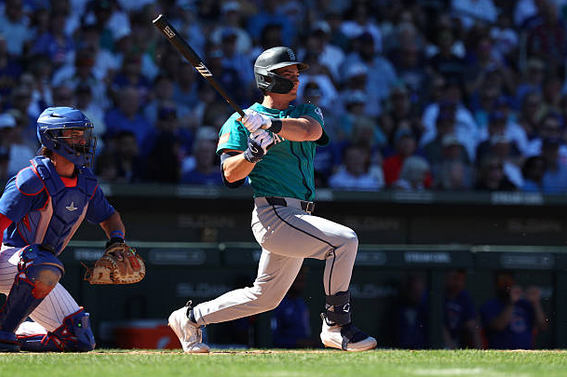
Cole Young had the second-lowest hard hit rate on the Mariners last year at 31.1%, about 10th percentile among major leaguers. He also hit the longest home run of any Mariner.
Well, not counting Cal Raleigh’s absolute tanks in the Home Run Derby. But even as the Mariner catcher hit 60 bombs in 2025, he never cracked 450 feet on any of them; his longest shot went 448 feet. Young, meanwhile, took poor Rangers starter Kumar Rocker 456 feet with a line drive to the second deck on the last day of July. It was one of just four home runs during Young’s rookie campaign, but it gave some indication that Seattle’s biggest prospect graduation of the year might have some serious pop in the tank.
But with 12 extra-base hits in 257 plate appearances, Young didn’t give much of an indication that he could do such things consistently. Indeed, while that exact nuke left the bat at 114.1 miles an hour - a maximum exit velocity in the 83rd percentile - Young hit so many weak grounders and lazy fly balls that the rest of his batted ball profile was markedly unimpressive.
Hitting six home runs in 63 plate appearances, however, is very impressive. That’s what Young did in Spring Training this year - but does that mean anything come Opening Day?
The Mariners second baseman has shown a fair bit more consistency in Spring Training when it comes to whacking the ball with gusto. The sample size is obviously smaller, but his hard hit rate - percentage of batted balls that left the bat at 95 miles an hour or more, with that cutoff chosen because that’s (roughly) the point where increases in exit velocity start to produce more and more hits [1] - has jumped from 34.4% in 2025 to 55.8% during 2026 Spring Training, per TJStats.
Other underlying metrics have improved quite a bit in the Cactus League. The average exit velocity of the hardest half of his batted balls (EV50 or Best Speed) went from 97.9 miles an hour to 103.4 miles an hour while the exit velocity of his 90th percentile hardest batted ball (EV90) was 102.7 miles per hour in 2025 but 106.7 miles an hour.
EV50 and EV90 tend to be more predictive than a pure average of exit velocities, where Young’s improvement has been the best, going from 86.7 miles an hour off the bat on average last year to 95.8 miles an hour during Spring Training. But even in my self-anointed “big three” of hard contact stats [2], Young has gone from quite a bit below the big-league average last year to quite a bit above it in Spring.
Okay, that’s probably enough ways to say Young is hitting the ball harder, but I’ll provide a thousand more words with this chart:
[caption id="" align="alignnone" width="2000"]
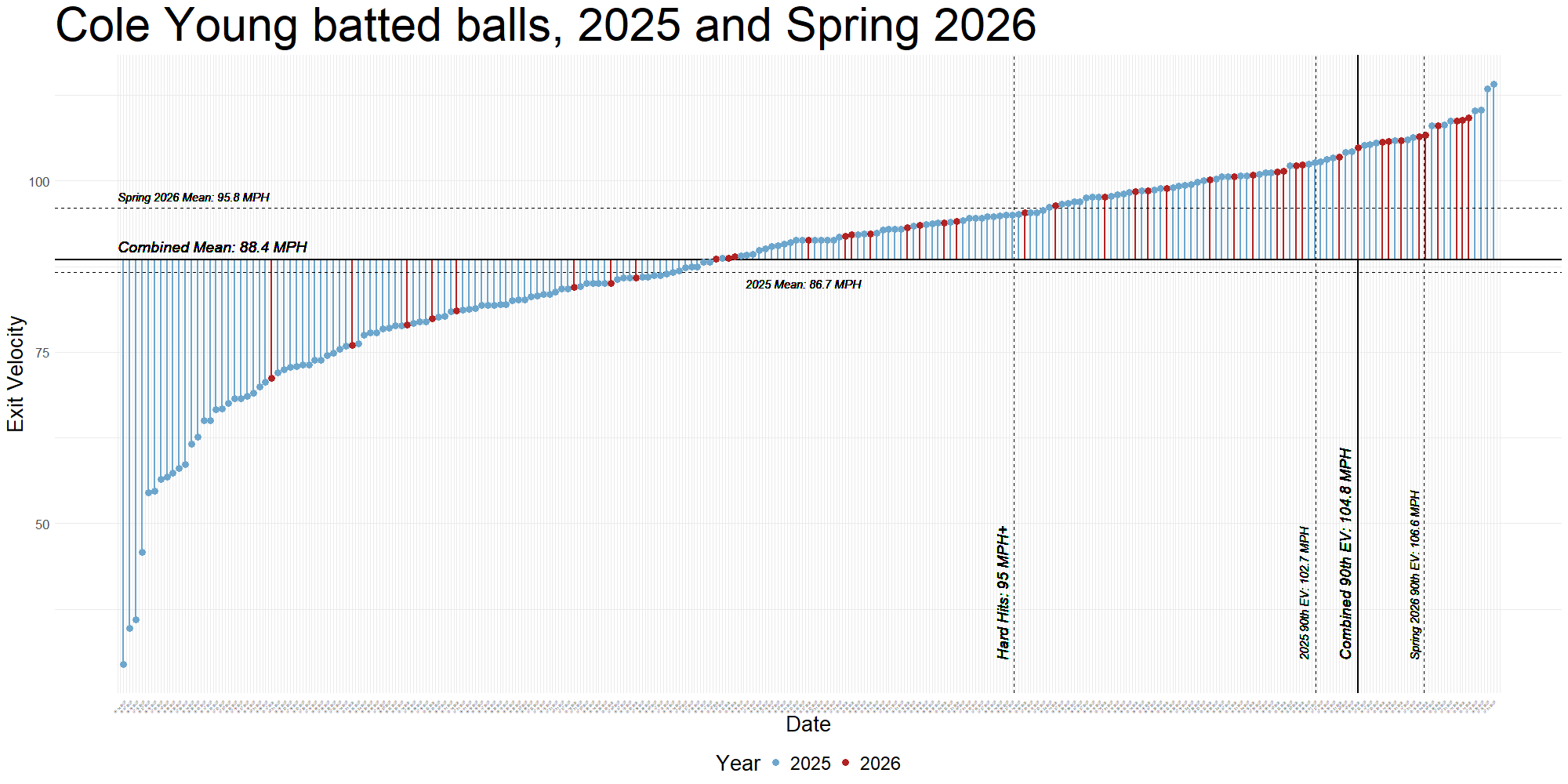
Cole Young has been hitting the ball hard more consistently in Spring Training 2026 than he did in the 2025 regular season. Data sourced from Baseball Savant and compiled using RStudio. [/caption]
There are quite a bit more blue 2025 lollipops than red 2026 lollipops overall, but when you look at the top half of the graph, there’s a noticeable clustering of those red Cactus League lollipops. We already knew Young could hit some shots some of the time, but now he’s hitting them a lot of the time.
Hitting the ball hard isn’t everything; just ask Oneil Cruz. There are certain combinations of hit direction and hit type that are better than others, especially for a lefty bat like Young. Popups anywhere are the worst, pulled and center-cut grounders are pretty bad, opposite field grounders are pretty solid, line drives anywhere are great, and pulled fly balls and liners are the best.
When it comes to the vaunted pull-air rate (so valued because pulled balls in the air have had a .555 average and 1.780 OPS since 2008, and that’s including useless popups), Young was already fairly solid at 17.8% [3], 75th percentile among batters with 200 plate appearances or more. His pull-air rate marginally increased to 18.6%, though that’s more in the bucket of continuation than change.
Given that Young’s pulled fly balls and liners didn’t actually help him comparatively much in 2025, with a similar pull-air OPS to his overall line drive OPS, you might expect that this doesn’t mean as much. And while it’s true that for guys already in the upper echelons of hard hit balls, increases in pull-air rate tend to be less impactful, that does not mean that a guy who already pulls the ball in the air won’t benefit as much from harder hits. In fact, increases in hard hit rate for pulled balls in the air has a much greater impact on production than increases in hard hit rate for line drives [4].
That’s good news for Cole Young, who is set to smack a lot more homers and doubles to right if he continues his hard-hitting pace. But what is behind his harder hitting to begin with?
Here is where we leave the advanced numbers behind and go into tried-and-true baseball wisdom. It’s his mechanics.
Specifically, it’s the difference between his leg kick and toe tap, and the timing of that pre-swing movement between 2025 and 2026. During his strong July and early August last year, Young sported a notable leg kick and would often go into the leg kick fairly soon in the pitcher’s delivery. You can go back up and look at his monster bomb off Rocker, or this ground rule double off Jacob Latz, or these three swings to provide more examples.
But as August rolled on, Young began to lower the height of his leg kick and go into it a hair later than he usually would. Here’s a late August flyout with a slightly lower leg kick, for example. By September, it had become a toe tap that he went into as the ball left the pitcher’s hand as opposed to a leg kick that he initiated during the windup, as you can see in this early September flyout that also showcases T-Mobile Park’s nice double-killing small gaps. Seattle’s Sept. 1 loss to the Rays contained a particularly bad example that produced an inning-ending groundout, where his toe tap starts very notably late and he has to make an emergency hack.
When you take a look at Young’s two homers against the Guardians on March 20, you’ll see he’s back to his leg kick, and Young is going into that leg kick fairly early on. This allows him more time to make a decision and a good swing, and these easy mechanics are something that should follow him into the regular season.
Of course, swing mechanics are an art as much as they are a science, with each hitter’s own feel mattering a lot for what makes a good swing. A lot of hitters do benefit from toe taps, but since Young doesn’t seem to be one of them, it’s good to see him back to the leg kick.
The advanced stats may be more predictive than the basic ones when it comes to Spring Training, but Young’s improvement has very much shown up in those top-line results. Instead of his .211/.302/.305 slash line during last year’s regular season, Young ripped out a .281/.349/.667 slash line in Cactus League play this year. He’ll be back to facing the best in the world come Opening Day, but that’s as good a sign as any that he’ll be up to the task.
[1] Although that graph actually shows a sustained increase in production between around 87 miles an hour and 107 miles an hour, and Davy Andrews’ analysis for FanGraphs showed that hard-hit rate is most predictive when the cutoff is set for between 98-104 miles an hour.
[2] Hard-hit rate, EV50/Best Speed, and EV90 - although perhaps hard-hit rate is the Chris Bosh of these stats since the industry standard cutoff was seemingly set around 5-10 miles an hour too slow.
[3] Not including pop-ups.
[4] For batters with more than 50 pulled fly balls in 2025, the r-squared value between pull-air hard hit rate and pull-air weighted on base average (wOBA - you may think of it as a slightly better OPS) was 0.518, meaning that pull-air hard hit rate accounted for a little over half of pull-air wOBA. That same value between line drive hard hit rate and line drive wOBA was 0.185, meaning that line drive hard hit rate accounted for 18.5% of line drive wOBA.