Three Mariners Prospect Pitchers to Watch in Spring Training

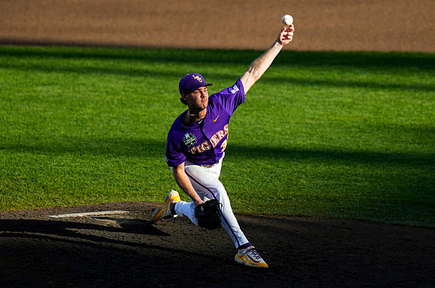
Pitchers and catchers report to Peoria Sports Complex on February 12, 2026, a date that is fast approaching as the offseason comes to its waning hours. The Seattle Mariners are likely all but complete when it comes to the major league roster, but quite a few non-roster invitees to spring training are looking to prove themselves on the mound for a chance to expedite their minor league journeys, or in some cases, punch their ticket to the Show for 2026.
The Mariners’ farm system has a good share of high-end prospects and a fair amount of outside threats, but not a lot of stuff in the middle. This is especially true of the pitchers, where there are two titanic names on Baseball America’s top 100 [1] in Kade Anderson and Ryan Sloan and a heap of names with much less fanfare.
But given Seattle’s slightly uncertain starting pitching depth and its penchant for developing relievers out of nothing, there just might be a future for plenty of the guys that don’t yet make the big lists. And there’s always a chance one of them makes a name for himself by putting up a monster Spring Training.
I must make you wait a bit on the sleeper prospects, however. This is the second in a series of four articles covering prospects to watch in Peoria, the first of which can be found here, and this one covers some of the more discussed names.
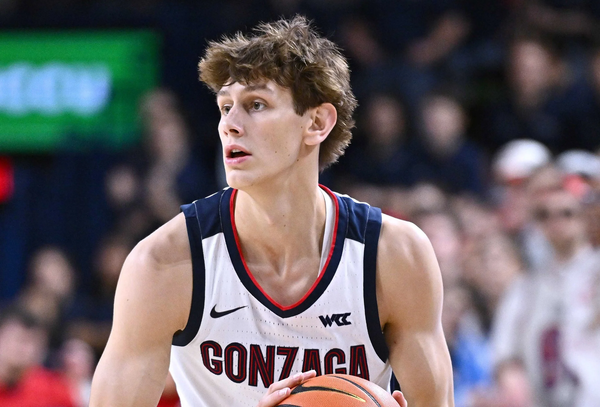
1. LHP Kade Anderson, 21 years old, yet to make his pro debut.
[caption id="" align="alignnone" width="1465"]
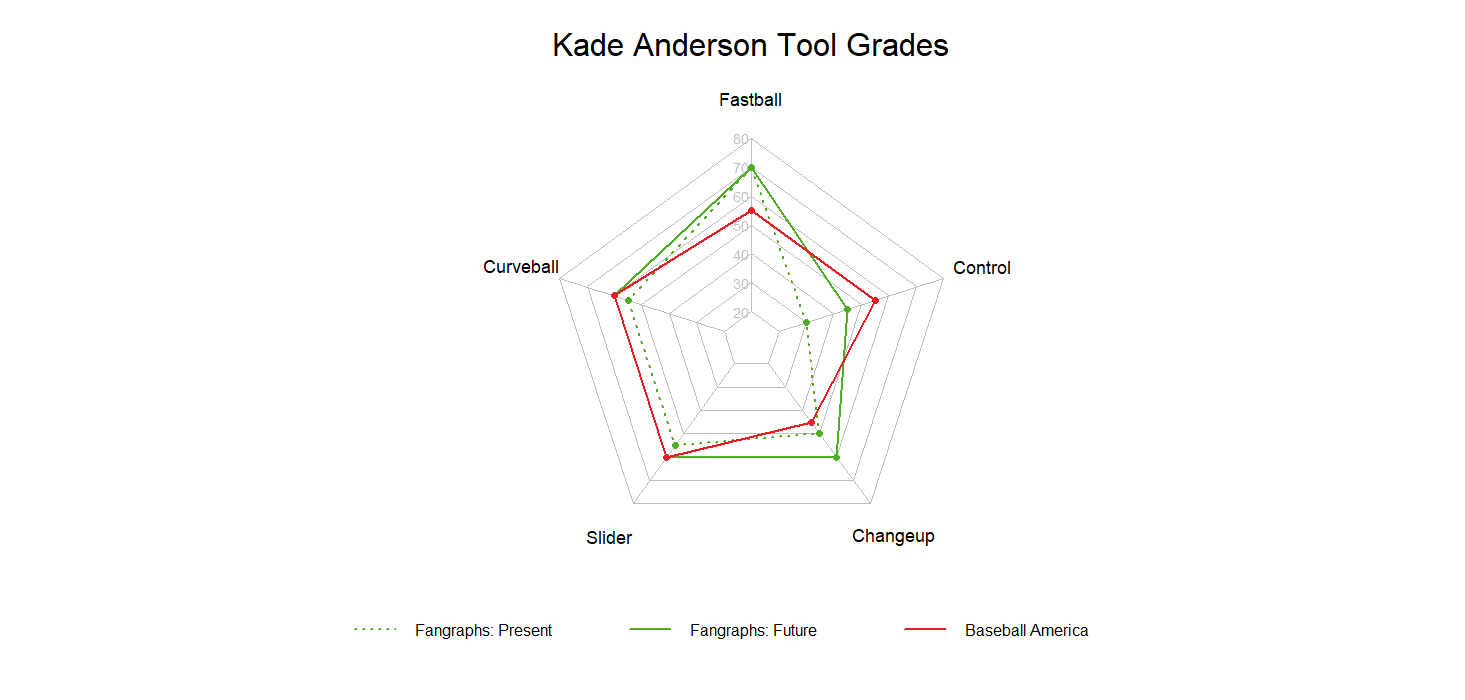
Kade Anderson has a FanGraphs “future value” of 50 and a Baseball America “adjusted grade” of 50 based on a 60 potential grade with average risk. [/caption]
The top pitching prospect in the Mariners organization - and one that surprisingly fell to third overall and into the waiting arms of Seattle’s farm - hasn’t yet thrown an inning of pro ball, having pitched 119 innings in NCAA in 2025 before being drafted and then shut down for the year so he could add general strength and weight.
During his 119 innings with Louisiana State in 2025, Anderson had a 3.18 ERA, 3.75 FIP, 1.059 WHIP, and 5.14 strikeout-to-walk ratio. His strikeout rate jumped from 33.9% to 37.4% between years at LSU, but a big drop in walk rate from 11.5% to 7.3% turned him from a great pitcher to an arm at the peak of his draft class.
Anderson’s fastball sat in the low- to mid-90s while topping out around 97 miles per hour in 2025, so keeping track of upticks on the radar gun might give a sense of where his strength is compared to last year. FanGraphs is extremely high on Anderson’s fastball because of its rising, gravity-defying action that led to it missing bats at quite a high clip, while Baseball America is less gung-ho on that front. Baseball America and FanGraphs have a similar split in grading his changeup, where FanGraphs lauds its late action.
But both FanGraphs and Baseball America are in agreement that Anderson’s breaking pitches - his curveball and slider - are quite strong, with 60-grade [2] potential each. He used them to great effect in 2025 as his out pitches, able to find the zone with his slider quite often, and they’ll probably be with him all the way to the majors. His curve might be an area where Seattle’s development crew should take a laissez-faire approach, as the system doesn’t have a strong track record with that pitch in recent years.
It should be noted that although FanGraphs rates his command quite a bit lower than Baseball America’s control grade, they are slightly different categorical grades: control refers to strikes and balls, command refers to pinpoint accuracy and quality strikes. Anderson is more of a strike-thrower than a horseshoes champion, control-over-command in baseball lingo.
While there are the clear beginnings of a high-end starter, some of the expectations placed upon Anderson are a little excessive: talk of him going to the big league squad by the end of the year is probably pushing it, given he didn’t throw a single inning in the minors last year and has a Tommy John history.
That said, his Spring Training performance might be the difference between beginning the 2026 season in Low-A Modesto, High-A Everett, or Double-A Arkansas. Keep track of his fastball velocity, his in-zone command, his curveball usage, and whether his changeup has the action to remain a key part of his arsenal.
2. RHP Ryan Sloan, 20 years old, High-A.
[caption id="" align="alignnone" width="1465"]
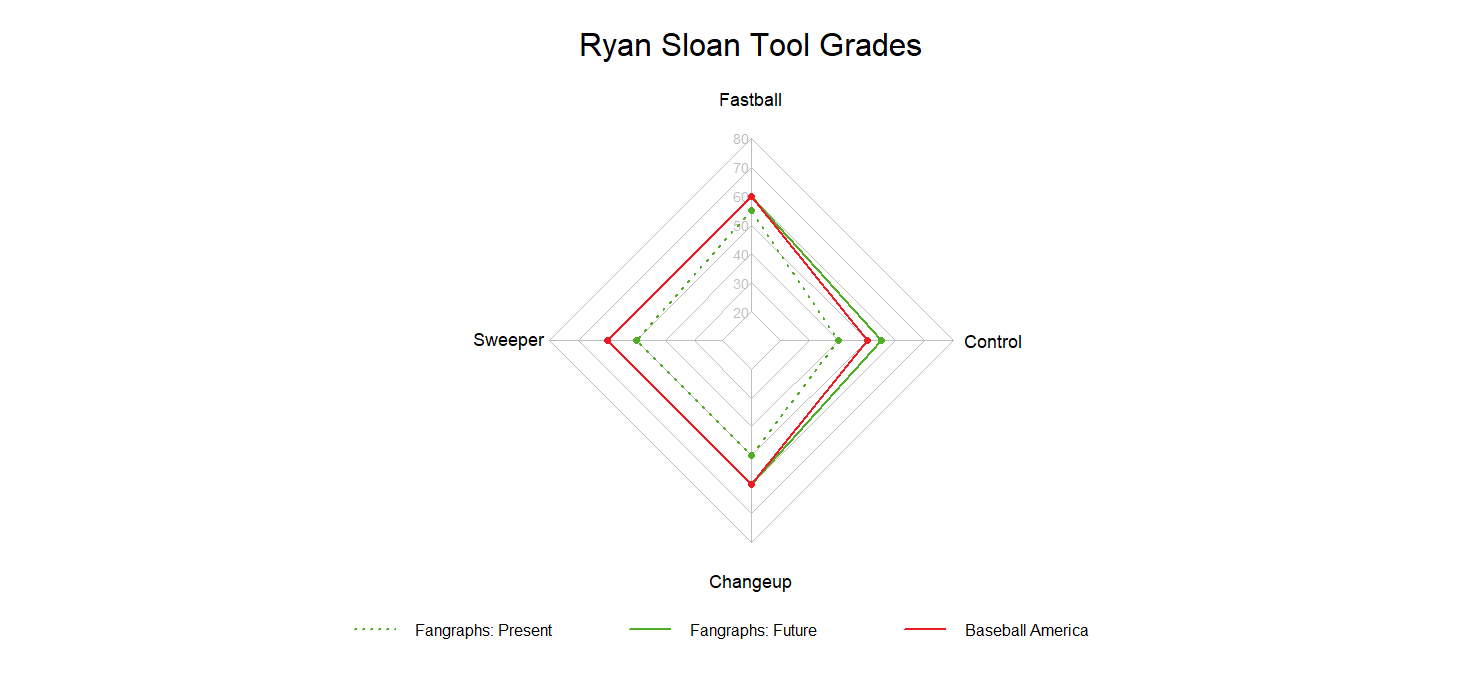
Ryan Sloan has a FanGraphs “future value” of 55 and a Baseball America “adjusted grade” of 45 based on a 60 potential grade with high risk. [/caption]
Ryan Sloan is barely 20 years old, but he’s going to be starting the year in Everett and might end up in Double-A by the end of the season. He has three strong pitches: a mid-90s fastball that reaches 98-99, a breaking ball (variously called a slider and sweeper) with a 45% whiff rate due to its late action, and a hard off-speed pitch (variously called a changeup and splitter, though Sloan himself refers to it as a changeup). He also added a cutter during the 2025 season, which Baseball America gives a 50 grade.
Sloan’s strong control completes his profile, with a 5.3% walk rate for the Low-A Modesto Nuts in 2025. During 18 starts for the Nuts, Sloan hurled 70 ⅔ innings to a 3.44 ERA (122 ERA+[3]), 2.91 FIP (145 FIP+), and 1.146 WHIP while striking out 27.1% of all batters. He got the call-up to High-A and made three starts there, giving up seven earned runs in 11 ⅓ innings before going out for the year with eye surgery.
Sloan locates his stuff in the zone so often that the thing to look out for isn’t walks or balls; it’s too many strikes. Spring Training will offer a glimpse into how his consistent strike-throwing plays against some better ballplayers - and George Kirby can still suffer from starts where he’s in the zone too much. That said, he’s almost certainly going to return to High-A Everett for the beginning of the 2026 season.
3. RHP Michael Morales, 23 years old, Double-A.
[caption id="" align="alignnone" width="1465"]
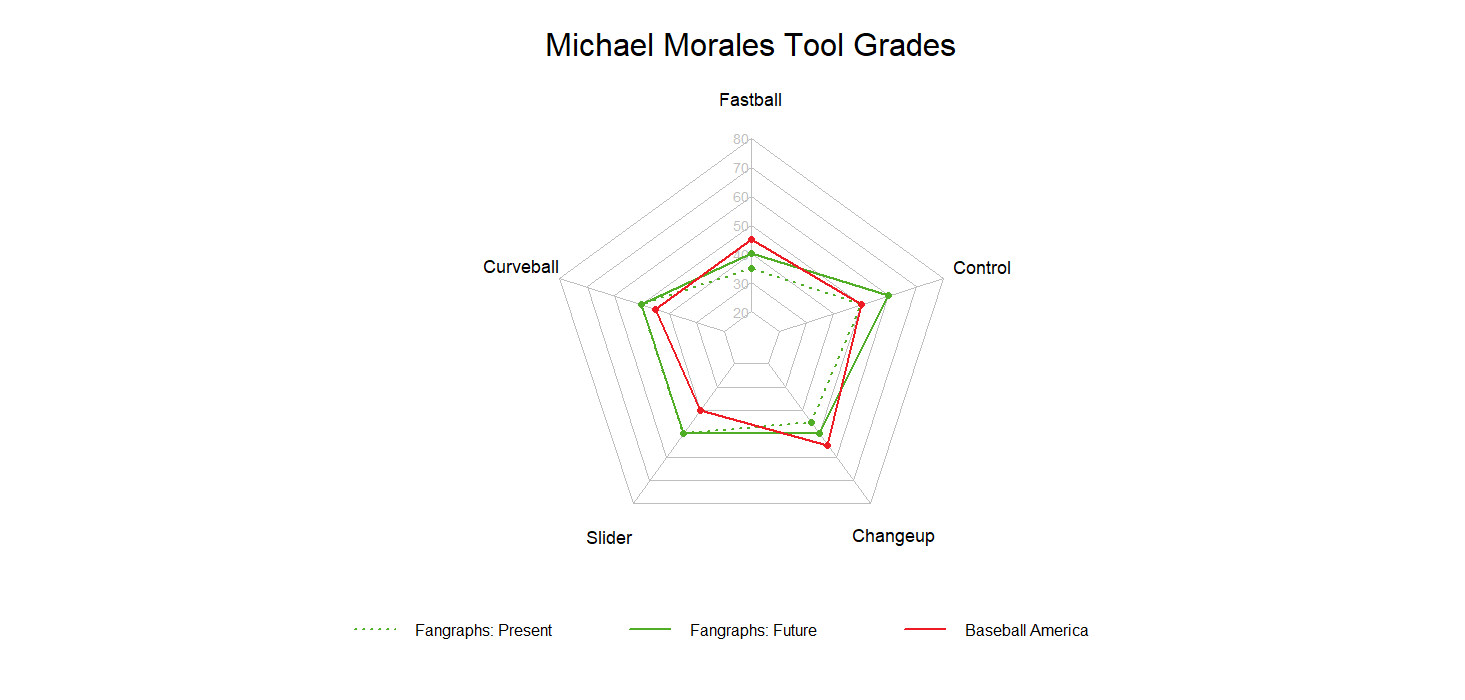
Michael Morales has a FanGraphs “future value” of 35+ and a Baseball America “adjusted grade” of 35 based on a 45 potential grade with average risk. [/caption]
Unlike Anderson and Sloan, Morales doesn’t project as a top-of-the-line starter. But given that he might start the 2026 season in Triple-A and Logan Evans is out for the year, Morales is probably in the running as a sixth or seventh starter in the depth chart - though Emerson Hancock probably has another shot at that role and Cooper Criswell can spot a start or two.
Morales’ biggest weakness is his lack of a definite strength. His fastball sits in the low 90s, and although he has solid control, he has trouble missing bats and isn’t much of a groundballer. While he has a curveball, slider, changeup, and cutter (graded at 45/45 by FanGraphs but not graded by Baseball America), none of them are incontrovertible standouts, though Baseball America rates his changeup above average. All of them are rated as serviceable, however.
Over 22 starts for the Double-A Arkansas Travelers in 2025, Morales had a 4.60 ERA (77 ERA+), 4.01 FIP (89 FIP+), and 1.397 WHIP, a marked decline from a 2024 season that saw him jump from High-A to Double-A with sub-four ERAs in both levels. His walk rate increased from 4.9% for the 2024 Travelers to 8.5% in 2025 while his strikeout rate declined from 25.4% to 16.1%.
Spring Training will be an opportunity to get a sense of Morales’ feel on the mound, the feel that he seemed to lose between 2024 and 2025. If he can have a knack for picking the right pitch for the right moment, he turn his rotation into more than the sum of its parts and set himself up for a season beginning in Tacoma. If he doesn’t, he might be more on the road to being a Logan Evans-type spot starter rather than a true back-of-the-rotation starter, and a rough enough showing in Peoria might result in Evans returning to Double-A to begin 2026.
[1] Both Sloan and Anderson are in the top 60, in fact.
[2] Also referred to as “plus” and can be thought of as roughly 84th percentile among big leaguers.
[3] Modesto’s John Thurman Field is one of the most pitcher-friendly parks in the Low-A California League.