Who Would Seahawks Pick 18th in 2025 NFL Draft If Simulators Made Selection?
Back in the 1970s, 1980s, and 1990s, long before the internet transformed lives, only the most die-hard NFL nerds created mock drafts. Long-time Sports Illustrated writer Paul Zimmerman always methodically assembled one mock per year, calling various sources from different teams with the aim of getting as many picks correct as possible.
Nowadays, however, as the draft has grown into one of the most exciting spectacles in sports, mock drafts have become a go-to source of excitement for football enthusiasts everywhere, with prognosticators producing them year round for their readership and fans able to assemble their own draft classes for their favorite team by taking on the role of general manager as often as they like with the arrival of online simulators.
Which begs the question: How accurate are these simulators when it comes to actually predicting what will happen in the NFL Draft?
Sample size matters when it comes to answering such a question, as any random mock draft can yield an unexpected result. Keeping that in mind, I took on the task of figuring out who the Seahawks would select with their first round pick by executing 25 different drafts with four different mock draft generators from Pro Football Focus, ESPN, Pro Football Network, and Mock Draft Database for a total of 100 drafts as data points.
Comparing the final tallies for all four platforms, who will Seattle draft 18th overall - or after a trade up or down in the first round - to bolster its roster? Here’s a deep dive into the results, which feature plenty of variance and a few curveballs along the way:
Pro Football Focus
Unlike the rest of the competition, PFF provides interesting tools to customize the mock drafting experience, including sliders for public versus PFF’s big board, care for positional value, emphasis on draft needs, and randomness. With so many options, I chose to do eight drafts based off the public big board, eight off of PFF’s big board, and nine with the slider in the middle for both big boards.
Not surprisingly, given the randomness of the simulations with different settings, 15 players were selected by the Seahawks with the 18th overall selection, tied for the most among the four simulators in this exercise. Four different prospects - Texas tackle Kelvin Banks Jr., Ohio State tackle Josh Simmons, Boston College edge Donovan Ezeiruaku, and Texas cornerback Jahdae Barron - led the way being selected three times apiece. Only two other players - Michigan tight end Colston Loveland and Alabama linebacker Jihaad Campbell - were picked more than once.
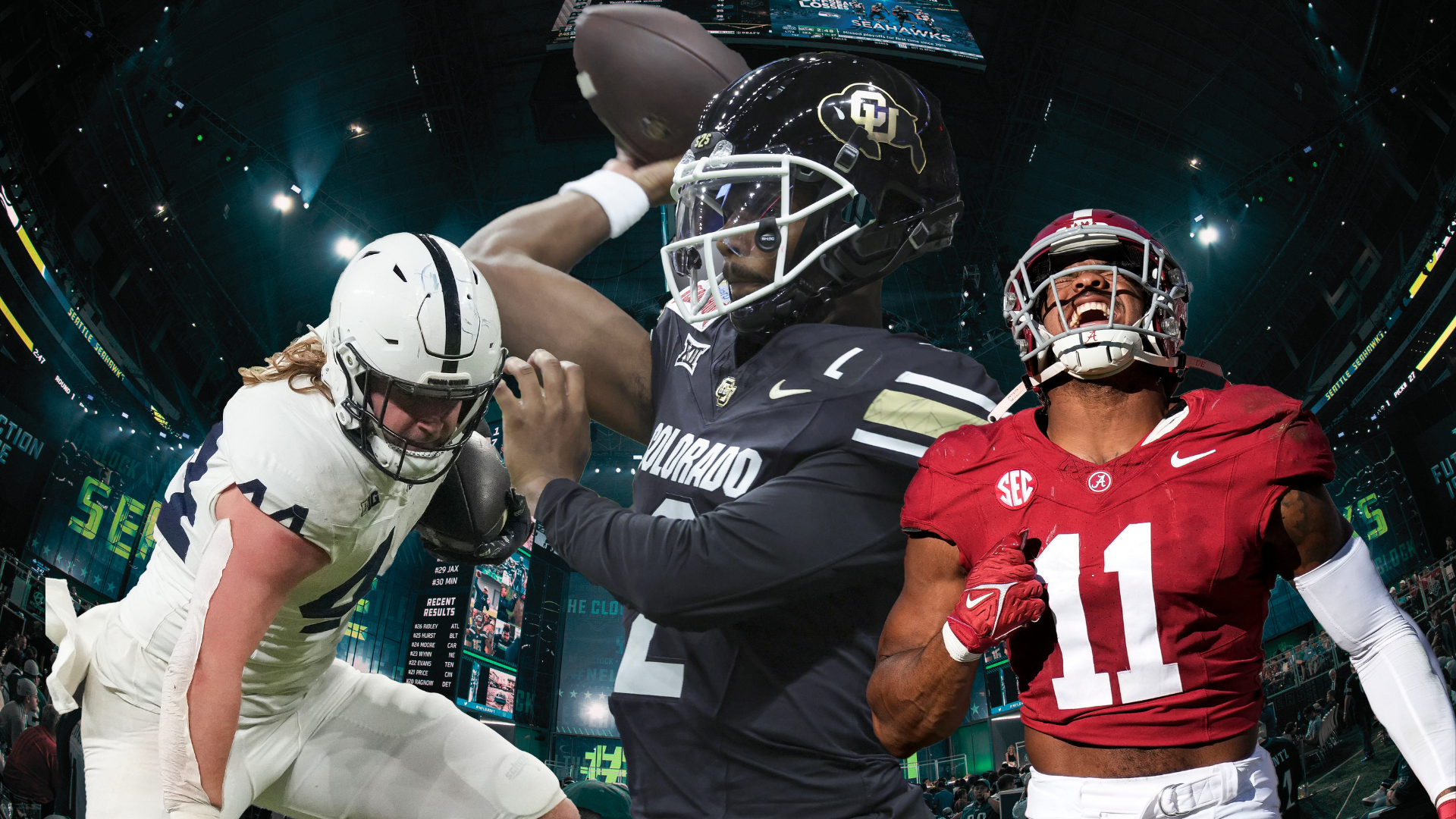
Among those who were picked once, Seattle lucked out with Georgia linebacker Jalon Walker and Penn State tight end Tyler Warren falling into their laps in two separate drafts, while Ohio State receiver Emeka Egbuka and Missouri receiver Luther Burden III were also selected once.
Fascinatingly, PFF apparently doesn’t view interior offensive line as a position of concern enough to warrant a first round pick, as on multiple occasions either Tyler Booker or Grey Zabel were available and the Seahawks still went a different direction. With the exception of Banks, who could project to sliding inside as a viable All-Pro caliber guard in the right system, they didn’t make a single selection for a guard in the 25 simulations.
ESPN
Over the past several years, ESPN has revealed multiple mock simulators, struggling to match up with the mainstays from PFF and Pro Football Network. This year, they re-framed the programming with their “Draft Day Predictor Model,” which was developed by the network’s analytics department, hoping to create a more realistic, authentic experience both with picks and trade scenarios.
While the revamped simulator spit out 15 different names to equal PFF’s variance, the consensus selections looked much different for Seattle at pick No. 18 with a number of players who lasted until that selection in the other simulator being swept up much quicker by other teams. As a result, three players - Oregon defensive tackle Derrick Harmon, Ole Miss quarterback Jaxson Dart, and Marshall edge Mike Green - were the three players to be selected a trio of times in the 25 simulations. Addressing the interior offensive line also proved to be a little bigger emphasis, as Booker was picked twice.
From a position standpoint, there was a bit more variety in ESPN’s selections, including Michigan cornerback Will Johnson, Georgia safety Malaki Starks, and Arizona receiver Tetairoa McMillan all falling to the Seahawks once apiece for Schneider to pick.
The lone shocking pick that the Seahawks made came in the form of North Carolina running back Omarion Hampton, whose name was selected twice during the simulations. With Ken Walker III, Zach Charbonnet, and Kenny McIntosh all on the roster, picking a ball carrier with a top-20 selection would seem to be malpractice and make fans grab their pitchforks and torches, but Hampton does have impressive talent and if one of the aforementioned backs was traded on draft weekend, it would be a little more understandable.
Pro Football Network
Since being released a couple of years ago, PFN’s mock draft simulator hasn’t changed much and really hasn’t needed to, as the simplicity and easy accessibility have been major plusses compared to competitors. However, as evidenced in the 25 simulations off the program, the lack of customization options and questionable adherence to team needs has become a bit of a detriment in regards to accuracy and realism.
Up to this point, the Seahawks haven’t been linked to Colorado quarterback Shedeur Sanders, the son of Hall of Famer Deion Sanders, and the recent signing of Drew Lock to compete for the backup job against Sam Howell behind starter Sam Darnold leaves a log jam under center. Nonetheless, the Big 12 Offensive Player of the Year consistently fell on the draft board and Schneider picked him a whopping nine times - 36 percent of the time - during the 25 draft simulations, easily the highest rate for any player on any of the simulators.
Far behind Sanders, speedy Texas receiver Matthew Golden landed with Seattle four times, while Simmons and Booker were drafted three times and two times respectively. If there’s a plus to the PFN simulations, their program is the only one that had trades without a user being selected, leading to the Seahawks jumping up to No. 10 overall in once instance to select LSU standout tackle Will Campbell and dropping back two spots before taking Barron in another draft.
If Schneider throws a curveball and selects Sanders as their future face of the franchise, the PFN simulator should be viewed as an electronic prophet. But compared to the other databases, that selection happening nearly double digit times seems like a huge miss in the roster needs category.
Mock Draft Database
One of the original draft simulators that caught fire with fans, Mock Draft Database has also maintained simplicity over the years, and for fans that desire more over the top trades, this program has what the doctor ordered. The spontaneity doesn’t always check off the realism box in terms of trade compensation and the fact Cam Ward wasn’t picked until eighth overall on a couple occasions is a big red flag, but when looking at the final results, it can be argued that the pick projections match up more with the consensus from draft experts and addresses team needs more effectively.
Out of the 25 simulations, Ezeiruaku wound up being selected by the Seahawks five times, including twice after trade downs with the Chargers and Ravens in the mid-20s, which matches with where most pundits expect him to be picked. Receiver ended up being a popular selection on MDD, as Schneider picked Egbuka and Golden four times apiece with all of those picks coming at 18 overall, while Simmons and Booker were each picked three times apiece at the native selection as well. All four of those players have been trendy picks in the 15-25 range.
Only four other players were selected in the 25 drafts by Seattle, with Zabel being picked twice with the 18th pick, Tennessee edge James Pearce Jr. being drafted twice after trade downs, and Williams being selected in the 15th spot after trading up with Atlanta. Eight picks being used on an offensive lineman and eight picks on highly-regarded receivers stands out as a positive attacking needs, but the lack of interior defensive tackles from a loaded class stands out as a bit of a head scratcher with Pearce and Green - two players with major character concerns - receiving three total picks instead.
Final Results
Thanks to inflated results from PFF’s simulator, Sanders tied with Golden for the most selections between the four programs, as both players earned a 10 percent share of selections apiece. Coming in third, Simmons - who would be a surprise pick coming off a patellar tendon injury with Charles Cross and Abraham Lucas still on the roster - was selected nine times during the simulation, while Ezeiruaku heard his name called eight times. Two other prospects - Booker and Egbuka - were selected more than six times.
From that group, Booker and Golden likely would be the selections that sparked the most positive interest from fans, as the former would provide a physical, nasty tone setter at either guard spot and the latter would help replace the lost downfield production from DK Metcalf and Tyler Lockett with his blazing 4.29 speed. Finishing second in the nation in sacks last season, Ezeiruaku also offers intrigue as an outside linebacker in Mike Macdonald’s defense, though some would question using a first round pick on an edge player with Boye Mafe, Uchenna Nwosu, Derrick Hall, and Demarcus Lawrence already on the roster.
As far as the biggest surprises for players who didn’t get selected near as often as projected, Zabel wasn’t even drafted a single time by Seattle on three of the four mock draft platforms. Some of that had to do with the fact he simply wasn’t available, as he regularly was selected before pick No. 18 on most of the simulators with Mock Draft Database being the exception to the rule.