What WNBA, WNBPA’s Moratorium on Business Means For Seattle Storm

[caption id="" align="alignnone" width="1770"]
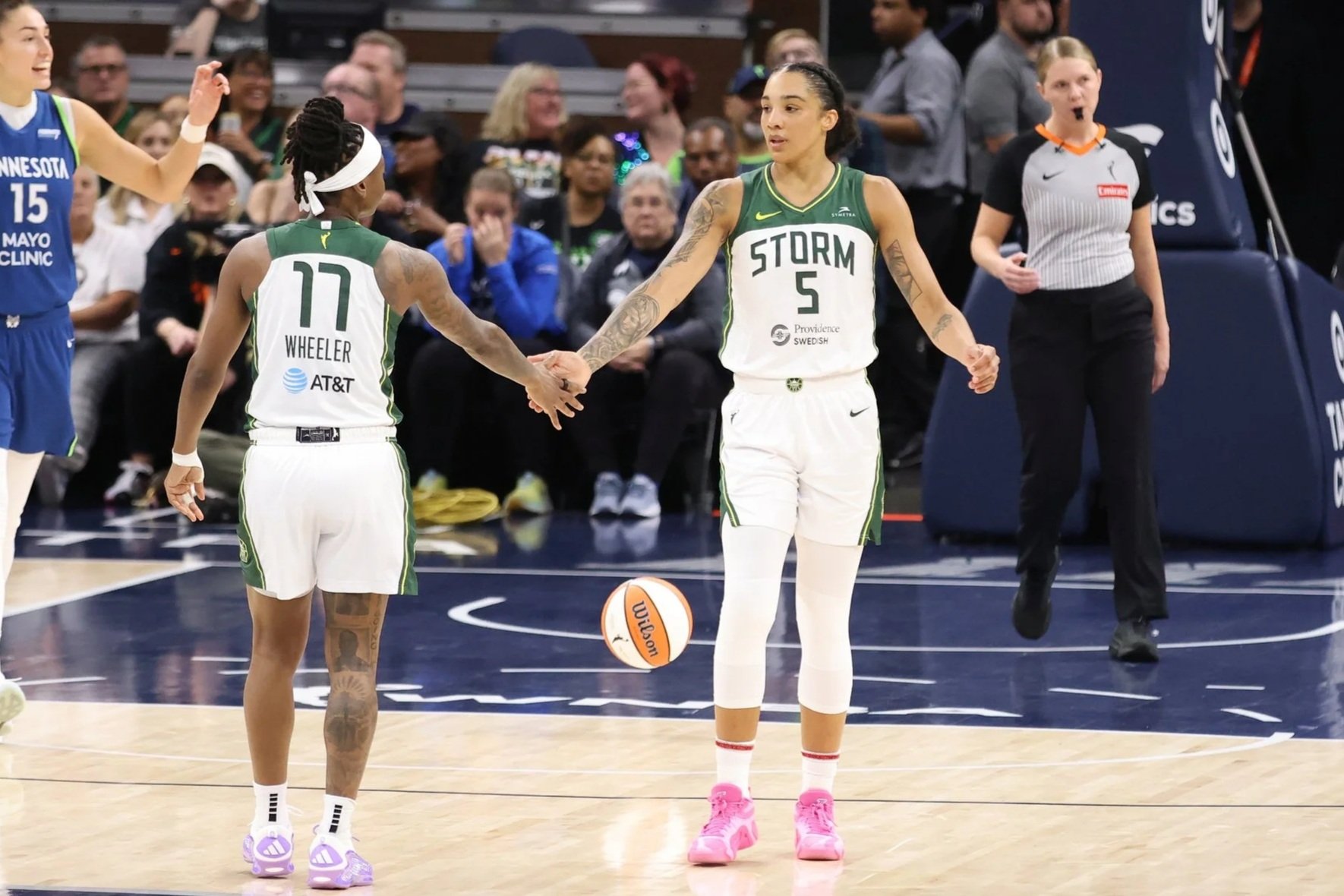
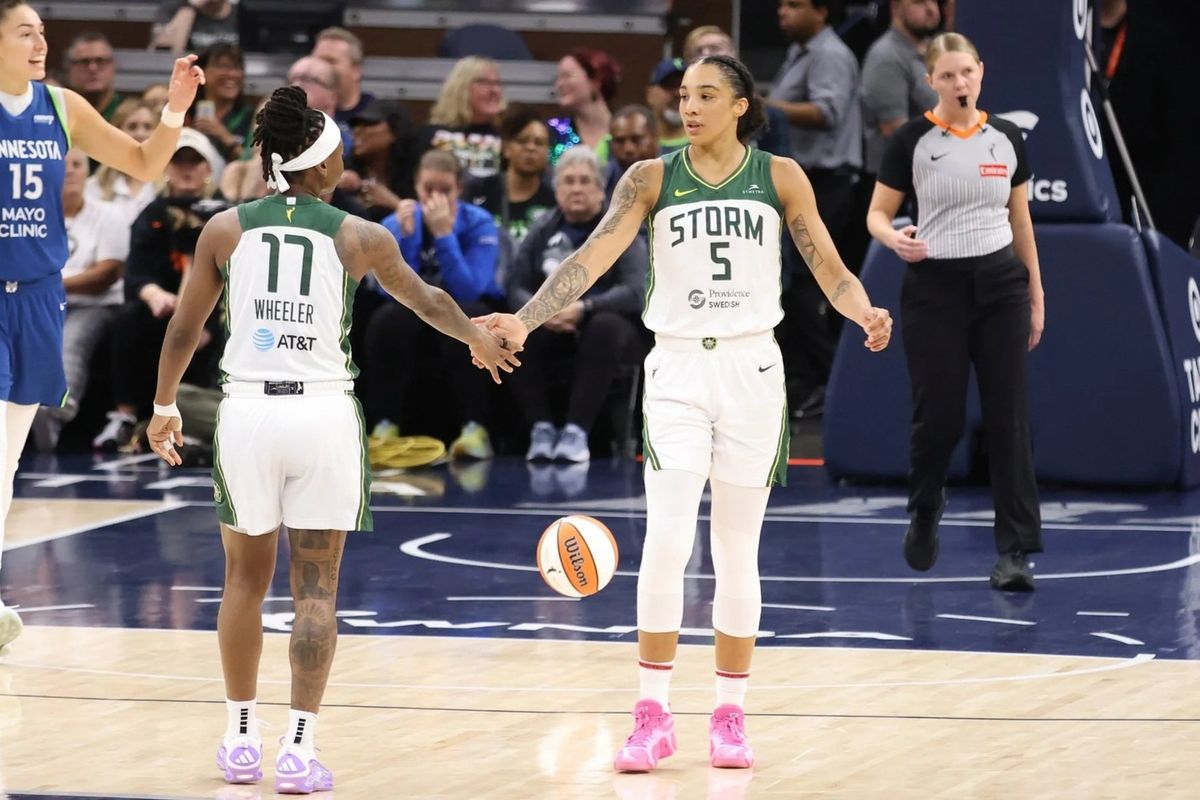
The WNBA and WNBPA agreed to a moratorium on league business, ending the potential for any contracts to be negotiated under the expiring CBA. Credit: John Mac [/caption]
Unsurprisingly, the WNBA and its player’s association did not reach an agreement on a new CBA by the extended Jan. 9 deadline. They didn’t even agree to an extension to the deadline.
Instead, the two parties resorted to the third option: a moratorium on league business.
The moratorium puts a pause on the opening stages of free agency, which would normally include teams extending qualifying offers to reserved free agents or applying core designations to top players.
Now, however, the entire offseason process is put further on hold until both sides can agree to a new deal, or at least a next step. The main point of contention for a new CBA has been the players’ desired structure for a revenue-sharing system, per ESPN’s Ramona Shelburne.
In an ESPN interview with WNBPA president and Seattle Storm veteran Nneka Ogwumike and WNBPA vice president Napheesa Collier, the list of items both sides agree on “is not very long.”
Ogwumike said the league had not responded to the player’s association’s latest proposal as of Thursday, Jan. 7, and the “evidence is showing that the league is trying to run out the clock.”
“Obviously, we’d hoped that we would be a lot farther along than we are, because it’s been about [15] months at this point, but at the same time, we have to stay strong in what our values are and what we're standing for,” Collier said in the interview. “The players feel really united right now. We’re waiting for the league to come back, and we're not going to accept a bad deal. We’re waiting for the league to come back and respond to our thoughtful and reasonable proposals.”
Regardless, it’s a stalemate. And it means that new Storm head coach Sonia Raman won’t have nearly as much time to begin assembling her 2026 roster — if the season happens at all.
How the moratorium affects the Storm
The core designation may not even return under the new CBA, or it may just work drastically differently. Seattle designated Gabby Williams in 2025, and at least under the current CBA, she could be cored again. But there’s no guarantee that this will remain under the new agreement, even when it does occur.
There’s likely to be some sort of system that resembles the core designation. Like the NFL’s franchise tag, it exists in other major sports leagues. However, the WNBA could adopt a supermax contract system similar to the NBA, which gives players more agency.
Dominique Malonga, the No. 2 overall pick in the 2025 draft, is going to be the focal point next season, but Williams has been around the team during the offseason and appears to be committed to the franchise. She could be retained with whatever system is put in place, but that decision can’t be made yet.
The Storm have two reserved free agents in guard Zia Cooke and post Mackenzie Holmes. Cooke is much more likely not to be retained, as the Storm may target a guard with their No. 3 overall pick and still have Nika Mühl and Lexie Brown under contract for 2026.
Holmes, however, could be a key piece for Seattle moving forward. She’s currently making an MVP case in the WNBL (Australia), averaging 21.6 points (2nd in the league), 9.3 rebounds (4th) and 1.2 blocks (8th) per game with the Geelong Venom. The Venom are just 4-14 this season, but Holmes has been a star for the team.
Still, the Storm can’t begin to move on, making qualifying offers to reserved free agents during the moratorium. So, pursuing Holmes or Cooke will have to wait for now.
We may not begin to know what the 2026 Storm roster will look like for months.
The league still has two expansion drafts to execute, free agency and the WNBA Draft to get through by the time the season is supposed to start in May. It’s not looking good for an on-time season start at this point.