What We’ve Learned About Seahawks’ Offense Through 3 Games

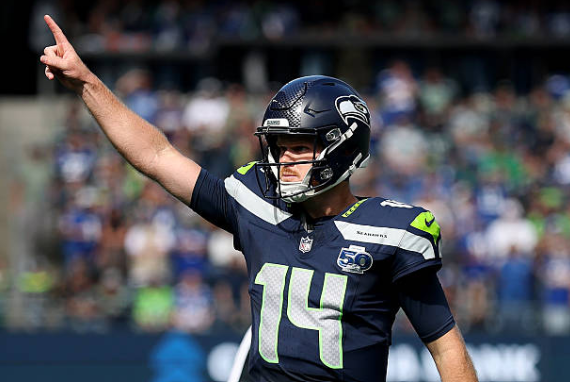
There’s still a lot of games left on the schedule, but the Seattle Seahawks have gotten off to a solid 2-1 start in year two under coach Mike Macdonald, including thrashing the New Orleans Saints 44-13 at Lumen Field on Sunday.
While Macdonald’s defense has been one of the best in the league so far, after a rough season opener against the 49ers, the Seahawks have found their footing on offense over the past two weeks scoring 24 points in a road win against the Steelers and scoring on their first seven possessions for the first time in franchise history against the Saints in Week 3.
In the early stages of the 2025 season, what have we learned about Seattle’s offense so far?
1. Sam Darnold has been everything Seattle’s coaching staff and front office believed he would be.
Time will tell whether or not the Seahawks made the right decision trading Geno Smith in favor of signing Darnold, but so far, that switch under center has paid major dividends with the veteran thriving in coordinator Klint Kubiak’s offense. Through weeks, the former top-10 pick has shown his breakout 2024 season wasn’t a fluke, currently ranking in the top seven among quarterbacks in completion rate (70.3 percent), yards per attempt (9.0), Big Time Throws (five), and passer rating (104.7), according to Pro Football Focus. He also has been one of the league’s most prolific deep ball passers, completing six throws traveling 20-plus yards through the air with a 44.4 percent Big Time Throw percentage while averaging a league-best 22.3 yards per attempt traveling that far.
For as great as those numbers are, however, it’s been Darnold’s quick release, mobility, and ability to evade pressure that have truly stood out in Kubiak’s offense. Excelling on bootleg concepts that move him out of the pocket, including a 12-yard touchdown pass to Jaxon Smith-Njigba in Sunday’s win over the Saints, he leads all quarterbacks averaging 14.3 yards per play action attempt while taking two sacks on 21 such drop backs. Extending broken plays has also been a strength with him hooking up with AJ Barner for a crucial third down after spinning out of a sack in a Week 2 win at Pittsburgh as well as a 29-yard completion to Smith-Njigba on Sunday after being flushed out of the pocket. There’s room for improvement, but the Pro Bowl signal caller looks right at home in Seattle.
2. Staying dedicated to the run game has not yielded desired results, at least yet.
All offseason long, following the hiring of Kubiak to replace Ryan Grubb, the Seahawks talked big about the run game being non-negotiable and re-emerging as a crucial part of their offensive identity. Through three weeks, they have backed up those words with volume, racking up 88 carries, or close to 30 carries per game, without the efficiency or productivity Macdonald hoped for. Aside from Ken Walker III erupting for 105 yards against the Steelers, the run game has largely been grounded averaging just 3.3 yards per attempt, including being held under three yards per carry by the Saints.
Walker’s elusiveness and elite speed have helped mitigate some of the issues up front and rookie fullback Robbie Ouzts has been a punisher as a lead blocker in two back personnel groupings, but according to TruMedia, the Seahawks currently rank 25th in the NFL in yards before contact per rush (0.89), a telltale sign that the blocking hasn’t been where it needs to be. Far too often, opponents have been able to penetrate gaps and blow up run plays before they can even get started, which stands out as the biggest problem Kubiak and his offensive staff must correct moving forward. On the plus side, Seattle has been very effective running the ball in the red zone with four rushing touchdowns, including three from Walker, so they have been able to finish drives with their rushing attack.
3. The offensive line has made marked improvements, but still has a long ways to go.
As noted in the above before contact statistic, offensive line coach John Benton would be the first to tell anyone that his unit has a lot of improvements to make opening up run lanes for Walker and the rest of Seattle’s backs. Targeting off the snap in the zone run game remains the biggest area of concern, but there have been some positive plays on that front in the past two games to suggest that a breakthrough could be coming, and even with the inconsistency, PFF has the team ranked 16th in run blocking grade and ESPN has them ranked 17th in Run Block Win Rate. Those marks are light years ahead of the past few seasons with obvious room for growth.
Oddly enough, pass protection has been complicated to evaluate. On one hand, ESPN has Benton’s crew ranked 32nd in Pass Block Win Rate with a dreadful 47 percent success rate. But even considering how quickly Darnold has gotten the ball out of his hands, PFF has a much more favorable view of the group, ranking the Seahawks 16th in pass blocking grade. Left tackle Charles Cross has taken a massive step forward in his fourth season, surrendering just four pressures and no sacks while earning a stellar 81.7 pass blocking grade, while center Jalen Sundell ranks a respectable 11th in pass blocking grade with three pressures and no sacks allowed. Grey Zabel has had his rookie hiccups and Anthony Bradford hasn’t taken the step forward yet that the coaching staff envisioned, but it’s early and those two players have been far from liabilities.
4. Jaxon Smith-Njigba was more than ready to take the stage as Seattle’s No. 1 receiver.
No longer in the shadow of DK Metcalf or Tyler Lockett, Smith-Njigba has silenced any remaining skeptics who questioned whether or not he could be a true No. 1 without his former sidekicks drawing attention from opposing defenses. In the first three weeks, only Rams star Puka Nacua has more receiving yards and only four players have more receptions than the former Ohio State star, who has been equally problematic for opponents from the boundary and the slot in Kubiak’s offense.
While he has been his usual self carving up the middle of the field with crossers and drag routes with eight receptions in the intermediate level (10-19 yards), Smith-Njigba also has been dynamic downfield, tying for the league lead with four receptions on passes traveling 20-plus yards and leading the league with 157 yards on those receptions. It hasn’t mattered how defenses have tried to cover him either, as he ranks in the top three in receiving yards against man coverage and top five against zone coverage. That’s a true sign of an elite wideout coming into his own in his third season and he may be just getting started.
5. Cooper Kupp and Tory Horton have been more than capable replacements for DK and Lockett.
Though the season opener didn’t go well for Kupp in his Seahawks debut with two catches for 15 yards, the veteran pass catcher has been far more effective since then, showing he has plenty of tread left on his tires. After nearly going for 100 yards against the Steelers, he caught both of his targets in a blowout win over the Saints, including a season-long 23-yard snag. He has been his usual reliable self catching 11 out of 13 targets and added some value after the catch, averaging nearly six yards per reception after the catch. Even if he isn’t the same caliber player who once won the Triple Crown with the Rams, his strengths at this point in his career fit Kubiak’s offense extremely well as a complementary target to Smith-Njigba.
As for replacing Metcalf’s downfield capabilities, Horton has kept the hype train rolling after a fantastic first training camp. After being shut out with no catches in his debut, he hauled in a 21-yard touchdown against the Steelers and tacked on another score against the Saints, turning two of his five receptions so far into six points. Emulating Lockett’s impact upon arrival years ago, he also has been a weapon on special teams, setting a new franchise record with a 95-yard punt return for a touchdown on Sunday. While he isn’t a carbon copy successor for either Metcalf or Lockett, his speed and versatility have helped the passing game stay potent and he’s just scratching the surface of his potential during his rookie campaign.