“We Are Persistent, We Are Resilient”: Gonzaga Volleyball Off to Best Start Since 2019


[caption id="" align="alignnone" width="1080"]
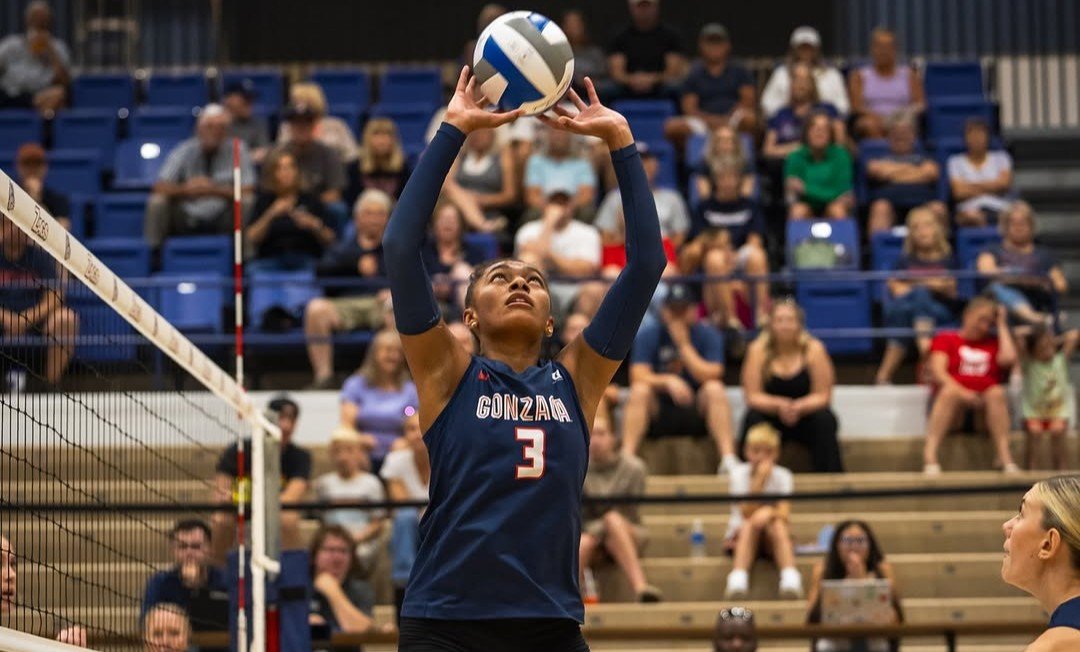
The Gonzaga Bulldogs' volleyball team is off to their best start since 2019. Credit: Gonzaga Bulldogs Volleyball/Instagram [/caption]
The sport of volleyball has not been kind to Gonzaga in recent memory. In each of the last nine seasons, the Zags have finished under .500, bottoming out at just one win in 25 games in 2024.
In fact, the Bulldogs won their first match last season against Southern Utah before not winning another game for the remainder of the year. With the program continuing to plummet, GU hired UT-Arlington head coach JT Wenger to be the Bulldogs’ new leader at the helm. Wenger went 29-3 in his last of eight seasons with the Mavericks, including going undefeated (16-0) in the WAC, where his team won the conference title and earned an appearance in the NCAA tournament.
Fast forward to this season, and the Zags (4-2) are off to their best start since 2019. In that season, Gonzaga won six of its first seven games before finishing 11-17. This time around, it seems the Bulldogs have a good a chance as ever for their first winning season in nearly a decade.
Through two tournaments played so far, GU has won two out of three games each weekend. The team played at the Grand Canyon Invitational to kick off their season, beating UTRGV three sets to one and sweeping LIU Brooklyn before being swept by the host Antelopes. The Zags then opened their home slate this past weekend in the Gonzaga Invitational by beating CSU Bakersfield in four sets, Maryland Eastern Shore in three, and once again being swept in the tournament finale by Montana State.
There are several key components spotlighted in this new era of Bulldogs volleyball that Wenger hopes will lead to sustained success during his first campaign in Spokane.
Dominant Donkers
When a new head coach takes over a university program, no matter the sport, there is usually roster turnover. Players transfer in and out, high school commits think over their previous devotion to a school, and even the surrounding coaching staff is in flux. Another commonality is players who follow the new head coach from his previous stop. Two weeks after Wenger was announced officially on Dec. 27, 2024, incoming sophomore Sjakkie Donkers transferred to Gonzaga to follow him from UT-Arlington. The Netherlands native was second on the Mavericks in kills and named as WAC Co-Freshman of the Year last season. But Donkers looks to have taken her play to the next level through six games with the Bulldogs.
Named to the Preseason All-WCC team, she has racked up 67 kills so far, and 4.47 kills/set, a mark that leads the WCC. Donkers is also tops in the conference in points as the 6-2 outside hitter is as good as anyone at ending a sequence with her right hand. She has a good vertical off the ground and combines it with explosion and velocity on her attacks. During the Gonzaga Invitational, Donkers went on multiple runs where she took over the game, including a 17-kill performance to kick off the weekend against CSU Bakersfield.
Donkers has stood out as a ferocious force — a needed star talent necessary for good teams. But she isn’t the only one who has stood out in the kill category.
Depth on the Outside and Up the Middle
In 2024, Raechelle Dykstra was second on the Zags with 216 kills behind fellow returner Maggie Rickert. This season, she has dropped to fourth on the team – but not to a slippage in play. The sophomore led Gonzaga with 12 kills and three aces in its sweep of UMES. Alongside Dykstra, freshman Kelly McAuley has been an instant sparkplug for the Bulldogs, racking up 45 kills so far in 2025, second on the squad.
6-4 Autumn Larson, who is tied for the tallest height on the roster, is fourth on the team with 29 kills. Middle hitters Fallon Thompson and Taylor Walsh round out the top six on the Zags in kills with 38 (third) and 28 (sixth), respectively. Dani Johnson does not trail far behind from being in the Bulldogs’ 20-kill club, posting 19 to this point.
This onslaught of weapons screams depth and options for Wenger to use at his disposal. A trend so far has been his constant rotation of players and not committing to a set lineup, which could be a normality for Gonzaga this season. Similar to a football team’s defensive line, Wenger can keep his players fresh by getting them rest while not sacrificing much of a drop-off in production on the ball. This strategy can also lead to interesting substitutions at times. During the team’s match against MSU, where the Zags didn’t win a set, Donkers didn’t play much of the second half of the first set, even though she scored three of the game’s first seven points.
Balancing his numerous options efficiently and correctly will be significant for Wenger, but for the most part, he’s off to a good start.
Focus on Fundamentals
There isn’t much that a one-win team does right. But when things slip away as drastically as they have for the Bulldogs, it’s often that the fundamentals of the game can be forgotten. Well, insert Wenger, who’s only won at each of his stops, who’s emphasized the Zags getting back to the basics. During the ramp-up to this season, Wenger has preached ‘serve-receive’ or digging the ball on aces and in a way to initiate offense. Last season, Gonzaga allowed the fourth-most service aces in the offense, and it is a problem that has plagued the program over the last several years.
When a serve or even an attack occurs, a team’s libero, or defensive specialist, is likely tasked with digging the ball out. GU’s libero is Rickert, who transitioned from the outside to be Gonzaga’s defensive stalwart in the center of its formation. So far, so good for Rickert as she is seventh in the conference with 65 digs. Setter Nia Damuni is not far behind in ninth with 58 digs, while McAuley is tied for 10th with 53, putting three Zags in the top 10 — with all three playing separate positions. The most common progression is Rickert digging it for Damuni to set it for one of the hitters, and she has assisted on 144 kills so far, a mark that is fifth in the WCC.
But this priority wasn’t showcased against the Bobcats in the final match of the Gonzaga Invitational. Even with GU not losing a set by more than four points and only losing the hitting percentage battle by 10 percent, the Bulldogs beat themselves in several different ways. Miscommunication caused multiple players to either go for the ball at once or let a ball drop as they deferred to a teammate. There were attacks sailed out of play and digs that weren’t set up correctly. A majority of these mistakes occurred late in sets too, allowing Montana State to eke out victories.
Regardless, the Zags battled throughout the weekend and in general, to kick off 2025. There seems to be an energy shift in how they are playing, with a roster that is largely the same in terms of its regulars, save Donkers and McAuley. Wenger spoke after the game versus CSU Bakersfield on the ESPN+ broadcast about his team’s identity and giving his players freedom to be confident and play cohesively.
“I think that we are persistent. We are resilient,” he said. “We’ve given them an opportunity to really express themselves on the floor and everywhere, and I think that they’ve taken some ownership, and they have some pride in their game, and that’s exciting for us.”
The Zags will be back on the road this weekend for their third and final tournament at the IU Indy Hampton Inn Invitational. They will begin by taking on Northern Illinois on Friday, September 12 at 8 AM PT, then host Jaguars that same day at 4 PM, and Bellarmine on Saturday, September 13 at 9 AM.