Analysis: Can Washington Huskies RB Jonah Coleman Win Heisman Trophy?

[caption id="" align="alignnone" width="1020"]
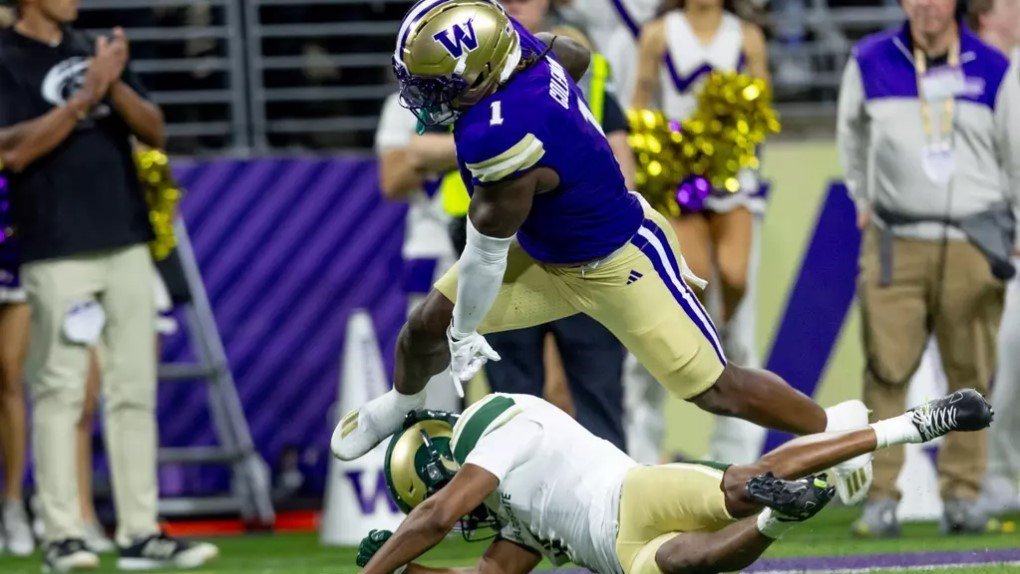
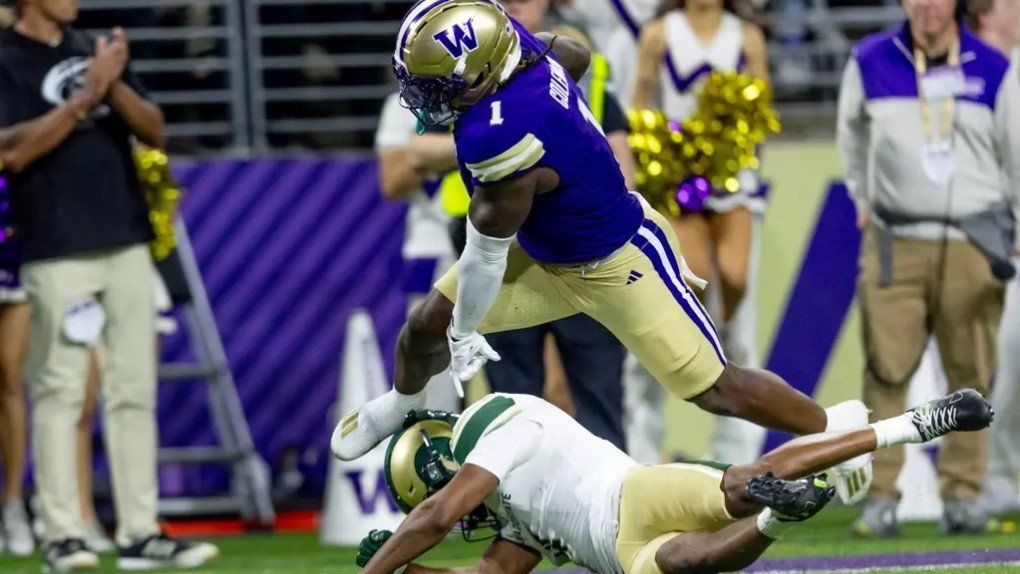
Washington Huskies running back Jonah Coleman (1) bowls over a Colorado State defender on Saturday, Aug. 30, 2025 at Husky Stadium in Seattle, Washington. Credit: Scott Eklund/Red Box Pictures/Washington Athletics [/caption]
Can a Husky win the Heisman?
Washington Huskies head coach Jedd Fisch hinted during the offseason that a UW football player could find his way to New York as a Heisman Trophy finalist in the near future. The second-year UW leader was referring to Huskies quarterback Demond Williams Jr. becoming a finalist to win the most prestigious award in college sports.
What if he was talking about the wrong Husky?
Washington running back Jonah Coleman has received national attention two full weeks into the season after leading the nation with seven touchdowns and rushing for a third-best 292 yards in wins over Colorado State and UC Davis. Coleman has won two Big Ten Co-Offensive Player of the Week honors in as many weeks. He was named the Doak Walker National Running Back of the Week after opening the season with 177 yards and two scores, and Bill Connelly of ESPN put Coleman in the Heisman lead after that Aug. 30 performance against Colorado State.
A lot will happen between being a frontrunner in August and voters casting their ballots in early December.
The Road to New York
A sliver of a path riddled with potholes and behemoths exists for Coleman to win the Heisman. Here’s some of what would need to happen.
Huskies must win
Over the past 20 seasons, the average record of the Heisman winner’s team was 11.95 wins and 1.8 losses. With a few exceptions — including Travis Hunter of Colorado last season — players in the running for the Heisman are generally on a team that is vying for a playoff spot into late November. This means Washington must win at least nine and probably 10 regular-season games for Coleman to have any chance.
Big in Big Ten Games
I hesitate to bring up last year’s stats. The offensive line was very, shall we say, different, and the Huskies were non-competitive in a couple of games. But Coleman had 11 carries for three yards at Oregon and 11 for 24 at Penn State. Coleman must post decent stat lines against the top teams, even if 2-3 are losses. Which probably means UW needs to be in every game so the running game continues to be a factor. A prerequisite for a trip to New York includes significant touches against Ohio State, Michigan and Oregon, as those are the games voters are more likely to watch.
Kickoff returns and Highlight Runs
With Coleman’s Beast Mode-style of running, he’s capable of putting on a show. Some of those bone-jarring carries against the likes of Ohio State and Oregon would help gain nationwide attention. Last year, there were 928 voters (870 media, 57 living former Heisman winners, one fan vote). While some put a lot of effort into voting, others may be heavily influenced by highlights they run across on social media or TV.
I was surprised to see Coleman returning kicks this season, and that’s another tool to get there. Heisman voters reward versatility, and may use special teams performances as a tie-breaker at the very least. A couple of kickoff returns for TDs would garner a lot of attention.
Bad Year for Quarterbacks
Over the past 20 seasons, quarterbacks have won 15 Heisman Trophies. Three running backs, one receiver and WR/CB Travis Hunter filled the other spots.
Hunter is a unique case, as voters were enamored, perhaps justifiably so, by an athlete who played both ways. He was also aided by a season in which quarterbacks didn’t stand out much, along with the attention head coach and former NFL star Deion Sanders brought to Colorado. Cam Ward posted strong numbers to finish second behind Hunter, but Miami lost two of its final three before the voting took place to hurt his chances. Three of the other four non-quarterback winners (DeVonta Smith, Derrick Henry and Mark Ingram) were Alabama players on championship-level teams. USC running back Reggie Bush, who won it in 2005, is the other non-QB.
The 2025 Heisman race opened up significantly when Texas’ Arch Manning and Clemson’s Cade Klubnik got off to rough starts. Ohio State’s Jeremiah Smith, considered a top non-QB candidate, also had a tough opening week.
Give Coleman the Rock
Henry was the most recent running back to win it after compiling 1,986 rushing yards and 23 touchdowns (plus 10 catches for 97 yards) prior to the 2015 Heisman ballot due date.
Adjusting for Alabama inflation (we’ll get to that in a moment), let’s just say that Coleman needs 2,200 total yards from scrimmage in 25 touchdowns to have a chance.
After two weeks, Coleman is on pace for 246 touches for 1,728 rushing yards, 276 receiving yards (2,004 total) and 42 touchdowns in a 12-game regular season. It’s hard to compare given the opponents, but if he continues to get 20-plus touches per game, Coleman has a chance to put up New York-level stats.
The Roadblocks to New York
East Coast Bias
It’s a long way from Seattle to New York, in terms of miles and the thought of a UW player becoming a Heisman finalist. I don’t fully buy into the idea of an East Coast bias. I believe there’s also a West Coast Bias, a Midwest bias and perhaps a bias in every area.
But a bias only matters when you’ve got the numbers. And the West does not have the numbers.
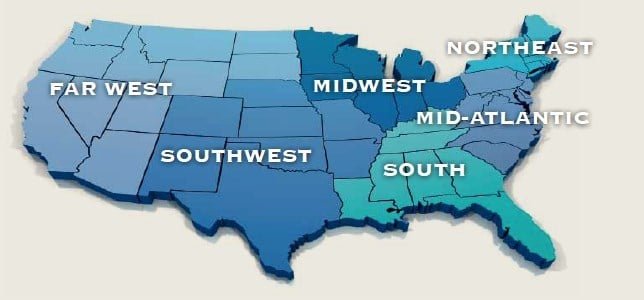
For the media portion of the voting, there are six geographical sections, each with 145 voters. Four of those six sections are east of the Mississippi River. In cases where a Pac-12 player has finished second, those players have generally won the two western sections but fallen short in the other four. That math makes it much more challenging for a player from the West to win.
We’ll never know, but I’ll always believe that, in 2023, if Washington had been a school east of the Mississippi, Michael Penix Jr. would have won the Heisman because of the (pre-vote) 13-0 team record.
Later game times also become an issue. While voters might see highlights of candidates out west, they are more likely to see full games of players in the east. I’m guessing not many stayed up until 2:30 a.m. Eastern time to see the last two UW games in full. While UW’s entry into the Big Ten makes winning more challenging, it does allow for a few more opportunities to be seen nationwide in favorable time slots when the team is playing well.
Brands matter
With the exception of Oregon’s Marcus Mariota in 2014, USC is the only program from the Pac-8/10/12 since Stanford’s Jim Plunkett in 1970 to have a winner. Of course, 2014 was around the height of Oregon’s brand recognition, and Mariota had entered the 2014 season with much preseason hype. Though Washington is a solid brand, it’s not quite on the same tier as USC and some of the traditional powers in the East.
What Are the Odds?
In 2025, gambling odds matter. They show up on the screens in the middle of games and during college football preview and highlight programming. Speaking of gambling, Oklahoma quarterback John Mateer (sorry, couldn’t resist), who transferred from Washington State after the 2024 season, is currently the betting favorite to win the Heisman in most sports books, followed by LSU QB Garrett Nussmeier, Miami QB Carson Beck, Oregon QB Dante Moore, Manning and Smith. People — Heisman voters are people, too — may see those top candidates over and over again and be influenced by the familiarity principle from seeing certain names at the top.
Where are Coleman’s odds? Coleman — first name Cam — of Auburn is currently listed among DraftKings’ 84 players people can bet on to win the Heisman. The Coleman we’re talking about today, Jonah Coleman, is not on the site as an option. FanDuel, one of the few major sites that list the UW running back, has him with the 47th-best odds at +20,000 (meaning a $100 bet would win $2,000). Demond Williams Jr. is listed 31st at +6,000.
So, Can Coleman Win It?
Sure. But… it’s pretty unlikely. He’ll have to put up numbers that blow away the field. If he finds his way to New York this December, you can bet Washington had a fantastic season, and that the Big Apple was just a stop along the way to the College Football Playoff.