The Mariners Need More From Randy Arozarena

In the span of a few weeks, the Mariners have gone from one of baseball’s most well-rounded offenses to one of its most inconsistent and home run-dependent. From May 1 onward, Seattle as a team ranks tied-25th in MLB in batting average (.231), tied-27th in on-base percentage (.298), 22nd in slugging percentage (.370), 19th in wRC+ (96), tied-21st in walk rate (7.7 percent) with the fifth-highest strikeout rate (23.5 percent), and tied-21st in runs scored (114) with 57 of those coming via the long-ball (50 percent).
One of the biggest issues with the club’s heavy reliance on hitting the ball over the fence, other than the fact that exactly half of its run production is coming that way, is that only three of its 13 active hitters have made considerable contributions in that department. Only the red-hot Cal Raleigh (13), Julio Rodríguez (6), and Rowdy Tellez (5) have five or more home runs since the start of May.
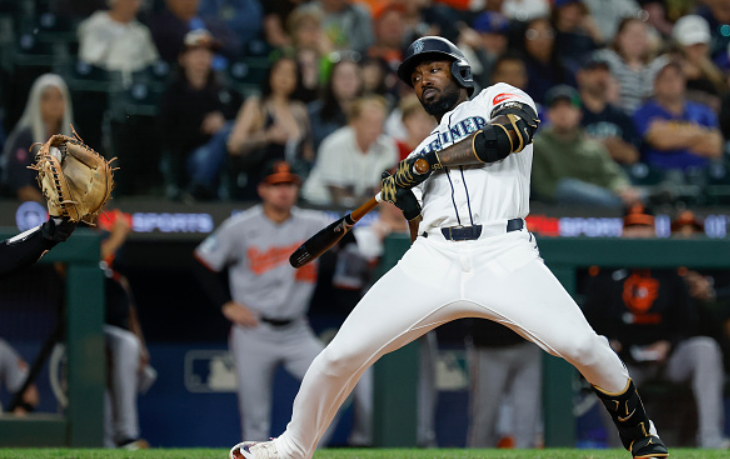
That’s where Randy Arozarena comes in. The team’s big trade deadline acquisition in the summer of 2024 has only two home runs after hitting five in March and April. Simply put: if Arozarena isn’t hitting the ball with authority, he’s not an incredibly valuable player — at least, not nearly as valuable as the Mariners need him to be — given his shortcomings in other areas of his game.
For the second year in a row, Arozarena is running a sub-.220 batting average with a sub-.400 slugging percentage. For a while this season, he was at least walking at a well-above-average rate of 16.8 percent. But since May 10, he’s walked just three times (3.2 percent) with five hit-by-pitches, tanking his on-base percentage on the year from .387 to .337. On the flip side, his strikeout rate sits at a career-high 29.4 percent as of June 4.
Fastballs, specifically of the four- and two-seam variety, have especially been problematic for the 30-year old. On 86 fastballs inside the strike zone in May and June, Arozarena is slugging .385 with a 26.8 percent whiff rate and 47.8 percent hard-hit rate. His career slash line on those pitches prior to this season was .304/.311/.550 with a 21.9 percent whiff rate and 54.9 percent hard-hit rate.
Those are pitches Arozarena has to do more damage on. Raleigh and Rodríguez can only carry so much of the load power-wise and there will come a point in the season where both will hit a dry spell and need someone else to step up — that’s baseball. The easiest and most preferable answer for Seattle in that regard would be its other big middle-of-the-order bat, Arozarena, who was arguably the club’s most clutch hitter in March and April but has virtually gone silent ever since.
Until Arozarena can get it going again or the Mariners potentially swing a trade for an impactful hitter, their offense is certain to continue sputtering. With the lack of depth they have offensively, they need their stars to be stars more than ever, but only some are holding up their end of the bargain right now.