Takeaways From Seahawks’ John Schneider, Mike Macdonald Pre-Draft Media Availability

[caption id="" align="alignnone" width="1920"]
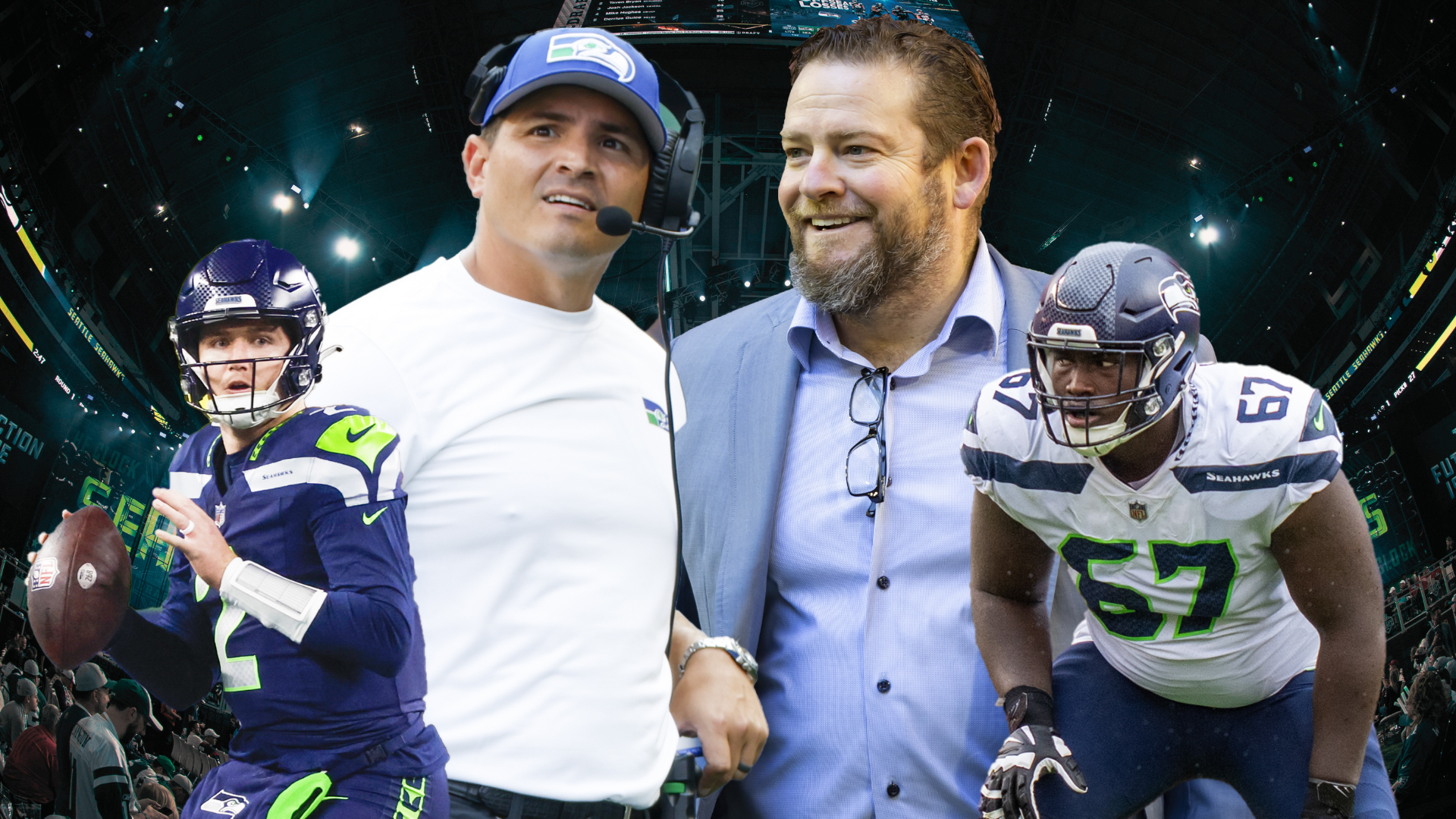
Seahawks coach Mike Macdonald and general manager John Schneider delved into a variety of topics in their annual pre-draft press conference, including Drew Lock's arrival and Charles Cross' contract situation. [/caption]
Leading up to the 2025 NFL Draft, which will kick off on Thursday, April 25 in Green Bay, Seattle Seahawks general manager John Schneider and coach Mike Macdonald spoke with the media in their annual pre-draft availability on Monday, discussing the current state of the roster, recent offseason moves, and the upcoming draft among other topics.
While Schneider and Macdonald didn’t provide much intel on what the Seahawks may choose to do in Thursday’s opening round and understandably didn’t dive into specific prospects, they still left an interesting bread crumb trail of information on numerous fronts heading into this week’s three-day draft extravaganza. Here are five key takeaways from Monday’s media session:
It remains to be seen whether Seattle will opt to use its fifth-year option on pending free agent Charles Cross.
Though this week’s upcoming draft obviously stands out as the most important event taking place for the Seahawks and the rest of the NFL, there’s still plenty of other roster-related action that teams such as the Seahawks have to tend to in coming days, including the looming May 1 deadline for deciding whether or not to exercise fifth-year player options on 2022 first-round draft picks.Historically, Schneider has rarely signed off on the option, with tight end Noah Fant being the lone exception after joining Seattle as part of the blockbuster Russell Wilson trade in March 2022, in part due to the cost. As for whether he plans to pick up the option with left tackle Charles Cross, which would cost $17.56 million fully guaranteed in 2026, he opted to take the high road."We'll answer that at a later date,” Schneider said.To this point, Cross has been a solid, yet unspectacular starter after being selected ninth overall in the 2022 NFL Draft. Still just 24 years old, he has been highly durable since coming into the league, starting 48 out of 51 possible games in his first three NFL seasons, and he did make noticeable strides both in pass protection and as a run blocker in 2024.On the other hand, at least statistically, Cross has yet to take the leap towards becoming a top-10 tackle as Seattle envisioned with a top-10 draft choice. Per Pro Football Focus, he has allowed at least six sacks in each of his three seasons and never surpassed a 96 percent pass block efficiency rate, leaving plenty of room for improvement before the team may be willing to invest a lucrative extension in him.While a $17.56 million price tag for 2026 may seem expensive, 13 left tackles currently have a higher average salary than that on their current contracts, so it would be an affordable price point for the Seahawks to exercise that would allow the two sides to continue negotiating or give the organization a bit more time to decide whether or not they intend to ink him for a pricey second contract at all.
Keeping three quarterbacks on active roster remains a possibility with Sam Howell talks ongoing behind the scenes.
Following the somewhat surprising re-signing of veteran quarterback Drew Lock, who inked a two-year, $5 million deal with the Seahawks earlier this month, the writing appeared to be on the wall that Sam Howell’s time in the Pacific Northwest was numbered. A report from ESPN that other teams had inquired about the fourth-year signal caller only further fueled such speculation.But based on comments from Schneider and Macdonald on Monday, Howell’s inevitable departure may not be inevitable after all. Schneider said Seattle wouldn’t be against the idea of rostering all three players in 2025, though he didn’t deny the aforementioned report of fielding calls on the former North Carolina star’s availability and didn’t shoot down the possibility of a trade either."Yeah, that’s accurate,” Schneider responded when asked about the Howell rumors. “We have a great relationship with [agent Bruce Tollner]. Bruce is very well known and respected throughout the National Football League, so he has a ton of contacts ... So it’s a very open dialogue."Since Lock’s new contract has north of $2 million in guaranteed money, the structure of the deal seems to imply he will be Darnold’s backup, and previous comments from Schneider hinted as much. Having already proven himself capable of winning games when called upon, including leading the Seahawks to a game-winning touchdown drive against the Eagles on Monday Night Football in December 2023, he has strong support in the building.However, Macdonald pushed back against the notion that Lock has the No. 2 spot in the bag, indicating that as long as Howell remains on the roster, he will have the chance to battle to retain that role behind Darnold. The same can be said for Jaren Hall, who he has spoken positively of in the past and has prior experience in a similar scheme to Kubiak’s when he started his career with the Vikings."It means that those guys are going to be competing. Both guys know that, and Jaren's part of the mix too, he can compete with those guys,” Macdonald commented. “But anytime you're adding competition to a room on a football team, it's good for us, especially when they're great players and great guys, it's going to be fun to see how it shakes out."Regardless of what happens with Howell, Schneider once again reiterated that signing Lock won’t alter the Seahawks draft plans when it comes to potentially investing one of their 10 picks on a quarterback this weekend. If the board falls the right way, which it hasn’t very often with him picking just two signal callers in his previous 15 drafts at the helm, he won’t be afraid to pull the trigger.At the same time, however, Schneider also doesn’t want to fall into the same sink hole that many other general managers have by forcing a quarterback selection, over-valuing a prospect simply because of the importance of his position."You've got to be careful how far you push those guys… What's happened, especially at that position - it's the most important position on the team - so yeah, over the years, there's been a lot of people who have been, I don't want to say over-drafted, but based on the class, just pushed up.”
New offensive coaching staff will have open mind to potential draft picks from a scheme fit perspective.
Long before Schneider dealt Smith and Metcalf or dished out a three-year, $100 million deal for Darnold in March, the Seahawks laid the groundwork for a busy offseason personnel-wise by executing a near-total overhaul of their offensive coaching staff. Going one-and-done as offensive coordinator, Macdonald fired Ryan Grubb on the day after their season-ending win in Los Angeles, eventually tabbing Klint Kubiak as his replacement.Leaning on Kubiak’s connections from previous stops, Seattle then hired seasoned offensive line coach John Benton, quarterback coach Andrew Janocko, and run game coordinator Rick Dennison, transforming one of the least experienced staffs from a year ago into one loaded with proven coaches. Among the few holdovers who was retained, running back coach Kennedy Polamalu will return for a second season, reuniting with Kubiak and Dennison after they worked together in Minnesota from 2019 to 2021.With those moves, the Seahawks will shift away from Grubb’s pass-heavy, shotgun-based system to Kubiak’s version of the West Coast offense, a variation that stems from the Mike Shanahan coaching tree. The new scheme will offer a more balanced approach in regard to pass/run splits, and the ground game will be built around wide zone, the staple concept dating back to Shanahan’s time in Denver, requiring more athletic linemen who can block on the move to create horizontal displacement as well as climb to the second level.But while Seattle undoubtedly will place higher value on line prospects with desired athletic traits that best fit the new system, Macdonald acknowledged that Kubiak, Benton, and the rest of the retooled staff won’t be pinning Schneider and the scouting department into a corner either on that front. They’re staying somewhat flexible evaluating numerous prospects, understanding that there may be linemen who aren’t top tier athletes who still have other traits that translate well to zone blocking and can mesh with the scheme.“The system has been defined and they've been running it for quite a long time,” Macdonald said. “I think what's cool about what these guys, you could make the mistake of saying, ‘hey, we're gonna be really myopic, and this is what we need, and we're not budging.’ They're not like that. They're kind of seeing the whole player and then having a vision for how they would fit with us, but definitely understand what we're going to be asking them to do is really clear.”Away from the offensive line, the same can be said for the Seahawks in regard to how they assess receivers and tight ends. Kubiak has historically utilized less 11 personnel with three receivers on the field than most other coordinators, instead preferring multi-tight end sets, but that doesn’t mean that they won’t be seeking a vertical threat to help offset the departures of Metcalf and Tyler Lockett. It also doesn’t mean they will be stubborn about seeking a tight end who primarily works as an inline blocker, as athletic pass catchers at the position have thrived in Kubiak’s system before.In summation, as the saying goes, there’s more than one way to skin a cat, and even if Kubiak and Seattle’s new staff has ideal preferences on the personnel front, they won’t be closed off when it comes to considering all options on the table and it will be fascinating to see which players they sign off on as strong fits during draft weekend.
Differing trade value metrics across the league have made moving up and down the draft board more challenging.
Since he first stepped foot in the VMAC in 2010, Schneider has rightfully earned a reputation for his aggressive nature seeking out deals to either recoup extra picks or slide up for a coveted prospect, orchestrating an incredible 35 draft weekend trades over the past 15 years. This included signing off on seven trades during the 2019 NFL Draft, transforming four picks into 11 new players, starting with trading down in the first round before moving back up to pick No. 64 to acquire Metcalf.But in recent seasons, while Schneider has remained active on the phones looking for his next deal, trades haven’t happened quite as frequently as they used to. Since 2022, the Seahawks have made a grand total of three draft weekend trades, including two deals with the Broncos in 2023 and 2024. Once a staple on his draft BINGO card earlier in his tenure, he also hasn’t traded down in the first round since 2019, underscoring a trend that has made it trickier to orchestrate deals during draft weekend with teams using different value scales across the league.“A lot of people used to use Jimmy Johnson's grading scale, the point system,” Schneider explained. “Now, like the advent of analytics, you have a lot of people that just have different systems. So what we're doing over the next two days is really having our guys make sure they're contacting the other teams, the teams that they're responsible for in terms of trades and making sure that we're in the same vicinity because everybody seems to be using different trading scales, point systems. And so you want to be able to move in a very fast manner.”As Schneider pointed out, Seattle has set aside certain teams for members of the personnel department to stay in touch with over the final couple days leading up to Thursday’s first round, figuring out what potential trades may look like before the Seahawks go on the clock with the 18th pick. With only 10 minutes to deliberate in the war room before turning in a selection, there isn’t much time to negotiate a deal in that window of time, making it crucial to have the foundation for possible trades framed on Tuesday and Wednesday behind the scenes.Interestingly, in a rare occurrence, all 32 NFL teams still have their native picks in the first round with 48 hours until the Titans go on the clock in Green Bay, which would suggest there won’t be much activity on the trade front this year. But Schneider understands the fluid nature of the draft as well as anyone and depending how the dominos fall early in the round, the flood gates could open for a bunch of movement with trades, so the Seahawks are keeping close tabs to ensure they can take advantage of the right opportunity if it presents itself on Thursday.“I was just talking to a gentleman this morning about that from another team. It sounded like last week people were going to be active and then nothing's really happened,” Schneider remarked. “So we're just trying to stay in contact with everybody. I don't know. It's hard to tell. I don't know if that's just because of what the top of the first round looks like. I don't know.”
The Seahawks believe they have positioned themselves to “draft darn good football players” and not hyper-focus on need.
During his off-podium time at the NFL combine back in February, Schneider indicated the Seahawks have had to learn the hard way from forcing players up the draft board ahead of better players in the past by putting too much emphasis on need, leading to significant changes in the process of building their big board and evaluating prospects in general. Looking back at his 15 previous years as general manager, it’s easy to point out a few examples, including whiffing on a first-round pick invested on TCU defensive end L.J. Collier in 2019. When asked for his thoughts on the current state of the roster following free agency and heading into this week’s draft, Schneider maintained that stance, sharing optimism about Seattle’s team-building approach over the past several months and how it has put him and the front office in an ideal situation where they don’t have to force the issue pursuing an offensive lineman in the first round or addressing another position of need ahead of acquiring the best player available.“We like it. We like where we're at,” Schneider said, later adding, “"We think we can just pick darn good football players.”Interjecting in the middle of Schneider’s response, Macdonald echoed those sentiments, simply saying he was “fired up” about Seattle’s current roster and the flexibility that the organization has been afforded rolling into the draft.In most regards, Schneider and Macdonald’s shared viewpoint seems to be a sound one. Even after trading Geno Smith and DK Metcalf last month in the week before free agency began, the Seahawks quickly signed Sam Darnold as their new starting quarterback and brought in former Rams All-Pro Cooper Kupp to pair with Jaxon Smith-Njigba, while the defense improved with the addition of veteran edge Demarcus Lawrence to go with an already stout defensive front, giving the organization plenty of flexibility navigating their draft board with the best player available mindset.With that said, Schneider has heard fans loud and clear when it comes to the desires for an improved offensive line, and after not making any significant additions to that group during free agency, the pressure will be on him to take advantage of Seattle’s early abundance of draft capital to move the needle and bolster a unit that has long been an Achilles’ heel for the franchise. If a talented guard and/or center isn’t brought on board, it will be difficult to sell the vision to a fan base that has become further disillusioned by consistently poor line play over the years.