WNBA Draft Preview: Storm Head Into 2026 With Big Shoes to Fill, But Plenty of Flexibility

[caption id="" align="alignnone" width="2625"]
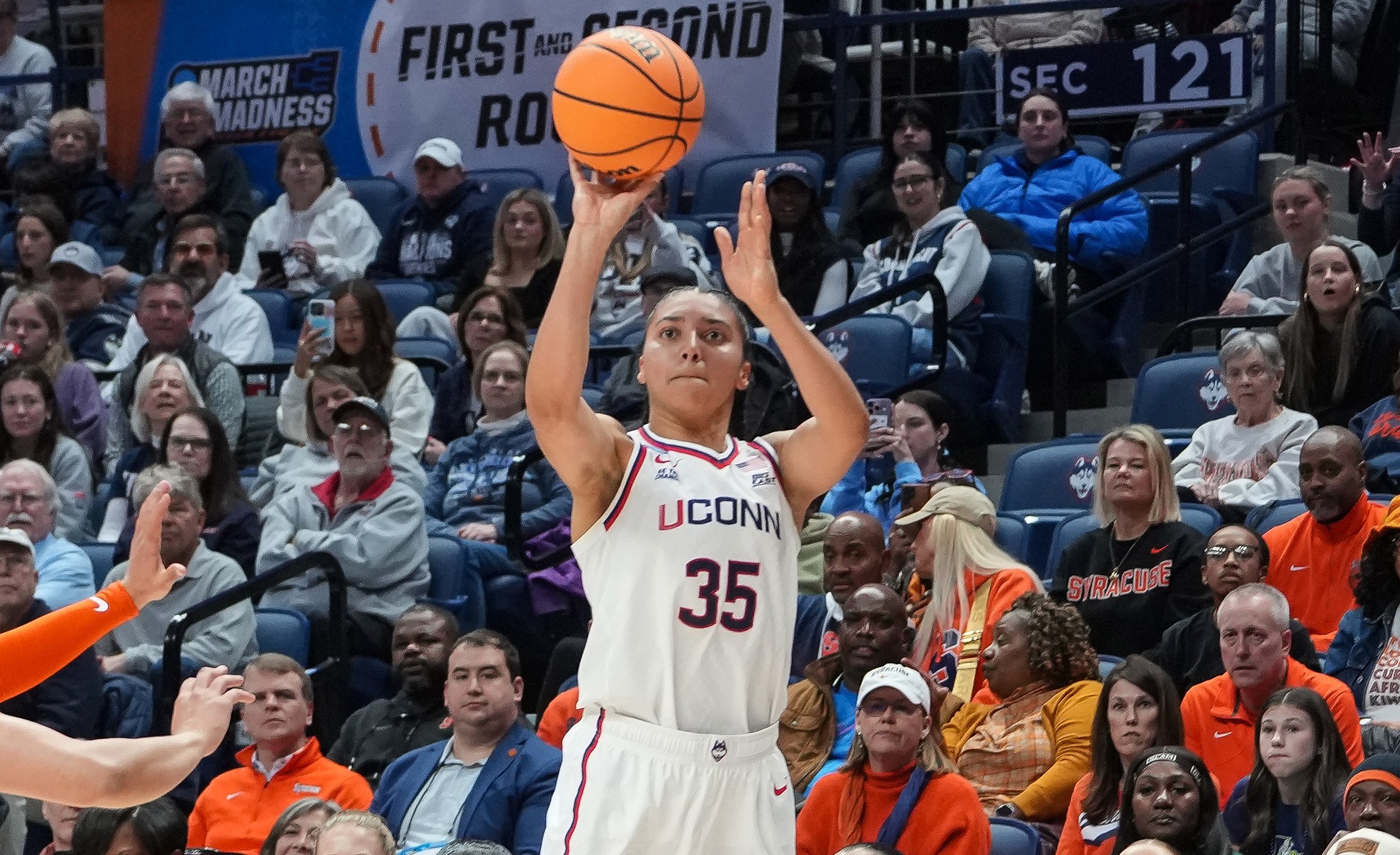
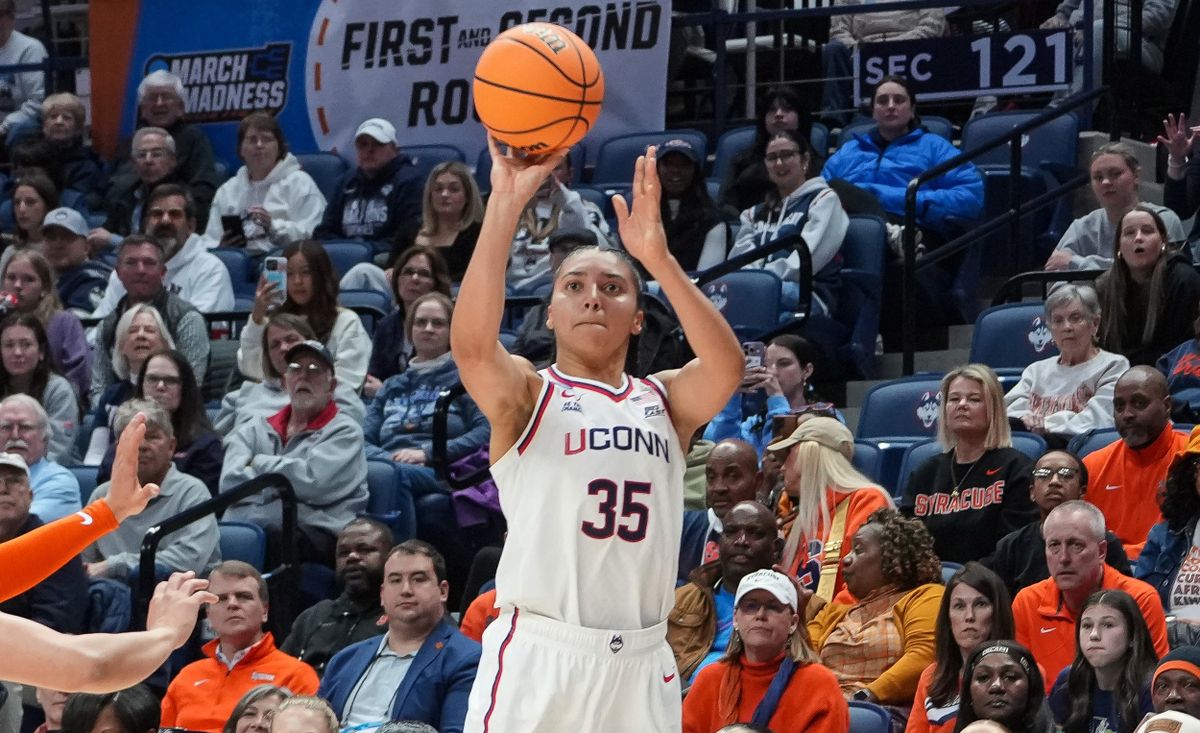
UConn Huskies guard Azzi Fudd (35) shoots a three point jump shot against the Syracuse Orange during the first half of the second round game of the women’s 2026 NCAA Tournament at Harry A. Gampel Pavilion. Mandatory Credit: Gregory Fisher-Imagn Images [/caption]
If you found yourself in the recesses of Climate Pledge Arena for some Seattle Storm basketball last summer, chances are you saw one of the following:
- A passionate Skylar Diggins hyping up her bench after a 3-pointer or a timely assist.
- WNBA president Nneka Ogwumike settling into the post to hit a turnaround jumper to get Seattle rolling.
- First-time All-Star Gabby Williams notching one of her three steals per game to flip the momentum to the home team.
The chances of one of those three things happening were practically 100% every night.
But with another season just around the corner, those odds stand at 0% after a wild start to WNBA free agency.
All three players, in addition to a dynamic scorer in Erica Wheeler and a trade-deadline star in Brittney Sykes, are all gone from a team that underperformed to go 23-21 and get eliminated by the eventual champion Las Vegas Aces in the postseason.
Ogwumike returned to her longtime squad in LA along with Wheeler, while Sykes signed a max deal with expansion Toronto, Williams signed with Golden State, and Diggins moved on to Chicago to be closer to family.
The pieces that remain are rock-solid, but few.
2025 No. 2 overall pick Dominique Malonga of France, still just 20 years old, and recently cored and signed defensive star Ezi Magbegor, will undoubtedly man the starting front court for first-time head coach Sonia Raman.
On the wing, a recovering Jordan Horston, who missed all of 2025 with a torn ACL, will presumably return healthy. GM Talisa Rhea also brought in Sixth Player of the Year runner-up guard Natisha Heideman from Minnesota, as Seattle will have a decent option at the starting point if needed.
Veteran big Stefanie Dolson also signed with Seattle to give Malonga and Magbegor some depth up front, while forward Mackenzie Holmes and guard Zia Cooke are both on training-camp deals to try and re-sign with the four-time champs in 2026.
This may seem all doom and gloom, and many fans were left wondering why Seattle decided to clean house so completely. After all, the Storm have just eight losing seasons in 27 years — this isn’t a fanbase familiar with the term “rebuilding.”
In short, we may get our answer to Seattle’s sweeping decision on Monday when the WNBA Draft commences. Seattle is armed with two first-rounders (No. 3 and No. 14), the first pick of the second round, and the ninth pick in the third.
While late-round picks seldom pan out in the WNBA, Rhea did well to trade disgruntled MVP candidate Jewell Loyd to Vegas before last season — that deal netted Seattle Malonga at No. 2 and now a prime pick at No. 3 in 2026.
Here's what Seattle could do with that franchise-altering asset in a draft bubbling with talent.
The Needs
The front court is the one part of this team that could start the season tomorrow.
UCLA big Lauren Betts shouldn't factor into the Storm's plans, nor should Spanish prodigy Awa Fam. The latter is very unlikely to fall out of the top two, as is TCU point guard Olivia Miles, who had an unreal tournament for the Horned Frogs and is a rare do-it-all floor general.
Unfortunately for the Storm, who many know on account of all-time point guard Sue Bird, Seattle could really use a top floor general. Rhea would need to reach on some projected middle-to-low first-round talent to get a point guard at No. 3 if Miles doesn't slide.
For this exercise, we'll let Seattle hope point guards like South Carolina's Raven Johnson and UCLA's Kiki Rice slide to No. 14, as drafting them at No. 3 could be catastrophic given the more appealing prospects lining the board at that spot.
For now, Seattle is free to draft practically any position from the point to the small forward, meeting the following needs:
- 3-and-D wing
- Floor general
- Score-first two-guard
That opens up plenty of options.
The Prospects
Here are three players Seattle could realistically grab at No. 3. Fam and Miles are not listed below as they are projected to fly off the board. Needless to say, if Miles is available at Seattle's spot, she'll likely be wearing green and gold in a few weeks.
Azzi Fudd, Shooting Guard, UConn
Fudd came into this season atop many folks' draft boards, and for good reason.
The defending champ entered her senior season fresh off a Final Four Most Outstanding Player selection and has one of the quickest releases of any pure shooter we've ever seen come out of the draft. She shot an absurd 44.7% from range to average 17.3 points in an All-American senior campaign, shooting 42.2% on 3s in her storied career in Storrs.
On defense, Fudd is an asset. She plays with an instinct for the ball, and isn't afraid to get into a primary ballhandler's face and make a bid for a reach-around steal. She’s a pest off-ball, and Seattle would undoubtedly be drafting a player who would gladly take on the assignment of guarding opposing star talent night in and night out.
Pairing her with an All-Defensive menace in Magbegor and a developing shot-blocker in Malonga could make Seattle a problem to score on.
She meets that 3-and-D title unlike any prospect in recent memory, but that's just it — there's a growing feeling among analysts forging mock drafts that her skillset isn't enough to overcome Fam or Miles in the top two, leaving Seattle to pick her up at three. Although Fudd isn't afraid to attack defenses off pin-down screens and use her “gravity” as a lethal shooter to score in other ways, creation isn't her forte — she had a 3.1-1.5 assist-to-turnover ratio in her senior season.
The critique is that Fudd simply wasn't effective against the best teams in the nation as the go-to option — she earned that Final Four honor last season playing as a second option to No. 1 pick Paige Bueckers.
To be fair to the mocks that have her falling out of the top two, Fudd averaged just a shade over 10 points on 31% shooting over her final three collegiate games against the likes of South Carolina and others.
If Seattle goes with Fudd, she's not the ceiling raiser that many would expect of a high draft pick. Instead, she's the type of elite 3-and-D wing that every champion needs, and could function as a prime Klay Thompson of sorts — playable in any situation.
Flau'jae Johnson, Shooting Guard, LSU
Here's your score-first two-guard.
Johnson has been one of the most dynamic shot-creators in the NCAA, averaging 14.6 points on 46.7% shooting in four outstanding seasons for the Tigers. She's starred alongside running mates like Milaysia Fulwiley, Aneesah Morrow and Angel Reese, and got it done as the primary scoring in her junior year, when she averaged nearly 19 points on 47% shooting.
From 3-point range, she's more than proficient. Johnson, once a 33% shooter, has raised that figure to 39.3% in her senior year and can hit shots off-ball with the best of them. In the mid-range, she made nearly half of her jumpers while shooting three per game (per CBS Sports).
While she doesn't get to the charity stripe enough (2.9 FTA/game in 2026), Raman and company should encourage the energetic on-ball talent to draw contact as she translates her game to the pros.
Johnson, who signed a deal with Roc Nation as a rapper at one point, is as expressive as they come. With Malonga and Magbegor both on the quieter side, Johnson could be the vocal leader and perimeter creator Seattle needs to maximize Malonga's unique talent as a do-it-all big.
She may not be the defender that Fudd is (few are), but she uniquely fills that two-guard spot. If Rhea and Raman see a path toward translating her scoring prowess into the WNBA, it may be worth reaching or trading down a pick to grab Johnson.
Nell Angloma, Small Forward, France
If you wanted to make Malonga comfortable, it could certainly help to get another talented French teenager for a second year in a row in Angloma.
Playing in France's top league, the 19-year-old Angloma averaged 15.5 points by slashing to the rim for Lattes Montpellier. She shot 47% from the field by getting high-quality looks close to the rim, but just 26% from range.
That inefficiency from 3-point land is indicative of Angloma's raw game, as the 5-foot-11 forward doesn't have the tightest handle for someone who attacks the basket as often as she does. She'll likely get a crash course in ball security at the Storm's facility and throughout her rookie season.
On the other end, Angloma leveraged her longer arms to notch 1.3 steals per game and could develop into a force on that end.
The biggest positive with prospects like Fam, Malonga, and Angloma is their youth (Fudd and Flau’jae are both graduating college seniors).
Shooting can be coached; it's just a risk to take a player who struggles from range as is. As for the ball-handling, Angloma isn't too far away. Her footwork is WNBA-ready (her spin move is legit), she'll just need some pointers and experience to keep the ball on her hip more consistently.
Seattle isn't likely to contend for much of anything in 2026, but selecting a young player who has played five professional seasons, as Angloma already has, could pan out quicker than one may think.
The Verdict: Fudd’s the Best Bet
This is one of the more interesting drafts in recent memory.
Mocks seem to have Fudd falling out of the top two after her rough tournament, but it doesn't mean her applicable skill set won't pique the interest of No. 1 Dallas or No. 2 Minnesota.
If Fudd goes ahead of Miles, expect Seattle to take the TCU star and run.
If not, Johnson provides an interesting alternative to Fudd with her versatile scoring, while Angloma provides a blank slate with a physical frame that could work well in the WNBA. Seattle could likely trade down a spot or two and still land the latter two while pulling in some assets if they decide not to take Fudd.
But, her high floor and the fact that Seattle is truly free to pick any sort of player they deem to be valuable beyond just 2026 point to Fudd as being the prospect of choice in a draft that will inform the future of the Storm as we know them.
The draft will air Monday, April 13 at 4 PM PT on ESPN.