How Should Mariners Approach Deadline Four Games Under .500 Yet Still in Playoff Hunt?

[caption id="" align="alignnone" width="2048"]
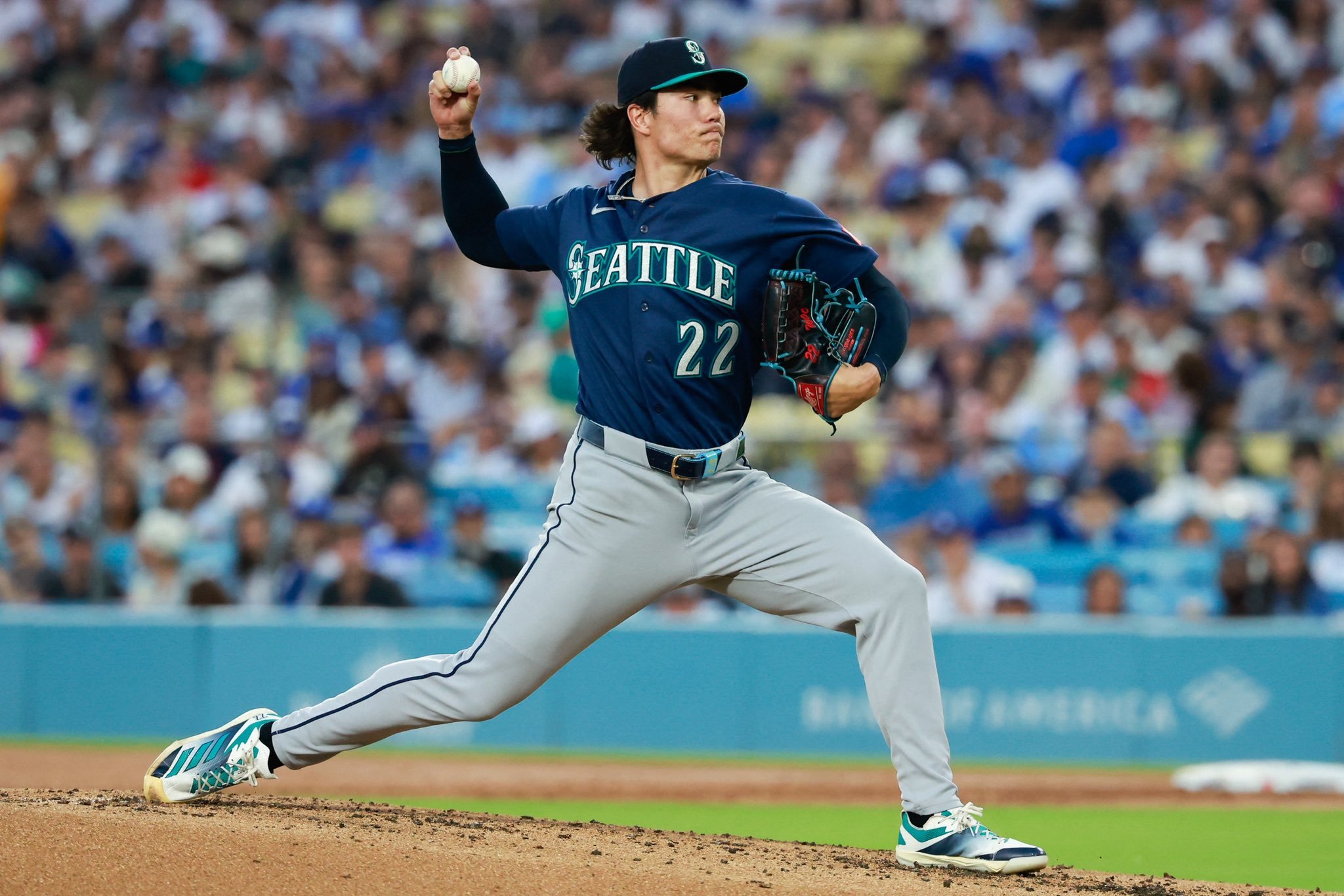
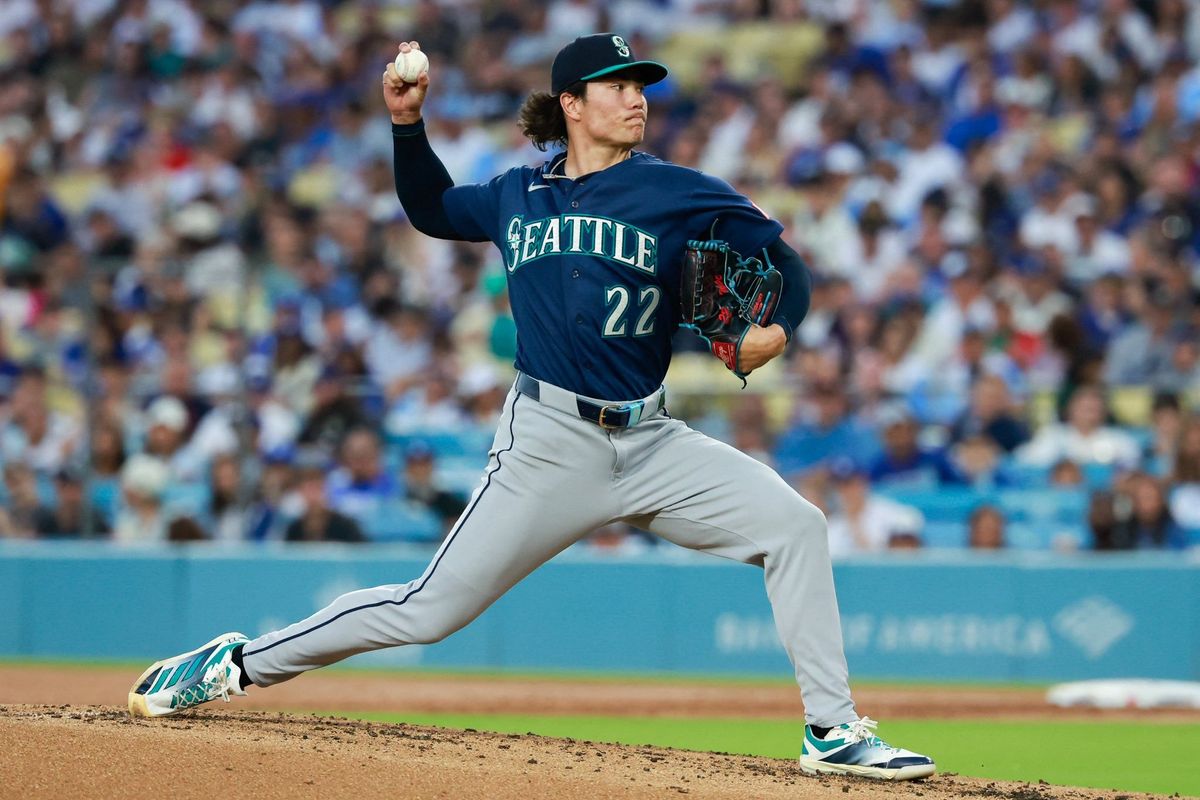
Seattle Mariners pitcher Bryan Woo (22) delivers in the second inning against the Los Angeles Dodgers at Dodger Stadium. Mandatory Credit: William Navarro-Imagn Images [/caption]
The Mariners certainly know what they’re doing wrong after they dropped their latest series to the Los Angeles Dodgers on Thursday with a 6-2 loss.
“Yeah, it’s up to us,” Bryan Woo said after his five-run, five-inning losing outing. “The front office and coaches and everybody has put enough into the product on the field. It’s time for us to do something about it.”
But they don’t quite know how. The team has a consistent discipline issue, careening between lethargic defeatism and frantic efforts to arrest their decline. The failures of the latter cause the team to return to lethargy, and the cycle repeats on a near-nightly basis.
With this in mind, how should the Mariners approach the upcoming 2026 trade deadline? They have a few more days than they would otherwise have most years - with the deadline set for Aug. 3 - but the hour is fast approaching when they have to decide on tune-ups, changes, and deals.
The team is in an odd spot. It’s not a situation where they can reasonably go out and get one-year rentals like they did in 2025, but it’s also not a sell situation, either; they could very well still go on a run and make a splash in the playoffs. An intuitive approach for Seattle is to deal away upcoming free agents in exchange for longer-term options, but those sort of minor sales would have to be augmented by long-term options for the relevant team (say, a prospect). The M’s also have a bunch of starting pitchers, including near-MLB prospects, allowing them to trade from that pool to deepen other areas of the team.
One thing they cannot do is stand completely pat. Beyond that, however, it’s prudent to examine the attitudes that the Mariners might have about their trade deadline situation; there are lots of ways to skin a catfish, after all.
But nearer on the needs list is an ability to slow the game down.
How can the stars they have keep themselves focused and disciplined?
Woo has been one of the bluntest observers of his own mistakes over the course of the season, from his blowup in St. Louis months ago to his most recent one in Los Angeles.
For whatever reason, Woo has been a completely different pitcher on the road than he is at T-Mobile Park. Now, Seattle’s is a pitcher’s yard, but the degree of Woo’s split has been enormous. Whereas he has a 2.20 ERA, 2.36 FIP, and 0.767 WHIP at home, he came into Thursday’s game with a 6.52 ERA, 4.01 FIP, and 1.500 WHIP in road starts this year.
Things got dicey for Woo quickly in the first inning on Thursday. Tommy Edman walked after successfully challenging a 3-2 pitch and Andy Pages singled him to third.
Woo pulled the string on Freddie Freeman and got him to strike out before mixing eye levels against Max Muncy for the second punchout of the frame, but with two outs, Mookie Betts doubled them both home on a slider that was left up in the zone. Further damage came in the fourth as Woo walked Kyle Tucker with one out and gave up a single to Teoscar Hernández before pumping a slider into Dalton Rushing’s wheelhouse. Seattle was down 5-0 after Rushing’s homer.
As much as the Dodgers defeated them in the series and outscored them 16-11, the deciding factor was discipline as much as it was talent. A pair of challenges in the bottom of the first were quite emblematic of this: Edman’s challenge was on a full count with no outs, a situation with a potential gain of 0.63 run expectancy between a ball and strike. After Betts’ double, meanwhile, Raleigh challenged a first-pitch ball - something that could only have a gain of 0.06 run expectancy.
It seemed that Raleigh’s challenge was reactive and overvaluing of perceived momentum; if that is the case, it is a clear example of letting immediate events get in the way of correct process. Those runs had already scored.
More examples of Mariners letting the game speed up proved vital in the sixth as the team had their one chance to get back in the game. Cole Young led off the inning with a triple, Randy Arozarena doubled him home, and Dominic Canzone walked. Julio Rodríguez took a hack at a pitch well below the zone and softly lined out to Max Muncy - the first crack in the attack - and though Josh Naylor singled the bases loaded and Cal Raleigh walked, but Rob Refsnyder overeagerly chased an 0-2 slider and Weston Wilson groundout out to end the inning.
That inning was both the big players coming up short in the big moment - even Raleigh’s walk came after he took a 3-0 pitch right down the middle that could have seen more damage, though it’s hard to blame someone for walking and passing the baton - and the personnel lacking in key areas. Refsnyder gave himself a lifeline on Tuesday, but Wilson is clearly not up to the level that the Mariners need.
Needs or players?
A common trap teams can fall into is thinking solely in terms of immediate needs rather than broadening their scope to include all available upgrades. The Mariners’ immediate needs (aside from improvements from Raleigh and Naylor) are a right-handed bat and another high-end reliever, but that doesn’t preclude Seattle from upgrading elsewhere.
Realistically, there are some areas where they have already made a full long-term commitment: Raleigh at catcher, Rodríguez at center field, Naylor at first, Young at second, and Colt Emerson at short. Most of the pitching staff also fall into this category, though if they choose to trade one, it calcifies the commitment to the others.
That means that most everything else is changeable, though there are plenty of roles each player has and plenty of ways to more creatively improve the roster. Weston Wilson and Victor Robles are two guys who the Mariners would be well-advised to upgrade from, though that doesn’t mean replacing Wilson or Robles per se. Aside from brief spurts for a game or two, Refsnyder has been very absent at the dish - but in addition to finding a replacement for Refsnyder himself, they could reduce the need for a player of that role by swapping Luke Raley for a better, less platoony outfielder. Such an upgrade could also come with better defense, reducing the reliance on Robles’ good-not-great glove.
And yet it would also mean leaving behind Raley’s hustle and his clubhouse presence, but sometimes getting a better player overall means trading in some of those things. There are trade-offs in everything. But this kind of thought process is exactly how the Mariners can upgrade their lineup without confining themselves to one-for-one replacements.
Whether the Mariners go with this kind of approach in the end is, of course, anyone’s guess. But it’s an approach that can often be overlooked.
Should the M’s move Randy Arozarena, a pitcher, or both?
The intuitive idea to retool the team for the following years entails Arozarena and one of the Mariners’ pitchers as the team’s biggest trade chips. Moving a pitcher is the clearest option, as the team has many good starters with more waiting in the wings. Of all these hurlers, Luis Castillo would be the most obvious to trade as he is in his 30s with two more years left on his contract after 2026, but few organizations are after the declining hurler and the team has openly been exploring other options, most notably Emerson Hancock. But there are valid reasons (and probably plenty of suitors) for George Kirby or Logan Gilbert, too, and Seattle should keep the lines open on those hurlers.
Trading Arozarena would be a more bold move, a much more open sell and an admission that the team isn’t as likely to make the World Series as they had hoped. But that admission would only be an acknowledgement of reality, and there would be a sizable return for a guy slashing .283/.376/.451 with 13 homers, 22 doubles, and 20 stolen bases.
Ultimately, the biggest onus is on the underperforming Mariners to discipline themselves back into form. If they don’t, then trading Arozarena would prove a keen decision; if they do, then the team could find itself regretting such a move. Of course, that assumes that improvements for Raleigh, Naylor, and Rodríguez are unconnected to whether they trade away Arozarena - such a trade would have plenty of impact on the clubhouse, but it would also test their competitiveness: if they react sluggishly, it would prove something disheartening about their fight, but they could also take it as a clear impetus and opportunity to slow things down.
The kind of return they get in an Arozarena trade would also matter. Perhaps near-MLB prospects would make sense, or perhaps an MLB player with a different toolset, potentially as part of a three-team trade?