‘Just When You Think You’ve Seen it All’: Blissful Mariners Take 6-5 Thriller in Baltimore

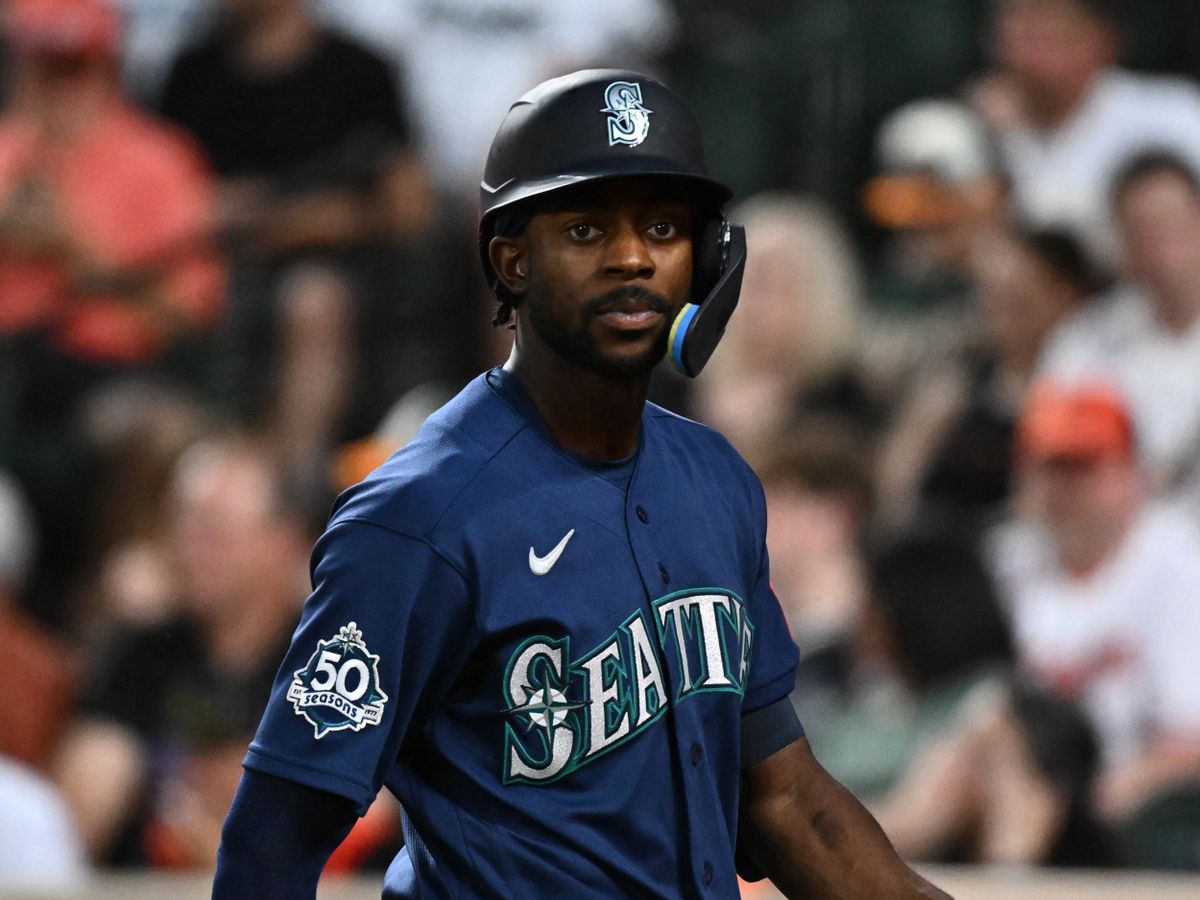
[caption id="" align="alignnone" width="3735"]
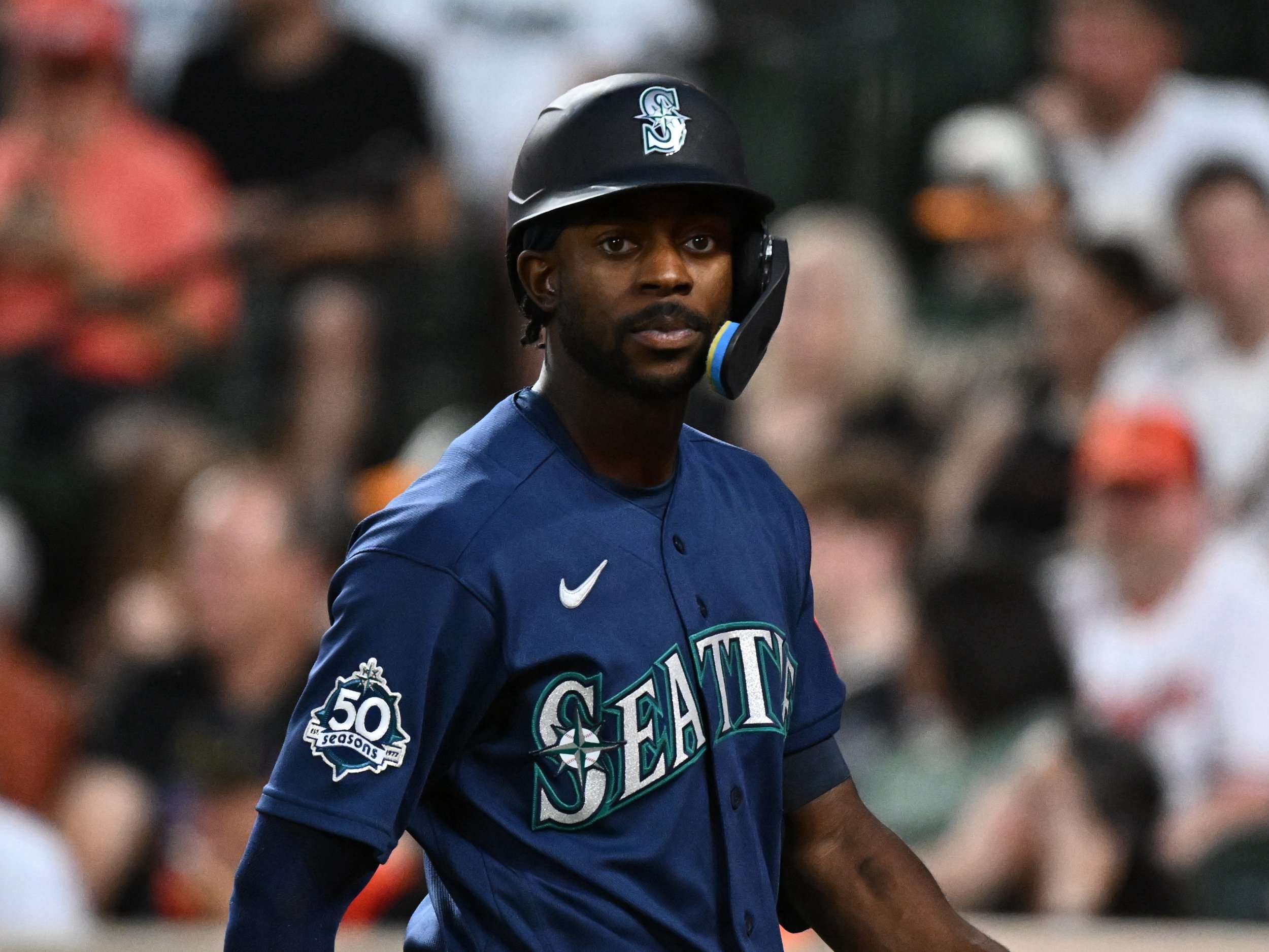
Seattle Mariners second baseman Ryan Bliss (1) looks on during the seventh inning against the Baltimore Orioles at Oriole Park at Camden Yards. Mandatory Credit: James A. Pittman-Imagn Images [/caption]
“This game’s put years on my life,” said Mariners catcher Mitch Garver after the team’s 6-5, 10-inning victory.
The 35-year-old catcher seemingly left it ambiguous as to whether “this game” referred to the night’s win (one more claustrophobic than a closed-up cave) or whether he meant baseball itself, but in any case, Tuesday’s might be the unlikeliest win the M’s have scratched across yet.
Where Víctor Robles and Jose A. Ferrer failed the Mariners on Tuesday night, Ryan Bliss and Nick Davila saved them. Where Mitch Garver’s lack of a challenge in the bottom of the first led to an Orioles run, his A-plus showing over the remaining nine innings allowed his team to take the win.
The victory required incredible plays from Patrick Wisdom and from a somewhat out-of-position Cole Young. It required the weakest arms in the Mariners bullpen to log two clean combined innings and give some rest for their weary companions. Perhaps most of all, it required grinding, gutsy, going-all-out play from a guy who had played in two MLB games in the previous 365 days.
And it required a man on barely four hours of sleep to make the biggest, most stressful pitches of his life. Isolating the only hero from the course of Tuesday’s game would be a task harder than those that befell both Davila and Bliss. But these tasks were not only reserved for the final innings.
Logan Gilbert put together an unlikely quality start despite being at 58 pitches through two.
Despite a 3.79 ERA going into Tuesday’s game, M’s starter Logan Gilbert has had his share of five-and-dive outings with batters fouling off good pitches and laying off tough filth. Much of it had been due to predictable sequencing, though that issue has been less apparent in May than it was in March and parts of April. The O’s stretched him thin over the first two innings, and with all of four available relievers in the bullpen, there wasn’t much room for inefficiency.
Taylor Ward slapped a single on the first pitch he saw and set the tone for that first pair of frames. That was the quickest batter Gilbert had, with Baltimore batters spitting on most of his misses off the plate and finding holes in the field time and time again. Gilbert tried to pitch backwards some of the time, but he didn’t have the requisite control over his secondaries and the bases became loaded with one out.
Now, the third batter could have been prevented with a challenge. A run is a run no matter when it is scored, and with Gilbert’s one-out, 3-2 slider on the edge to Colton Cowser, catcher Mitch Garver would have only needed to be 15% sure of an overturn in order for challenging the pitch to be a break-even decision. In other words, making 15% of all challenges in that situation (runners on first and second with one out and a full count) would cancel out the lost value of missing 85% of challenges.
That may have been the only mistake Garver made all game. Julio Rodríguez made the first of two strong catches to keep a dangerous line drive to only a sacrifice fly, and five pitches later, Gilbert froze Coby Mayo on a front-door slider to finish the inning.
Defense once again saved a run in the second, this time the first of Garver’s many clutch moves with the glove. A walk and a ground-rule double set another excellent table for the O’s, and as Ward chopped a ball to short and Cole Young’s throw went a foot towards the first base line, it looked like Baltimore’s second run was about to come home.
Garver, not usually known for his tagging skills, rapidly swiveled to his left and applied the tag on the runner Tyler O’Neill for a called out. Orioles manager Craig Albernaz called for a challenge, but the M’s catcher had put the tag on O’Neill’s head before the runner’s hand reached the porcelain-colored dish. It took seven pitches to get there, but Gilbert struck out Gunnar Henderson to end the inning.
The M’s starter was at 58 pitches by this point. With Cooper Criswell newly injured, Matt Brash likely unavailable due to Seattle’s load management plan, and both Andrés Muñoz and Eduard Bazardo having pitched two games straight, Seattle had a bullpen held together more with Flex Glue than with flexible arms.
A hope, a prayer, and the promise of a nice big ice bath for Gilbert’s right arm was all that promised to give the M’s even nine innings of work from their exhausted pitchers.
Well, there was a fourth thing: the slider. Gilbert threw it 37 times on Tuesday, just as much as his four-seam fastball and far more than most of the stuff in his arsenal. He kitchen-sinked his way through a 15-pitch third, but in the fourth and fifth, it was mostly sliders and four-seamers with the occasional cutter thrown in. Gilbert got a whiff on half of Baltimore’s 16 total swings against the spinner, and unlike his smorgasbord of secondaries early on, the starter could control it.
The O’s did Gilbert a solid, however, swinging quite early in counts in these two frames and seemingly losing track of the extremity of Seattle’s bullpen thinness. Rodríguez’ second sliding catch kept the fifth clean while the sixth was all sliders and cutters with some changeups, with Gilbert totally emptying the tank and finishing the game with 105 pitches. He went a full six innings.
It would take a lot more than that for Seattle to get a win.
Mitch Garver had one of his best games all season, netting Seattle plenty of runs on both sides of the ball.
Garver had already made up for the first inning missed challenge with his run-saving swivel in the second, but he was just getting started. Despite a .617 OPS through the season going into Tuesday, the backup catcher had notched two homers since Cal Raleigh’s fall to the IL in mid-May and had been serviceable with the stick overall.
With two men on and two men out in the top of the fourth, Garver strolled to the plate and whacked a three-run homer. Baltimore wouldn’t again hold a lead at any point in the game and the Mariners would be up until the bottom of the ninth. A trio of singles in the top of the seventh and the combination of a Young error and an Alex Hoppe wild pitch in the bottom of the seventh put one run each in both teams’ corners, but it was the ninth when the razor’s edge returned.
Jose A. Ferrer’s first pitch to former Mariner outfielder Leody Taveras was called ball one, but Garver challenged and got the strike to begin the final frame. Ferrer, pitching his third game in four days, had little control of his changeup, but when a 2-2 fastball went wide, Taveras started trotting to first.
Seattle got out number one as Taveras made a timer violation and was given a strike. Of all the lucky breaks the M’s got on Tuesday, that one was truly worthy of the record books.
Mayo mixed together a terrific at-bat, however; the Oriole third baseman watched each ball go by and fouled off a couple of good two-strike pitches. When Ferrer tossed him a full-count cookie, Mayo teed off and cut Seattle’s lead to one.
A second stellar tag from Garver in the 10th would put a cherry on top of the catching performance, but in the meantime, there would be others to save the Mariners’ bacon.
“I just knew I could get there”: Ryan Bliss poured every ounce of energy into some game-saving moments of his own.
If Garver entered the year as a role player, Bliss started 2026 as the picture of organizational depth. Once ranked 14th among Mariners prospects by Baseball America before the 2024 season, he hasn’t played consistently enough when he has been on the major league team and he hasn’t been on the major league team for long enough stints to show drastic improvement. Going into Tuesday’s game, had gone 0-4 with two strikeouts in two games this year.
O’s starter Trevor Rogers was in a groove the first two innings, throwing 20 pitches over those frames and facing little trouble aside from a Josh Naylor single. Then entered Ryan Bliss.
The Mariners second baseman, playing because of a mysterious Colt Emerson back issue, came up with one out and Rogers just two pitches into the inning. Four pitches brought the count to 2-2, but as Rogers threw one pitch after another to all corners of the plate, Bliss pestered the hurler relentlessly, fouling off six straight pitches.
“Logan (Gilbert) was coming off a pretty hefty first two innings, I just knew we had to get an at-bat going, get an inning going, give him some breath,” Bliss said of his approach in that appearance.. “And I was like, look, have an at-bat. Try to get a hit, obviously, but have an at-bat.”
Rogers’ 11th toss became a single into right field, fulfilling both of the goals Seattle’s infielder had.
“I think it locked me in for the rest of the night,” said Bliss of that knock.
It was Bliss’ only hit of the game - and he was erased from the basepaths upon a botched bunt by Robles - but his defensive contributions were critical.
Now we return to the ninth inning. Jeremiah Jackson squibbed a slow roller like a heat-seeking sloth for third base, an unmakeable play for Patrick Wisdom at third, and O’Neill fought Ferrer like Bliss had fought Rogers many innings earlier before whacking a liner to right center. Robles misplayed the angle of the fly ball, seeming to expect it to go off the wall, and it fell in and bounced over the wall for a ground-rule double: another break for the Mariners, but a rare one in that part of that inning.
“It was the same stuff, I mean, he (Ferrer) was throwing hard, he was throwing aggressively. They (the Orioles) just weren’t chasing the changeup,” Garver observed. “They put up good at-bats off of him, they really did. They put the ball in play, they were taking tough pitches.”
Ferrer got Samuel Basallo to two strikes, but as Basallo sent the second squibber of the inning and Ferrer’s throw home was late, the Orioles tied the game up and brought the winning run to third. Ward walked as the Mariners reliever began to lose his control, but the second out was made as Wisdom clearheadedly got a force out at the plate on Henderson’s weak grounder.
The weeds were still as thick as the Olympic rainforest. Bliss described the feeling of being in the field as the pitcher and batter performed their war-dance and scenarios scrolled through his mind.
“Everything. Like, I’m literally playing every situation I can in my head before the pitch is thrown. I mean, ‘if this ball’s hit here, where can I go? If this ball’s here,’ I’m just looking to see what could happen,” Bliss said. “Just playing it through, that way, when the play happens, I’ve seen it before.”
An observation often attributed to Dwight Eisenhower - though he himself attributed it elsewhere - is that plans are useless, but planning is indispensable. It ties in with the difference between explicit (conscious) reasoning and implicit (unconscious) reasoning, and the tendency for once-conscious logic to become unconscious with enough practice. Anyone in the MLB has an incredible wealth of practice on baseball situations, calculating ball speeds, and decision-making that allow them to make split-second decisions.
Pete Alonso rocketed a grounder up the middle at 110.7 miles an hour. All the plans went out the window just as all the planning kicked into gear. Bliss grabbed the ball and dashed towards second, foregoing the out at first. There is no time in such a scenario to consciously calculate the expected value of throwing to first versus dashing to second, and indeed the decision Bliss made may have been the riskier of the two. But he made it to the bag before the quick Henderson and inaugurated the 10th inning.
“Like I said, I played it in my head, I was like, slow runner at the plate, I know Gunnar (Henderson) was at first. I just thought it was hit hard enough to where I could beat him. I trusted my speed over his at that point,” Bliss reflected on the play. “I know it was 3-2, I know he was on the run, the ball was just hit so hard to me and got to me so fast, I just knew I could get there.”
A light at the end of the tunnel became visible to the visitors as Randy Arozarena slashed a fly ball to right that carried into the wind just enough to become a two-run homer. Seattle led 6-4 going into the bottom of the extra inning, though the automatic runner for Baltimore meant that the hosts started the frame with the tying run at the plate.
Things got hairy quickly, with a hit batter and a single scoring the one run and putting that tying man 90 feet away. With the infield drawn in, Mayo sent a floater to the shallow outfield. It would have been routine in a normal situation, but with the focus on keeping the lead at any cost and Naylor getting a rough jump, it plummeted towards no-man’s land.
For the second time in as many innings, Bliss prevented a run.
“I actually looked down and saw Naylor, I think he collided with the runner a little bit, so I looked, and I was like, ‘this has to be me,’ ‘cause he’s gonna be late,” Bliss said after the game. “So I just full sprinted, called him off, made the play.”
“Definitely running on adrenaline”: Nick Davila got his first career save by the skin of his teeth, helped out by Wisdom and Garver.
The man on the mound for that second play was Nick Davila, whose mind had been well and truly off baseball 24 hours earlier. But with Criswell’s medical situation deteriorating and the team needing arms, he got added to the taxi squad at the 11th hour.
“So, I had my two-year anniversary with my girlfriend. We were at Din Tai Fung, next to the airport … about 30 minutes north of Tacoma,” Davila remembered about his Monday evening. “I get a call from JR [Rainiers manager John Russell], he said, ‘hey, buddy, you’re gonna head up, and you’re gonna meet the team in Baltimore.”
Thus began a mad dash to get his stuff packed and still try to salvage a planned date. Davila got sent on a red-eye across the country, departing at 10:20 p.m. on Monday and landing at the waking hours of many of Baltimore’s citizens on the day of Tuesday’s game.
“I don’t have any clothes with me right now, and I’m like, ‘Well, I’m on the taxi squad, so I’m probably not gonna play, I don’t know what’s going on,’” Davila recalled. “I’m on this flight with Mastro (Miles Mastrobuoni) and I’m just like, ‘alright, well, s—, hopefully I get in there. Let’s see what’s up,’ I’m not too sure, maybe like 50/50 … we get here at, like, 6:45, get into my room, and it’s like eight o’clock.”
The dominoes cascaded quickly. Davila now had to salvage some sleep before getting to Camden Yards before Criswell got put on the IL, the Mariners came out to a lead, and the eventual assignment went into view as the Birds knotted it in the ninth. While Davila had shown a good ability to get ground ball outs in his little time up with Seattle, a heap of hard contact had made the team choose Alex Hoppe as the low-leverage arm once the ‘pen had its moment of health.
Nevertheless, he entered in a save situation with a runner placed on second. No pressure.
“I just couldn’t believe I was in the game. It was freakin’ nuts. I had goosebumps kinda going out there, I was like, ‘this is not real,’” Davila said. “Every single pitch I was throwing was like, ‘you don’t wanna be anywhere else but right here, let’s execute this pitch to the best of your ability,’ and it was like everything I was putting into it was just that pitch … and it was just a stepping ladder, to the next one, to the next one.”
This mental fortitude and ability to keep his eyes glued to the prize did not come without roadblocks: the aforementioned hit batter and single up the middle - a hard hit ground ball by Taveras, perhaps a cosmically pithy combination of statistical likelihood and a former Mariner doing damage against them - pressed his margin of error down to nothing.
Even if Garver didn’t show it from behind his catcher’s mask, he didn’t have high hopes in his heart.
“Davila came in and hit the first guy, and I said, ‘s—, man, we’re gonna play another inning,’” Garver quipped. “That was my honest thought.”
Garver soon found himself ensuring that Davila could make it there. Jackson grounded the ball down the third base line, and with Wisdom ranging as far as he could with momentum driving him towards the third base dugout, he had no opportunity to go for the double play. And so he fired home, a bit to his arm side as he needed to avoid hitting the runner. Garver swiveled leftwards and applied the tag in time for home plate umpire Doug Eddings to make the ruling of “out.”
The O’s challenged the bang-bang play, but runner Blaze Alexander’s hand kicked up enough dust to cloud any prognosis one way or the other, and the call stood. Wisdom, like Bliss, noted how the action differed from the preparation.
“Yeah, I can sit here and say, ‘yeah, I slowed it down,’ but when you’re in the moment, there’s a lot of adrenaline pumpin’, and the crowd’s loud,” Wisdom said. “But those are the moments you want, right? That’s what you play for, and ultimately, as a kid, that’s what you’re doin’ in the backyard. You’re thinking of those types of moments, right?”
It was on Davila to get the final out. The rookie reliever was the first to admit that there was little real energy left in the tank and that he was running “definitely running on adrenaline”, but he attacked O’Neill in the zone, getting two quick strikes before the batter took a couple off the plate.
“Once I got that first strike on a sinker, and Mitch called a sinker again, I was like, ‘okay, let’s go,’” Davila said, with a breathless chuckle on those last three words as he recalled some sense of frenzied trust. “I had him 0-2, and I was like, ‘oh my God, one pitch away,’ but there’s so many guys that get one pitch away and then they blow it, so I was like, ‘I can’t get too ahead of myself, I gotta make sure I’m in the moment right here … and then I executed the next pitch.”
A 2-2 sinker inside proved finally lethal in what was a veritably Rasputinian loss for the Orioles.
It’s said that in baseball, a team wins a third of its games and loses a third, making the third in the middle the ones that count. There’s a lingering sense that the Mariners strung together
“Just when you think you’ve seen it all,” said Mariners manager Dan Wilson.