Mariners Split First Two against Rockies, Reach Edge of Elimination

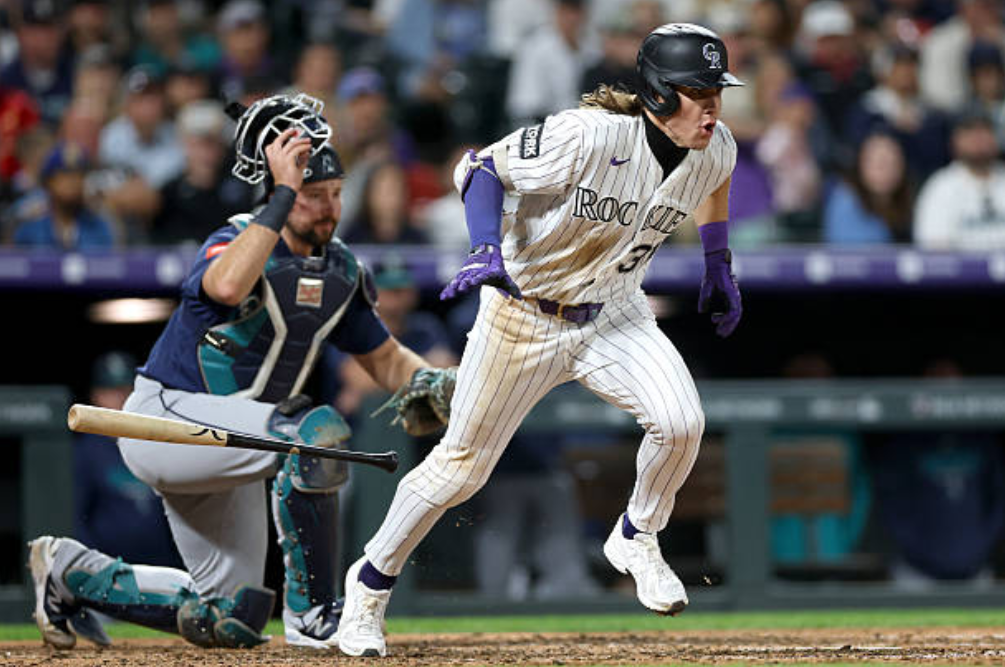
When the M’s looked at their schedule in the early months of 2026, the antepenultimate series of the season - a three-game set against the Colorado Rockies - surely did not stand out as particularly important.
The 2025 Rockies, who were the second-to-last regular season series for the M’s, had been mere speed bumps for Cal Raleigh to reach the six decade mark and for the team to clinch its spot as AL West champs. The fact that their opponents were then the Rockies meant nothing, because the story of that team at that point was what they could do, rather than what could be done to them.
And as it turned out, it is not. Despite the fact that the two teams will be separated by somewhere on the order of 15 to 20 wins at the end of the year, neither one will be going anywhere in October. The Rockies, as expected, have been one of the worst teams in the sport, long competing for the NL West cellar with the near-equally hapless Giants until the bottom fell out in September with a 1-11 run going into their series with Seattle.
Over the first two games of their series, the teams have split a game apiece, looking very much evenly matched as they battled - perhaps flailed is a better term - against each other in picturesque Coors Field. Seattle won 5-4 on Friday while Colorado prevailed 5-3 on Saturday, nearly even tallies for teams that, by this point of the year, were nearly even in ability.
Perhaps the Mariners could have won both had their defense been merely average; perhaps the Rockies could have won both had their pitching been merely average. Both teams ensured that their performance in this series wouldn’t meaningfully impact their chances long before they actually faced off; the only difference is that the Mariners didn’t expect it to happen to them.
Lazaro Montes and Michael Arroyo brought the M’s back to win on Friday.
It’s clear based on his lineup decisions that skipper Dan Wilson doesn’t trust Michael Arroyo to play third base. With the right-handed Gabriel Hughes on the hill for Colorado on Friday, Arroyo started the game on the pine before hopping into the game in the seventh inning.
Arroyo, as he usually does, wasted little time before putting the ball in play, rocking a double down the line with one away and the Mariners down by a run. A couple of productive outs later (here the M’s did indeed manage to do the little things right, though their ability to keep runners from advancing on the other side was sorely lacking), Arroyo came home to score and the M’s tied the Rockies 4-4.
Montes, not to be outdone, waited for his moment to strike. He hadn’t yet gotten a hit by the time his at-bat in the ninth rolled around, but when home reliever Jordan Romano dropped a 1-0 slider on the lower inside corner, Montes made him pay.
It didn’t even look like a particularly comfortable swing. But it doesn’t look like “Laz” needs to bring his A-swing in order to get the club head moving at 84.9 miles an hour, which is what StatCast clocked the swing as. The ball went in the air at a 38 degree angle and yet soared into the second deck in Coors Field, a reminder of the young Mariner’s absurd power and the Mile High City’s thin air. It proved the winning run in their 5-4 victory that day.
Both got the start on Saturday as Cole Young took the day off, with Weston Wilson playing third to - ostensibly - to a better job on defense than Arroyo.
Unlike on Friday, however, neither one came home to score on Saturday. This wasn’t for lack of trying, as Arroyo got two hits and brought his batting average to .368 over his first eight games in the majors.
As for Montes, he had the opportunity to make lightning strike twice in the second game. With the M’s down 5-3 and Arroyo on first with one out in the ninth, the Cuban faced southpaw reliever Brennan Bernardino. The M’s have been reticent to let Montes go up against left-handed relievers (with a rather stark Double-A split in the category perhaps counteracting the fact he was about even between righties and lefties in Triple-A), but what could most be seen is that the weaknesses in his profile are the same from each side: Montes swung and missed two rather sluggish heaters right down the middle.
Had Montes connected, the game would have likely been tied, but as things stood, Bernardino got the rookie to chase a curveball off the plate for the second out of the ninth.
Cal Raleigh had a 2-for-4 day on Saturday, providing most of the offense in the loss.
Though the M’s cinched Friday’s game, catcher Cal Raleigh only got himself a golden sombrero as he went down hacking thrice and looking once. It was a performance that fit more in his dreary first half than in his heretofore second half recovery.
Going into Saturday, however, his slash line since the start of August was a respectable .214/.335/.493. As per usual when Raleigh is in usual production mode, most of the damage is due to home runs, and he continued that style of play when Jose Quintana tossed him a 3-1 cookie with a man on in the top of the first.
What followed was the second-longest Mariners home run of the season at 459 feet. Though this one was certainly helped by the light Denver air - balls hit at 32 degrees within a couple ticks of a 111.7 mile an hour exit velocity have gone an average of 434 feet in the StatCast era - it was certainly no cheap way to start off Saturday night’s contest.
The other run the M’s got in the middle game was a home run off Randy Arozarena’s bat. But despite only scoring thrice on Saturday, the M’s had a solid shot at winning the game and the series.
The Mariners’ defense was atrocious in the first two games in Colorado - not much of a departure from their 2026 norm.
Raleigh may have provided the spark with the stick on Saturday, but he didn’t extend this quality to the defensive side of the ball. Although the swings in his offensive production have been the most notable and well-traversed point of discussion in his last two years, less well-known is that his defense has declined year-over-year in each of those seasons.
That defense, though fallen from his Platinum Glove campaign in 2024, was still above-average last year. But in 2026, the glovework has dipped into outright negative territory according to StatCast’s fielding run value. On the aggregate this year, he has improved his ability to block pitches, but has suffered concurrent collapses in catcher framing (still important despite ABS) and in throwing runners out.
It was that last part that came to the fore on Friday and Saturday. Not all of the Rockies’ five bags on Friday were necessarily Raleigh’s fault, but there was no shortage of bad or late throws that made bases of bad and good jumps alike.
Jake McCarthy got the steals party started in the fourth, Ezequiel Tovar and Connor Norby both swiped second at different points in the sixth, and Cole Carrigg nabbed second in both the seventh and ninth. The last of those steals was at least a little close (close enough for Dan Wilson to pull the trigger on a manager’s challenge), but up to that point, the Rockies had gone a perfect 5-for-5.
Against Raleigh, they did - but when Carrigg tried to bolt for third, Andrés Muñoz had him dead to rights between the basepaths. The pickoff ended Colorado’s last real chance to come back against the Mariners on Friday and Muñoz completed the save scarcely a minute later.
Thanks to a Friday failure rate in the clutch that could be described as a mile high from the Rockies (they went 4-for-20 with runners in scoring position), only one of those stolen bases came around to score.
But the Rockies’ only run against Mariners starter Bryce Miller on Saturday was due to such a throwing mistake on Raleigh’s part. With an out in the third, McCarthy laid down an unexpected bunt. Raleigh popped up and rushed to get the ball, but his throw went wide of Naylor and McCarthy steamed into third.
Of course, the rest of the defense had plenty to say as regards the Rockies’ run-scoring in the first two games of the series. Arroyo, playing second, failed to back Naylor up in time on the bunt play, slowly strolling to the requisite position rather than quickly darting there. Dominic Canzone’s throw home on an ensuing shallow fly ball bounced to the plate and kicked off Raleigh, allowing McCarthy to dash to the dish and put Colorado on the board.
Things didn’t end there in the miscues department. Bryce Miller was lucky enough to not have the defense affect his scoreline too heavily - well, except for the most important statistic - but the same didn’t apply to Carlos Vargas or Jose A. Ferrer.
With Vargas on the hill (he had quickly gotten out of the sixth and kept Miller’s earned run line spotless) and one out in the seventh, the Rockies got runners at first and third. The manager Wilson turned to Ferrer to get a potential ground ball double play and keep the Mariners’ three-run lead intact.
Ferrer duly got the team that ground ball; he got multiple, in fact. Even during his slump in the second half of the year, he has been doing so more often than not. Unfortunately for Seattle, their grounder-focused bullpen core is sorely mismatched to the defense that exists in actual fact behind those pitchers.
One run scored on a weak squibber that the M’s could do nothing about but take the lessened lead and get the extra out. But Norby proceeded to ground a rather routine ball to third, where W. Wilson was waiting - presumably because of his greater experience and defense.
The third baseman’s reaction time might have been measurable in hours. By the time Wilson unfroze himself, he could only weakly move to his left and awkwardly lunge at the ball, and what should have been a tailor-made third out became a single.
TJ Rumfield poked one through the middle to cement the punishment, tying the game at three apiece.
Cooper Criswell came into the inning to relieve Ferrer but followed up that performance with a walk to load the bases and a full count cookie to Carrigg that the latter coaxed into center field for two more runs, bringing the game to its final 5-3 score.
W. Wilson, rather fittingly for his role in the loss, struck out to end the game.
On Deck: officiation.
The last note in the melancholy saga of the Mariners’ 2026 season is set to come sooner rather than later.
One Rangers win would make it mathematically impossible for the M’s to win the AL West; one win for the White Sox would make it mathematically impossible for Seattle to get the third wild card spot. A Mariners loss would seal both simultaneously.
The team’s whole final week, then, could be officially meaningless. That isn’t so different to where they are now, after all.