Analysis: Why Continue Piggyback When Tactic Lacks Intended Benefit?

[caption id="" align="alignnone" width="3435"]
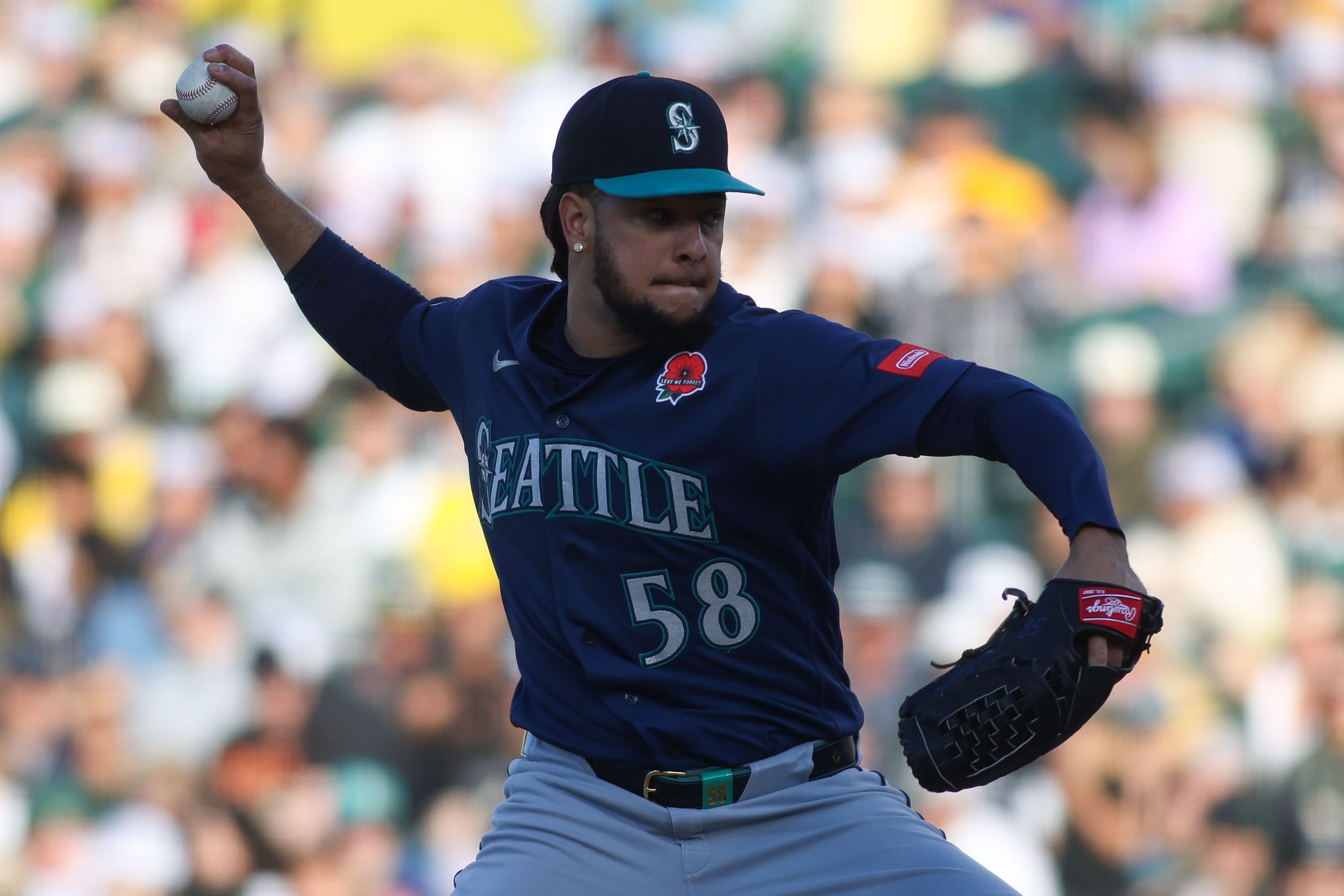
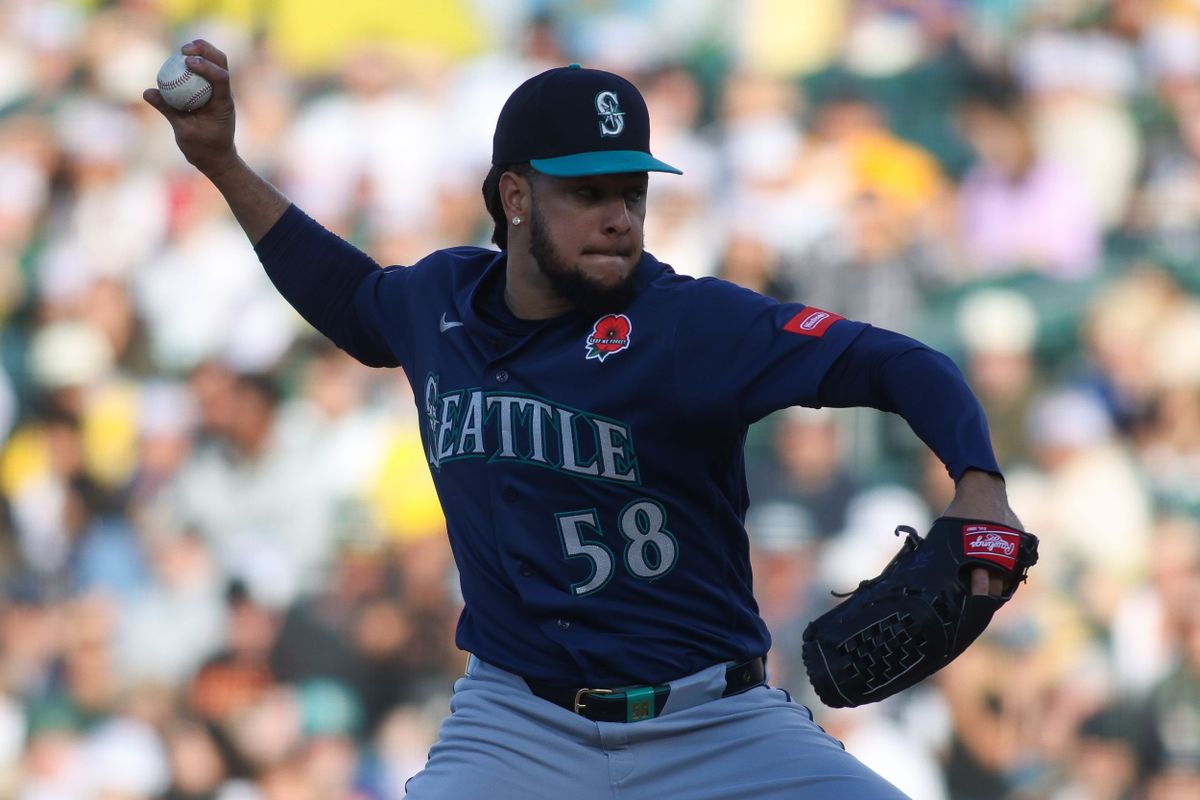
Seattle Mariners pitcher Luis Castillo (58) throws to a Athletics batter during the first inning at Sutter Health Park. Mandatory Credit: Scott Marshall-Imagn Images [/caption]
From the score of the game itself, the Mariners’ performance on Monday against the A’s was as good as they could hope for. Seattle took advantage of some defensive miscues in the top of the third to scratch across a pair of runs before the wheels flew off Sacramento starter Aaron Civale’s bus with two outs and the team wound up with a 6-0 lead before the end of the frame and a 9-2 win by the end of the game.
But that explosion of runs papered over some clear tension as the team continued to use its tactic of piggybacking two of their six starters. To be abundantly clear, the tension itself isn’t the main reason why the idea is flawed - that would be the self-imposed constraints on player usage - but given that it seems to have been adopted in order for such tension to be avoided, the uneasiness was notable and instructive.
Bryce Miller had spun a gem given his pitch limitations on Tuesday, May 19, going 5 ⅔ innings in the first of Seattle’s attempted piggybacked starts. The game fell apart in the ninth as the M’s tried to stretch the piggyback beyond the point where it made sense, but Miller’s performance itself during that game was a good sign.
Luis Castillo, meanwhile, had been the shakier of the duo on that night - working around a jam in the eighth was enough for that difference to be felt when Miller had brought a no-hitter into the sixth - and got pulled after letting two runners reach in the ninth inning. Those men came around to score and give the M’s a loss that day, and with Castillo’s struggles for the first two months of the year, it made for a situation where “the Rock” had the most to prove going into the game.
The roles were reversed on Monday; Castillo began the game while Miller was set to go forth in relief. Perhaps correlative with that, it was Miller who was the less secure of the two hurlers, though both had big cushions after the mammoth third inning. But where Castillo was cleanly and quickly working through A’s hitters for the first four innings - with the best stuff he had shown since his inaugural start of the year against the Yankees - Miller had to deal with a lot of batters fouling off a bunch of pitches and working him over his five innings.
For Castillo, the availability of the changeup allowed him to de-emphasize the sinker somewhat (as that pitch has been the one to be hit the most, though it can be a bit of a chicken-and-egg situation with him going to the sinker in situations when he’s already struggling), but the key to his success was pinpoint accuracy with his four-seamer and slider: exactly what had taken him to victory against the Yankees in his first start. When he missed, he missed out of the zone, rather than over the plate, but he worked ahead in so many counts that his misses didn’t matter.S
“The command, the pitches, the mindset, the attacking, it was something that we are looking for all season,” Castillo said of his outing [1]. Had it been a normal start, there would have been plenty of runway to go six innings; after all, he had thrown just 68 pitches.
Castillo wasn’t happy upon hearing that he would be out of the game after just four, though, showing a level of frustration rarely seen from the usually level-headed hurler.
Another look at Luis Castillo after learning that his night was done.
Can’t recall ever seeing this kind of frustration in his nearly four years with the Mariners.
"We knew that was part of the plan, and you've got to respect what his decision was." pic.twitter.com/goDRAmc262— Daniel Kramer (@DKramer_) May 26, 2026
The starter seemed to have cooled down a bit after some innings in the dugout and a chat with manager Dan Wilson during the top of the fifth.
“Starting the game, I knew that he (Miller) was throwing. I asked him (Wilson) ‘one more inning, one more inning,’ but he told me that Bryce was already ready in the bullpen,” Castillo said. “You know that it was part of the plan, and I respect that decision that they made.” [2]
Wilson also recalled Miller being up and running by the time Castillo realized he was getting pulled, making the switch fait accompli during their conversation.
“I don’t know if it (four innings) was predetermined, but I think, once Bryce gets going there, it’s kinda hard to sit him down,” Wilson said on Monday.
Both pitchers are clearly uneasy with the setup, with unclear instructions on when one is starting and the other is going in relief.
“This setup’s not very comfortable,” Miller frankly told Mariners.TV’s Brad Adam, though the hurler did express appreciation for throwing on a big league mound and a professionalism about doing what is asked.
Perhaps the team has tipped their hand to an alternation strategy with Miller starting and then Castillo, but it was clear that the higher-ups hadn’t communicated the eventual starter all that early to the guys on the ground. Miller said as much, that the team hadn’t made things clear until the last day or two before the game itself.
Castillo expressed both skepticism and openness to the piggyback, though perhaps the overarching feeling was resignation to the fact that, once the brass decides on something, that’s what the team has to do; there’s a clear hierarchy to all of this, even though the final judgments can seem as if they are coming down from the furthest unreachable balconies of an ancient tower.
“It’s a plan that, like I say, in my nine-year career they have never done this ‘piggyback’ thing,” Castillo said. “But, it’s wholly crazy what some people are used to; we just have to keep working on what they want us to do, and well, just comply with that decision.” [3]
Of course, the nine-run beating the bats gave to Sacramento’s pitching papered over pretty much all the issues either pitcher could have had on that particular day. There were scarce pitching strategies, operations, or tactics that wouldn’t have resulted in a win with the run support in mind. Hydrogen bomb versus coughing baby, as the kids say. But one could imagine that, given a slimmer lead, their discomfort might have shown more. That’s what happened the previous Tuesday, after all.
The lack of communication is the most worrying segment of the saga. If the plan is alternation, as it seems to be, anyone involved in planning could have just told the two starters as much as soon as they could. The fact that they didn’t is indicative of something. This same disconnect is shown from the team’s treatment of the J.P. Crawford situation, where the indications were that the team prioritized keeping the shortstop in that position over getting the defensive improvement, only for the shortstop to suggest moving in order to help his team win. There is no need to act as if a fog of war exists between front office and field players, given that both occupy the same building.
Now, the worry of stepping on toes should be subordinate to winning. If a decision will clearly improve the chances of success, the good vibes from that success will drastically outweigh personal distaste with diminished or less prestigious roles. But not only does the piggyback represent little else than a lateral move from other options, the very toes it was meant to leave untrod upon have very clearly been squished.
Ripping the band-aid off and moving someone to the bullpen, or otherwise committing to a six-man rotation, would have clearer advantages. The six-man cycle would keep all the pitchers ready in case one of them goes down, and with the way Castillo pitched on Tuesday, it’s quite possible his skid is behind him, leaving the M’s with a half dozen viable starters. Transitioning back to starting (in that same injury case) from a previous bullpen role would take a bit of re-adjustment for whoever goes to the ‘pen, but that would preserve the five-man rhythm and allow the team the flexibility of using a starter-quality reliever whenever the need arises rather than confining them to every fifth game.
That last point is crucial. If Castillo - who is still probably the most fit for a bullpen role amongst the six - can give three innings or so whenever needed, it would be a lot more valuable to the team than putting all their chips on the piggyback. But why should it be Castillo going back to the bullpen?
To be clear, it’s not an easy decision. But between Miller and Castillo, it is the latter who is more dependent on day-to-day secondary command. If he loses that, hitters can key in to the four-seamer or sinker and have a field day, as they have earlier in the season. Now, a clearly and consistently revived changeup would alter this assessment, but that’s the way things stand at present.
It wouldn’t be surprising if Miller stumbles at some point this year, though. Fastball-focused Mariners-developed pitchers tend to go through a clear cycle of early dominance based on the heater (and sometimes one or two secondaries) followed by the league adjusting to those pitches and a period in the doldrums - sometimes extended for years as with Logan Gilbert - until a more thorough arsenal of secondaries can be developed. Miller is clearly still fastball-first in spite of a good splitter and lots of potential in his slider, so if the cycle holds true, he might see some frustrating lack of wind in the coming months. Perhaps that would presage a return for Castillo.
In any case, these players are professionals, and are willing to commit to the brass’ operations even if they aren’t the clearest or wisest.
“This is the plan, this is the plan that we have: when he (Miller) takes it to open the game, I go to the bullpen,” Castillo said. “This is the plan, and I have to accept it and adapt myself soon to the position that I didn’t impose, and yeah, we have to do it.” [4]
[1] Translation mine from the following: “Los comandos, picheos, la mentalidad, atacando: eso fue algo que nosotros estamos buscando durante toda la temporada que tenemos.”
[2] Translation mine from the following: “Sabe que, empezando el juego, estaba tirando así. Y yo le pedí ‘un inning más, un inning más,’ y me dijo que ya Bryce estaba listo en el bullpen … pero, tú sabes que ese fue parte del plan, y respeto esta decisión que ellos toman.”
[3] Translation mine from the following: “Es un plan que ya, como digo, nueve años que tengo en mi carrera nunca habían hecho eso de ‘piggyback,’ pero, es de toda la locura lo que unos acostumbran; solamente seguir trabajando lo que ellos quieran que nosotros hagamos. Y bueno, solamente cumplir con esta decisión.”
[4] Translation mine from the following: “Ese es el plan, ese es el plan que tenemos: cuando él le toca abrir el juego, yo voy al bullpen. Ese es el plan, y tengo aceptarlo y tengo adaptarme ya a la posición que yo no he impuesto, y sí, tenemos que hacerlo.”