Julio Rodríguez Hamstring Injury Raises Roster Management Questions

[caption id="" align="alignnone" width="6000"]
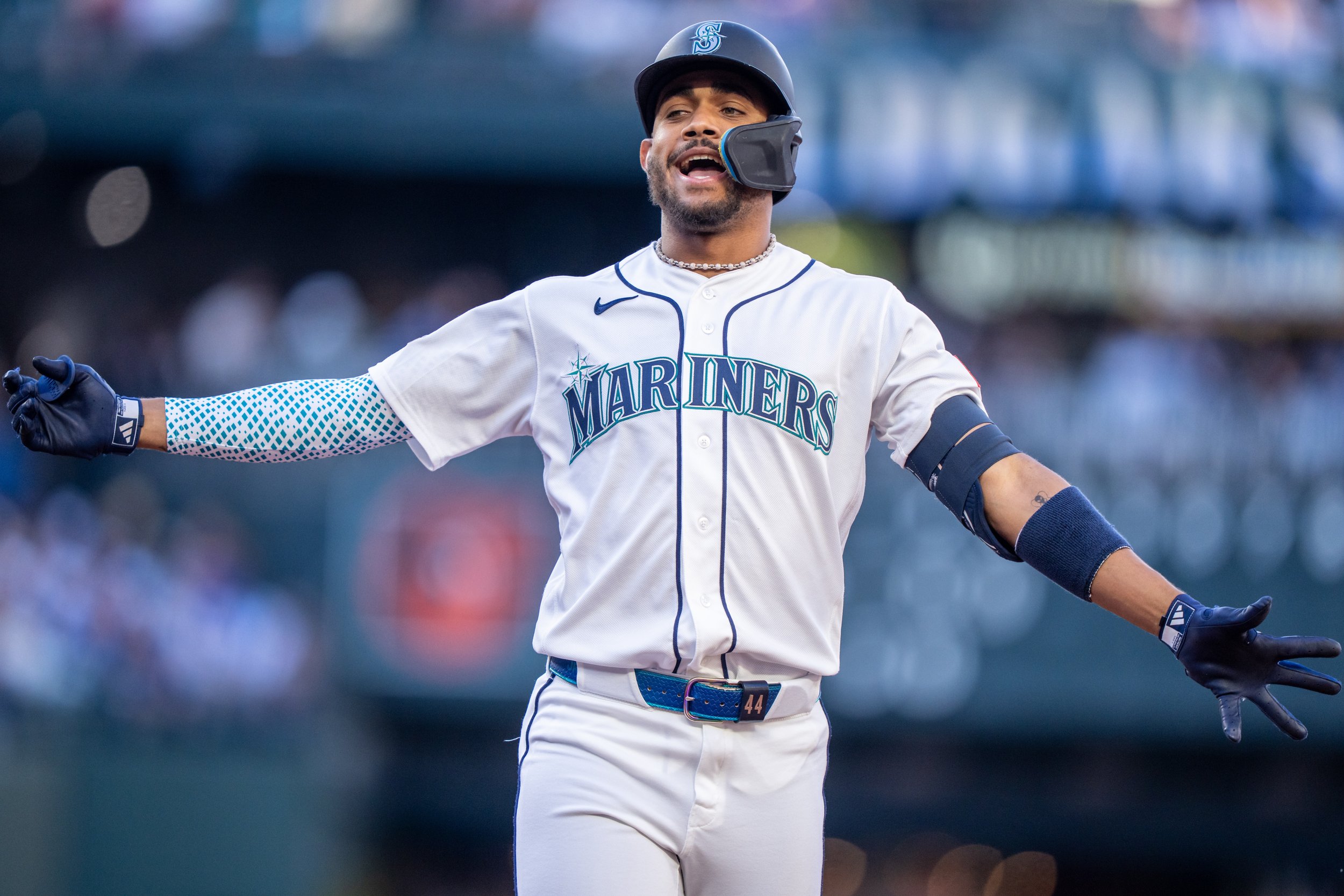
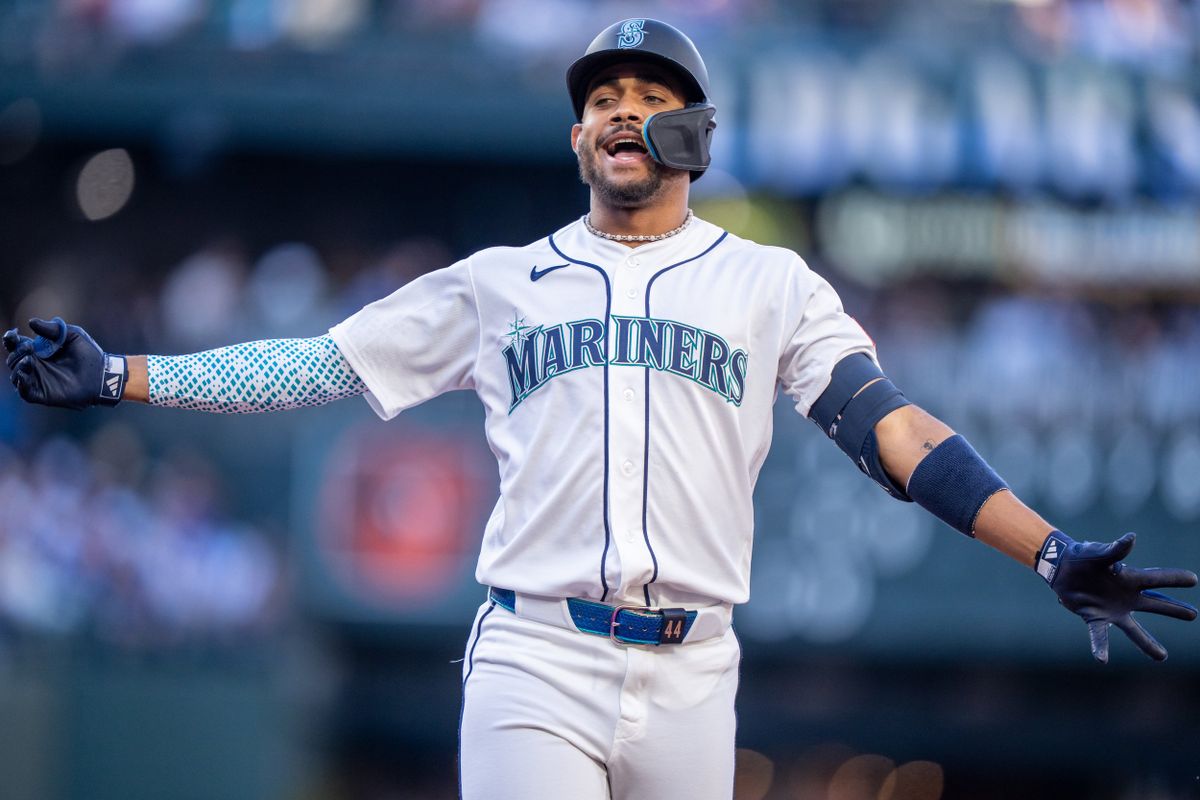
Seattle Mariners centerfielder Julio Rodriguez (44) celebrates at first base after hitting a RBI-single during the third inning against the Baltimore Orioles at T-Mobile Park. Mandatory Credit: Stephen Brashear-Imagn Images [/caption]
The Mariners lost 5-3 on Tuesday, with stagnant offense and uninspiring low-leverage relief pitching, but the biggest news from the day was that the continuing injury steamroller picked up another victim. Julio Rodríguez wasn’t in the lineup on Wednesday after getting injured during Tuesday’s game. Despite scoring the only run the team had through the first eight innings on the 125th double of his career, a rough at-bat in the bottom of the sixth was his last appearance on the day.
Rodríguez left the game as the top of the seventh began. Rob Refsnyder entered the game in right field and Víctor Robles moved over to center, stretching the in-game roster to its limits considering their day-to-day injuries. Refsnyder faced the right-handed Yennier Cano with runners on the corners and two outs in the bottom of the eighth, popping out to end the inning without any runs coming through, but the longer-term worry regards Rodríguez and what is being called a hamstring spasm.
The center fielder, according to skipper Dan Wilson, suffered this spasm jumping for a low fly ball in the top of the sixth. The team checked in on him after the half inning and took him out after re-checking at the end of the sixth. Wilson elaborated on Wednesday that Rodríguez had been recovering well from the injury, only out of the game due to the quick turnaround from the night game to the day game. But these things can take unexpected twists and turns even if that was a truthful statement.
This appears to be the play in which Julio Rodríguez tweaked his hamstring, based on what Dan Wilson said postgame. pic.twitter.com/Yem42VwTAJ— Daniel Kramer (@DKramer_) June 18, 2026
Outside of his double, Rodríguez hadn’t been making good swing decisions during the game, though this aspect is unlikely to be directly related to his hamstring. The jump that the center fielder made during the play was probably unnecessary, but these kinds of injuries stem more from wear and tear than they do from the specific stress that acutely provokes a player’s pain. It’s possible that the low-level stress could have subconsciously affected his play, but that is obviously speculative.
The consequences of the play itself could be found in the third earned run that starter George Kirby gave up, a two-out RBI triple from Leody Taveras. A scene from a bygone era played itself out in right center as the ball rolled all the way to the wall before the hobbled Rodríguez could get to it; a fully healthy center fielder would have cut the ball off beforehand and kept Taveras to a double, and with “Polar Bear” Pete Alonso running from first, there would have been a solid chance of keeping the run off the board entirely.
Leody drives one in the gap for an RBI triple! pic.twitter.com/szhJPhEimx— Baltimore Orioles (@Orioles) June 18, 2026
Counterfactuals aren’t the point. The team is still hoping that Rodríguez’ injury is minor, similar to Colt Emerson’s knock and unlike the team’s long-term issue with Brendan Donovan or potential lingering hamstring problem with Randy Arozarena. But the pattern of injuries does raise questions about commonalities; at a certain point, is it still bad luck?
The short answer is mostly yes. Teams sometimes go through such injury bugs, and even though there have been commonalities in hamstring or back issues, these are large workhorse body parts that are more likely to get injured over the course of a season.
But the degree of wear and tear that the headline players are going through may be a factor of roster construction. Going into the season, the Mariners had platoons in two positions (right field and designated hitter), using 11 of 13 hitting roles for the top-line production. Once accounting for a backup catcher, this leaves one remaining batter on the roster to give the occasional rest days for everyone else. Assuming everyone is healthy, this would be a rotating Brendan Donovan, but he is currently in the beginning stages of running work and, while rehab is tentatively in the near future, nothing is scheduled yet. In any case, Donovan was expected to have hiccups coming off surgery in the offseason, and the team has relied on most of the starters to put in work every game.
It is perhaps symptomatic of a common issue in the Mariners’ strategies, that being that too many things often have to go right in order for the overall strategy to work. Injuries are always going to happen on any sports team, but being able to rotate guys out even in the event of these injuries to make sure there isn’t a cascading effect is something that the M’s need to do more often.
Despite all of this, where it may seem as if the sky is falling day-in-and day out as the M’s drop winnable games right and left, the team is still treading water with the fortune of playing in the worst division in the sport. It remains to be seen on Thursday whether or not the team is telling the truth regarding Rodríguez returning then, though most teams are cagey with these sorts of things and the most important item on the injury checklist is to make sure a minor knock doesn’t become a major one.
A change in tactics regarding platoons could help alleviate things, especially as players trickle back from these injuries. Rob Refsnyder may have staunched the bleeding for now with a solid June, but a big swing in the trade market for a much more versatile and much less platoony right-hander could also serve as a way to cycle out everyday players here and there and prevent such injury bugs from striking later on in the season.