Mariners Drop First Game of Critical Rangers Series

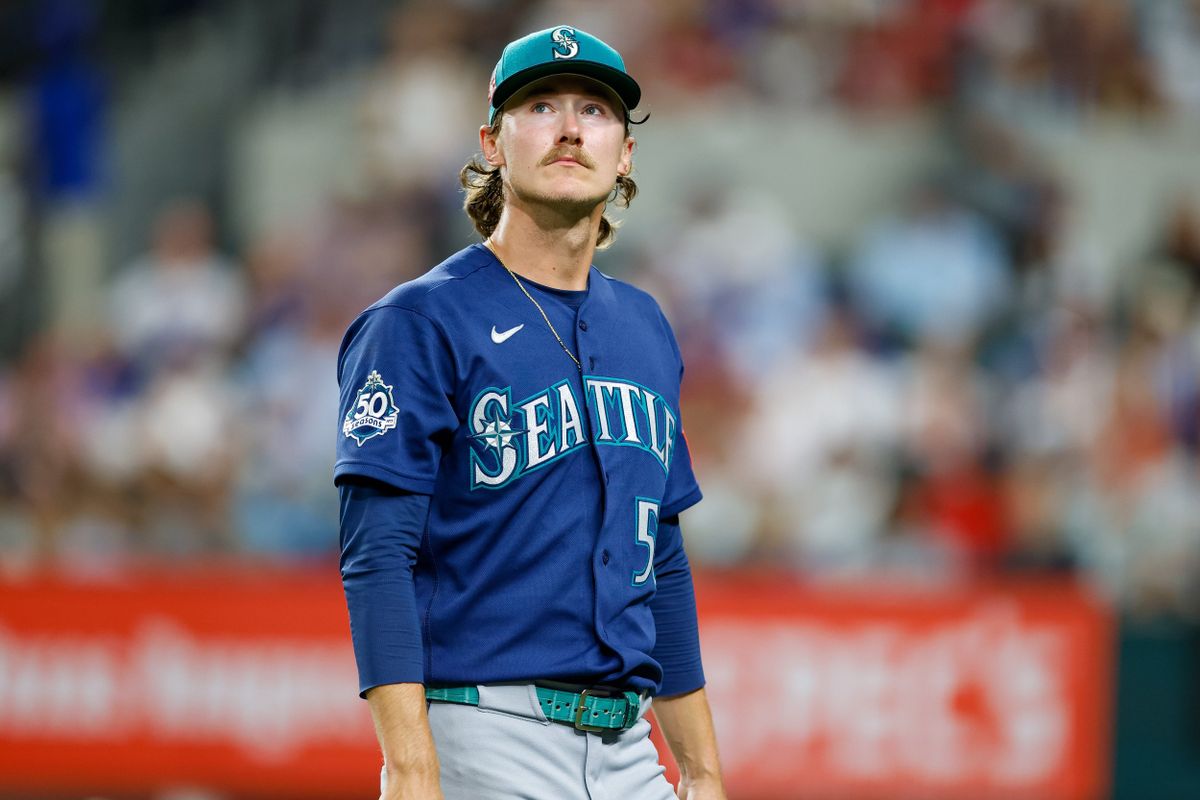
[caption id="" align="alignnone" width="6098"]
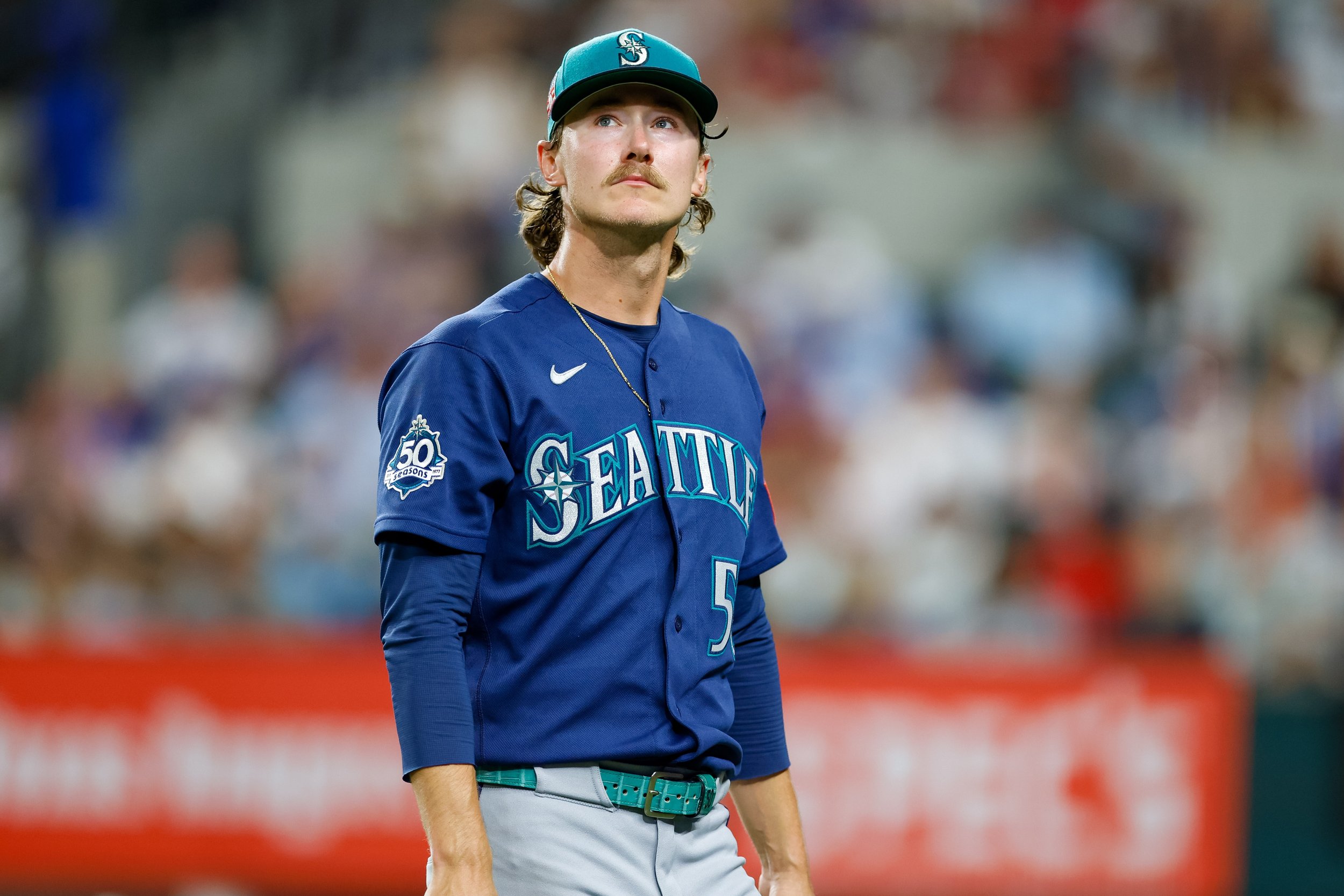
Seattle Mariners pitcher Bryce Miller (50) comes out of the game during the sixth inning against the Texas Rangers at Globe Life Field. Mandatory Credit: Andrew Dieb-Imagn Images [/caption]
Every contest is an opportunity for a team to advance one game in the standings. The Mariners entered Friday night’s game having won 51 of those opportunities and lost 52 of them. They hadn’t given much indication at all that they could transform themselves into a competent, consistent squad during those 103 games, with every speck of momentum mired in a following slump, and with the team seemingly unwilling to impose themselves on the game.
At times, it appears that the team really wishes to turn things around. At others, they seem convinced that they can’t really control or influence what happens during a game. Skipper Dan Wilson didn’t touch upon the divisional implications of the loss, instead focusing on an offense that he saw as indicative of an upswing and a level of fight he admired.
“The score didn’t go our way tonight, but I thought we did a lot of good things offensively. We particularly really put a lot of pressure on it, a lot of pitches on. I thought they took their walks when we needed them, and able to get some hits and create a lot of traffic,” Wilson said. “I like the way they continue to fight back as they always do. Got behind after the solo shot, came back in it, got behind after the two-run shot, and were able to jump right back in it again. And they kept fighting ‘til the end.”
There is a difference between finding silver linings and blinding oneself to one’s own flaws. If that was the Mariners fighting, it goes a good ways to explain their season-long lethargy. It may have been one of the least close one-run games ever played, with the score only reaching 5-4 in the ninth because they lucked into a two-out wild pitch. Once they fell behind 5-3 in the bottom of the sixth, they had two total baserunners for the final three innings of the game.
This is flatly not how a contending team plays against a divisional opponent, let alone one that the world fancied as runaway division champions before the season. Their autopsy for Friday’s game has long since started to resemble an autopsy for the whole season, though as has held true the entire year, the other American League teams have been too busy immuring their own chances to take advantage of Seattle walling itself off.
Seattle scored once in the second, but a missed opportunity with the bases loaded again squandered a chance to put their opponents away.
The Mariners went quickly in the first, but in the second, Josh Naylor worked a one-out walk, Cole Young cracked a single, and Weston Wilson knocked Naylor in with a single of his own before Colt Emerson walked the bases loaded.
Now, it was a two-out opportunity, but with the Mariners’ feast-or-famine relationship to clutch hitting and a 1-1 tied game at the time, a hit - or even a walk - could have gone quite a ways towards getting them in the right zone, and anything except an out would have scored at least a run. The M’s wound up going 2-for-8 with runners in scoring position (fairly good by their standards), but the missed opportunity with bases loaded ended up haunting the team later on in the game.
Bryce Miller struggled to place his splitter, and the Rangers hardly missed his heater.
Mariners hurler Bryce Miller entered Friday’s game with 8.4 strikeouts per nine innings in his career. Even during a tough, injury-marred 2025 season, he still managed 7.4 strikeouts per nine, and the least amount of strikeouts he had yet had in an outing was one (which he had done four times).
The Rangers struck out zero times against Miller on Friday, and of all 48 swings they took against him, they only missed five times. They didn’t miss once on his fastball, even though its velocity was roughly similar to his season average. Typically, when one pitch isn’t working well, a hurler like Miller can go to one of his other quality offerings. But the fastball was still one of his best pitches in a lot of ways, as the Rangers had a 30% hard-hit rate against the pitch.
But Miller had good control of neither his splitter nor his slider. The splitter’s issues were evident early in the game, when one stayed up for Wyatt Langford to launch a blast to left field. Nimmo sent another hanger for a double to right, and although he didn’t score, the bad locations made the Mariners’ battery lay off that pitch.
“The whole game, the splitter was staying up on me, it was floating. As the game went on, we kind of went away from it … It was just staying up, I mean, a lot of bad shapes, leaving them up, not getting them underneath the zone in finish counts. It's done that to me before, but just not like a whole game.”
Miller’s slider also seemed off, as he wasn’t able to locate it near the edges of the plate, with the pitch either backing up on him or flying well out of a contested area of the plate. The one pitch that the battery figured out would do well against Texas was the cutter, but according to Miller, they perhaps started using the pitch a bit late in the game.
Another homer, this time by Jake Burger with a man on in the third, gave the Rangers three runs. But despite constant contact and deep fly balls, they mostly died at the warning track, and by the end of the fifth inning, Miller was on 74 pitches, well on his way to a potential quality start.
But with an out in the sixth, Nimmo fought off a high inside fastball into right field and Miller walked Evan Carter after going up 0-2 in the count, enough for Wilson to take him out and replace him with Eduard Bazardo.
Colt Emerson had a good day at the dish, but a defensive miss gave the Rangers the final lead.
Emerson is perhaps finally turning something of a corner at the plate, as he went 2-for-3 with a double and a walk, his first multi-hit game since July 4 and his first extra-base hit since June 26. He led off the fifth inning with a single, beginning a rally that tied the game 3-3 as Randy Arozarena singled him to third and Dominic Canzone slapped a double into left center field.
As Bazardo came into the game, he got Jake Burger to roll over a grounder up the middle. Had Emerson gotten a good jump on it or moved quicker to grab it, it would have been an inning-ending double play and the game would have still been tied as the seventh began. But he didn’t get a good jump, and - perhaps more worryingly - his charge leftward to the ball was notably slow and it snuck past his outstretched arm. Nimmo scored from second and Carter got to third. Nicky Lopez laid down a bunt to bring home Carter and make the score 5-3.
Emerson, to his credit, was the most effective part of the team’s putative comeback efforts in the ninth, as he whacked a double down the right field line with one out in the frame. But with the team having been as quiet as churchmice with the bat the previous two innings (even against a very weak Rangers bullpen), they needed to string some hits together to turn it into a victory. Emerson got to third on a groundout and scored on a wild pitch, but as Arozarena weakly rolled one over, the game ended with a Rangers victory.
When it comes to evaluating rookies, early struggles can be rather unindicative of future ability. He has been chasing far too much, but he probably has an ability to be more disciplined and his track record at times in the minors (in addition to his clear tools) suggests he is going to improve on that front. He has been a fairly decent defender - above average according to defensive runs saved (DRS) and below average according to StatCast’s fielding run value (FRV) - but the way Burger’s grounder worked its way past him was a startling display of perhaps a lower defensive ceiling than the Mariners expect. The late jump can be made earlier with training, but Emerson’s slowness in getting to the ball was unsettling. It’s one play, but it perhaps says something uneasy about Emerson’s future.
Still, Emerson has a whole lot of chances to prove himself well more than the worth of his contract, and it’s still quite likely he settles in as a well above-average fielder. But perhaps expectations should be tempered as to whether he can enter the elite echelons of defensive shortstops.
The Guns of August
There’s a reason the M’s lack of urgency is likely to bite them in the backside if they’re not careful. On July 27, 2026, the Mariners will play the final game of a four-game set in Texas. At most, they can be 54-53. After that, the deluge.
The barrage starts with three games against the Dodgers, whose 66-38 record is the best in baseball. A brief two-series respite against the Twins and Tigers (with .486 and .481 winning percentages, respectively) follows, but then the Mariners face the Rays (.583), Yankees (.563), Astros (.486), Brewers (.621), Cubs (.563), and Phillies (.538).
To date, the Mariners have a 21-26 record against winning teams, not exactly promising when six of nine teams they face in the course of a month are well above the even mark. Seattle’s particular bugbear of lethargic hitting won’t be alleviated by the opponents they face.
To put it short, they are running out of time for dawdling. They could very well end up well underwater at the end of August, and if they drop more games to the Rangers in their current series, they could be nearly out of the divisional running by the onset of September.