Big-Time Bryan Woo Bounce-Back Outing Gives Mariners Series Win vs. Atlanta

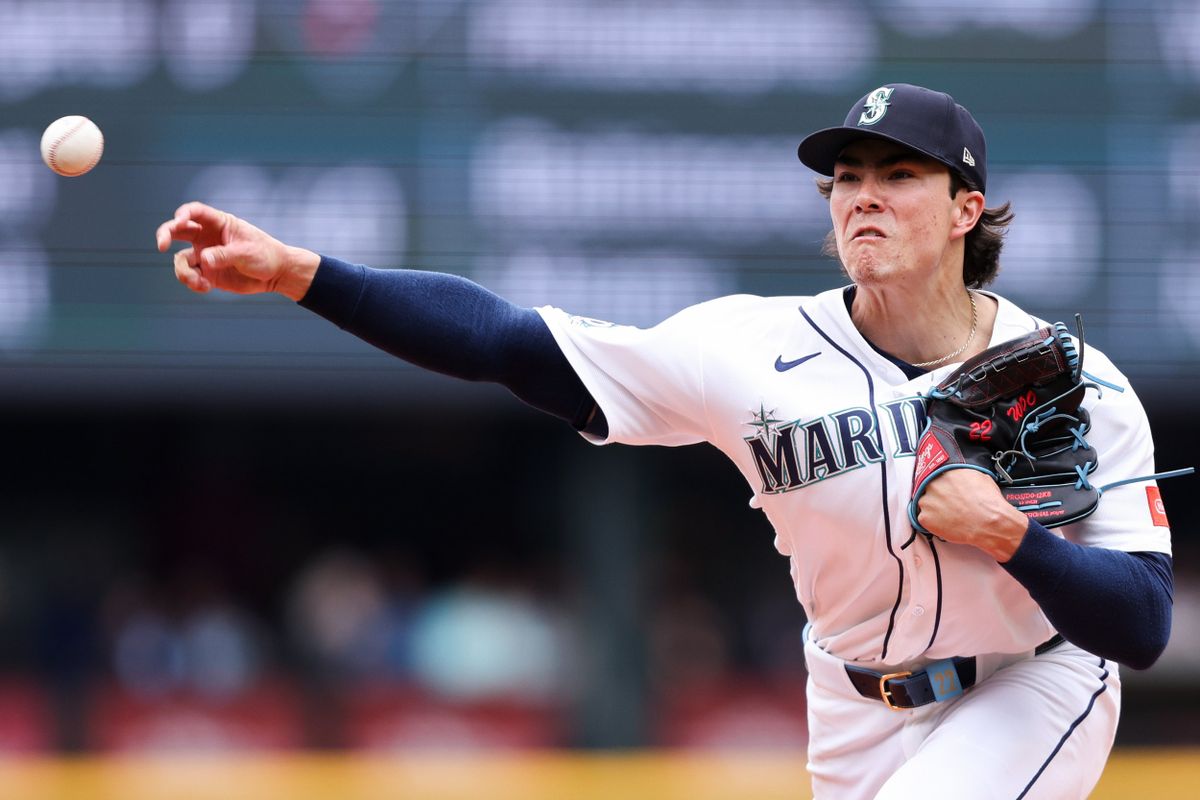
[caption id="" align="alignnone" width="3117"]
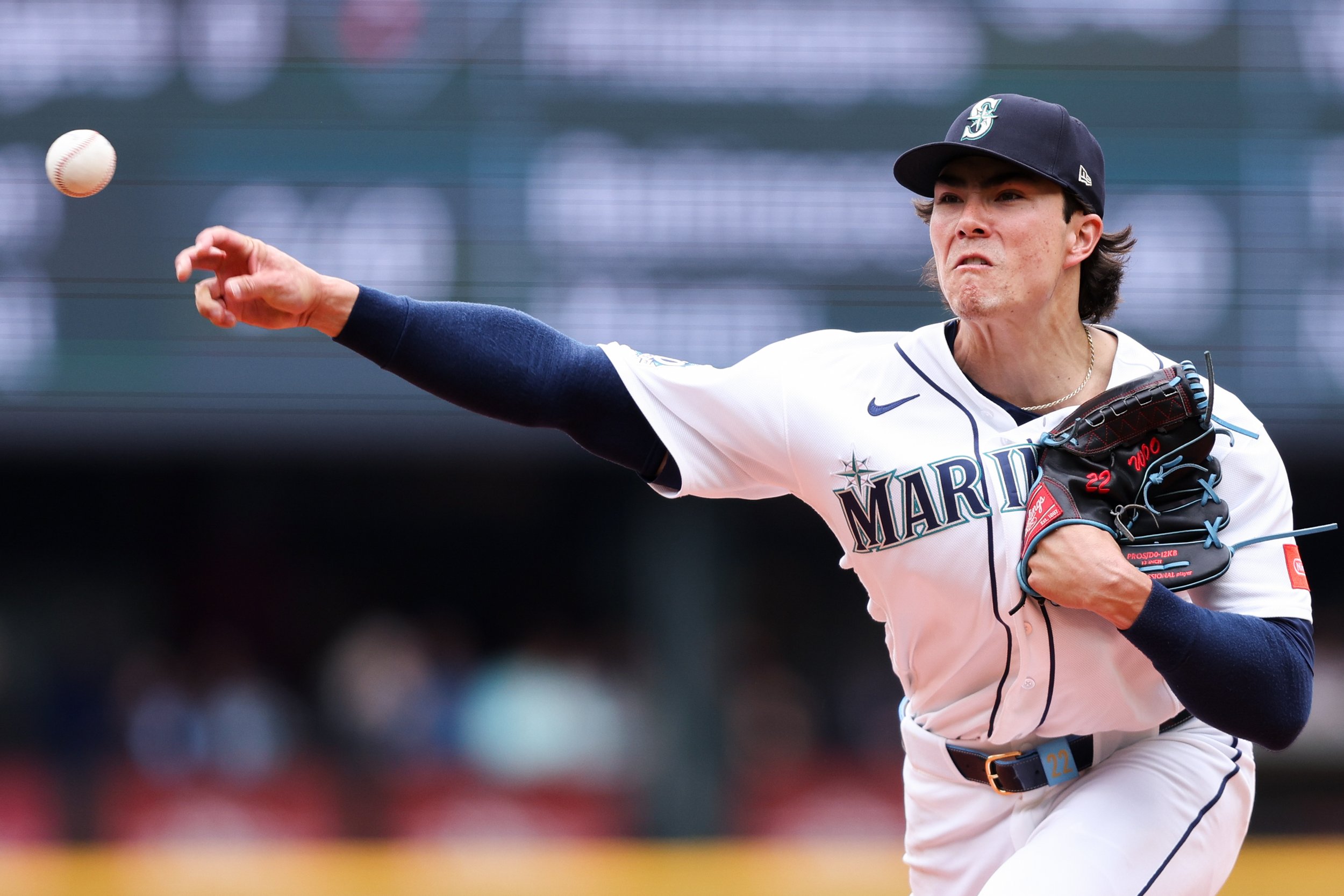
Seattle Mariners starting pitcher Bryan Woo (22) delivers a pitch in the second inning against the Atlanta Braves at T-Mobile Park. Mandatory Credit: Kevin Ng-Imagn Images [/caption]
It might have seemed that the Atlanta Braves were the worst possible team for a struggling Bryan Woo to face. Woo, whose arsenal depends almost entirely on two zippy fastballs thrown over the plate, was set to face an aggressive squad that feasted on fastballs. That ability to jump on the heater has been the lynchpin of Atlanta’s stellar opening salvo of the 2026 campaign, and Woo had to stare them down as the M’s tried to be the very first team to hand the Braves a series defeat.
On the other side of the ball, the Mariners needed to produce more with the stick, having logged quite a few uncompetitive innings on offense in both previous games in the series, with a pair of well-timed homers providing just enough runs on Monday but not on Tuesday. The hitting took a bit of an improvement overall on Wednesday, and though the sequencing didn’t do them many favors, the runs they scraped across were enough for a 3-1 victory.
There were banner days for several involved. For Julio Rodríguez, who came about 20 feet from denting the newly-unveiled Randy Johnson plaque with a mammoth homer; for Cole Young, who put together a three-hit outing; and for Josh Naylor, who showed up with the glove, the bat, and the well-renowned mind to find stolen bases.
But it all started with the guy on the mound, who gave his team an excellent chance to win the game.
Bryan Woo effectively countered Atlanta’s hot hitters and put a pair of bad starts behind him.
If there was any pitcher who badly needed a quality start on Wednesday afternoon, it was Woo. Facing two aggressive teams in his previous two starts, he had found his fastball ambushed and his earned runs totals exploding on the backs of home runs and hard hit balls aplenty.
Woo made a simple adjustment to the Braves’ approach on Wednesday, as he was willing to throw a few more balls if it meant he could avoid bats. The first inning took 24 pitches as Drake Baldwin and Matt Olson fought Woo valiantly and took balls when they were off the plate, and while Olson won that battle with a walk (Baldwin struck out), the inning ended soon after and Woo began going on a roll.
Once Woo was on, he was on. He didn’t overthink things, throwing 65 four-seamers in 98 pitches. After the game, he talked at length about the value of self-trust for a pitcher.
“When you’re not committed in yourself, when you don’t trust yourself, for some reason, the same pitches - whether they’re really, really good, same velocity, same movement, they just don’t work,” Woo observed. “I don’t know what it is. Baseball is a weird sport like that where you try too hard, you try too hard, and 98 at the top of the zone just gets whacked. And then 93 with conviction and commitment and trust, it just works … it’ll never show up on a stat sheet, but you talk to guys about it, you just have to have a bit of ‘I don’t give a s—’ … baseball is a weird sport like that.”
It helped that when Woo missed with his four-seamer, he missed up out of the zone. The Braves fouled off quite a lot of his heaters, but perhaps that hex (if one could say that) that Woo talked about, where a hitter senses his opponent’s lack of confidence and chews it like a shark, took effect on the Braves. Woo used just enough sweepers, sliders, and changeups to keep Atlanta hitters off the heater, and of his nine strikeouts, six were on non-fastball pitches. When looking at a chart of his two-strike pitches, it is striking how well-located they were, with few misses too far out of the zone and none over the heart of the plate.
For Woo, it was about the aforementioned trust in his stuff, which also meant simplifying what he was doing up on the rubber.
“Getting too much into scouting reports, for me, can be a detriment. You get out there and you’re thinking too much, and you want to do this and do that … probably the more that you’re thinking, probably the less effective that you’re going to be,” Woo said. “The more that you just go out and trust yourself and compete, I think anybody can tell you that they’d be at their best.”
Woo tore down Atlanta’s lineup with 12 pitches in the second and nine in the third. Ozzie Albies worked an eight-pitch walk to begin the fourth, however, and two following strikeouts took 13 combined pitches as Olson and Michael Harris II weren’t easy to wring off the ball, but although Atlanta managed a single to bring a runner into scoring position for the first time, a quick groundout ended the frame.
With the starter on 68 pitches, however, it wasn’t clear whether the Mariners would be able to get six innings from him. The fifth saw a couple more sloggy at-bats; though Woo continued coming out ahead in these slogs, he had a short leash for the sixth with his pitch count at 88.
And yet the sixth was perhaps Woo’s best inning, as he took down the top of the order (who was coming up for the third time in the game) with two strikeouts in 10 pitches. In the days of old, when hurlers could get a 120-pitch leash, there would have been little worry in sending such an on-game starter out for the seventh, but in the modern game, the six-inning, no-run outing was about the best Seattle could hope for.
“Boy, he nailed it,” Mariners manager Dan Wilson said of Woo’s sixth inning. “That was really big, it set us up for the bullpen later in that game.”
A recovering Cal Raleigh didn’t have his best game on Wednesday, but he still put a ball in play when he needed to.
For the fifth straight game, the Mariners had someone other than Cal Raleigh doing the catching duties, with Jhonny Pereda suiting up behind the plate. But just like on Tuesday, Raleigh was available to be the designated hitter, and he slotted in at his usual second in the Mariners lineup.
Raleigh clearly had trouble timing up opposing pitchers. An at-bat later on in the game saw him swing under some fastballs right in the perfect center of the plate from the left side, but his biggest chance was in the third inning as he batted righty against Braves southpaw Martín Pérez.
Pereda got it started, taking a mistake from the Atlanta starter into left field for a leadoff single out of the eight hole. Leo Rivas corked a double down the left field line, and as J.P. Crawford watched a couple close balls fly by for a free pass (his first of two in the game), the bases were loaded for Raleigh.
In the first, Raleigh had meekly flown out to left, with a notably slow swing. He didn’t get much of a barrel on the ball in the third, but he did two decent things with the swing, one from a process standpoint and one from that of results.
Results-wise, Raleigh got the ball in play. With the bases loaded, that meant a run; as it turned out, with Woo on the money, it was a big run. From a process lens, however, Raleigh swung the bat at 79.4 miles an hour, well over his average bat speed on the year and the second-fastest swing anyone had during the game. That’s a good sign for his comfort status, as it means the pain on swinging might be improving even as his timing remained off.
It was still the one way to knock in a run without an error: a run-scoring double play. It was the only run Seattle got in that inning, but it was an early lead.
Julio Rodríguez, Josh Naylor, and Cole Young put together two more runs for the Mariners, and some quick glovework from Naylor on the other side helped close out the win.
It may be a long time before any of the retired number plaques get dented from a home run. Rodríguez came perhaps closer than anyone yet has to doing so, and yet he was still around 20 feet short.
All that matters is that he cleared the fence. With one out and nobody on in the bottom of the sixth, Pérez left a 3-1 changeup middle-middle to the Mariners center fielder. Rodríguez had been expecting an off-speed pitch, having seen quite a few of them from Pérez, and he didn’t miss it at all.
The Mariners had a 436-foot insurance run, 110.4 miles an hour off the bat. Although Braves manager Walt Weiss kept his starter out for another batter, he brought in Tyler Kinley in relief not long after the homer. Randy Arozarena knocked a two-out single and Young rocketed a double down the right field line, but as it took a friendly bounce to Braves right fielder Mike Yazstremski, Arozarena was held at third and Seattle would need another hit to cash in another run from the inning.
Surprisingly for a team that has relied on platoon matchups for much of the year, Wilson didn’t take Connor Joe out of the game for either Dominic Canzone or Luke Raley with the right-handed Kinley on the mound. In the sixth inning, with the possibility of another at-bat for the spot of the order coming up and a run expectancy not significantly higher than any given inning (0.570 runs on average scored with second and third and two outs compared to 0.461 runs on average scored in a given inning), there is always the judgment call, but the decision remained a bit mysterious after the game.
Wilson was asked if the team’s lack of backup infielders due to Raleigh’s injury concerns and Pereda’s presence - the team views Joe as having more infield versatility than Raley or Canzone, though the last time Joe played third base was in 2019 with the Triple-A Oklahoma City Dodgers - and he seemed to affirm that Joe stayed in the game in case the team needed someone to switch over to an infield spot.
“I don’t know if we’re limited, I wouldn’t say limited, but I think it does eliminate some opportunities, and it does curb a little bit of aggression,” Wilson said. “But that’s where we’re at, that’s what happens when you’re injured.”
Joe grounded out to third. Cooper Criswell came in for the top of the seventh, with Jose A. Ferrer having pitched both previous games and Matt Brash and Gabe Speier on the injured list, and he went through his three guys without much issue. Criswell’s performance as a middle leverage reliever has gone under the radar, with a 2.35 ERA, and though his 4.64 FIP is worrisome, a big part of that is due to a large home run to fly ball rate that isn’t necessarily indicative of future performance. Still, the team doesn’t quite put him in leverage spots yet, and he has done well in his role.
Eduard Bazardo entered the game with something of the opposite FIP vs. xFIP (where the home run component of FIP is replaced with fly ball rate times league homer-to-fly ball rate) situation compared to Criswell, as he had given up 21 fly balls without a single homer and his 2.57 FIP going into the game was quite a bit lower than his 4.48 xFIP.
The workings of a potential blowup outing came not from a mean-regression homer but from a couple of singles to open the inning with runners on the corners for the Braves. Dominic Smith got a bit under one and sent a sacrifice fly that gave Atlanta their first run of the game, but it was one out for the reliever as he got back into the game.
Naylor helped him out at first. Whatever may be said of his range, he is an apt fielder when it comes to receiving the ball, and a pickoff move that appeared an easy safe call for first base umpire Ryan Wills ended up being challenged by the Mariners.
Bazardo threw him a strike and Naylor, with the ball by his side, applied the tag before pinch-runner Jorge Mateo’s foot stepped on the bag. From Mateo’s perspective, the throw didn’t seem like a very threatening one, which allowed it to become the second out of the inning.
“You got to give ‘Naylz’ some credit,” Wilson said of the play. “I think the temptation a lot of times it to go get that ball and then go back to tag. He let that ball travel really well, it got right to his hip, and that’s what made the difference.”
Naylor wasn’t the one who called for the challenge, as the Mariners’ video review team was already on the play once it happened. The safe call was overturned and Bazardo had the second out of the inning; although another man reached with a single, it ended without further ado.
The bottom of the frame saw Seattle’s final run come on the board as Naylor knocked a one-out single, stole second base, and then came around to score on Young’s second double of the game. Although Young had struggled earlier in the homestand, he did a better job of fighting off tough pitches and selecting good ones to hit against the Braves on Wednesday.
When Ferrer - pitching for the third straight day - got three quick outs in the ninth, Seattle notched win number 18 on the year.
On Deck
The M’s are still two games under .500 as they go on the road for a set against the Chicago White Sox starting on Friday. The Southsiders, uplifted in part by what appears to be a very fruitful offseason signing of Munetaka Murakami, have been playing better ball than some of the atrocious seasons in recent memory, but they are still 17-20.
That’s only a half game worse than the Mariners. Now, the M’s are expected by all major projection systems to have a better rest of the year than the White Sox, but the team still has to play the games.
“We definitely want to build on [the series win],” Woo said. “I think that the only thing that we’re looking for now is just consistency. Seen some really good stretches and then, next series, we just kind of lose that momentum a little bit.”