50 in 50: Ownership’s Comfortable Half Measures Ensured Mariners’ Mediocrity

You can’t have your cake and eat it too. It’s a bit of an archaism, given that “have” can mean “eat”, but it’s an apt turn of phrase to describe the pitfalls the Seattle Mariners have fallen into from ownership on down.
This attitude meshes with and reinforces their approach to risk; there is a genuine desire to win within the ownership group, but they aren’t willing to take on what they see as risks to revenue in order to achieve those wins. They believe - and the front office tells them that it is possible - that they can win the World Series without making any kind of lunge into the uncomfortable.
But when it’s a trade-off? When they must make uncomfortable moves in order to actually have a good shot at winning the World Series? They may not think of it in these terms, but by virtue of their actions, it is clear that they would rather remain in comfortable mediocrity than get what they supposedly want.
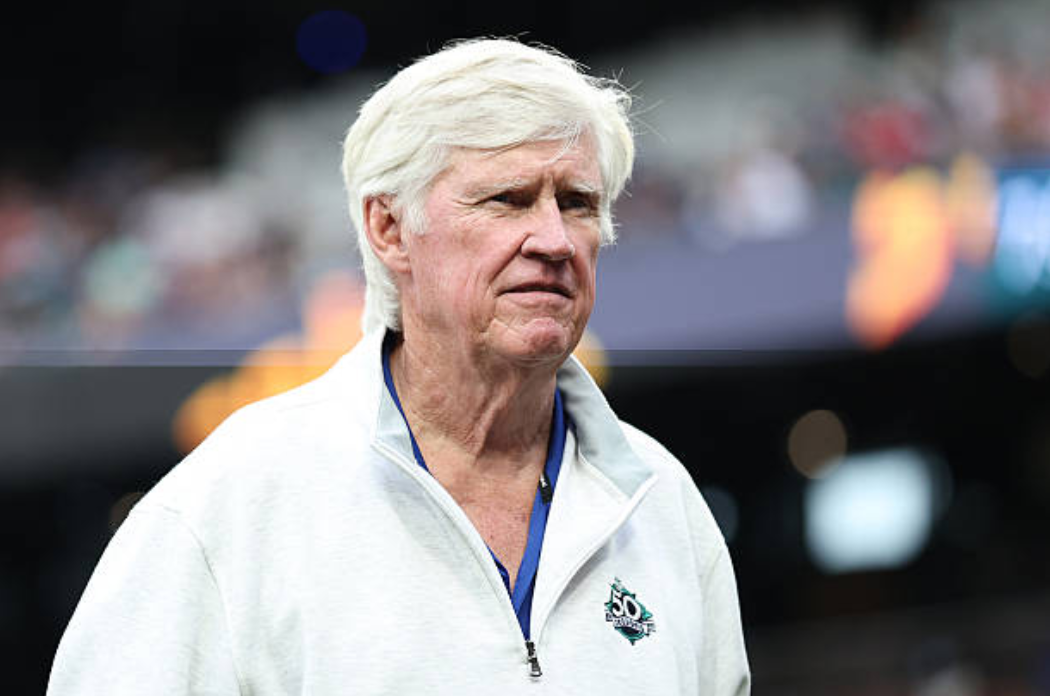
Stanton said as much on Monday. Even in a rather unintrusive one-on-one interview with King 5’s Paul Silvi, he couldn’t help but make it evident, in a way that a fish cannot help but make it evident that it is wet.
Silvi asked Stanton what he could have done differently in the 2026 season, and the Mariners majority owner all but went in circles around himself, merely repeating that changes were necessary without elaborating on any of those changes at all.
“Ultimately, I’ve gotta have people around the organization that are committed to the same thing that we as owners are committed to, and that’s to win championships. And I think that, in conversations I had with Jerry (Dipoto), Justin Hollander, others in the front office, there is that commitment. And I think that they’ve done a number of things in order to ensure that we have the pieces in place to be able to compete at the highest level. But we didn’t do that this year and we need to make changes.”
Stanton’s theory of successful long-term strategy is clouded by his desire to keep a big profit margin. He did mention things that, in the abstract, are good things to keep in mind; he noted that “It’s not just a matter of money, it’s a matter of being able to intelligently spend the money” - a manner of operations that has eluded many a bad owner in baseball history.
But sometimes, the intelligent move is to spend a lot of money on a big-name target. There is always the inherent risk with such a player that they don’t pan out as well as hoped, but that’s true of any player a team acquires in any way.
Had the Mariners gone in on Shohei Ohtani (either time he was available) and drafted and developed as they have in our own history, their 2020s would have looked a lot better. Had they expanded their pocketbooks for the many lesser-but-still great stars who have become free agents over the past few years, they would likely have avoided their current fate.
But the biggest area where the whole team has had issues in spending has been the depth pieces and the role players. Rob Refsnyder turned out terribly, but his acquisition actually looked solid going into the season - unlike the swansongs of AJ Pollock and Kolten Wong that only amounted to making decisions based on hope.
A lot of the lack of depth has been an issue of the front office, but the kind of thinking that leads to the lack of depth was clear as day when Stanton described where he does and doesn’t open the pocketbook.
“We’ll make selective decisions to add players where we’ve got gaps,” Stanton said. “If we’re missing an infielder, or we’re missing an outfielder, or we’re missing a starter.”
This kind of attitude lends itself to the Mariners’ consistent depth issues, because as Stanton himself noted - even though he seemed to attribute the issues to a mixed bucket of freak accidents and regular injury accumulation - injuries always affect a baseball team.
“Different players have good and bad seasons, and that’s gonna happen every time. Injuries play a role, we had a couple of fluke concussions that affected the team, we had some injuries associated with collisions, and we had frankly the kinds of injuries that always happen when you have to play 162 games on top of spring training, potentially in the postseason.”
The fact that injuries will always accumulate should be a basis for the Mariners organization to invest in plenty of backup options. Stanton made no comments about needing more depth, and though Dipoto did during his media availability earlier in the day, he still said roughly the same thing that Stanton did: that much of the big roles in 2027 would be left to guys like Colt Emerson, Michael Arroyo, Lazaro Montes, and Brendan Donovan - all of whom are definite question marks - and would only look out-of-house for obvious holes.
Silvi brought up fan calls for Stanton to sell, and the rather immediate response from the head owner was that other owners might try to move the team.
“I guess I hear that, but I also hear the people that are in the diamond club and in the 300 level that are appreciative of what our group has done,” Stanton said. “And one of the things, and I don’t want to belabor it, but I remember vividly the Seattle Pilots leaving town. I remember vividly - and I was involved - in the Sonics leaving town. The one promise I will absolutely make, is for my lifetime, the Seattle Mariners will always be the Seattle Mariners, and we are committed to winning championships, but we are also committed to being in Seattle forever.”
As a sidebar, it’s not entirely clear what Stanton meant by “300 level”, as while that would imply a contrast between the higher-paying and lower-paying customers were it taken literally, Stanton didn’t employ any hint of contrastive tone in that sentence. Perhaps he misspoke - or mis-intonated - that way, or perhaps he meant to say something along the lines of “suite level”, but given that the options mean completely opposite things, I won’t speculate further here.
But the whole quote was a big neon sign that illuminated the brass’ distaste for risk. This seems to be a persistent aspect of the organizational culture of the M’s, as Dipoto talked about how the team didn’t axe Dan Wilson earlier in the season due to a decision that the team they had would be the team they rode out the season with, and as Stanton continued talking about the overarching ownership question, he naturally slipped into that framework as he offered his two cents.
“Selling the team is inherently a risky proposition in that you don’t know what the interest of the new owner will be,” Stanton said. “We’re committed to owning the team - this is now, the ownership group is, I think, the second or third longest serving ownership group in baseball - and we’re committed to staying here.
For what it’s worth, it’s often fairly clear even to outsiders, as it was in 2007 and 2008 with the Clay Bennett-led group’s acquisition of the Sonics, when a new ownership group is interested in relocating to a new city. And in discussions with hypothetical buyers, filtering for city-loyalty would be a trivial matter.
Only after that did Stanton fully iterate his idea of committing to winning, a window into a mode of thinking where doing something new is a frightful idea.
“We’re also committed to winning, and the only way I can prove that is by us winning, and continuing to make commitments like increasing the payroll each of the last five years, being willing to trade and pick up important players that we think will make a difference … from our point of view, our commitment to winning, and our commitment to continuing to win and to make changes when necessary in order to win, is the best evidence to offer that we are committed.”
Put bluntly, this is no way to operate a winning culture. Banking a World Series on hopes that multiple things will each turn out to their 1-in-5 or 1-in-10 best outcome (the percentages get miniscule very quickly here; they get miniscule even when stacking 3-in-4 chances on top of each other) is a quick way to ensure that no World Series appearance actually happens. It helps explain why, even of the five core seasons of their current competitive window, the Mariners have only made the playoffs twice.
Stanton also failed to mention that the Mariners’ increase in payroll from 2025 to 2026 was rather miniscule. Per Spotrac, it increased from roughly $165.6 million to $167.9 million, a 1.4% jump; according to the Bureau of Labor Statistics, the overall consumer price index (CPI) increased 3.4% from Aug. 2025 to Aug. 2026. This means, by this definition, that the Mariners’ inflation-adjusted payroll actually went down by 2.2% this year.
Comparing the national CPI to baseball salaries is a bit of an apples to oranges comparison, to be fair. Again taking Spotrac’s numbers, teams went from spending an average of $178 million on labor payroll in 2025 to an average of $183.5 million in 2026, an year-over year 3.1% inflation rate in the sport.
By that metric, the Mariners’ baseball inflation-adjusted payroll decreased by 1.6% between 2025 and 2026.
And the team, you may note, was still beneath the mean payroll in the sport both years. Seattle went from no. 15 in payroll rankings to no. 16, in other words slipping from slightly above the median to slightly below the median.
Truly committing to winning means real investment in the team. It means intelligent investment, as Stanton will tell you, but an ownership group (a team being a line-goes-up investment first is often more true for the minor owners than the majority owner) shouldn’t use that fact to dodge the responsibility to open the checkbook when the time comes.
Half measures, like those that both the Mariners ownership and front office have routinely taken in their ostensible championship window, only leave you halfway there. No one ever did anything hard - anything worthwhile - by putting in half the work.
2026 made a lot of things queasily clear for the Mariners, but maybe the most abundantly obvious thing of all is that they can’t keep falling back on comfortable half measures because they’re afraid of going all the way. They can’t have their cake and eat it too.