50 in 50: What Do M’s Manager Failures Say About Future Skipper Needs?
Though he made clear that the process would extend “as long as it takes”, Mariners president of baseball operations Jerry Dipoto set out a checklist of sorts when he described his ideal manager hire for 2027 during his end-of-season interview in late September.

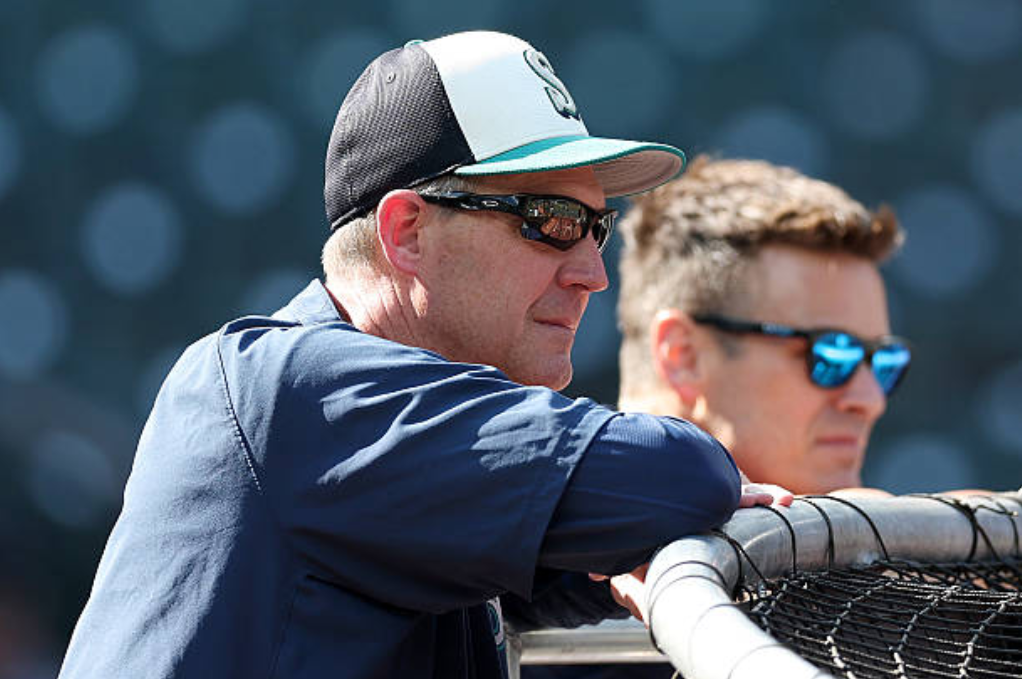
Though he made clear that the process would extend “as long as it takes”, Mariners president of baseball operations Jerry Dipoto set out a checklist of sorts when he described his ideal manager hire for 2027 during his end-of-season interview in late September.
“Generally speaking, we're just looking for someone who has high character, growth mindset, has the ability to think strategically in the context of a major league game,” Dipoto said.
While the front office head said it would be preferred for the incoming skipper to have big league experience, he made explicit that it was not an out-and-out requirement.
Dipoto has overseen two skippers in his long tenure as first the Mariners’ general manager and then the POBO, and neither was someone who really fit these criteria. Scott Servais was probably closer from an analytical standpoint, but he came in as Dipoto’s in-house guy rather than as someone to both understand and challenge him. Dan Wilson was hired - it’s still not clear at whose request - due to his long tenure with the Mariners, rather than an interview process to find the best candidate, and he had evident issues with understanding and applying principles of modern analytics.
Neither of those managers were people outside the Mariners’ or Dipoto’s general remit. Perhaps the most significant of the promises the POBO made was that the new skipper would come from the outside.
“There are a lot of good people out there, and most of what we've done, in recent years especially, has been insular,” Dipoto said. “And I think this year's failure requires that we look outside to find someone who might be able to poke holes in what we're doing and help us see something that perhaps we're blind to.”
At the highest level, Dipoto is correct here. But this is a balancing act that we have seen better leaders fail at maintaining; he must be meticulous but not micromanagerial, his hire must have an alternate perspective but not an outmoded one.
Even if he didn’t say it explicitly, it was from his other statements that day that Dipoto has other requirements for the Mariners’ 2027 manager: namely that they must be good communicators and they must create and uphold standards of accountability.
These are the exact ways that Wilson failed in 2026, but they were also the ways in which Dipoto failed.
The piggyback situation, even if it occurred at a time when the Mariners were ahead of their AL West competitors, was the opposite of good communication.
“I regret a lot of communication issues that we had this year … the way [the piggyback] was communicated, the way it was received, and the drama around it was part of what I think was a bag that we were carrying around with us all year and couldn't shed,” Dipoto said. “I could come up with 10 others that were contributing factors, but we need to communicate more clearly. And we talked about this with the players during that piggyback period, we handled the kickoff of that as poorly as you possibly could from a leadership standpoint.”
So was the consistent pattern of players getting injuries and either hiding them entirely from management or downplaying their severity. Colt Emerson’s entire rookie year became a murky, unclear reflection of his potential as the team discovered at the very point of demoting him that he had been dealing with a wrist injury all year. Rob Refsnyder and the team weren’t able to communicate about his knee issues until halfway through the season, Cal Raleigh tried to play through a late April knock, a decision that wound up derailing almost his entire year and giving him a .182/.296/.368 slash line at the end of the season.
It doesn’t seem like there was one particular node where this communication broke down; rather, it seemed to have been related to the more general breakdown in culture and accountability that permeated the organization from top to bottom this year.
This means that the issue cannot be fixed with only a manager, no matter how effective. Dipoto and the front office need to show that they can be more forthright in their internal and external communications from the jump and the manager that they hire must be an effective communicator between the front office and the players.
A similar burden for the incoming manager and the rest of the organization will be to drastically improve the team culture from the depths it sunk to by the end of 2026. That was the greatest failure - beyond the lack of modernity - of Wilson’s tenure as skipper, and though Dipoto talked about his own need to take a more active role in maintaining standards, much of the day-to-day operations of doing so will fall at the feet of the new manager (and indeed, the players themselves).
“What is culture?” Dipoto asked rhetorically. “It's the standards you're willing to uphold. It's the belief systems you share. It's what you're willing to tolerate. And this year we tolerated an environment where we just didn't live up to our own standards, and that's where we need to reset.”
It’s not clear why Dipoto and company allowed the standards to fall apart in 2026, only that they did so. It does mean that they will have to prove their ability to keep the standard high in 2027 - and whoever Dipoto brings on as manager should ideally have already proven their ability to do so.
Dovetailing off of that, Dipoto also made clear his plans to allow the new manager, whoever that may be, to fill out the coaching vacancies. If there is any indication that Dipoto’s method of running the organization has changed, this is it; if this turns out not to be the case and Dipoto ends up micromanaging those hires, it would be a sign that the lessons he professed to learn after 2026 were for naught.
There are plenty of options for the M’s. If they want to look at experienced skippers, they could scoop up Joe Espada from the Astros or go with someone like Brandon Hyde or Don Mattingly. They could alternately go with guys who have big league coaching experience but limited or no managerial history, such as Kai Correa or Grady Sizemore. Given the stipulation that they go out-of-house, they might shy away from Kristopher Negrón, who spent 2022 through 2025 in a coaching capacity with the Mariners.
Guardians skipper Stephen Vogt might be option 1A if he’s available, but as Vogt is under contract with Cleveland, it would have to be a wink-and-nod “trade” where the teams swap players and the Guardians release Vogt with the understanding that he signs with Seattle.
This early into the search, however, there are plenty of dark horses who might rise to the top of the pile, even with Dipoto’s preference for MLB experience.
No matter who the new skipper might be, however, the checklist must be front and center. Do they understand the modern game? If so, do they understand it to the level of being able to instinctually apply that knowledge in high-pressure situations? How good is their communication? Can they challenge Seattle’s current ideas without incurring the M’s to swing wildly between various concepts? Can they create and enforce standards? Can they fill out a support staff of capable individuals? Can they grow and adjust as need be?