3 Takeaways From Kraken Management’s Season-Ending Press Conference

[caption id="" align="alignnone" width="4866"]
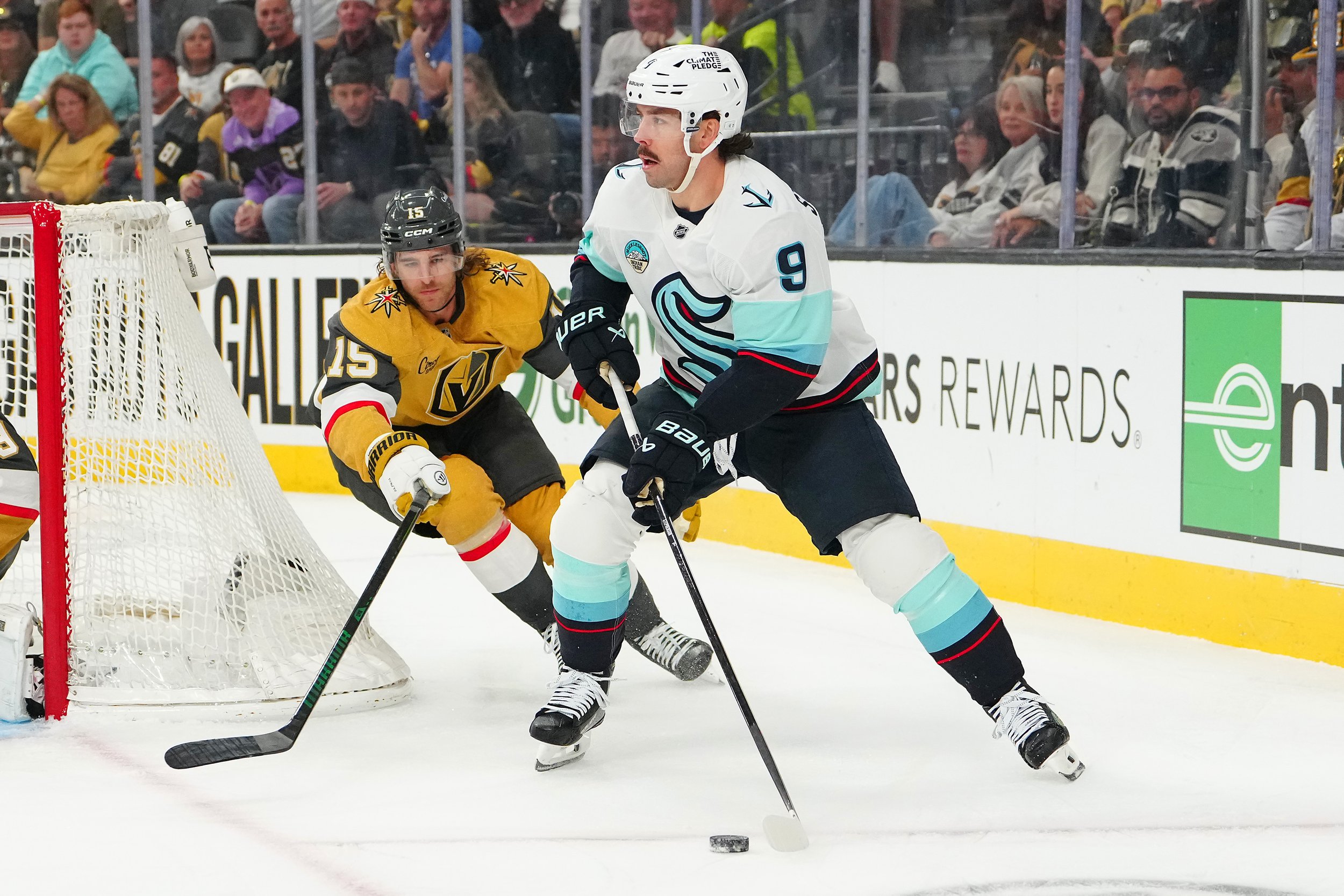
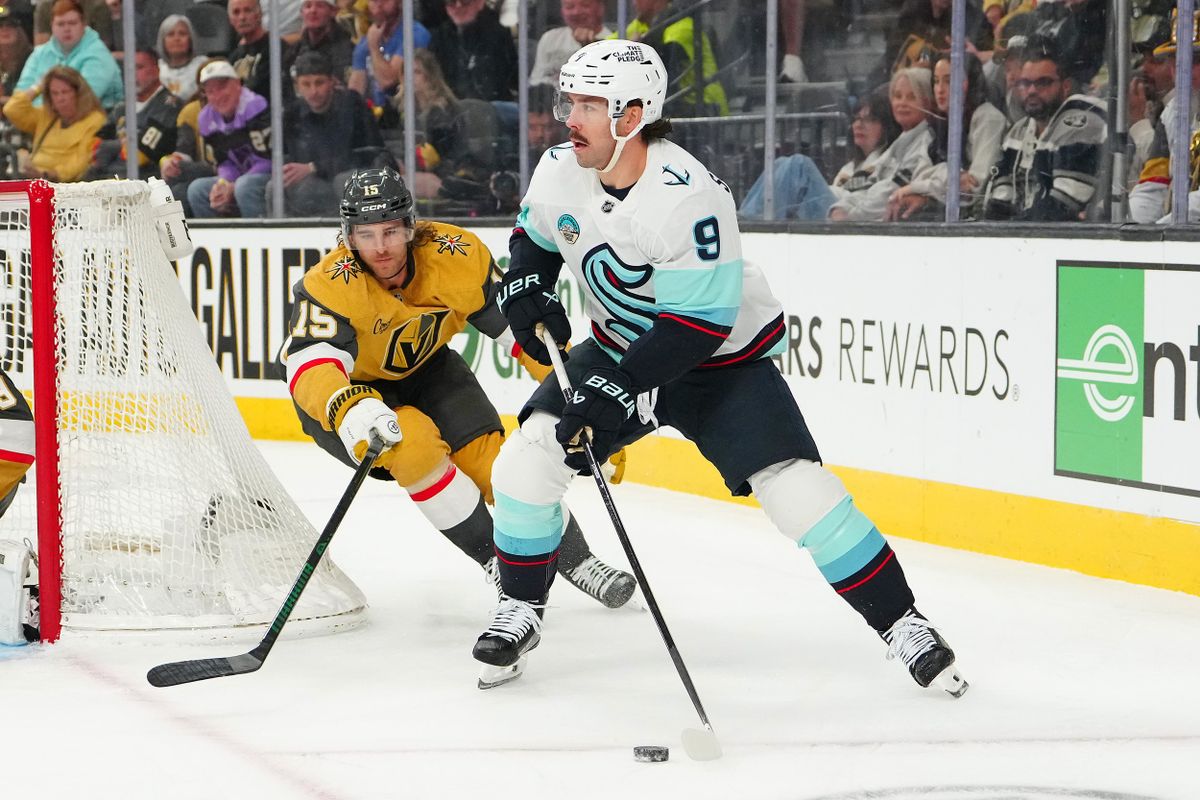
Seattle Kraken center Chandler Stephenson (9) controls the puck ahead of Vegas Golden Knights defenseman Noah Hanifin (15) during the first period at T-Mobile Arena. Mandatory Credit: Stephen R. Sylvanie-Imagn Images [/caption]
SEATTLE, Wash. — The Seattle Kraken hosted a season-ending press conference with general manager Jason Botterill and CEO Tod Leiweke at Kraken Community Iceplex on Wednesday. Below are three of the biggest takeaways that will provide a glimpse into how the team will operate over the offseason and beyond.
Botterill Pledges Changes in Approach Following Francis Departure, But How Much?
Shortly after the team decided to part ways with Ron Francis, the franchise’s first general manager and most recently President of Hockey Operations, Leiweke said decisions are “uniquely” Botterill’s now.
However, to kick off Wednesday’s presser, Botterill claimed that he held final say since he was elevated to GM last year. So what exactly was the dynamic there? And what will change now that Francis is out of the picture?
Asked directly, Botterill insisted he had final say the whole season, but he also utilized Francis as a resource and ran ideas by him. However, Francis focused mainly on working with ownership on “bigger picture” items.
Now that Francis is out of the building, Botterill said he plans to open the lines of communication throughout the management staff, and lean on people in lower roles that he feels deserve more responsibility.
“As much as Ron is a mentor and friend, we all have different sort of approaches to going about things,” Botterill said. “Different personalities, different ways we structure meetings, different ways we interact with players.
“All I can tell you is, like, the way I operate with my staff is certainly direct communication. Try to make sure they have clear goals and clear understanding of what they’re doing moving forward here. We’ll continue to be very aggressive in trying to, one, interact with my own staff, but also just building this team.”
Botterill cited assistant GM Ryan Jankowski, who was brought in last year from the Utah Mammoth/Arizona Coyotes front office, as someone who offered new thoughts and perspective upon arrival and is ready to take on a bigger role in the department.
Based on all of the above, it seems that Francis did not delegate many responsibilities to the staff below him as GM, or at least did not do so in a clear way. Even Leiweke acknowledged Francis’ involvement in decisions two weeks ago despite Botterill’s insistence in making final decisions.
Perhaps with Francis completely removed from the situation, Botterill will be allowed to operate with more autonomy. Without his former boss looking over his shoulder. This upcoming offseason should determine exactly how Botterill will utilize that control, for better or worse, which leads to the next point…
Seattle Will Lean on Youth and Trades More Than Free Agency
The reason for this, evidently, is two-fold. First, the Kraken simply have not been able to attract high-end free agents, and have seemingly been forced to overpay in both salary and contract length in order to attain even players a tier below.
At the same time, the rising salary cap makes it easier for teams to retain their own top players, which leads to a shortage in available reinforcements on the open market. The salary cap is expected to rise from $95.5 million to $104 million next season, according to PuckPedia.
Botterill acknowledged this, and while the organization can’t point to a winning product on the ice, Leiweke and Botterill expressed a need to sell potential free agents on everything else around the organization, such as the quality of the practice facilities and simply living in Seattle in general.
“This is a great community, and we have a passion for it,” Leiweke said. “We’ve got to do a better job of telling that story and promoting that to the other players. It is a long way to travel. Jason’s team travels more miles than most any other team, but we’ve tried to compensate on that by making this a place that the players and their families want to be.”
Botterill pointed to the organization’s track record of retaining their own free agents, citing Jordan Eberle, Matty Beniers and Joey Daccord as specific examples that players want to stay in Seattle once they experience it.
There are certainly other factors that go into those extensions, particularly the rarity of a lottery pick such as Beniers signing long-term with a different organization out of their entry-level deal, but that’s what the organization is banking on.
With a limited free agent market and difficulty attracting new players as it stands, the team will have to focus on promoting from within while also working the trade market.
“I think you’re going to have a lot more budget teams than just pure cap teams now,” Botterill said. “So those are the things to certainly focus in on as possible trade partners there. But I think you’re just even seeing it with this free agent market this year. We’ll continue to be aggressive there, but there’s not a plethora of players there, certainly high-end players. …
“It just goes to show you the importance of drafting and development. … It’s finding the right trade partners to make hockey deals, and that’s what we’ll certainly be aggressive on.”
In addition to having faith in the farm system, as referenced above, Seattle holds four first-round picks over the next two drafts, including its own lottery pick for this summer.
Botterill also expressed excitement with what he saw from the young NHLers such as Jacob Melanson, Ryan Winterton and Berkly Catton as well as the next wave of prospects including Jake O’Brien, Oscar Fisker Molgaard, and Tyson Jugnauth among others.
If top free agents are not an option, Seattle will have to utilize a combination of picks and prospects to get those players via trade, and that appears to be what the organization would like to do this offseason.
The Kraken Will Resist a Full Rebuild, Pending Their Audit
Perhaps the most direct question fans had entering the offseason after Seattle missed the playoffs for a third straight season. As of Wednesday, it does not appear as if the Kraken will tear it all down, rather attempting to make tweaks.
The organization is picking between a group of firms and individuals to conduct a full audit of the franchise alongside Botterill, according to Leiweke, and despite acknowledging that management needs to take a step back and evaluate, the organization believes it’s closer to long-term contention than people think.
“The goal is not just to make the playoffs. The goal is to build a long-term winning team,” Leiweke said. “And as Jason said, I think the pieces are in place. I think our ownership feels that we’ve got to add to those pieces. We’ve got critical pieces in place. We’ve got to add and push this to another level.”
This overall mindset makes it fair to question just how much will actually change going forward. Despite failing to make the playoffs in one of the weakest divisions in recent history — the Vegas Golden Knights topped the Pacific Division with 95 points, which would put them below the second wild-card spot in the Eastern Conference — the Kraken evidently believe they have the tools in place to become a long-term winner.
That said, Botterill did express a desire to mix up the forward group, with a desire to bring in more speed and aggression to fit coach Lane Lambert’s style.
“We obviously understand that young players can’t step into top line roles right off the bat,” Botterill said. “If we can find a mix of adding a player or two that have more of a track record of producing in the National Hockey League. Also, too, we know exactly how (Lambert) wants to play with a lot of assertiveness, aggression, speed.
“If we could continue to find players that are willing to go to the net and just create more chances there, I think that those are the biggest things that we’ll be focused on.”
The first step towards the next chapter: the NHL Draft Lottery, which is set to take place on May 5. The Kraken hold a 7.5% chance of getting the first overall pick (sixth-best odds). Seattle will pick no lower than eighth overall, depending on the results.
The ball– er, puck– is officially in Botterill’s court, and Botterill’s court alone.