Right Timing Should Allow Seahawks to Keep Star DT Tandem Together Beyond 2026

[caption id="" align="alignnone" width="2936"]
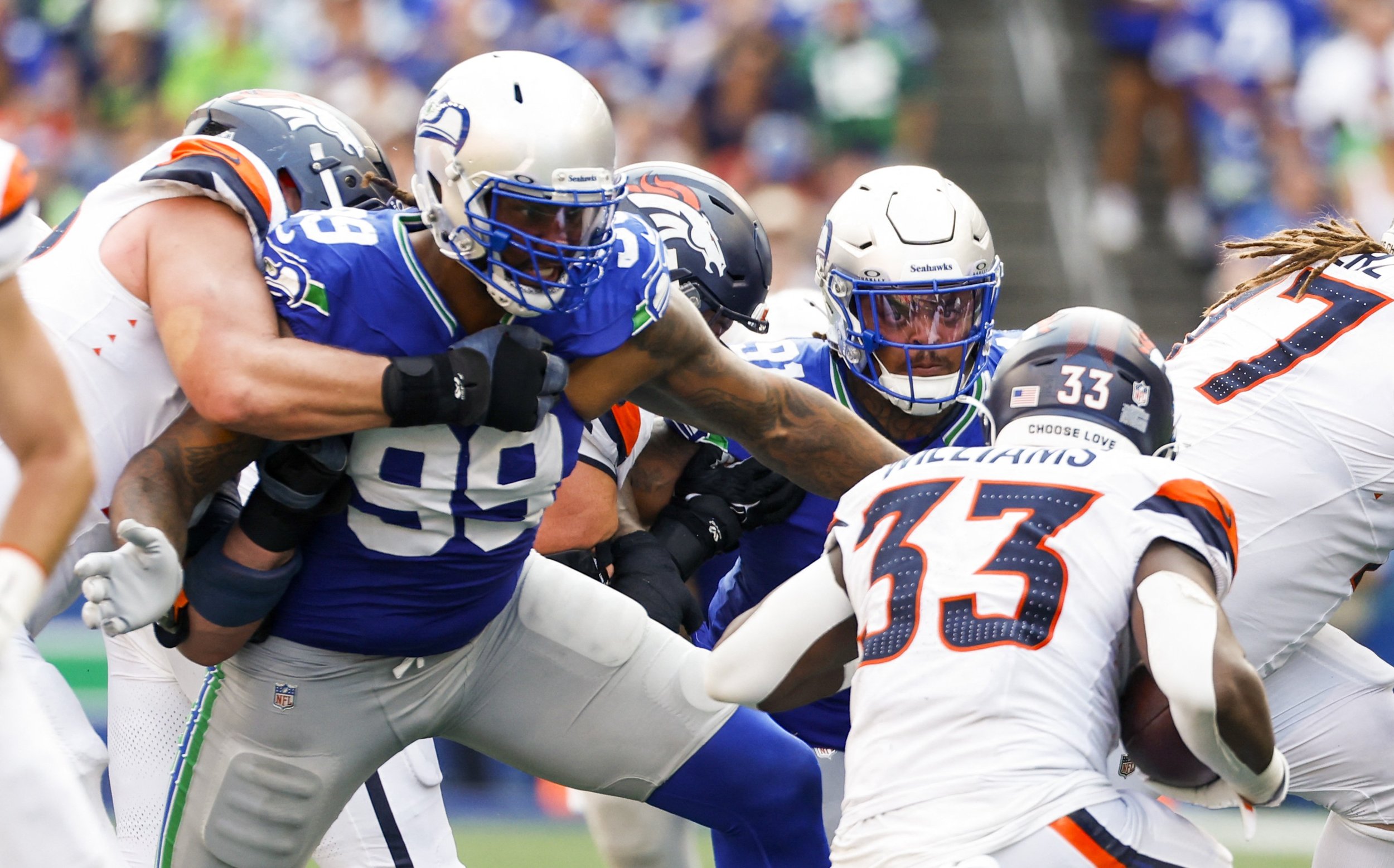
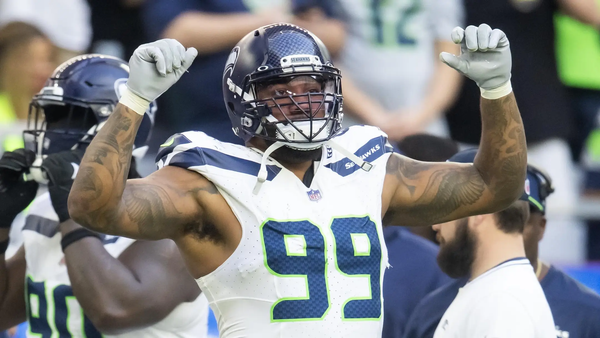
Seattle Seahawks defensive end Leonard Williams (99) and Seattle Seahawks defensive tackle Byron Murphy II (91) tackle Denver Broncos running back Javonte Williams (33) for a loss during the fourth quarter at Lumen Field. Mandatory Credit: Joe Nicholson-Imagn [/caption]
In the era of the hard salary cap and rapidly rising quarterback, receiver, and pass rusher contracts that seemingly offset yearly cap jumps, it has become increasingly difficult for NFL teams to keep multiple stars from the same position group together over the long haul.
Specifically, there have been numerous examples over the years where teams have had to move on from a talented defensive tackle after choosing to give another defensive lineman a lucrative multi-year contract. Back in 2009, the Patriots traded future Hall of Famer Richard Seymour to the Raiders, opting to extend the younger Vince Wilfork long-term. A little over a decade later, the 49ers dealt DeForest Buckner to the Colts, instead keeping Arik Armstead on a five-year extension in the same position group.
Most recently, the Seahawks benefited from the Giants’ financial log-jam in the trenches, acquiring veteran Leonard Williams at the trade deadline in October 2023 for a second and fourth-round pick in the upcoming 2024 NFL Draft. The move opened up much-needed salary cap relief for an underachieving New York squad, which also had All-Pro defensive tackle Dexter Lawrence on the books on a new $90 million extension signed the previous March.
Just six months and change after orchestrating that trade, with Williams receiving his own new contract in Seattle after flourishing in 10 games with the Seahawks, general manager John Schneider doubled down on the interior defensive line come draft weekend. Even with “Big Cat” locked up for the next three years, the team invested the No. 16 overall pick in the first round on Texas defensive tackle Byron Murphy II, hoping to quickly build one of the league’s most formidable defensive fronts.
At the time, though that move received plenty of praise from the draft community, there were some pundits who questioned Schneider’s decision to not go a different direction and address a more urgent need such as the interior offensive line, which had long been a noteworthy weakness.
Two years later, however, it’s safe to say Schneider and the Seahawks played their cards right. After a somewhat quiet statistical rookie season, Murphy broke out as one of the NFL’s top young defenders in 2025, joining Williams as the only pair of defensive tackles on the same team to post at least seven sacks and 50 quarterback pressures last season. The duo tortured opposing signal callers and stymied running backs from the start of the season all the way to Super Bowl LX, helping the franchise earn a second Lombardi Trophy in starring roles.
Finally getting his due after years of being criminally overlooked for his excellence, in part due to playing for a bunch of bad teams with the Jets and Giants, Williams garnered All-Pro honors for the first time in his career. While Murphy didn’t quite match his teammate in the accolades department, he received votes for All-Pro consideration and put his name on the national map with two sacks and a fumble recovery in the Super Bowl win in Santa Clara.
Between the lines, Schneider’s bold move to double dip at defensive tackle by drafting Murphy less than a month after extending Williams has been a home run. And beyond the field, that decision also carries interesting long-term ramifications that should pay major dividends, likely allowing the Seahawks keep the two players together for the foreseeable future without obliterating the team’s salary cap.
Coming off his first All-Pro season, Williams only has one year remaining on the three-year, $64.5 million deal he signed in March 2024, making him a prime candidate for an extension before the start of the 2026 season. Considering his production shining in coach Mike Macdonald’s defense, he likely will command a raise from that number on an annual basis and has obviously earned that uptick in pay with accolades now matching his talent and impact.
Still, absorbing such a contract will take another big bite out of Seattle’s salary cap for the next few seasons, and after re-signing receiver Jaxon Smith-Njigba to a record-breaking extension earlier this year, Schneider still has to lock up star cornerback Devon Witherspoon for the long haul. That’s the price that comes with winning a Super Bowl once the star players who paved the way for such success reach the end of their rookie contracts, and before long, it will be Murphy’s time to cash in as well, with him becoming eligible for a new deal next spring.
As the Patriots, 49ers, and Giants all learned the hard way, trying to keep two massive defensive tackle salaries on the books at the same time typically isn’t a tenable situation. New England and San Francisco quickly made the tough call to trade Seymour and Buckner respectively, while New York only managed to keep Williams and Lawrence together as long as it did in part due to then-quarterback Daniel Jones being on a rookie contract. Once Jones got paid, trading one of them became a necessity for the franchise’s future cap health.
With Sam Darnold under center and approaching his own negotiation window for a new contract next year, the Seahawks don’t have the rookie quarterback contract luxury at their disposal in this instance. But ironically enough, the timing selecting Murphy in the immediate aftermath of Williams’ last extension gives Schneider and the front office a large window to avoid both of them having extensions on the payroll at the same time.
Under the terms of Murphy’s slotted rookie deal, he has affordable $4.386 million and $5.117 million cap hits over the next two seasons. And, as a former first round pick, Seattle has the right to pick up a fifth-year option on his contract as it has with Witherspoon, Smith-Njigba, and tackle Charles Cross in the past 18 months. If Schneider exercises that option, the player will receive at minimum a base salary calculated from the average of the third to 25th highest salaries for defensive tackles over the past five seasons, with room for higher salaries based on playing time and whether or not he makes a Pro Bowl team.
Per OverTheCap.com estimates, 2023 first round picks at the defensive tackle position would have been in line for $13.931 million cap hits without playtime or Pro Bowl bonuses. That number bumps up to north of $15 million with playtime escalators, including playing 50% or more of the snaps in each of the player’s first three seasons, exceeding 75% snap share in two of the three seasons, or averaging 75% or better snap shares in those three seasons, while making one or two Pro Bowl teams would jump the hit to $22 and $27 million.
Based on those estimates, with the understanding that the values would likely be slightly higher for 2024 draft picks, Murphy right now would be in line for the lowest basic fifth-year salary projection. He has yet to be named to a Pro Bowl roster, eliminating the possibility of reaching maximum pay with two such selections. In regards to playing time, he played just 49% of defensive snaps as a rookie and did not hit 75% last year, making it impossible for him to reach any of the league’s thresholds for that escalator by the end of the 2026 season.
As an ascending talent alongside Williams, it wouldn’t be a surprise at all if Murphy earns his first Pro Bowl this upcoming season. If that does happen, Seattle would be on the hook for a fifth-year option cap hit that likely sits in the $23-24 million range, sitting just outside the top-10 highest paid defensive tackles for annual salary and ranking ninth currently for cap hit at the position in 2028. If he isn’t a Pro Bowler, that number will plunge to a much more affordable $14-16 million range.
Either way, the Seahawks won’t have to worry about Murphy getting a major raise until 2028 at the earliest, and Schneider has recently structured extensions for Cross and Smith-Njigba to include the fifth-year option before the new deal begins. Using this structure allows the team to stretch out the signing bonus over an additional year and can lower the cap hit for that extra season, creating options for the front office once that time comes.
But until then, in what should be music to the ears of 12s everywhere, Schneider will have the ability to negotiate a deal with Williams to add two or three years to his contract at market value with the comfort of knowing that Murphy will have manageable cap hits for the next two years, if not three with the fifth-year option. By that point, “Big Cat” will be approaching his 35th birthday and potentially nearing the end of his impressive career, ready to pass the torch to his young understudy.
In other words, from a worst case scenario point of view, the Seahawks would have to make a decision on Williams entering the final year of his contract in 2029 if he signed a three-year extension, as that would be the first year of Murphy’s new deal coming into effect. And even if the veteran had to take a pay cut or walk away under that premise due to cap constraints/age concerns, that would mean the franchise got to enjoy half a decade with the duo playing together as foundational pieces up front in Macdonald’s defense, which would be an outstanding return on investments.