Raleigh or Judge? State of American League MVP Chase with Four Games Remaining

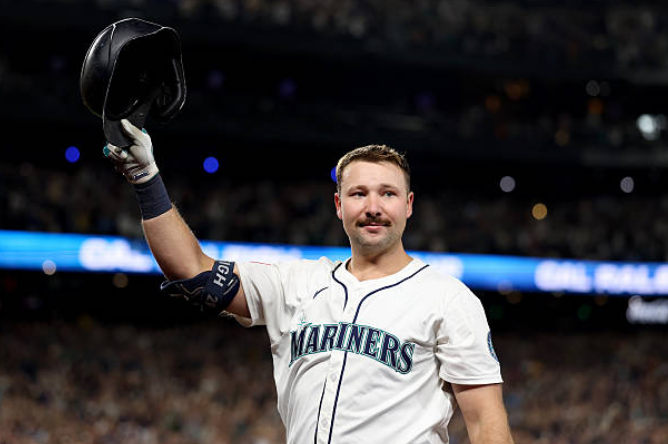
One question has lit up the baseball world for months on end: who should be the American League MVP?
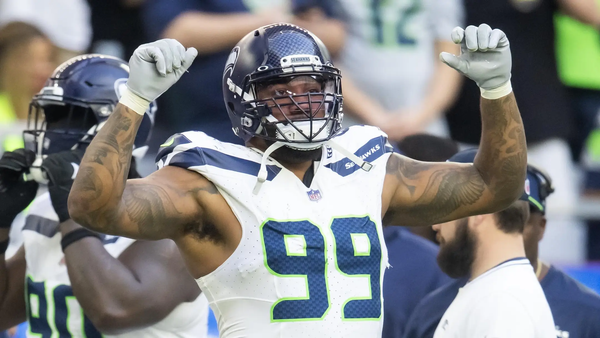
Going into the season, there wasn’t much expectation that it would be anyone but Aaron Judge. The Yankees slugger had put up a 10+ Wins Above Replacement (WAR) season according to both Baseball-Reference and Fangraphs in two of the previous three years, during both of which he led all of baseball in both on base percentage and slugging percentage as well as becoming the first player since Barry Bonds to put up a full 200 OPS+ season (essentially, meaning he put up twice the production of the average MLB player).
By the All-Star Break, Judge had accrued a .355/.462/.733 slash line, 35 home runs, 81 RBIs, 7.1 Baseball-Reference WAR (bWAR), and a similar¹ Fangraphs WAR (fWAR). Once again, his OPS+ was north of 200. Had the rest of baseball performed about as expected, there wouldn't have been much question about the MVP, even at that early date.
And yet, that was not so. If someone in the Bronx took I-80 west from New York to Chicago, veered northwest onto I-90 in the Windy City, and rode that road all the way to its very terminus, they would find the magic that had been brewing for months.
Mariners catcher Cal Raleigh was on pace for the greatest catching season in MLB history. At the All-Star Break, he had a .259/.356/.634 slash line with 38 home runs, 82 RBIs, 4.8 bWAR, and 6.2 fWAR. His .375 isolated power (slugging minus batting average) would have been tied with Aaron Judge’s 2022 for 21st best in MLB history (though Judge was outpacing him at .378).
At this early date, the question was this: if Cal keeps it up, is he the MVP? For Judge, his first half performance was strong but not out of the ordinary. For Raleigh, it was incredible. The X-factor, then as now, was how much value can be placed on the leadership role a catcher plays.
As it turned out, both stars cooled off a little in the second half, though slumps by their standards are much more like solid seasons from most MLB players. From the All-Star break through the end of August, Judge slashed .222/.384/.481, hit eight homers, and knocked in 16. Raleigh, during the same stretch, had a .197/.295/.454 triple slash with 12 big flies and 25 RBIs. Some bad luck peppered both of these stretches, but both sluggers’ power numbers and walk rates kept up with previous performance.
Worryingly for Raleigh, his defense took a bit of a tumble along with the Mariners’ fortunes near the end of August. Framing, throwing, and tags at the plate began to be nascent issues.
September, however, has been kinder to the Junior Circuit’s MVP contestants, both of them north of 1.000 OPS during the month. The fWAR numbers, with four games left in the regular season, are as close as ever: Judge sits at 9.6 and Raleigh at 9.1. Baseball-Reference is much more favorable to Judge, with 9.3 bWAR for the Yankee and 7.2 bWAR for the Mariner.
However, there are two things to take note of. One is that WAR, although it calculates to one decimal point, is meant to be read in terms of differences of one total win or more: in other words, a 0.5 difference in WAR means the players are basically tied.
The other is that fWAR takes catcher framing into account while bWAR does not. The ability of the catcher to use visual trickery to steal borderline strikes from umpires’ human eyes can mean a world of difference in the game of inches, and any consideration of a catcher’s value should take that into account.
It’s part of a larger discussion about the usefulness of bWAR and fWAR (the short answer is that they have different applicabilities), but for our purposes, we can consider Cal Raleigh’s fWAR to be more indicative of his value than his bWAR. The point is less relevant for Judge, who plays a position where both variants are similarly useful (and who has similar tallies in both regardless).
But with such a close race as the season comes to its end, who has the ultimate edge?
“If you take 250 points off Cal Raleigh’s OPS, he’d be league average; if you take 250 points off Aaron Judge’s OPS, he’d be Cal Raleigh.”
The above phrase is the biggest case that is made for Aaron Judge’s MVP campaign, and it’s a pretty stark argument. Aaron Judge is truly having one of the greatest offensive seasons of all time; it’s just obscured by the fact that he’s Aaron Judge, who does that every year he’s healthy.
Still, Judge’s .328/.455/.681 triple slash and 213 OPS+ are mind-boggling. His .353 isolated power is 2019 Mike Trout or 1925 Rogers Hornsby territory. Not only does Judge have 51 home runs, but 29 doubles, two triples, 91 singles, and an AL-best 121 walks coming into Thursday. And don’t let the fact this is his third of four years with an OPS+ greater than 200 distract you from the fact that the only other person to do it over a full season this millennium was Barry Bonds.
Compared to Raleigh’s .248/.361/.598 slash line and 172 OPS+, Judge is truly in another realm with the bat, despite his deficit in home runs and RBIs, where Raleigh has 60 and 125, respectively. The question becomes, does Cal Raleigh have enough to make up for it?
“Raleigh is a premium catcher; Judge is an outfielder/DH.”
This is the most common argument made in support of Raleigh’s MVP campaign. Judge may be putting up bonkers numbers at the plate, but he’s playing an ancillary position. Compare that to Raleigh, who is involved in every single pitch on the defensive side of the ball, organizes his pitching staff in team meetings, and suffers a massive bodily toll from crouching for hours on end nearly every day.
All variants of WAR account for this, with a positional value adjustment being applied to every player based on the innings they log in each of the positions on the diamond. Catchers gain the most from this positional adjustment, while designated hitters are docked the hardest.
Raleigh’s biggest boon at backstop, according to Fangraphs, is his ability to frame pitches. I can attest that the eye test agrees with this, as aside from a rough stretch that coincided with Seattle’s late August rut, Mariners pitching had been gifted a whole lot of close strikes from Raleigh’s quick mitt.
There are some knocks to his defense, however. Cal Raleigh has caught 20.6 percent of opposing base stealing attempts, compared to a league average of 21.3 percent. Runners do attempt steals slightly less often against Raleigh (0.83 attempts per nine innings against Raleigh compared to 0.94 attempts per nine innings against all AL catchers), and there is certainly value in a reputation that keeps runners out of scoring position.
While his performance behind the plate isn’t quite what it was during his Platinum Glove 2024 campaign, when he led MLB in catching runners on the basepaths, he has still been a strong defensive catcher, and the difficulty of the position’s workload gives a weight of its own to Raleigh’s performance.
“As a catcher, you come off the field at the end of the day, you’re mentally and physically exhausted,” Mariners manager (and former Mariners catcher) Dan Wilson said. “For him to do what he’s done offensively and to do what he does behind the plate, I honestly don’t think we’ve seen this before. It’s been incredible.”
Raleigh has played 120 games at the catcher position in 2025 while DHing in 35 and showing up solely as a pinch hitter in two contests. Remarkably, he has performed better at the plate on the days he is behind it for nine innings, with a .996 OPS as a catcher compared to an .826 OPS as a DH—though obviously, the rest at catcher is needed over a long season.
Still, this has put him at the heart of the action for over 1000 innings, compared to Judge, who has played 91 games as a right fielder and 56 games as a designated hitter while his one other appearance was a pinch hit at-bat. And the catcher’s role is not just being behind the dish; it is coordinating with the staff, captaining the team, and making game-time decisions. In short, it is to put the team on your back.
At least according to Fangraphs, Cal Raleigh’s work in that role moves him into a near-tie with Aaron Judge when it comes to value.
Cal Raleigh’s Historicity
The thing about the MVP awards is that they are contextual. It’s not just the work put in as an individual, but the way that work interacts with baseball history, both from a team perspective and a player perspective.
Where would the Mariners be without Cal Raleigh, the Yankees without Judge?
If we use the fWAR stat as it was designed—and suppose that we reduce their respective teams’ wins by that number to simulate two replacement players taking the place of Judge and Raleigh—we come to the conclusion that both teams would lose about nine wins. Seattle, currently at 89-69, would instead sit at 80-78, while the Yankees, now at 90-68, would be much diminished at 81-77. Both teams would be on the cusp of mathematical elimination going into the last few games of the season.
For the Yankees, at least, we saw a bit of that lifelessness when Judge was briefly out early in the second half. For the M’s, we don’t have to imagine; there are 47 years of history to look back on.
And that leads into the other aspect of such a question. The Yankees have 27 World Series rings and 41 American League pennants; the Mariners have none of either. Leading a team like the Mariners to newfound glory—pushing aside the long-regnant Astros to become the division winner for the first time since 2001—is, simply put, more monumental than getting the Yankees to the playoffs for the 26th time in 31 years.
I must also bring up the two-ton elephant in the room. Cal Raleigh has joined legendary company with a 60-homer season, becoming the first Mariner, the fourth American Leaguer, and the seventh player to ever do it. He has joined Barry Bonds, Mark McGwire, Sammy Sosa, Aaron Judge, Roger Maris, and Babe Ruth. As if that wasn’t magical enough, he reached that mark on the selfsame night the Mariners clinched the division.
60 home runs is perhaps more special in the American League. The Senior Circuit’s trio of sexagenarians—Bonds, McGwire, and Sosa—all have the dark cloud of performance enhancing drugs clouding their glory. It’s why there was so much weight attached to Aaron Judge’s hunt for the AL home run record in 2022: Maris never had to testify before Congress as McGwire had.
And Raleigh, alone of all the AL’s 60-blast bashers, did it in a pitcher’s park. While Ruth, Maris, and Judge had the Yankee Stadium short porch to assist them (although Ruth, to be fair, had that balanced against a truly cavernous² center field in those days), Raleigh took on a ball yard where fly balls go to die, suffocated in thick marine air. Countless fly balls have perished out on the right field warning track in T-Mobile that would have continued 15 feet further in New York’s east coast unlayered air—and factoring the short porch into account, there’s truly no telling how Raleigh’s season would have gone had he been in Yankee Stadium.
When it comes to catchers, Raleigh’s performance is unprecedented. While 2012 Buster Posey might still rank as the greatest catching season ever (though 2025 Raleigh has a good argument), there is no doubt that Raleigh’s power as a catcher is unparalleled. Put it this way: Raleigh has hit 49 home runs this year while playing catcher. No other primary catcher has ever hit 49 big flies in a season total.
Because Raleigh and Judge are essentially tied in value when you look at on-field performance minus any historical context, the unprecedented nature of Raleigh’s accolades is a titanic tiebreaker for the Mariner.
A Change of Heart
I’m willing to admit I initially got this wrong. Go back to my work on the Mariners-Yankees series back in July, I declared then that I thought Judge the favorite. Part of it was that I doubted Raleigh’s ability to keep up his torrid pace, part of it was that Judge’s team came through when it mattered in that series while Raleigh’s did not.
Since then, the Mariners have gone 41-24 while the Yankees have been a slightly worse 38-27. There’s a very real chance the two of them meet in the postseason, though as the playoff picture stands now, that would have to be in the ALCS. But for the Mariners, Raleigh has already produced a run of magic for the ages.
Despite the doubts, he has essentially kept up the production. He may have fallen a little off his breakneck first half pace, but he has still put up 60 home runs on the year with an almost .600 slugging percentage. And in high leverage situations, he has a 1.101 OPS; it seems he is more than comfortable under the bright lights.
I’ll reframe the MVP question more simply. Let’s say you and 14 others were re-drafting every American League team based on each player’s 2025 seasons. If you had the first overall pick in such a draft, would you take Aaron Judge or Cal Raleigh?
Given everything about this season, I would pick Cal Raleigh.
1 — Neither Baseball-Reference nor Fangraphs offer any splits for WAR, and so finding WAR stats at specific dates (in this case, at the All-Star break) is a matter of either searching through the Wayback Machine for pages from a specific date or of finding the league and player stats for that date, calculating league runs created, league adjustment, runs per win, and player runs created for that date, and then calculating it. Aaron Judge’s All-Star Break bWAR was saved on a July 17 capture of his Baseball-Reference page, but the closest Fangraphs capture was on July 22, after the second half had started. His fWAR at that point was 7.3, and I didn’t think it necessary to spend an hour or so figuring out the fraction of a win difference from five days earlier.
2 — The deepest part of center field in the old Yankee Stadium’s original dimensions was 490 feet.