Power Questions Linger as Mariners' Harry Ford Eyes MLB Future


[caption id="" align="alignnone" width="1080"]
Credit: Harry Ford/Instagram [/caption]
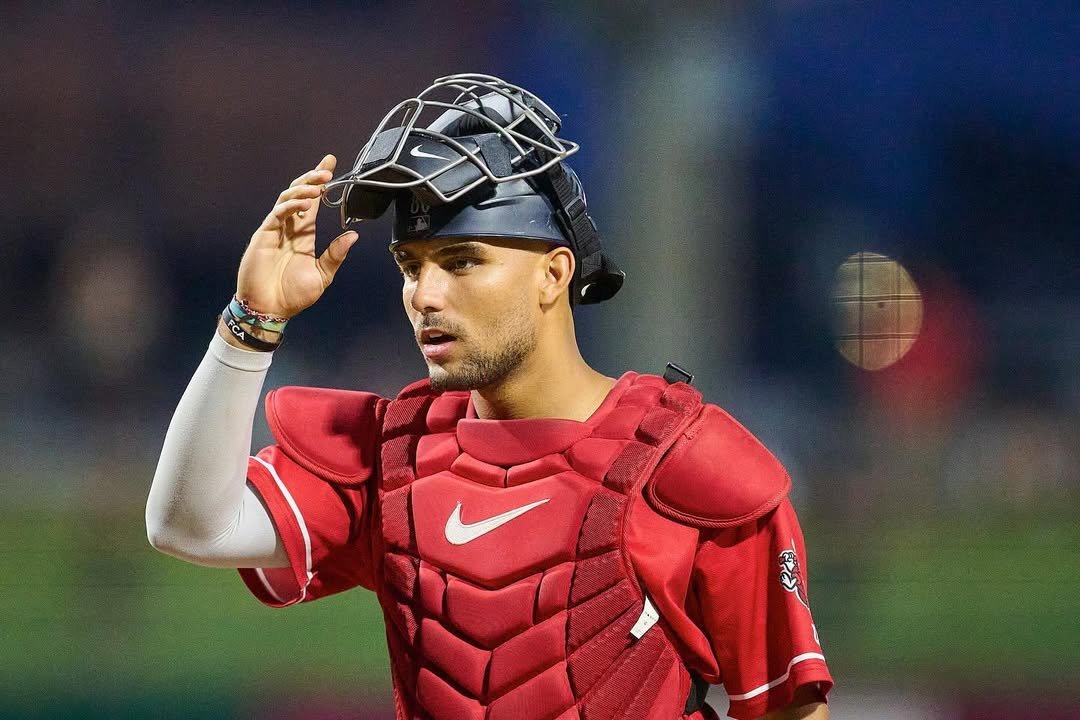
It’s been a spring full of strong performances from several of the Mariners’ young hitters, but perhaps none has been more encouraging than what Harry Ford has put on display. In 21 Cactus League plate appearances, the 2021 first-round draft pick has gone 8-for-17 with a pair of extra-base hits, including a home run, five RBI, three stolen bases, and a trio of walks.
Although every year is a “big year” for any professional baseball player, the upcoming minor-league season is especially important for Ford. Success would almost certainly result in his first call-up to MLB, while plateauing or outright failure would cause his already descending status as a high-end prospect to fall even further. In a year’s time, he has gone from a consensus top-40 prospect in baseball to sliding big in — or even falling entirely out of — the top-100 lists of major publications around the game.
Developing as a young catcher is typically a long, drawn-out process, more so than most prospects at other positions. As such, Ford has been on a slower track to the majors than some of his peers. That’s not to say he’s “behind;” after all, he only just turned 22 years old on February 21. But he’s a seasoned minor-leaguer at this point, entering his fourth full season, and fifth overall, in the Mariners organization.
Ford has climbed up a level of pro ball heading into each of those years and has yet to receive an in-season promotion. His most recent stop, with Double-A Arkansas for the entire duration of the 2024 campaign, saw him post a .249 batting average with a .377 on-base percentage, a 14.1 percent walk rate, and a 22 percent strikeout rate. The average was a bit lower than preferable, but the real issue was his inability to do damage with the bat. His slugging percentage (.367) came in a full 10 points lower than his on-base percentage and he only registered 35 extra-base hits, seven of which went over the wall, in 523 total plate appearances.
Concerns over Ford’s ability to stick behind the plate have faded over the last year or so, but catching — with any sort of regularity, at least — may not be an immediate option for him with the presence of Cal Raleigh in Seattle. It could be somewhere else, though, as Ford has been one of the most talked-about Mariners prospects in trade rumors over the last year, with the Rays reportedly showing interest in him at some point.
If he stays with the Mariners, however, where he ultimately winds up defensively shouldn’t be too severe of a predicament given his unique athleticism, but how the bat profiles elsewhere, whether it be in a corner outfield spot or somewhere along the diamond, is a real question. That said, many players have overcome having below-average power to carve out everyday roles at positions where slugging is usually coveted; it would just make him a less-than-ideal fit at quite a few spots.
But how much stock can really be put into Ford’s power-related struggles given how tough Arkansas’ home stadium, Dickey-Stephens Park, notoriously is on right-handed hitters? At his other two stops in A-level Modesto and High-A Everett, he slugged an acceptable .438 and .430, respectively.
We likely won’t have to wait long to get a bit more context from a change of scenery. In an early February interview on Over-Slot: The MLB Draft Podcast, Mariners president of baseball operations Jerry Dipoto confirmed the plan is for Ford to begin the upcoming season in the friendlier Pacific Coast League circuit with Triple-A Tacoma. While Ford will see the difficulty of opposing pitching uptick, the ballparks in which he’ll play will be far more favorable from a potential power output standpoint. If he’s able to ride the momentum of his strong spring and get his slugging to jump considerably, then the worries borne out of his 2024 performance will be, at the very least, tempered. If not, though, that’s a problem.
The latter outcome wouldn’t necessarily be an indictment on Ford’s ability to be a useful big-leaguer, however. It would just put a cap on how his ceiling would be viewed. The elite on-base skills and athletic ability he has showcased in the minors should translate well to some form of role in the majors. But is he a future All-Star level player, or just a solid two-win utility man? We should have a better idea of what the answer is pretty soon.