How NCAA’s House Settlement Will Impact Huskies in a New Era of College Athletics

[caption id="" align="alignnone" width="5184"]

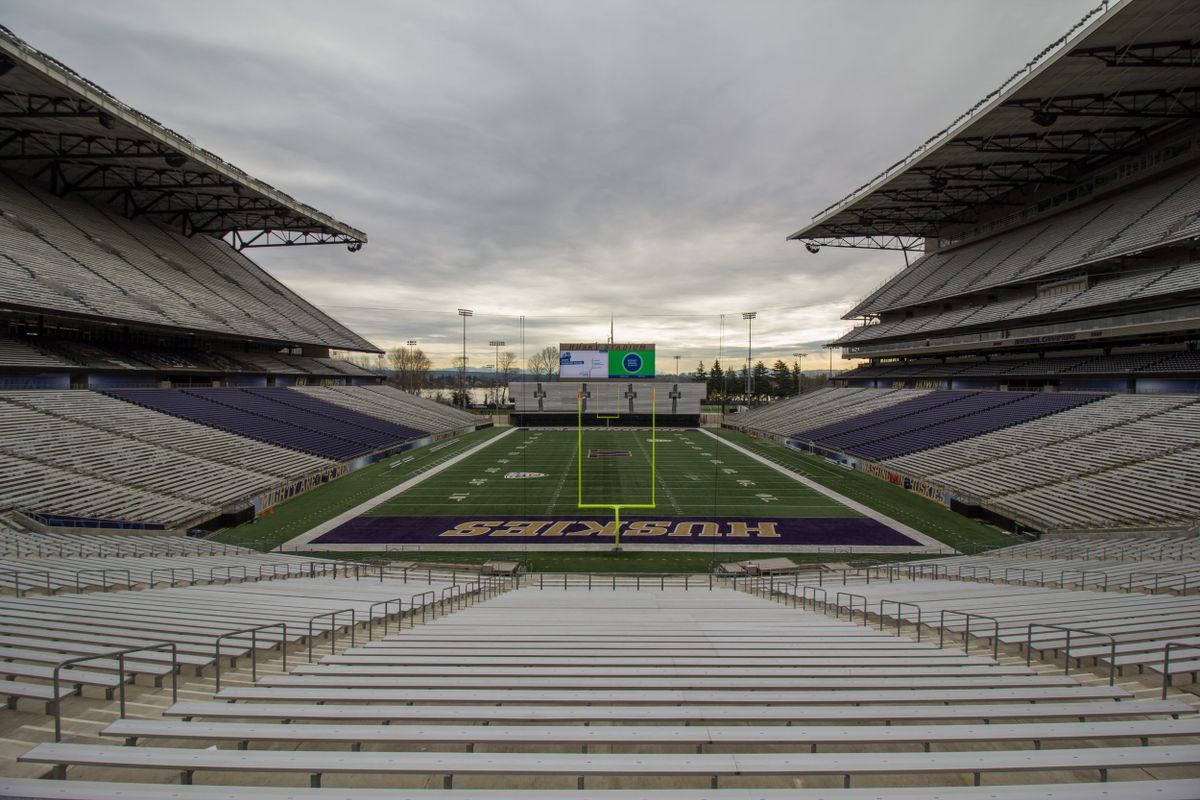
Massive changes in the college athletics landscape will continue to have an impact on every Division I program, including the Washington Huskies, moving forward. [/caption]
Welcome to the new world of college athletics.
In 1992, Washington Huskies quarterback Billy Joe Hobert was suspended for acquiring a loan to buy a Camaro, a sweet stereo system, and a couple of guns.
Now, 33 years later, a guy like Hobert — a wildly popular college athlete coming off of a national championship season — could demand much, much more.
Starting July 1, those funds can come directly from the school. After much waiting and speculation, California judge Claudia Wilken approved what has been known as the “House settlement” — a settlement of three antitrust cases.
Say what you want about what may or may not have been going on under the table in major college football and basketball over the last century. This is a monumental change in college athletics. For the past few years, athletes were being paid for Name, Image, and Likeness (NIL), typically through collectives that were, on paper, not officially affiliated with any college. At Washington, Montlake Futures was tasked with arranging financial deals with athletes. The intent was for athletes to be able to do things like commercials for the local Chevrolet dealer, appearances, and autograph signings. Often, though, payments were simply handed over to the athletes looking to attend, transfer to, or stay at a university.
The settlement changes much of that.
"Despite some compromises, the settlement agreement nevertheless will result in extraordinary relief for members of the settlement classes. If approved, it would permit levels and types of student-athlete compensation that have never been permitted in the history of college sports, while also very generously compensating Division I student-athletes who suffered past harms," Wilken said as part of the 76-page opinion.
The settlement also changes the NIL landscape. Effective immediately, all contracts between athletes and third-party entities such as businesses, boosters, and collectives must pass through a clearinghouse. The intent is to make sure all deals are legit, and not simply an end-around to add to the school’s payment of athletes. Contracts signed before Wilken’s decision and paid prior to July 1 are not subject to clearinghouse approval.
What Does This Mean for Washington?
The settlement allows, but does not require, schools to pay a percentage of revenue. That calculation for 2026 is expected to be approximately $20.5 million for the entire athletic department. Washington Athletic Director Pat Chun has intimated in the past that the Huskies plan to spend to the max allowed by the settlement. While Washington has not specified publicly what that will look like, but it has been widely reported that most Power 4 schools will use approximately 90% of those funds for football and men’s basketball. If that’s the case at Washington, that leaves about $2 million total for athletes in baseball, women’s basketball, beach volleyball, cross country, golf, gymnastics, rowing, soccer, softball, tennis, track & field, and volleyball.
University of Washington athletic director Pat Chun released the following statement after the House settlement announcement:
“With today’s formal approval of the House vs. NCAA settlement, universities are now permitted to provide additional financial support for student-athletes in the form of revenue sharing, above the existing financial benefits from scholarships and limited academic stipends. Since the preliminary approval of the settlement last year, UW Athletics has been preparing for this outcome. UW will distribute the maximum allowable revenue share to our student-athletes. Also, Husky Athletics has built an internal business unit, Dawgs Unleashed, to assist our student-athletes with maximizing their Name, Image and Likeness (NIL) opportunities. The potential number of valid business-purpose NIL opportunities for our student-athletes, both locally and globally, will be unmatched. We look forward to UW athletic programs flourishing in the new era of college sports.”
The success of programs like “Dawgs Unleashed” could swing the competitive balance among the Power 4 football programs that build relationships between businesses interested in NIL deals with athletes.
Some advantages for Washington football could be the number of local high-profile companies in the area, including Amazon, Boeing, and Microsoft, among many others. UW head coach Jedd Fisch has lauded the proximity and number of Fortune 500 companies since his arrival. Washington is among a relatively small handful of perennial Top 25 programs to be located within the confines of a large city, which in theory gives Washington athletes more bites at the apple when searching for NIL deals that will pass muster with the clearinghouse.
However, what that means for athletes at UW remains unclear. How many businesses in Seattle have the appetite to pay college athletes? And how does that compare to places like a Ford dealership in SEC country? While there is more clarity about what kinds of deals can be made, this will likely be an evolving process.
Roster limits for football change from a maximum of 85 scholarships to a maximum of 105 roster spots with the settlement. Fisch has said he wants to stay around 85 so football players are compensated at a higher individual rate and see a clearer path toward playing time.
Big Ten Commissioner Tony Petitti also released a statement Friday evening: “We look forward to implementing this historic settlement designed to bring stability, integrity and competitive balance to college athletics while increasing both scholarship and revenue opportunities in all sports.”
Affect on other sports
One of the unknowns is how the settlement might affect the number of overall opportunities offered by colleges, especially those outside the Power 4. With a limited amount of revenue sharing to go around to the Olympic sports, some schools may choose to cut sports, or direct more resources to programs with a visible path toward competitive success. This could make scholarships harder to come by for athletes in sports that traditionally lose money for colleges.
Will This Stick?
One of the major issues is that there was no true athlete representation in this settlement. The athletes are still not considered employees, and therefore have not unionized. Most NCAA programs, it would seem, hope there’s another step in this process that ends with a Congressional bill to further define athlete compensation.
One thing seems certain: Lawyers are going to keep making a lot of money on both sides of the tug-of-war for money made by college athletics. There are expected to be legal challenges to potential loopholes, along with NIL deals that are denied by the clearinghouse. The NCAA has been getting crushed in court for years, so the House settlement is unlikely to bring about a complete truce. It seems inevitable that new court cases will pop up even with the resolution of the prior ones.
Title IX could also come into play. Essentially, schools that receive federal funds are required to provide equal opportunities for male and female student-athletes, including scholarships, facilities, equipment and support. This is why many FBS-level schools offer more sports teams for women than for men. This is how schools balance out the 85 scholarships for football, and the reason why sports such as men’s baseball were limited to 11.7 scholarships. It will be interesting to see how Title IX is interpreted in this new era.