John Schneider’s Biggest Gamble Will Make or Break Seahawks’ 2025 Playoff Chances
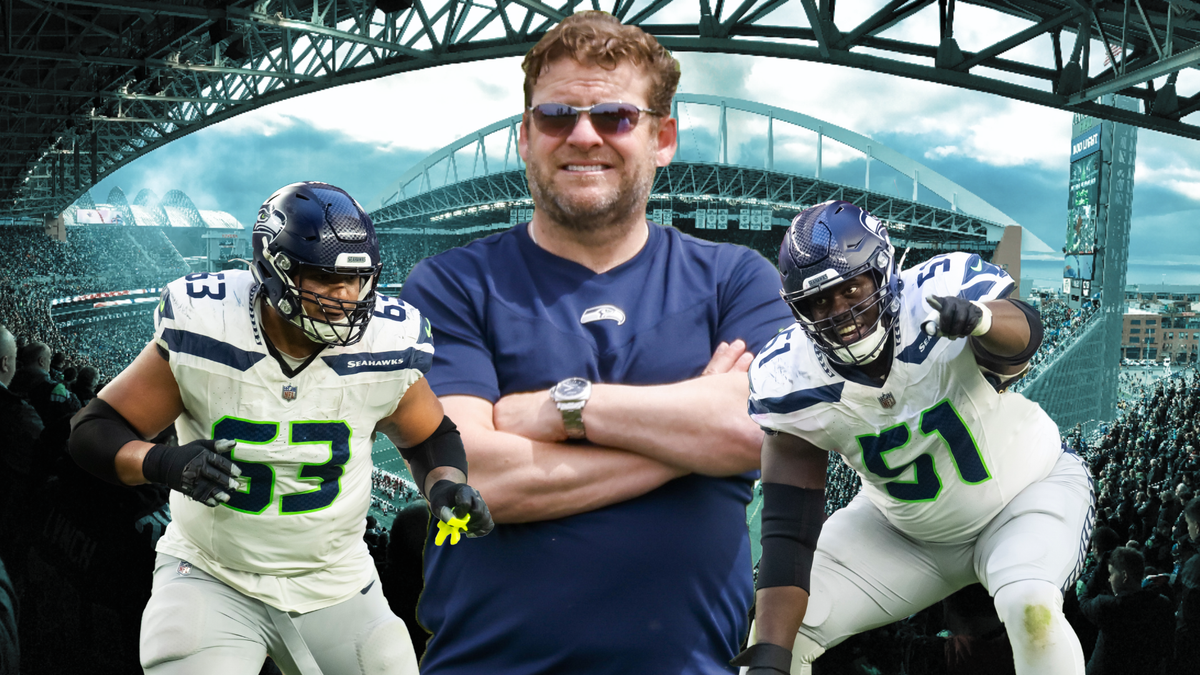
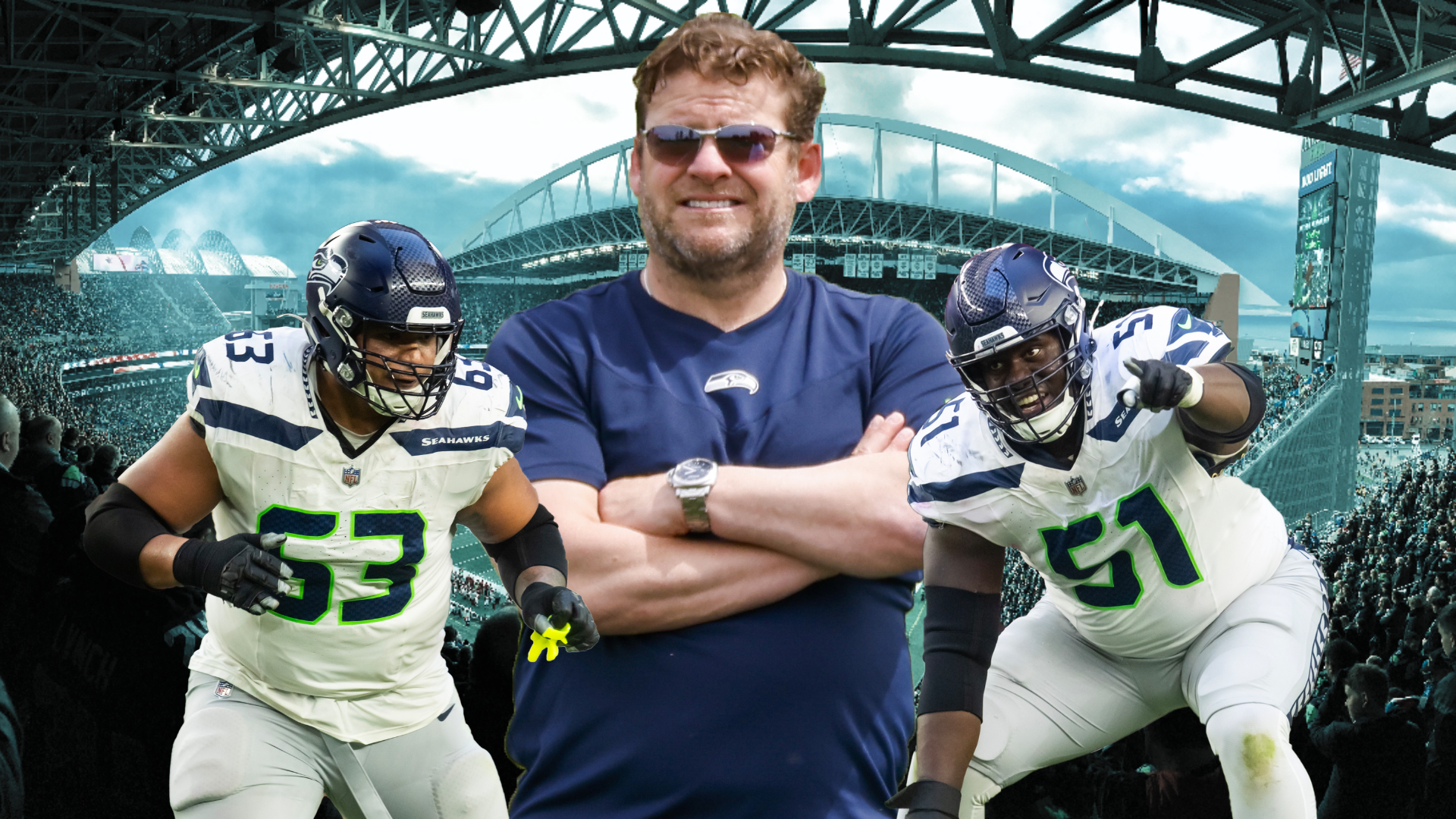
In the midst of an offseason defined by seismic changes so far, both in regard to player personnel and the coaching staff, Seattle Seahawks general manager John Schneider has been pushing all of his chips to the middle of the table.
First, when negotiations apparently broke down between the player and team before they even got off the ground, Schneider quickly pivoted at the quarterback position by trading away two-time Pro Bowler Geno Smith to the Raiders and signed former Vikings starter Sam Darnold as his replacement. Only two days later, honoring the request of the disgruntled star, he jettisoned receiver DK Metcalf in a trade to the Steelers, which followed up releasing franchise icon Tyler Lockett earlier in the week, plugging those holes by signing veteran wideouts Cooper Kupp and Marquez Valdes-Scantling for significantly less money.
All of those moves came on the heels of a dramatic overhaul of the offensive coaching staff, starting with the dismissal of offensive coordinator Ryan Grubb less than 24 hours after the team’s season-ending road win in Los Angeles. A lengthy search led to Klint Kubiak - formerly the play caller for the Vikings and Saints - being hired as his replacement along with the arrival of long-time NFL offensive line coach John Benton, senior assistant Rick Dennison, quarterback coach Andrew Janocko, and run game specialist Justin Outten, prioritizing chemistry with all four assistants previously working alongside Kubiak.
Based on that frenzy of transactions, Schneider has taken on the role of a riverboat gambler by putting his money mostly on known, yet largely unproven, commodities. Prior to a breakout season in Minnesota, Darnold had washed out as a starter with two other teams, failing to live up to his No. 3 overall pick billing, while Kubiak lasted just one season apiece as a coordinator with the Vikings and Saints and has now been with four teams in as many seasons. Even in the case of Kupp, the one-time All-Pro has not hit the 1,000-yard mark since 2021 and frequent injuries led to the Rams cutting him, casting questions about what he has left in the tank.
But while Seattle’s chances of improving upon a 10-win season that didn’t culminate in a playoff berth will certainly ride on Darnold’s arm and Kupp and Valdes-Scantling picking up the slack helping replace lost production from Metcalf and Lockett’s departures, Schneider’s most bold roll of the dice sticking with status quo along the offensive line holds all of the cards.
Unlike most offseasons, in Schneider’s defense, the normally frugal spender made a valiant push to open up the checkbook pursuing a big splash in the trenches to address one of the worst lines in the league. If not for the sticking point of requesting a physical prior to signing a contract, guard Will Fries could most certainly be a member of the Seahawks instead of the Vikings, who he ultimately signed a five-year, $88 million deal with on the opening day of free agency. The team handed him a competitive offer north of $17 million per season, a departure from previous free agency periods.
However, since coming up short with Fries, Seattle has brought in numerous veteran guards for free agent visits, only for all of those players to sign elsewhere. Among those who flew out to the VMAC who opted to sign with another team, former second-round picks Teven Jenkins and Dillon Radunz left without a contract and joined the Browns and Saints respectively, while former Saints starter Lucas Patrick decided against a reunion with Kubiak and Benton to go to the Bengals on an affordable one-year deal.
With free agency now slowing to a turtle-like pace, not many options remain on a picked over crop of free agents. Much to the dismay of many fans, in the two weeks since the start of the new league year, the Seahawks have only added versatile lineman Josh Jones, who has started just three games since 2023 and likely only fills the swing tackle role vacated by the release of George Fant. That move alone is far from an inspiring one to address the weakest link on the roster.
As things stand, Schneider appears to be betting on Benton, Dennison, and Outten, who have more than 50 years of NFL coaching combined between them with an offensive line/run game specialty, to be the biggest difference makers for improving Seattle’s line by doing a better job coaching up and developing mostly the same cast of characters rather than overhauling personnel.
Though it may be aggravating for fans who have been pleading for upgrades up front for years, Schneider’s strategy isn’t without promise. The Seahawks have invested seven draft picks in offensive linemen over the previous three drafts, the second most in the NFL during that span, including three selections on guard Christian Haynes, guard Sataoa Laumea, and tackle Mike Jerrell last April. They also have multi-year starters in Charles Cross and Abraham Lucas healthy and ready to roll at the tackle spots and centers Olu Oluwatimi and Jalen Sundell each receiving valuable experience last season.
Considering Seattle has used a first-round pick, a second-round pick, a third-round pick, and four day three selections on offensive linemen since 2022, the group should have plenty of untapped upside, particularly with Cross and Lucas poised to take another big step in their growth. Even in the interior, Anthony Bradford, Haynes, and Laumea have flashed in spurts amid their struggles at the guard spots and Oluwatimi made strides in a partial season as a starter replacing the retired Connor Williams a year ago. All six of those players are 26 years or younger, representing balls of clay for a proven teacher in Benton to mold into quality NFL offensive linemen.
At the same time, based off of on-field performance, Benton, Dennison, and Outten could face a difficult challenge trying to transform a maligned Seahawks offensive line into a formidable one without any significant veteran additions. Before going down with an injury in November, Bradford was tied for the most sacks allowed by a guard and also ranked first in penalties, and at 330-plus pounds, he may not be a good fit for Kubiak’s zone-centric scheme. Meanwhile, Haynes couldn’t earn a starting opportunity as a rookie even after Bradford got hurt, as Laumea passed over him to start the final six games at right guard.
As for the tackle spots, Cross has been solid, yet unspectacular, over the course of three NFL seasons and has yet to take the major leap expected from a top-10 pick. While he played some of his best football in 2024, he still gave up 47 pressures and six sacks according to Pro Football Focus, failing to statistically demonstrate much improvement from his sophomore campaign. Lucas has been saddled by injuries, missing 22 games over the past two years due to knee problems, and durability remains his biggest question mark going into the last year of his rookie deal.
Like Bradford, Oluwatimi isn’t known for his athletic prowess and excelled at the college level in a gap-heavy run game, which has led to speculation Sundell may actually be the better fit for Kubiak’s system. But as a former undrafted free agent who has fewer than 50 NFL snaps under his belt, asking Sundell to jump into the starting lineup would carry a tremendous amount of risk with the chance to backfire badly if he’s too green to handle the job.
Of course, if there’s an obvious silver lining for the Seahawks, as Schneider has cited multiple times this offseason, the team has 10 draft picks in their arsenal rolling into next month’s draft. Even if they largely get shut out in free agency, a strong tackle and guard class presents a great opportunity to infuse the line with more exciting young talent, especially with four selections on day two thanks to the picks acquired in the Smith and Metcalf trades earlier this month.
With that said, as evidenced once again by the fact that the clock already is ticking on Haynes just one year after being selected in the third round, drafting offensive linemen in bunches hasn’t been the solution for Schneider and the front office for more than a decade. Only one tackle, guard, or center drafted by the current regime - Russell Okung - has made a Pro Bowl since 2010, while second contracts have been few and far between, both a sign of lack of development and unwillingness to spend to retain players at those positions.
While it may sound like a broken record, unless that trend changes in a big way due to improved coaching, improved talent through the draft, or a combination of both, the Seahawks won’t be able to come close to playing to their potential on offense. If the offensive line remains a major area of weakness, Darnold will surely regress under heaps of pressure, the run game won’t take off as envisioned, and the losses of Metcalf and Lockett will only be further magnified, making all of his other offseason moves questionable at best.
By choosing not to invest in a serviceable veteran to support an otherwise young unit and banking solely on coaches to lift the same group to new heights, Schneider hasn’t just left Seattle’s playoff hopes in the present hanging in the balance with his latest dicey wager revolving around the offensive line, but he’s also potentially put his own job on more tenuous ground. With the buck now solely stopping with him as the sole decision maker at the top of the front office food chain, all eyes will be on him in coming months with a critical season in the Pacific Northwest looming.