International Signings, Big Free Agents, Minor Mariners Trade: Things Finally Happen Mid-January

Much of the MLB offseason has consisted of a crawl, a slow drip, whatever metaphor you prefer for when things happen at a snail’s pace. But eventually, things had to give, and teams and players needed to make their final decisions as less than a month remained before pitchers and catchers were set to report to sunbelt duty. This happened to coincide with the opening of the international signing window, where deals that had been unofficial for quite some time were finally announced to bring very young talent abroad into big-league farm systems.
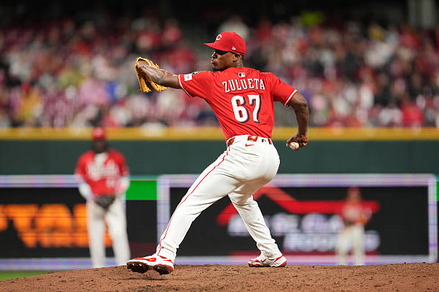
Jerry Dipoto and the Mariners, for their part, also made a relatively small-ball deal to get another reliever into the system, and although he’s much less of an instant splash than Jose A. Ferrer, the newly-added Yosver Zulueta is the type of grounder-heavy sinker-slider reliever that the Mariners lab likes to work with.
Mariners sign six international players, including four on Baseball America’s Top 100 Bonus Board.
January 15 marked the official opening of the international signing window, but although the window extends all the way to Dec. 15, much of the action happens very early on as players who have been talking with a team for quite a while finally put pen to paper. Players signed must be 16 before signing and be 17 before Sept. 1 of the year, and teams have a set bonus pool [1] to make their signings. Seattle had $7,357,100 in bonus pool money to spend on this year’s international class, and the team signed six players on the first day of the window.
Although around 30% of big-league players began as international signings, there’s no guarantee any of the youngsters that get signed - even those with good scouting grades - will amount to a major league player. The overall grades amount to educated guesses, probability figures that gauge how likely it is for a player to contribute. The grades are on a 20-80 scale, where 50 is big league average and each increment of 10 is a standard deviation from the mean [2] (meaning that a player with 80-grade speed, for example, is faster than roughly 99.7% of all major league ballplayers). While grades are not publicly available for all of the players Seattle signed, two of the Mariners’ signees are on FanGraphs’ list of 59 international prospects, all of whom have detailed grades.
OF Juan Rijo | 17 | Dominican Republic | 6-1, 185 pounds | $2.2 million signing bonus | 40+ Future Value (FanGraphs)
[caption id="" align="alignnone" width="1100"]
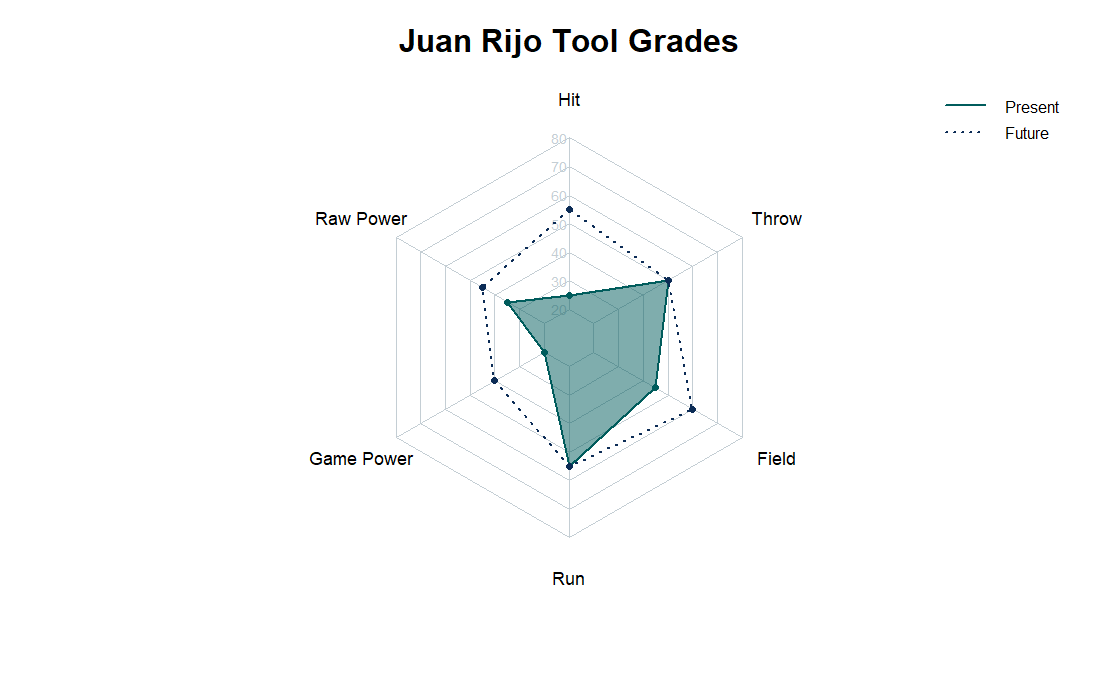
FanGraphs’ present and future tool grades for Juan Rijo, plotted on a radar chart. [/caption]
The top-rated prospect among the six, the left-handed Juan Rijo projects as a hit-over-power kind of player. Scouts describe his swing as smooth and repeatable, which is something you can see for yourself on the MLB website. There’s perhaps an imbalanced finish to his stroke in some of the footage, but given that the actual bat path is short and direct, Rijo does show a fair bit of promise when it comes to consistency - bolstered by good pitch recognition and selection.
There seems to be some disagreement on his fielding ability. As shown above, FanGraphs projects that he can improve to a plus fielder with above-average speed, but Baseball America expects that he might slow down as he puts on weight and settle in as an unassuming corner outfield glove. From the footage I’ve seen, he does have a fairly strong arm, but can be inaccurate with it at times.
In a statement released on Thursday, Mariners senior director of international scouting Frankie Thon Jr. praised Rijo’s skillset as “well-rounded” and made mention of work ethic and baseball acumen, which are potential good signs for his development.
OF Gregory Pio | 16 | Dominican Republic | 5-11, 170 pounds | $2.9 million signing bonus | 35+ Future Value (FanGraphs)
[caption id="" align="alignnone" width="1100"]
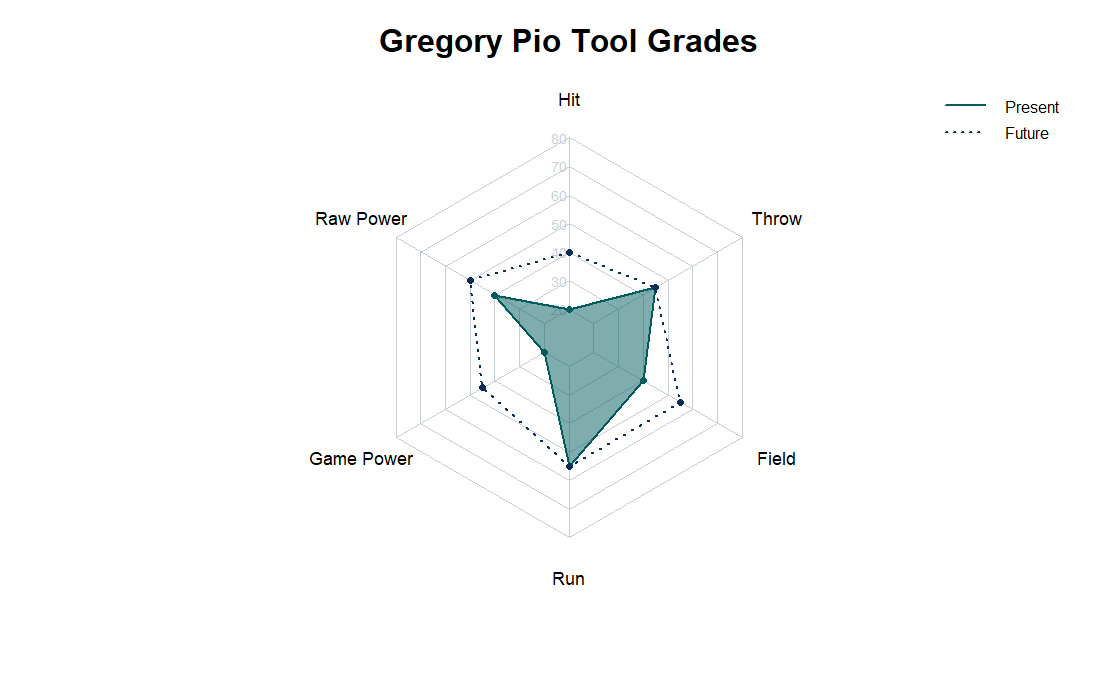
FanGraphs’ present and future tool grades for Gregory Pio, plotted on a radar chart. [/caption]
Pio’s right-handed swing is quite a bit different from the technically sound stroke that Rijo displays. He can generate quite a bit of power, but at a trade-off: it’s a long hack with more potential failure points [3], and he has issues with pitch selection. FanGraphs isn’t super confident in Pio’s ability to fill out his power beyond the mid ranges, but the Mariners evidently are betting on a power profile that already shows signs of life.
FanGraphs and Baseball America disagree on the true caliber of his speed, with FanGraphs (as shown above) noting it as above average but not extensively so, while Baseball America describes it as “plus-plus”, i.e. 70-grade. Pio’s ceiling, no matter who you trust for grades, is clearly a power-speed guy with bat skills as the prime limiting factor, but given that he’s the youngest of Seattle’s signees at 16, there’s more room for a big shift in his profile.
Thon described Pio as a “slam-dunk centerfielder” in Seattle’s press release, and although Baseball America and FanGraphs used less bombastic language to describe him on that side of the ball, they both put his defense in the same direction. FanGraphs, once again, is going a little against the grain by rating his future fielding grade lower than Rijo’s, but it still has him above average.
INF Leonardo Reynoso | 17 | Dominican Republic | 5-10, 170 pounds | $775 thousand signing bonus
You might expect Reynoso’s stockier frame to lend itself more to power, but Baseball America describes his hitting profile as having “mostly gap power” and praising his adjustability and contact. He can hit from both sides of the plate, but he does have more confidence in his left-handed swing and is able to generate more consistent force on the ball from that side (video here). He seems like a guy with fairly good raw power who sacrifices some of that for more contact in game situations, which has the obvious upside of creating a solid base onto which a power burst could be added later.
Given his solid arm strength but lack of range, the Mariners project Reynoso as a third baseman, though Baseball America also gives second base as an option. Looking at footage, he has quick hands and good feel for the ball, but probably won’t be a shortstop given that he often has to use those abilities to make up for the aforementioned lack of range.
C Daniel Alaña | 17 | Venezuela | 5-11 | $600 thousand signing bonus
One of the more powerful hitters the Mariners signed, Alaña has a violent right-handed swing, coming with the obvious benefits and drawbacks. It’s worth noting that his swing mechanics have made a notable improvement in the past year or so, as newer swing footage shows his hands controlled and at a good distance from his body, whereas his hands often wheeled much further away from his body in older film.
Baseball America praises his arm strength as another tool in Alaña’s arsenal, fitting for his position as a catcher. I haven’t found any recent footage showcasing his pop times, but my guess is that they might not be as good as his arm or power.
OF Ambeiro Recio | 17 | Dominican Republic | 6-1 | $400 thousand signing bonus
Recio’s raw power has been noted by several around baseball, with Beisbol FR’s Francys Romero describing him as one of his dark horses (for both power and contact!), and footage of his batting practices shows that his power is high-level at five o-clock - with Baseball America putting his raw power ceiling at 70-grade - though I haven’t seen much one way or the other in terms of game power. His right-handed swing features an inwards toe tap followed by a powerful uppercut, certainly giving him potential for the “pull air” rate that is so highly prized in modern baseball.
I haven’t seen much defensive footage of Recio, but given that Baseball America projects him into the corner outfield, it’s likely that scouts currently see Recio as a bat-first prospect.
OF Jarvis Gómez | 17 | Dominican Republic | 6-1 | $100 thousand signing bonus
Gómez is also billed with strong raw power, but somewhat awkward mechanics mean that much of his force might go to waste if he doesn’t shorten up his swing in the coming years. His wiry frame gives Mariners player development another thing to work on, but if both of those things can be ironed out, he has some other tools to work with - 60-grades in throwing and running according to Baseball America - and has definite potential at center field, though the M’s were clearly less confident in Gómez than in their other signings.
The big names signed shorter contracts for larger AAVs, a shift from the way free agency has usually operated.
I’ve written a bit about Kyle Tucker and Bo Bichette as potential dark horse Mariners targets (though either one would have certainly required the team to dump cost elsewhere), but once the two finally put pen to paper on their contracts, it became clear that Seattle was never in the running for these big names.
Tucker went first, and his signing drew heads not just for the team he joined but for the price tag he worked. The defending repeat champion Dodgers ponied up $240 million; although that isn’t unheard of for high-end free agents, teams typically spread that payday out over something like seven to 10 years. Tucker signed for four. $30 million is included in deferrals, giving his contract a $57.1 million average annual value (AAV), one of the highest ever paid [4]. His deal includes opt-outs after the second or third years of his contract, just in case Tucker plays so well as to be even more valuable.
Since the Mariners play in the American League, they are somewhat insulated from the colossus come October, but anything Dodgers-related seemingly has implications for next winter’s labor negotiations.
Bo Bichette was reportedly on the cusp of a roughly $200 million contract for seven years with the Phillies, but having lost out on the Tucker sweepstaskes, Mets owner Steve Cohen [5] presumably pivoted to swipe Bichette at any cost - doing so with a three-year, $126 million deal with two opt-outs for the star infielder on Friday morning.
Both deals include early opt-outs and the ability for the player to advertise their talents at least one more time, though any 2026-27 lockout would stifle potential bidding wars. It remains to be seen whether the concept of shorter-term megadeals becomes league standard for high-level free agents a little on the good side of 30, but the two mid-January contracts are a potential window into such a world.
As for much of the rest of the league, the twin towers of titanic spending (one so profitable it can run some of the biggest budgets of any sports team ever, the other with a rich-by-billionaire-standards owner ready and willing to bathe the balance sheet in blood red) give GMs a task of player development, target identification, and retention through team culture - though it should be noted that many of the rest (Mariners included) can still afford to spend more than they do in free agency, even if they would have to go quite far in the red to match the Mets or Dodgers.
Yosver Zulueta has the stuff to be another Mariners pitching lab steal, though there are some control kinks to iron out.
Seattle made a reliever move on Thursday, nabbing right-hander Yosver Zulueta from the Reds in exchange for minor league hurler Dusty Revis, who the M’s drafted in the 11th round in 2025. From a glance, it appears that Zulueta is exactly the type of guy the Mariners pitching lab loves: he has an above-average sinker that sits mid-high 90s complemented by a slider that gets quite a bit of whiff in the minors, and a four-seamer that he’ll throw in at times. Prospect Savant’s version of Stuff+ actually likes his sweeper and changeup more than his mainstays, but I don’t know if they’ll feature all that heavily in the Mariners version of Zulueta.
Another aspect of Zulueta’s game that the M’s almost certainly like is his ground ball rate. Playing for the Triple-A Louisville Bats in 2025, he had a 57.8% ground ball rate, a figure which would be about 95th percentile in the majors. With three strong-gloved infield prospects coming onto the big-league scene, Seattle has clearly been pivoting to ground ball rate in the profile of their bullpen acquisitions, and I wouldn’t be surprised if Zulueta makes regular appearances in 2026.
Zulueta hasn’t played much in the majors, with just 19 appearances for the Reds across two years, with a 5.32 career ERA and 1.310 WHIP. His 4.21 career FIP, meanwhile, shows that what little playing time he did have in Cincinnati suffered from a degree of bad luck. Across 44 appearances and 60 ⅓ innings in Triple-A in 2025, Zulueta had a 3.28 ERA, 4.26 FIP [6], and 2.44 strikeout-to-walk ratio.
Walks have been Zulueta’s biggest issue, both in the minors and his little time in the Show. Even during his quite solid year for the Bats, Zulueta walked 12.8% of all batters he faced, and that will be the thing that determines whether he breaks out or not in 2026.
The M’s made space on the 40-man by designating utility man Samad Taylor for assignment. The 27-year-old Taylor essentially served as an org guy for Seattle, filling roster spots in case of injury and making just 14 plate appearances over his time with Seattle.
[1] Teams with lower revenue get more money for the pool, teams who signed a player that rejected a qualifying offer get less money ($500 thousand less, unless they exceeded the competitive balance tax threshold, then it becomes $1 million), and teams can trade for up to 60% of their original bonus pool money.
[2] This rule applies better to any particular skill than overall grading when it comes to the lower half of the distribution, given that anyone in an MLB system is well above three standard deviations better than the world population mean at playing baseball. There’s a lot of 20 and 30 overall players available, but they tend not to get much playing time.
[3] For whatever reason, MLB.com’s description has him at 6-1. Baseball America, FanGraphs, the Mariners’ press release, and MLB.com’s own stats all have him at 5-11, so I’m going with that height.
[4] Depending on how you count, it’s the highest AAV of all time. Details here. For what it’s worth, the Mets’ offer was apparently four years, $220 million - not much cheaper.
[5] Cohen memorably referenced the process of papal election as Tucker neared the hour of decision.
[6] Around 9% better than average in the offense-heavy International League.