Analysis: Identifying Best Running Back Fits for Seahawks’ 2026 Draft Picks

[caption id="" align="alignnone" width="3916"]
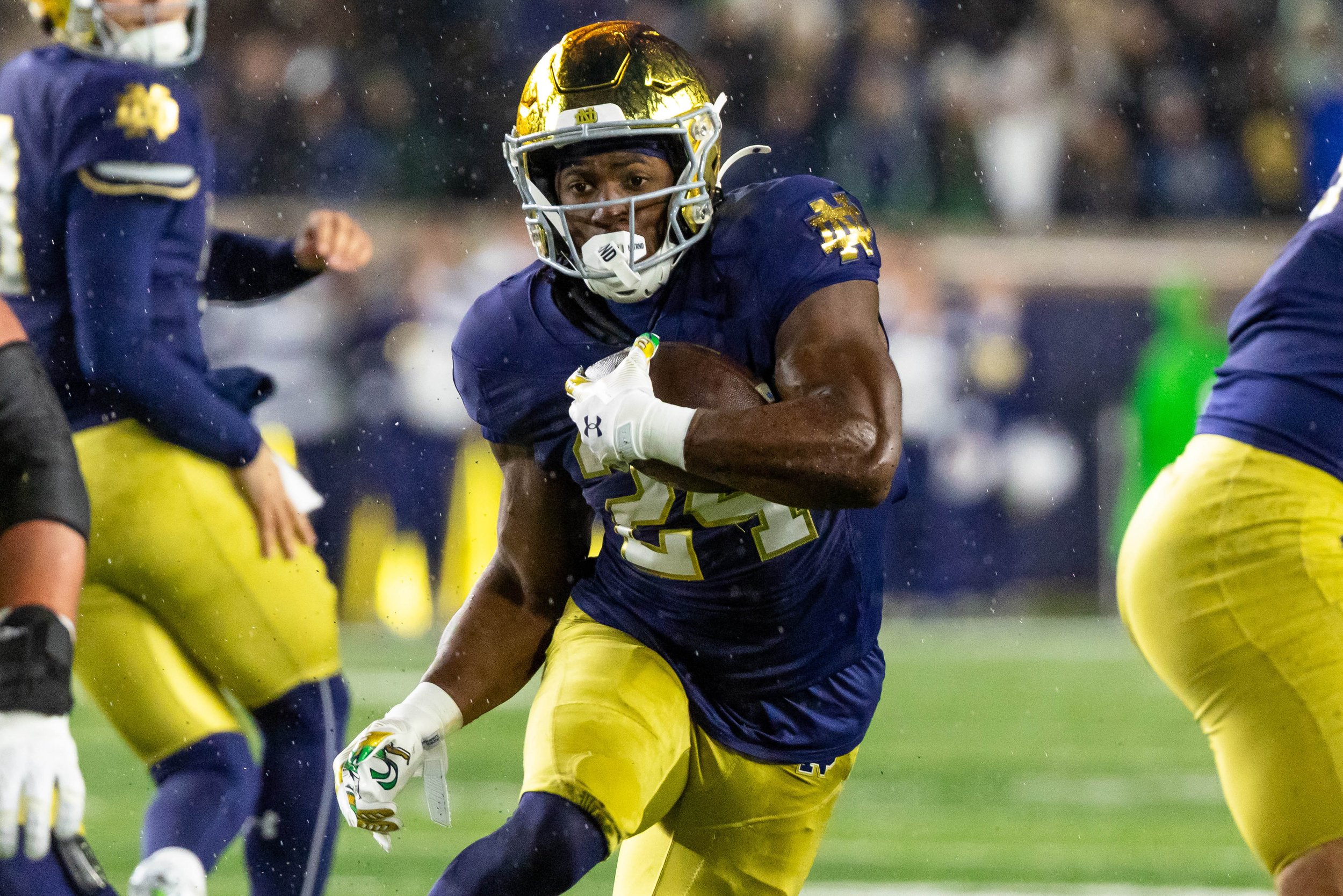
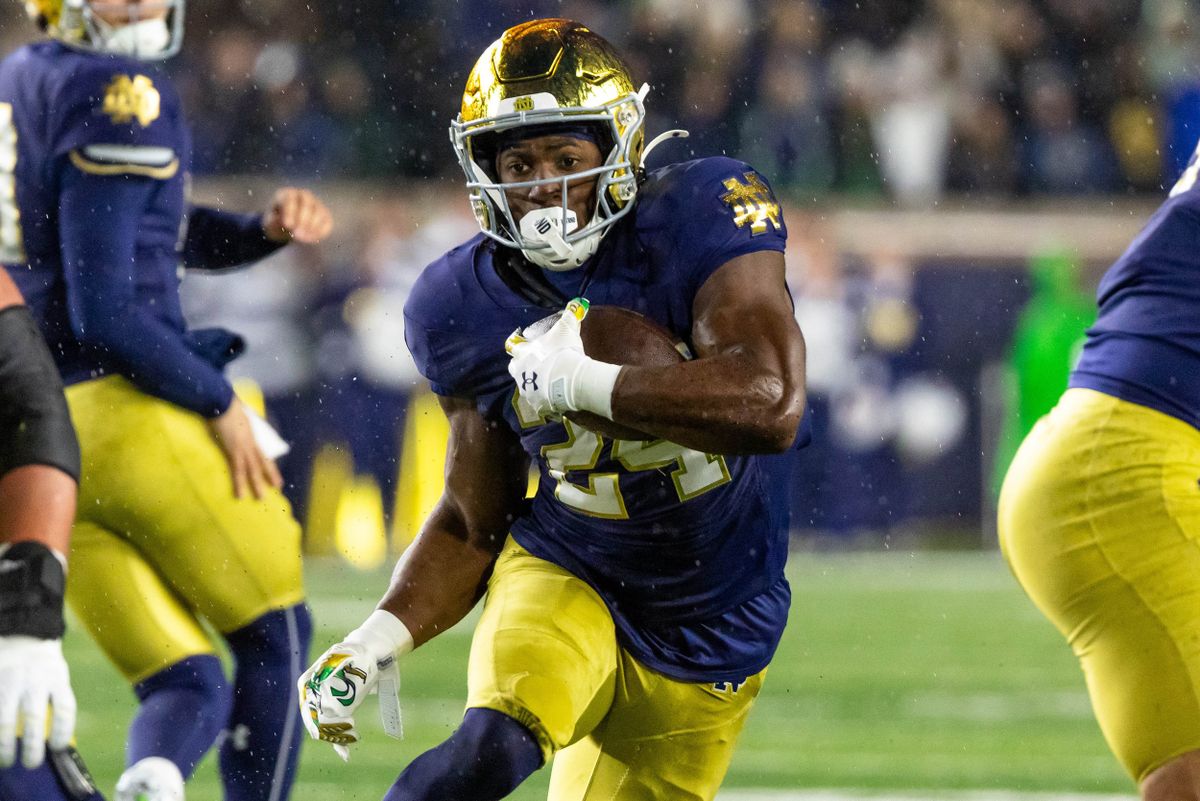
Notre Dame Fighting Irish running back Jadarian Price (24) runs the ball against the Navy Midshipmen during the first half at Notre Dame Stadium. Mandatory Credit: Michael Caterina-Imagn Images [/caption]
Expectedly losing several key starters from their Super Bowl-winning squad in free agency, the Seattle Seahawks arguably took their greatest hit in the backfield with four-year starter Ken Walker III departing to join the Kansas City Chiefs on a three-year deal.
Losing Walker alone would have stung, but the Seahawks also face the prospects of being without Zach Charbonnet deep into the 2026 season after he suffered a torn ACL in a playoff win over the 49ers in January, leaving them without their top two rushers from a year ago. In the aftermath of the Super Bowl MVP’s departure, general manager John Schneider waited out the free agent market before eventually signing former Packers backup Emanuel Wilson, pairing him with returning reserves George Holani and Kenny McIntosh as the top three backs on the depth chart.
Based on recent comments from Schneider, Seattle may be more comfortable with that trio than others outside of the organization, ready to give Holani or McIntosh a more extended run while thrusting Wilson into the mix with the potential to be more than just a complementary power back. But with Charbonnet only having one season left on his rookie deal, even with the team having just four picks currently, tabbing a potential long-term starter in April’s draft feels like a strong possibility, if not a guarantee.
Looking at this year’s latest crop of backs, which runners stand out as the best potential fits to succeed Walker and/or add juice to the Seahawks’ stable of backs with each of their four selections?
Round 1, Pick 32 - Jadarian Price, Notre Dame
Part of a true Batman and Robin scenario in South Bend, Price didn’t receive the fanfare expected top-10 pick Jeremiyah Love did as a Heisman finalist for the Fighting Irish, but he has elite NFL traits of his own. Even with only five games where he received 10 or more carries last season as the change of pace back complementing Love, the 210-pound back racked up 674 yards and 11 touchdowns while averaging six yards per carry. 24 of his 113 carries went for at least 10 yards, or north of 21%, while he ranked in the top 20 nationally in breakaway run rate at 45%. He demonstrates excellent vision reading his blocks in both zone and gap schemes and once he has a sliver of daylight, he can cut on a dime and has the burst to go the distance anytime he touches the football. He isn’t a hammer who runs through defenders often, but he excels at wiggling his way around defenders both in traffic and in space and has enough power to regularly slip through arm tackles. Adding to his value, while he didn’t get many chances to contribute as a receiver with six total catches as a junior, he averaged nearly 18 yards after the catch per reception with no drops and he returned two kicks for touchdowns on special teams last season.
Also in Consideration: Mike Washington Jr., Arkansas
Round 2, Pick 64 - Mike Washington Jr., Arkansas
As demonstrated at the NFL combine when he rocketed his way to a 4.33 40-yard dash time, Washington can fly for a back weighing in north of 225 pounds. That elite speed became a greater weapon for him at Arkansas after spending time at Buffalo and New Mexico state in his first four college seasons, as he ripped off 17 runs of 15-plus yards and posted an impressive 48% breakaway run rate that ranked sixth in the nation among qualified backs for the Razorbacks. More fast than quick, he’s not as sudden shifting gears in space as some other top backs in this year’s class and he doesn’t always play to his size from a physicality standpoint when it comes to bowling over defenders or breaking tackles. Still, he averaged 3.86 yards per carry after contact, exhibiting the ability to prolong runs with a bruising style in spurts while having the wheels to bust out the explosives against top-flight competition. He will have to show marked improvements as a pass protector to become a three-down back and his average production prior to last season could come into play in regard to when he’s selected, but in terms of physical tools, he has borderline first round talent on par with Price.
Also in Consideration: Emmett Johnson, Nebraska
Johnson didn’t test as well as hoped in Indy and those results may have put a cap on his draft ceiling as a mid-second round pick, but he was arguably the Big Ten’s most electric back for the Cornhuskers last season, providing a blend of suddenness, power, and soft hands with 36 runs of 10-plus yards, 68 missed tackles forced, and 370 receiving yards.
Round 3, Pick 96 - Jonah Coleman, Washington
Built with a stocky 5-9, 220-pound frame and running with a low center of gravity catered for plowing through contact, Coleman isn’t the type of back defenders want to see coming at them full speed downhill. One of the best in the country at shucking off would-be tacklers, he tallied yards after contact in bunches and rarely goes down to arm tackles. He finished fourth in the nation among qualified backs averaging 4.34 yards after contact per carry during his standout junior season. He’s also far more explosive and slippery than would be expected given his size, as he ranked in the top 12 in the country in runs of 10-plus yards (38) that season. Playing at well below 100 percent for much of the second half in 2025, his numbers took a big hit as injuries sapped his explosiveness and power down the stretch, but he still showed his nose for finding the end zone in short yardage situations with more than a dozen rushing touchdowns. At the next level, he’s not likely to be as consistent of a home run threat without elite speed, but his combination of punishing running, reliable hands out of the backfield, and blitz pickup savvy in pass protection should set him up for early success as a three-down back option in the league.
Also in Consideration: Kaelon Black, Indiana; Roman Hemby, Indiana; Seth McGowan, Kentucky; Kaytron Allen, Penn State
Both of Indiana’s standout runners - Black and Hemby - offer smooth running styles as zone scheme runners, underrated pop behind their pads, and enough burst to occasionally rip off long runs past the second level of the defense. Durability and age questions may be the biggest question marks for both prospects. Off-field issues will need to be checked into for McGowan, who previously split carries with Washington at New Mexico State two years ago and packs a mean punch as a between the tackles runner. Allen stole the show as Penn State’s main runner last year, racking up 1,300 rushing yards with 15 touchdowns and over 700 yards after contact, but questions remain about his all-around three-down tools.
Round 5, Pick 188 - Robert Henry Jr., UTSA
As far as sleepers go, Henry may be the best-kept secret after a dynamic breakout season for the Roadrunners. While he has a slight frame at 5-9, 196 pounds and won’t be lowering the boom on tacklers as a means for picking up extra yardage, he plays much faster than his 4.52 40-time between the lines, as he emerged as one of the nation’s most prolific big play threats on the ground last season. Able to reach full speed in the blink of an eye when he finds a crease, he led all backs with at least 125 carries in 2025 with a 60.8% breakaway run rate while averaging a gaudy 6.9 yards per carry. His speed and lateral agility also created problems for defenders who tried to size him up in pursuit, as he finished fifth in the FBS division averaging 4.26 yards per carry after contact with 33 missed tackles forced. Dropping two passes last season and enduring some issues in blitz pickup as a pass protector in three seasons at UTSA, his all-around game needs some polish, but he can be equally explosive as a pass catcher, evidenced by a 74-yard receiving touchdown at Colorado State. He’s likely to be a complementary back early, but there’s Day 3 starter potential in the right scheme with proper development.
Also in Consideration: Nicholas Singleton, Penn State; Demond Claiborne, Wake Forest; Adam Randall, Clemson; Eli Heidenreich, Navy
Even with lost snaps to Allen at Happy Valley last year and inconsistent play year to year, Singleton brings intriguing explosiveness at 224 pounds to the equation and previously had two 1,000-yard seasons with an average of north of six yards per carry along with quality receiving production. Claiborne doesn’t offer the size Seattle has typically preferred in the backfield, but he’s slippery in space and posted a stellar 42% breakaway rate, providing some of the home run-hitting speed lost with Walker’s exit. A converted receiver with elite size, Randall may need more time to develop into an every down back, but he has an incredibly high ceiling with proper coaching to take advantage of his physical and athletic gifts. Becoming known as the Christian McCaffrey of the armed forces, Heidenreich had two seasons with north of a 19 yards per reception average and averaged 6.8 yards per carry for his collegiate career, fitting the bill as a true dual threat alternative that will excel on third downs with more backfield running experience.