Analysis: Identifying Best EDGE Fits for Seahawks’ 2026 Draft Picks

[caption id="" align="alignnone" width="3172"]
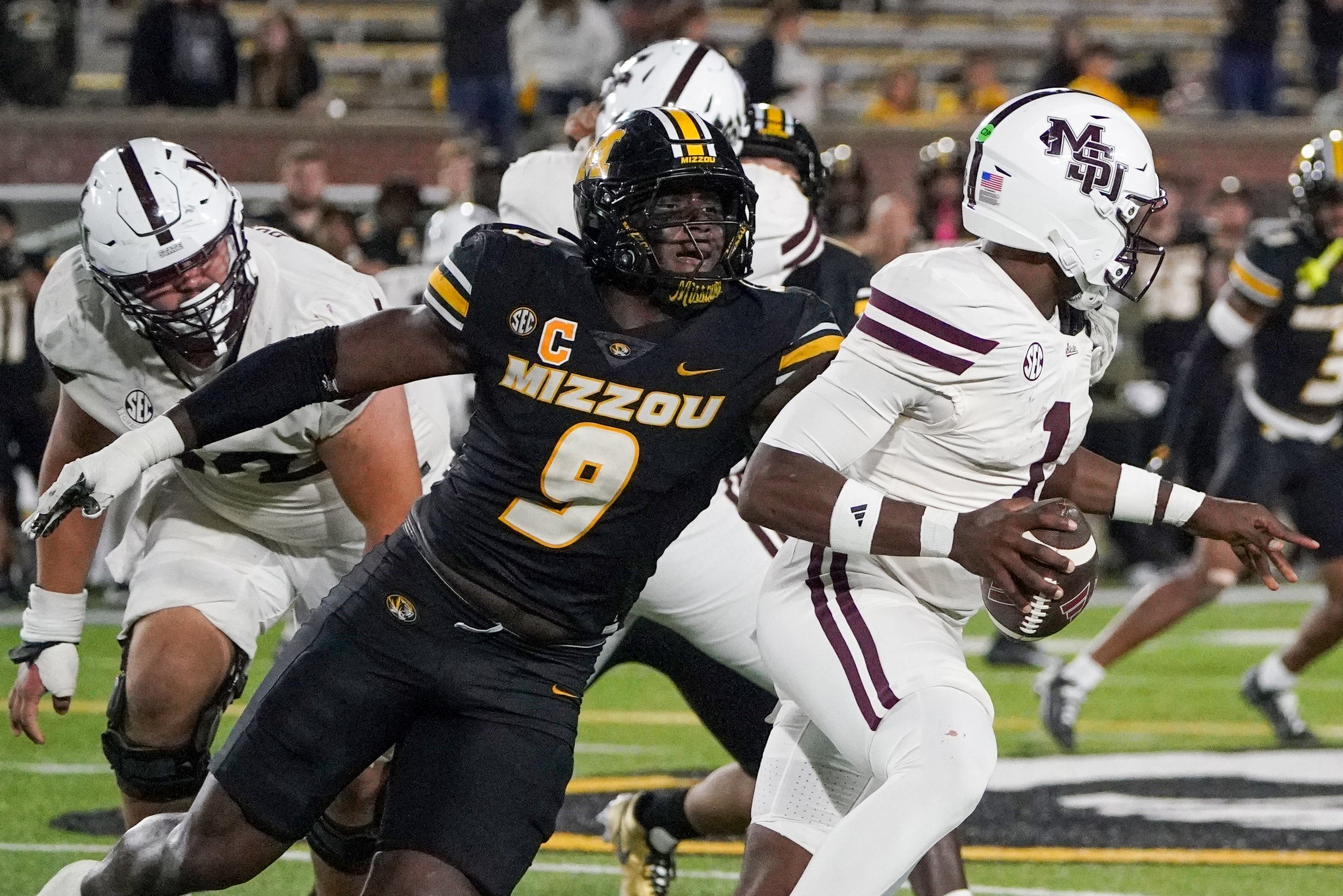
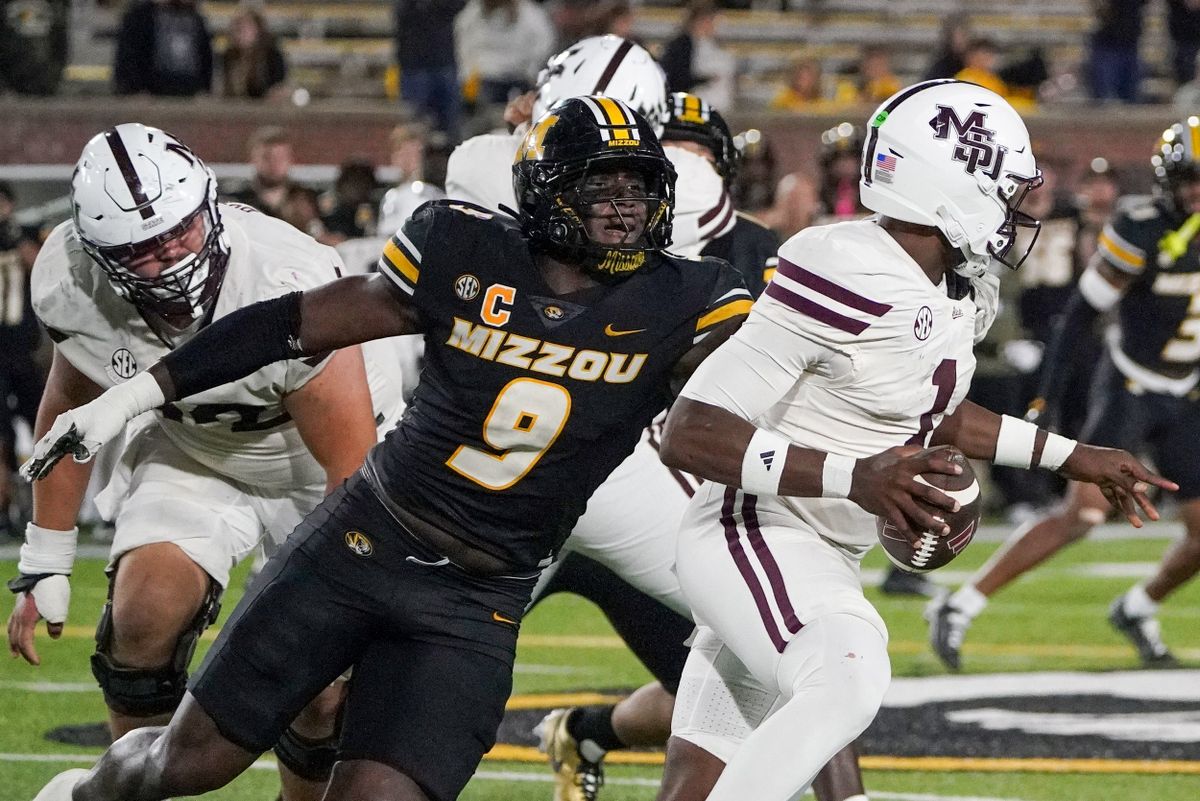
Mississippi State Bulldogs quarterback Kamario Taylor (1) runs the ball as Missouri Tigers defensive end Zion Young (9) attempts the sack during the second half of the game at Faurot Field at Memorial Stadium. Mandatory Credit: Denny Medley-Imagn Images [/caption]
Expectedly losing several key starters from their Super Bowl-winning squad in free agency, the Seattle Seahawks allowed former second round pick Boye Mafe to walk, as the three-year starter took his talents to the Cincinnati Bengals on a three-year, $60 million deal.
Losing Mafe, who only had two sacks and four quarterback hits in 17 games last season for Seattle, may not seem like a significant departure. But those numbers didn’t fully illustrate his impact in coach Mike Macdonald’s defense, as he still managed to eclipse 40 pressures and posted a 19% Pass Rush Win Rate that ranked eighth among EDGE defenders via ESPN, providing plenty of disruption even if the tangible statistics hitting quarterbacks didn’t translate from that.
In addition, the Seahawks have other questions at the position without Mafe, starting with the immediate future of Demarcus Lawrence, who has been at the center of retirement speculation since Super Bowl LX. Uchenna Nwosu, who finally overcame a rough two-year run of injuries to bounce back with a strong 2025 campaign, as well as Derick Hall, each have only one year remaining on their current contracts, making the EDGE spot a significant area of need short and long term for the franchise.
Looking at this year’s latest crop of EDGE defenders, which players stand out as the best potential fits to succeed Mafe and help reinforce the Seahawks’ defensive line for 2026 and beyond with each of their four selections?
Round 1, Pick 32 - Zion Young, Missouri
Checking off every measurable box, Young stands 6-6 with a muscular 262-pound frame and 33-inch arms, and he utilizes those physical tools exceptionally well. As a run defender, his length and physicality can overwhelm blockers, allowing him to deploy jarring hits at the point of attack and shed off the edge to make tackles with ease. He’s a capable speed rusher for his size, threatening the edge of tackles with the ability to transfer quickly into a bull rush or a hard slant inside to harass quarterbacks, and his refinement in that area allowed for a career-high 6.5 sacks for the Tigers last year. There’s still a lot of room for growth fundamentally from him, especially with the need for better developed counters. If he can improve his success getting off of blocks when his initial rush is stymied, his best football in that regard likely remains ahead of him, which will be enticing for prospective teams. Given his steady growth over his college career and the tools he brings to the equation, it’d be a surprise if he slides out of the first round, and his play style fits as an eventual heir apparent for Demarcus Lawrence with the Seahawks.
Also in Consideration: Gabe Jacas, Illinois; Malachi Lawrence, UCF
Offering plus size at 6-4, 260 pounds with 33-inch arms, Jacas doesn’t win with elaborate counter moves, but he constantly bullied the Big Ten’s best with impressive lower body power, jarring hands, and a relentless bull rush, tallying 11 sacks, 13.5 tackles for loss, and three forced fumbles as a senior. A twitchy EDGE with plus length and burst similar to Mafe’s skill set, Lawrence produced at least five sacks in each of his final three seasons with the Knights, including 7.5 sacks and 11.5 tackles for loss as a senior, earning First-Team All-Big 12 distinction.
Round 2, Pick 64 - Derrick Moore, Michigan
Measuring in at 6-3, 254 pounds, Moore has adequate size and athleticism to play defensive end with his hand in the dirt or outside linebacker in a two-point stance. Though he has enough length and power to set a firm edge, his run defense has been inconsistent throughout his college career, as he doesn’t always have a quick read on when to shed blocks and rally to a ball carrier. But his pass rushing talents have been much more evident on a persistent basis in the past two years, starting with a powerful bull rush that left many Big Ten tackles plowed back into the pocket. He’s an excellent closer once he collapses on quarterbacks and his development with counters off his bull rush resulted in a dramatic spike in sacks as a senior, which should bode well for his future in the league. Whoever drafts him will be tasked with squeezing out better all-around play for him to be a three-down starter, but Mike Macdonald should have strong intel on him coming out of Ann Arbor and his versatility off the edge would be a fine fit replacing Mafe in the rotation up front in Seattle.
Also in Consideration: Cashius Howell, Texas A&M; Dani Dennis-Sutton, Penn State
Playing under 250 pounds for most of his college career, Howell’s run defense has been suspect at times with opposing blockers able to bully him while trying to set the edge, but he’s a bendy, explosive upfield rusher with a dynamic spin move whose immense production should translate early at the next level. Dennis-Sutton has long been a ballyhooed prospect due to his tantalizing blend of size and athleticism, demonstrating the ability to dominate tackles with his length and power in spurts while producing 8.5 sacks each of the past two seasons, but he has some limitations to his game likely to drop him into mid-Day 2 range.
Round 3, Pick 96 - R Mason Thomas, Oklahoma
On just production alone, Thomas would be in consideration for an earlier selection, as he racked up 15.5 sacks and 22 tackles for loss in his final two seasons with the Sooners. But while his athleticism and burst off the edge makes him a dangerous threat rocketing past tackles and bending around them to hunt down quarterbacks, which by itself offers great value in the modern NFL, there are legitimate questions stemming from his lack of size, length, and physicality that may drop him down boards for most teams. Weighing barely a Big Mac above 240 pounds with 31-inch arms, he looks more like an off ball linebacker than an NFL edge with a lean, sawed-off frame, leaving limited room for further growth without compensating his best assets in the speed and quickness department. There are plenty of sub-245 pound rushers who have found success in the league, however, and he has experience dropping back into coverage, which should help mitigate some of the early down concerns as a run defender. By late Day 2, his pass rushing upside would be too much to pass up, and the Seahawks could start him off early as a passing down hunter with hopes he could eventually take on a larger role.
Also in Consideration: Joshua Josephs, Tennessee; LT Overton, Alabama; Max Llewellyn, Iowa
Weighing in at just 242 pounds at the combine, Josephs can be bullied around a bit in the run game, though he does a fine job running down plays in pursuit and he has enough counter moves in his arsenal rushing the passer to believe that with more time in the weight room, he could become a quality three-down player in the league. Overton projects as an intriguing base end/3-tech hybrid at 274 pounds whose physicality as a run defender stands a big plus, but whoever drafts him will have plenty of work to do turning his size and traits into pass rushing production after he registered just six sacks in four collegiate seasons. The opposite of Overton, Llewellyn had excellent numbers at Iowa with 12.5 sacks and 17.5 tackles for loss in his final two seasons and plays with a relentless motor while deploying polished counter moves, but he didn’t test well in Indy and could be a high floor, relatively low-ceiling prospect in comparison.
Round 5, Pick 188 - Mason Reiger, Wisconsin
Sitting out the 2024 campaign with a knee injury, Reiger was only on the peripheral radar of NFL teams when he transferred to Wisconsin last season with average at best numbers previously at Louisville. But while he posted modest numbers with five sacks and six tackles for loss for the Badgers, he did amass 45 pressures as a disruptive presence who caught the attention of Big Ten foes, following up with a strong combine workout that further elevated his stock. Those athletic tools didn’t always show up between the lines, particularly with hit-and-miss pass rushing production, as tackles sometimes were able to devour him off the edge. His previous injury history may also put a cap on how high he hears his name called. But he’s a tough-minded EDGE who can rush the passer and defend the run, offering three-down value as a developmental rotational piece with enough traits and experience to potentially become more down the road, something the Seahawks will be in the market for on Day 3.
Also in Consideration: Tyreak Sapp, Florida; Nadame Tucker, Western Michigan; Mikail Kamara, Indiana
Two seasons ago, Sapp posted seven sacks as a focal point for the Gators, regularly winning with a punishing bull rush at 273 pounds to find his way to the quarterback, but he’s in the tweener category with questions about whether or not he has enough juice to play off edge and being a bit small to line up inside in the league. Set to be 26 years old as a rookie, age may take Tucker off the board for a lot of teams and he struggled mightily as a run defender for the Broncos, but he’s a polished edge rusher whose talents infiltrating the pocket coupled with room for improvement in other aspects of his game should make him an ideal Day 3 flier. Hovering under the radar after excelling for the National Champions at Indiana, Kamara had 10 sacks only two years ago and plays with a ruggedness against the pass and run that will stand out to teams even if his athleticism and size concerns remain up for debate.