How John Schneider, Seahawks Plan to Attack Offensive Line Deficiencies
[caption id="" align="alignnone" width="2049"]
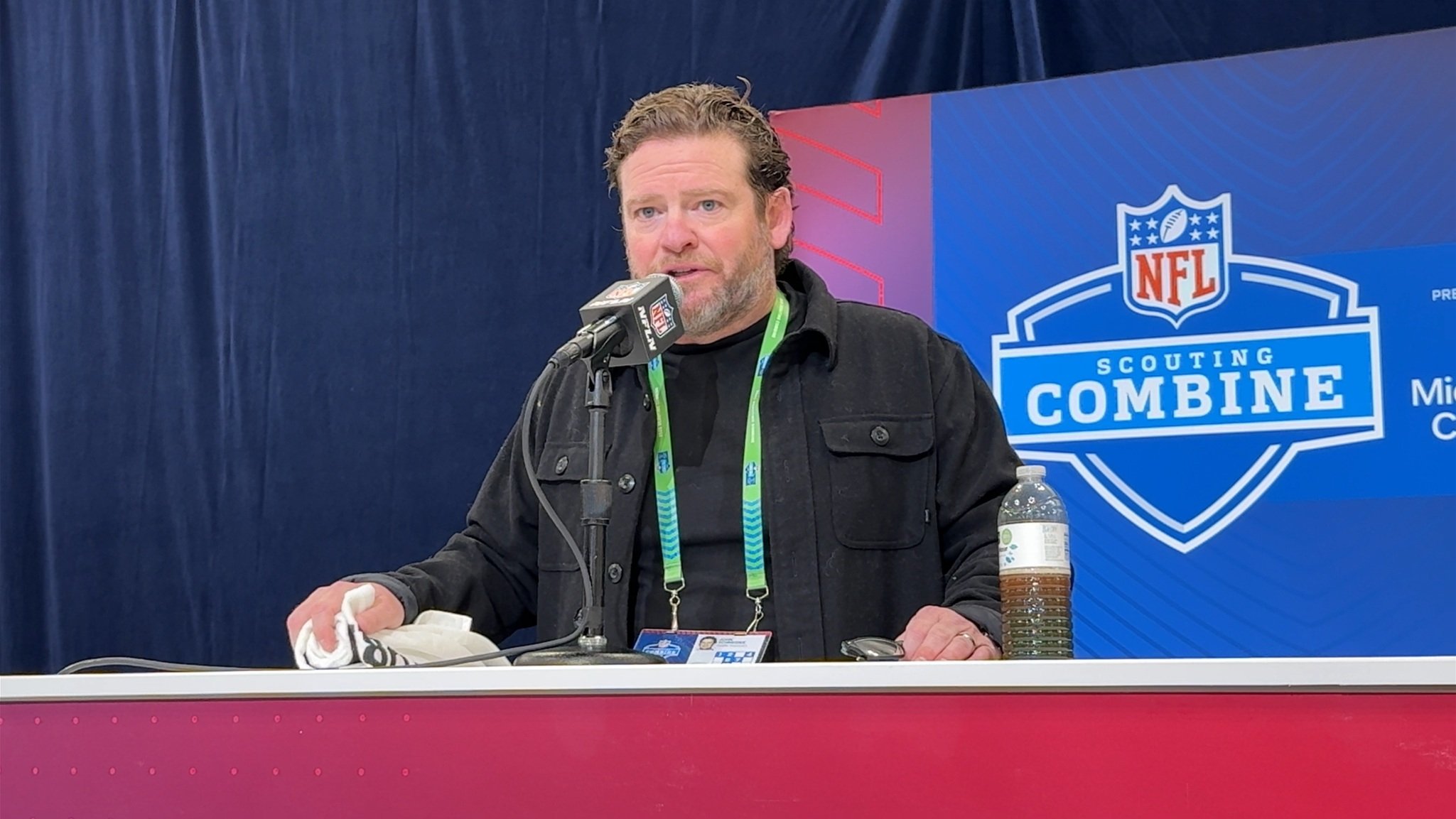
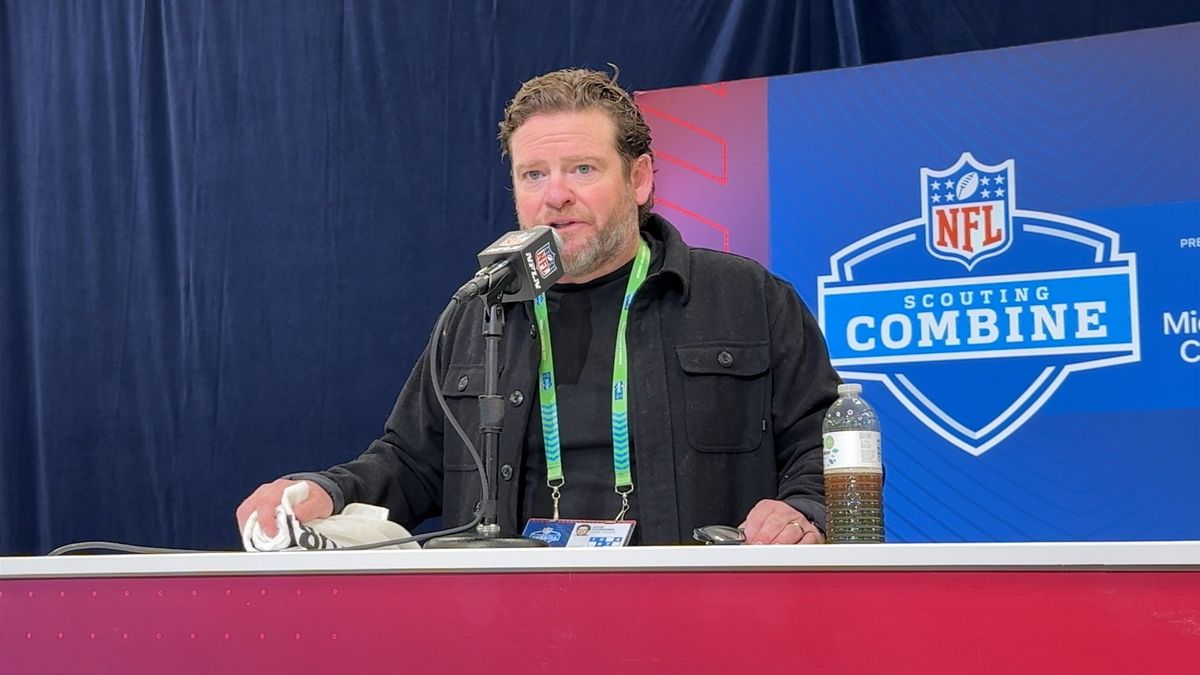
Seattle Seahawks general manager John Schneider fields questions at the 2025 NFL Scouting Combine in Indianapolis. [/caption]
INDIANAPOLIS, Ind. - During his 15 seasons as general manager of the Seattle Seahawks, John Schneider has enjoyed a tremendous amount of success, leading the franchise to 10 playoff berths and a Super Bowl title while demonstrating a consistent knack for finding talent in all three phases.
But after failing to make the postseason for a second consecutive season - a feat he had thankfully not achieved during his entire tenure in Seattle - a frustrated Schneider has spent this offseason thus far pursuing improvement for an offensive line that has long been a thorn in the side for the Seahawks, including struggling to protect quarterback Geno Smith or open up a consistent run game last season.
To begin attacking this chronic deficiency, Schneider oversaw the process of overhauling the team’s offensive coaching staff this winter, bringing in more than 40 years of experience coaching the offensive line between the trio of John Benton, Rick Dennison, and Justin Outten, who all linked back up with newly-hired offensive coordinator Klint Kubiak after previously working with him at other stops.
Unlike a year ago when first-time head coach Mike Macdonald wasn’t able to attend the NFL combine as he assembled his staff, getting all of those ducks in a row before the important week in the Circle City has affordedSchneider and the rest of the scouting staff with the opportunity to learn what coaches seek personnel-wise at their respective positions, including Benton and Dennison as the new architects of Seattle’s offensive line.
“It’s fun, it’s good. It’s a really cool group, and it’s cool to kind of have things settled too,” Schneider told reporters from the combine on Tuesday. “Because last year through our offseason process, we were late with our hire, then Mike [Macdonald] was hiring a staff and getting people together throughout the draft meetings. So this year, to be able to keep talking the same language, having the position coaches come in and present to us now before we start each position, like, ‘Hey, this is what I want, this is what I’m looking for. It really helps. We’re constantly talking about that holistic approach of acquisitions, sports science, player development, just bringing that whole thing together, and obviously coaching is the No. 1 priority, especially on that side of the ball the way we finished.”
This wasn’t the first time Schneider emphasized the importance of teaching as a focal point for achieving Seattle’s desired growth along the offensive line in recent weeks. Earlier this month in a weekly interview on Seattle Sports 710, he highlighted the organization’s development of offensive linemen as a clear area for improvement moving forward at a positional group where the majority of teams need help reinforcing the trenches.
Adding to that discussion on Tuesday, Schneider pointed out off podium that the Seahawks’ line issues haven’t boiled down to lack of investments, citing the fact that they have drafted the second most offensive linemen in the NFL since he arrived in 2010. With limited cap flexibility, the franchise has regularly opted to spend at other position groups, choosing to allow tackles, guards, and centers to regularly leave for greener pastures in free agency rather than losing star players at cornerback, receiver, or safety.
As a result, Seattle has often found itself playing a game of musical chairs up front, reliant on hitting on draft picks regularly to compensate for the talent drain along the offensive line. Unfortunately, while 2022 first-round pick Charles Cross has generally played well in his three NFL seasons, many of the other high selections used on offensive linemen have not panned out as hoped, leaving more questions than answers for Schneider, who went as far as wondering aloud if reallocating money towards the line may be necessary even though he advised against throwing money to “fix a perceived need” in the aforementioned interview only a few weeks ago.
“We need to do a better job of figuring out who you're paying. We’ve spent at other positions,” Schneider explained. “So again, since 2010, the guys that have left are offensive linemen. It's the second highest group of the guys we’ve drafted that have left, have gone to other places. It’s not a level of importance. It’s a level of figuring out who you’re going to pay… It’s just supply and demand.”
If there’s a reason for optimism that the future will be a brighter one for the Seahawks along the line, Schneider believes the team has many of the pieces already in place to take a big jump next season with better coaching alone.
Most notably, Benton brings more than two decades of experience coaching in Kubiak’s wide zone-centric scheme heralding from legendary coach Mike Shanahan’s system, including coaching top-10 run games with the Texans from 2010 to 2012. His presence coupled with Dennison’s extensive background coaching offensive linemen has a chance to be a major difference maker accelerating the development of players such as Cross, center Olu Oluwatimi, and second-year guards Christian Haynes and Sataoa Laumea.
“They like the guys we took last year. They like the center play,” Schneider said when asked of the new staff’s impression of the offensive linemen they inherited. “They obviously don't know the people yet, so we’ve got to get that up to speed as quickly as we can.”
As Schneider noted, the evaluation process for Kubiak, Benton, Dennison, and others has only just started as they continue to take deep dives into film and begin building relationships with returning players. This week will be a critical step in that assessment, as everyone from the general manager down to assistant coaches will be engaging in rapid fire comparative analysis as they look to make the best moves possible to improve the offensive line.
As just one example, following the abrupt midseason retirement of veteran Connor Williams last October, the Seahawks have to decide whether they believe Oluwatimi or second-year pivot man Jalen Sundell can develop into a long-term answer at center, the position Kubiak previously cited as crucial for the success of his scheme. To reach a verdict on that front, those players will have to be compared to this year’s free agent crop as well as the incoming draft class, keeping all options on the table while also weighing costs as part of the equation.
Per usual, Schneider didn’t delve too much into specifics on the free agent or draft front, but he thinks Oluwatimi and Sundell acquitted themselves well under difficult circumstances last season and both could potentially be in the mix to start next season. At the same time, he advocated for adding a veteran to the mix at some point next month and likes what he has seen from this year’s incoming draft class at guard and center, zeroing in on certain characteristics that they will be bookmarking in the evaluation process for Kubiak’s scheme, which will be much different than the one deployed by Ryan Grubb last year.
“There's a level of intelligence and how they see the game, like the person, the quickness of which they see the game, especially with wide zone,” Schneider said. “These guys got to be able to adjust on the run, on the move, running off the ball. Last year we were an offense that didn't run off the ball. Now we have a new coaching staff. It's the person and then the competitor. And then with our new system, figuring out how they adjust.”
It will be several months before Seattle returns to the practice field, leaving no shortage of possibilities for what the group could look like by the time OTAs begin in May and ample time to continue scouring through film to finalize a blueprint for the offseason plan along the offensive line. With veteran Laken Tomlinson set to be a free agent, there’s a strong likelihood a new starter will be plugged in at that spot, while center and right guard both could be primed for battles with rookies or veteran additions joining the fold next to Oluwatimi, Sundell, Haynes, and Laumea vying for playing time.
Sticking with status quo to an extent with a few new wrinkles, Schneider wants competitive players first and foremost, and as long as that box is checked off along with desired football IQ and athleticism needed for a new scheme for returning players and newcomers alike, he trusts a re-engineered coaching staff to do a better job maximizing the talent in the offensive line room, banking on teaching and development to build the foundation for a contender in the trenches.