How Bryan Woo’s League-Best Heaters Anchored Mariners Rotation in 2025

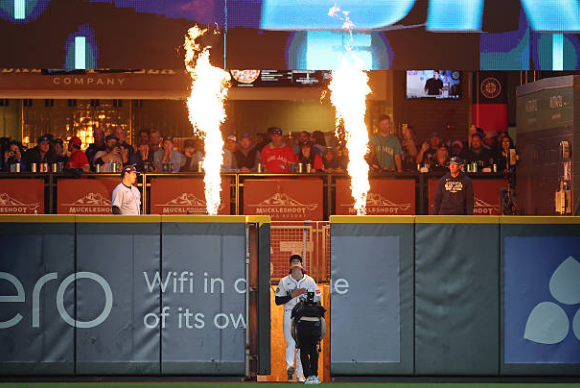
It takes a whole lot of consistency to log 25 straight six-inning starts with two walks or less to begin a season. It has only happened twice in MLB history: in 1905 by the right arm of Cy Young himself, and in 2025 courtesy of Mariners starter Bryan Woo.
Woo’s stat line would have put him in Cy Young contention had Tarik Skubal played in the Senior Circuit. Over 186 ⅔ innings in 30 starts, Woo went 15-7, struck out 198 batters, walked 36, had a 0.927 WHIP, and posted an elite 2.94 ERA. His 3.47 FIP was a little less outstanding, but 4.3 wins above replacement according to Baseball-Reference and 3.6 according to FanGraphs put him squarely in All-Star category, and indeed he made his first Midsummer Classic in 2025.
Incredibly, much of this production has stemmed from just two pitches, both of the same overarching type: the four-seam fastball and the sinker.
Bread and butter: two elite fastballs have propelled Woo to ace status.
Woo is far from the only pitcher to mix four-seamers and sinkers to great effect in modern baseball, but when it comes to preventing production, there was no better combination of fastballs than his.
Some, like Paul Skenes, had better four-seamers. Others, like Garrett Crochet, had better sinkers. But when you take a look at Bryan Woo’s Baseball Savant page, one number pops out: his fastball run value is 100th percentile. Run value, for a pitcher, measures how many runs were prevented due to outcomes from each combination of runners, outs, and count, and as such is a context-driven measure of how that pitcher affected outcomes on the field.
Woo’s fastballs saved the Mariners 30 runs in total in 2025, 21 runs with his four-seamer and eight runs with his sinker (it adds up to 30 instead of 29 because of rounding, where the two post-decimal figures add up to 0.5 or greater). A run prevented on defense is just as good as one produced on offense, meaning that Woo’s fastballs alone did more for his team in 2025 than all but 15 MLB hitters.
Other metrics, less context-dependent than run value (and as such more predictive) also loved Woo’s heaters. The league’s weighted on base average (wOBA)—a catch-all offensive production stat that is more complex than OPS but correlates more closely with team runs—against Woo’s four-seam fastball was .241, sixth lowest of any four-seamer in MLB and the lowest of any starting pitcher. That figure was .304 against Woo’s sinker, 12th lowest of any sinker in baseball and fourth lowest of any starter.
Woo’s was also one of just 18 sinkers with an opposing wOBA below the .313 league average wOBA against all pitches. A whole lot of hurlers throw sinkers in the modern MLB, but scarce few are ahead of the curve with it—but that includes Bryan Woo.
Removing context completely from the equation and looking at expected wOBA (xwOBA), which is wOBA calculated from the expected outcome of each batted ball based solely on exit velocity and launch angle, we see that Woo’s fastballs, once again, climb towards the top of the list. The xwOBA against Woo’s four-seamer in 2025 was .270, sixth lowest in MLB and third lowest of any starting pitcher, while his opponents’ xwOBA was .319 against his sinker, 23rd lowest in MLB.
It should be noted that although the league’s actual wOBA was .313 in 2025, its xwOBA was .324, an .011-point difference that basically means that defenses were better positioned in 2025 than in 2024 and the expected values of each exit velocity and launch angle combination have yet to be fully updated.
All of this stat-talk helps build a picture of two fastballs that are taking more runs off the board than any other heater duo, but what is actually happening between the rubber and the plate that causes these pitches to be so good?
It isn’t quite velocity. Woo’s four-seamer averaged 95.7 miles per hour and his sinker averaged 95.4 miles per hour. While those numbers are both above average (the sinker velocity more so), they are not in the elite range of heaters in the modern MLB. Almost 50 qualified pitchers had average four-seamer velocities of 97 miles an hour or greater in 2025, with even starting pitchers like Dylan Cease, Paul Skenes, and Jacob Misiorowski pumping four-seamers faster than that on average. Woo’s two-seamer velocity is in the top 100 in baseball for that pitch, but again, there are plenty of hurlers around the league who sit a couple miles an hour faster than Woo does.
At first glance, it might not seem like movement, either. Woo’s four-seamers have an average arm-side run of 9.7 inches, 2.1 inches above average but not in the lateral movement stratosphere that guys like Paul Skenes achieve. Woo’s horizontal movement is right around the middle of the league, meaning that in a vacuum, his heaters are no flatter or steeper than the average big-league pitcher.
The key to Woo’s success lies in his arm angle and release height. Woo’s motion to the plate involves a relatively low 25-degree arm angle that combines with a downward shuffle of the body to produce a four-seam release point 5.06 feet off the ground, lower than 95 percent of all four-seam release points in major league baseball. Mixed with the above average velocity and the roughly average induced vertical break, Woo’s four-seamer reaches the plate at an incredibly flat vertical approach angle (VAA) of -3.7 degrees (meaning it is falling at a 3.7 degree angle as it crosses the plate).
That -3.7-degree VAA is the 15th flattest of any single pitch in the Major Leagues and the flattest pitch delivered by any starter in 2025.
The reason why this flatness helps Woo is that hitters swing at a slightly upwards angle so that their bat is on the same plane as the incoming pitch, creating a greater window of time to meet the ball. Woo’s four-seamer, so flat it appears to be rising, thwarts this strategy by narrowing that window for the bat to make good contact and causing batters to miss their swings or make weak contact, especially when it is at the roof of the zone.
Flatter fastball approach angles—and this is why pitching labs across the league, including Seattle’s, are hunting for flat VAAs in their prospects—allow pitchers more wiggle room at the top of the plate, as locations that might end up meeting the barrel of the bat with a steeper approach extract soft contact or even whiffs when the angle is flat. For a team like Seattle that builds its pitching foundation on throwing strikes and working ahead in counts, this wiggle room is incredibly useful.
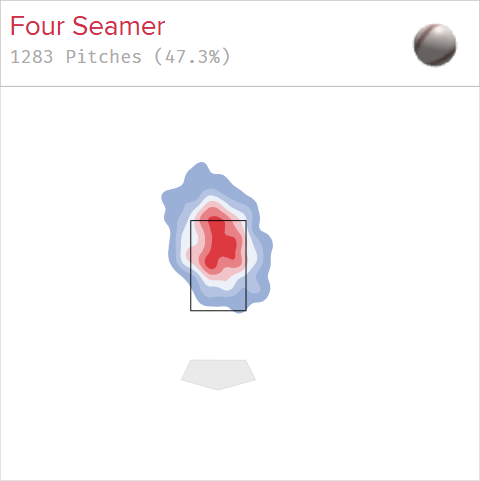
VAA is less paramount when it comes to sinkers, as that pitch uses its drop to elicit ground balls. Against Woo, for example, batters had an average launch angle of 27 degrees upward on his four-seamer but three degrees downward against his sinker.
Woo’s sinker, however, is productive thanks to a combination of factors. Its 16.6 inches of armside movement is 77th percentile compared to other sinkers, its velocity is 70th percentile, and batters facing it are also thinking about his seemingly physics-defying four-seamer, allowing his well-placed sinkers to find the bottom of the bats time and time again.
If Woo’s secondaries improve, he could be a Cy Young contender in 2026 even if Skubal stays in the AL.
Admittedly, this is a fairly big if. Mariners starters have had issues developing consistent secondaries year-to-year, a recent example being Logan Gilbert, whose slider dropped from a run value of 16 in 2024 to -1 in 2025, with opponents going from a .210 batting average and .375 slugging in 2024 to a .255 average and .510 slugging in 2025. Bryan Woo’s sweeper went into a similar—if less pronounced in the absolute—decline in 2025.
Except … did it? In terms of actual production against it, yes, so it did. Opposing wOBA increased from .069 to .230, but since Woo typically leaned more on his secondaries during the second or third time through the lineup, the impact of that production—meager in a vacuum—was amplified.
And, for what it’s worth, hitters were evidently just a little lucky against Woo’s sweeper. Opposing batters’ xwOBA against that pitch was .181 in 2025, fourth lowest of any MLB sweeper thrown 200 times or more that year. Their hard hit rate (the percentage of the time they had an exit velocity of 95 miles an hour or more) was just 17.1 percent, third lowest of any sweeper thrown 200 or more times. They missed on 46.3 percent of their swings against it, the fifth highest whiff rate of any sweeper with that much usage.
Woo’s sweeper has indications that it should be not only one of the best sweepers in the game, but one of the best singular pitches in terms of stuff. Among all pitches thrown 200 or more times, Bryan Woo’s sweeper is 32nd best in whiff rate, 10th best in hard hit rate, and 19th best in xwOBA. Just one pitch was better in all three categories than Woo’s sweeper in 2025: Freddy Peralta’s slider.
Paul Skenes’ changeup and Tyler Glasnow’s curveball bested Woo’s sweeper in hard hit rate and xwOBA but found slightly more contact; Logan Gilbert’s splitter had a higher whiff rate and lower xwOBA but was hit harder. There’s every indication that Woo’s sweeper can become nearly as elite as his four-seamer.
His other secondaries, however, need some more work. The slider (yes, Woo throws both a slider and sweeper as separate pitches) had the highest hard hit rate of any slider in the league thrown 200 or more times, sitting at 61.7 percent. Opposing hitters’ xwOBA against Woo’s slider was .329, higher than 75 percent of sliders of a similar usage. Woo managed a slightly above average 36.1 percent whiff rate on his slider, but compared to his sweeper, Woo’s slider seems much more pedestrian. In a completely different story to the sweeper over 2025, Woo got a fair amount of luck with the slider, as opponents’ .300 actual wOBA was still more production than against sliders of similar usage but far closer to the average, and the pitch had a flat 0 on its total run value.
An intriguing point of development could be the changeup. Woo threw his changeup just seven percent of the time in 2025, and it ended up being something of a mixed bag for him. The overall run value of -1 was (as you could imagine) right near the middle of the pack for changeups, but the overall numbers indicated a surely usable pitch: batters slashed .235/.245/.399 against Woo’s changeup. Hitters were able to get contact against it, whiffing on just 22.5 percent of his changeups, but most of that contact was weak.
There was a marked difference, however, between Woo’s harder changeups and his softer ones. The pitch had an average velocity of 89.6 miles per hour, but when Woo threw it harder, he got better results. Opposing batters slashed .143/.182/.238 with a .185 wOBA, hit the ball hard 18.8 percent of the time, and logged an average exit velocity of 87.8 miles per hour. Against changeups 89 miles per hour or slower from Woo, however, the league slashed .444/.400/.778 with a .468 wOBA, 44.4 percent hard hit rate, and 91.6 mile per hour average exit velocity.
That might seem strange. Changeups, after all, are supposed to be separated from the pitcher’s fastball by a wide margin to allow for more swing-and-miss from hitters who expect heaters. Indeed, the slower changeups had a 31.8 percent whiff rate compared to 22.5 percent for the faster ones, and the slower changeups dropped 2.4 inches further than the faster changeups. What was going on?
Some of the disconnect was luck, but turning to the StatCast expected metrics—.359/.323/.546 with a .347 xwOBA against the slower changeups and .182/.219/.347 with a .245 xwOBA against the faster changeups—shows that hitters indeed saw the slow stuff better.
The answer may be some sort of habit that tips his changeup while lowering its velocity, such as a slower arm movement, but it could also be that he doesn’t quite have a “feel” for the pitch, or some combination of the two. Since the entire point of the pitch is to work in tandem with a fastball, changeups are perhaps the pitch least receptive to a “one-size-fits-all” approach. If Woo has the best feel for a hard changeup, then he and the Mariners should go with that. After all, the organization is no stranger to an ace with a hard change.
If just one of these secondary pitches reaches the upper echelons, Woo’s dominance in 2025 could deepen even further. It’s worth remembering that Woo is 25 and still has time for growth in his pitching career.
Will Woo’s fastballs regress in 2026?
What goes up must come down: that is one of humanity’s oldest sayings for good reason. Bryan Woo’s fastballs were the best in the business in 2025, but will that be true come the new year?
He has benefited from some luck on his four-seamer, that much is true. Hitters had a batting average on balls in play (BABIP) of .168 against that pitch. As a rule, BABIP regresses to league average, a figure that sits around .290, so an exceptionally low BABIP indicates batting underperformance and an exceptionally high BABIP indicates batting overperformance. From BABIP alone, then, we could say that Woo’s fastball is due for a decline of some sort.
But it’s not as simple as that. Hitters that hit more line drives than average typically have a higher BABIP, as do those who hit the ball hard, and so avoiding these things as a pitcher helps sustain low opposing BABIPs. While Woo’s opposing line drive rate is around league average, the soft contact he gets from his exceptionally flat fastball means that the many fly balls batters hit against him—Woo, like many guys who rely on the high heat, is a fly ball pitcher—are some of the most routine outs in the game.
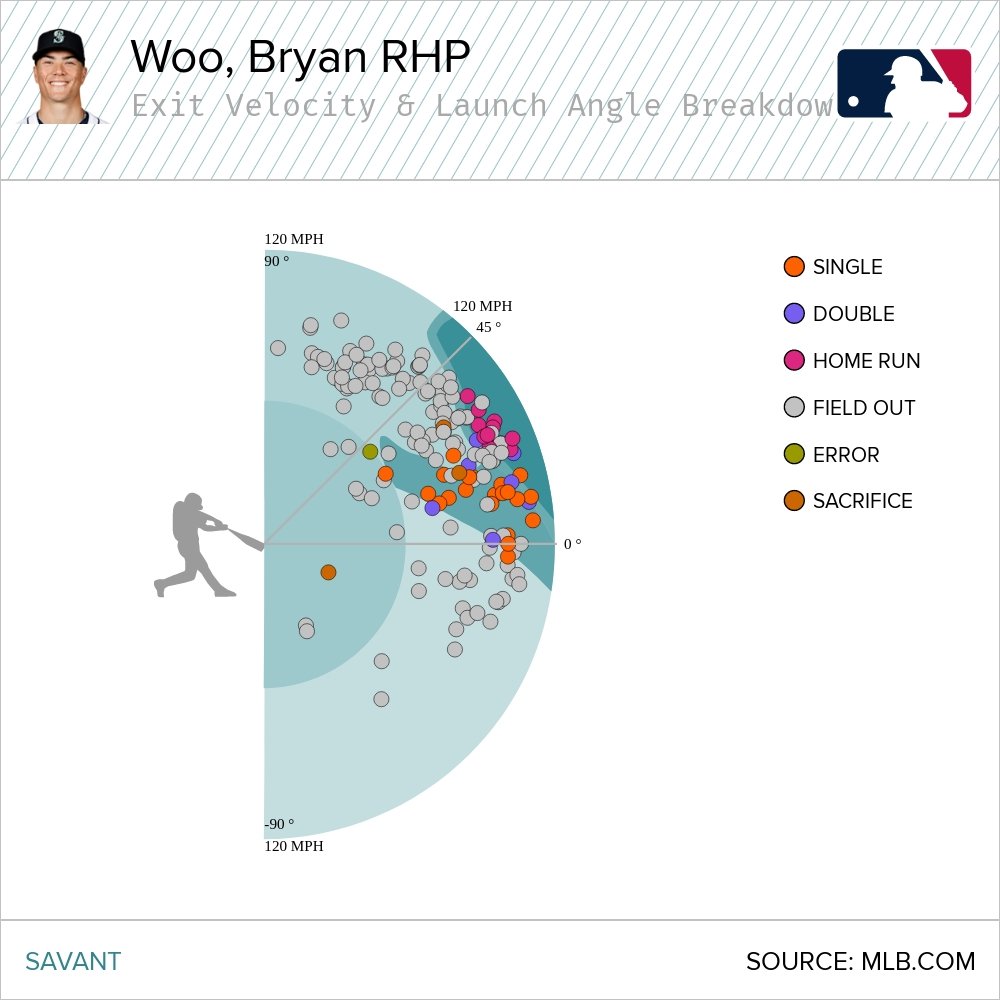
The actual slash line against his four-seamer in 2025 was .153/.215/.332 for an OPS of .547; the StatCast expected slash line based on exit velocity and launch angle was .187/.248/.372 for a .620 OPS. With this (and the fact that his 2024 four-seamer was almost as good) in mind, while it’s likely his fastball production ticks downwards a little bit in 2026, Woo’s will still be one of the best four-seamers in the game.
As for the sinker, there doesn’t appear to be too much regression in the waiting for Woo; hitters had a .291 BABIP against it, essentially the exact league average.
However, there is a catch to this rosy picture. Hitters achieved a “barrel” (a combination of launch angle and exit velocity that has a .500 or greater batting average and a 1.500 or greater slugging percentage) against Woo’s four-seamer 6.4 percent of the time in 2025 compared to 3.9 percent of the time in 2024, and that number for the sinker has similarly jumped from 3.8 percent in 2024 to 5.2 percent in 2025, both noticeable spikes that could indicate a growing league familiarity with the quirks of those pitches. This worry is doubled around his sinker, whose hard-hit rate jumped from 38.2 percent to 48.6 percent, though his four-seamer maintained its low hard-hit rate year-to-year.
But any secondary development would help combat this, forcing hitters to think about a changeup or sweeper in addition to his showstopping sizzler.
Hitters still haven’t caught up to Bryan Woo, and if he takes yet another step forward in 2026, they may never get that chance. For the Mariners, at least, that is exactly what they’re looking for.