Combine Confidential: Breaking Down Seahawks’ Potential Geno Smith Successor Options
[caption id="" align="alignnone" width="1270"]
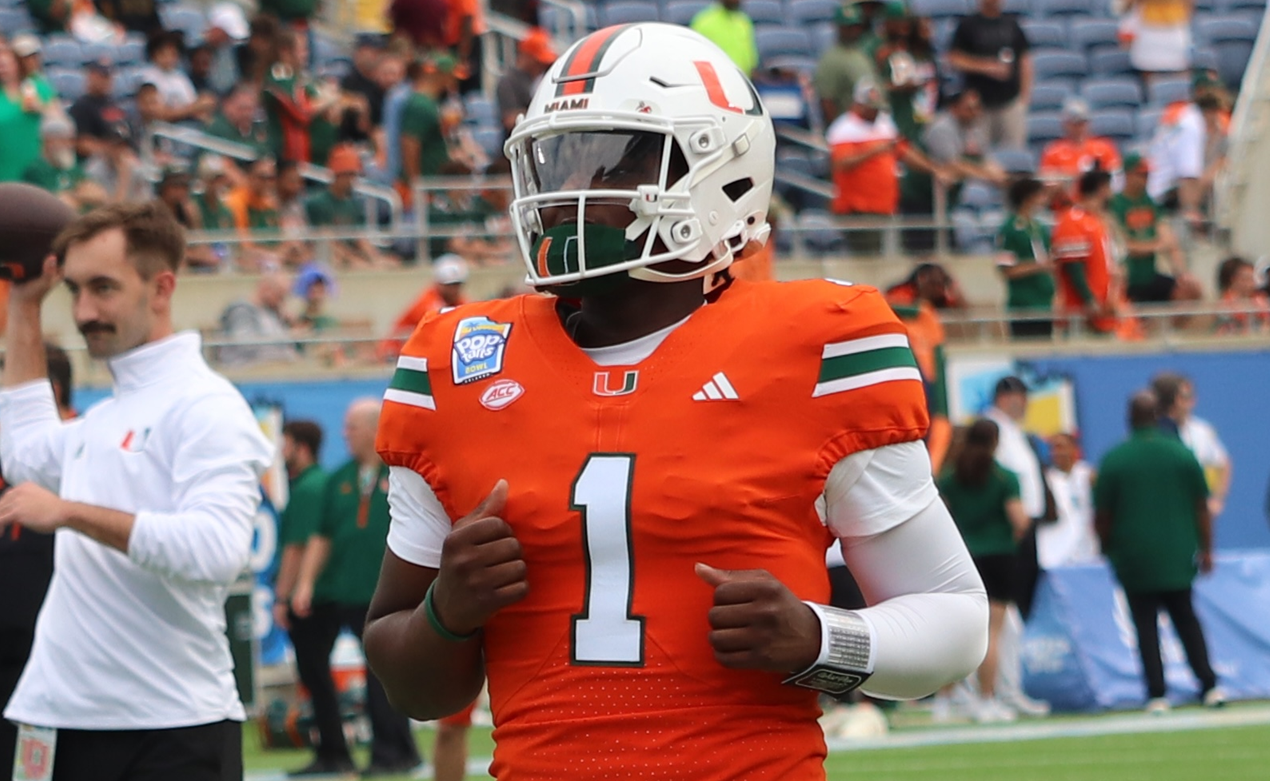
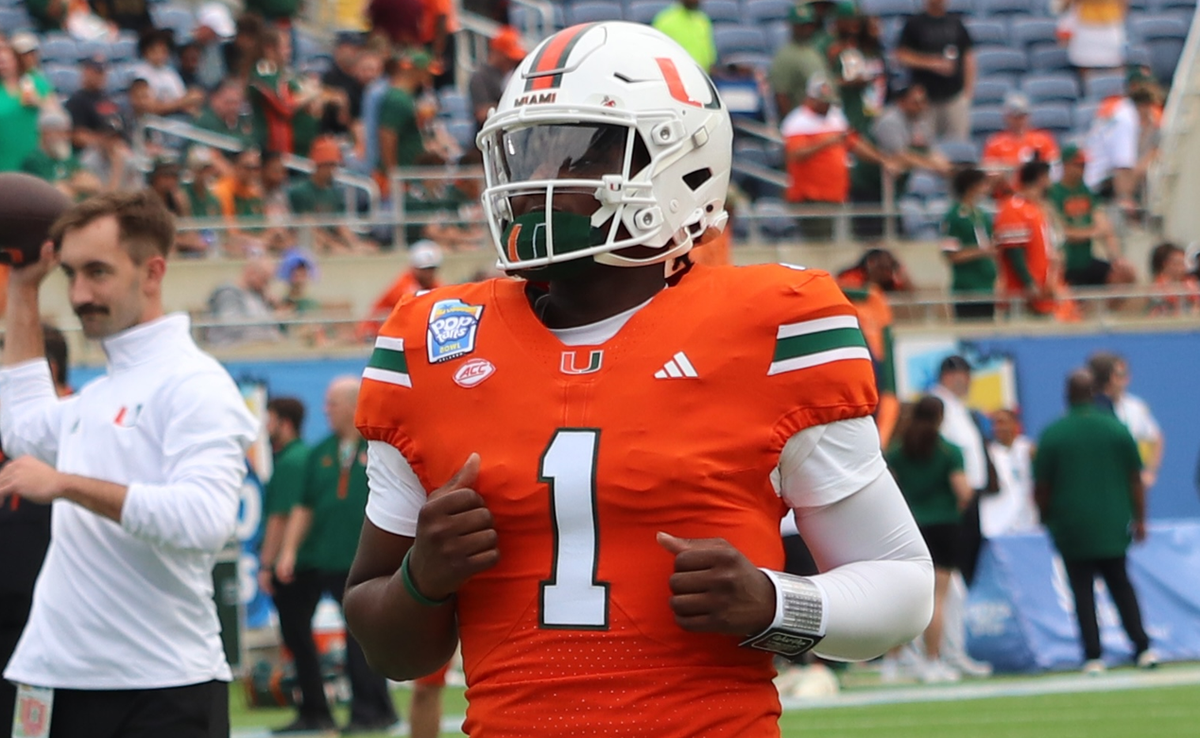
Quarterback Cam Ward erupted in his lone season at Miami, tossing 39 touchdowns and finishing fourth in Heisman Trophy voting. [/caption]
INDIANAPOLIS, Ind. - Continuing an offseason theme, Seahawks general manager John Schneider and coach Mike Macdonald both affirmed their commitment to Geno Smith as their starting quarterback at the NFL combine this week, and the team and player began negotiations on an extension in earnest on Friday.
But even if Smith receives a new contract in the near future as hoped, the veteran signal caller will turn 35 years old during the 2025 season and finding a long-term solution at the position remains a pressing concern for the Seahawks to address sooner rather than later. After not drafting a quarterback last season, Schneider didn’t rule out the possibility of doing so this April, as long as the dominoes finally breaks in a manner that allows them to select one that they like.
“Hopefully the board talks to us, right?” Schneider said off podium on Tuesday during media availability. “And maybe we draft a quarterback. It just hasn’t gone that way.”
Though the 2025 draft class isn’t being touted as necessarily a strong one at the quarterback position, Schneider, Macdonald, and company will be paying close attention in Indy to zero in on potential targets to develop behind Smith. Here’s a look at 12 prospects who could be possible fits for the Seahawks in the first round, in the second and third round, and as day three bargains:
First Round
Cam Ward, Miami
Formerly a zero star recruit, Ward started his ascent to potential top-five NFL draft choice at FCS program Incarnate Word, throwing for nearly 7,000 yards and 71 touchdowns in two seasons before transferring to Washington State. Continuing to thrive against superior Pac 12 competition, he tossed 48 touchdowns in two seasons in Pullman before hitting the transfer portal again and taking his talents to Miami, where he garnered Consensus All-American honors, won the Davey O’Brien Award, and finishing fourth in Heisman Trophy balloting after throwing 39 touchdowns and just seven interceptions.
Possessing plus-arm talent and a quick release, Ward can be equally effective carving up defenses in the quick passing game as well as having the Howitzer to frequently connect on shot plays vertically. Though his game isn’t predicated on scrambling and extending plays with his legs, he has enough mobility to navigate the pocket to evade oncoming pass rushers and can pick up first downs as a scrambler when he needs to. He has a propensity to be a bit too aggressive throwing downfield and decision making under duress will need improvement at the next level, but all the physical tools are in place to be a quality NFL starter.
Shadeur Sanders, Colorado
Another top-tier quarterback who made the less-traveled journey from an FCS program to potential top-five pick, Sanders began his college career playing for his father Deion Sanders at Jackson State, eventually following him to Boulder to become Colorado’s signal caller with two years of eligibility remaining. In two seasons for the Buffaloes, he tossed 64 touchdowns while completing nearly 72 percent of his pass attempts while averaging 8.1 yards per attempt, helping the team improve from 4-8 in his junior season to 9-4 as a senior and finishing eighth in Heisman balloting.
While Sanders doesn’t have the strongest arm, he throws a beautiful, accurate deep ball and has enough juice to complete throws to the opposite hash and numbers, excelling at throwing receivers open by anticipating windows in coverage. He will stand in the pocket and deliver strikes while taking hits from pass rushers, demonstrating the toughness teams covet at the position, but his tendency to hold onto the ball too long will need to be shored up at the next level for him to hold up physically with a tall, lean frame. He may have the highest floor of any quarterback in this class with immediate starter talent and a ceiling that still has plenty of untapped potential.
Jaxson Dart, Ole Miss
Highly recruited out of Utah, Dart originally committed to USC and saw significant action as a freshman in 2021, throwing nine touchdowns in five games for the Trojans. With Caleb Williams transferring from Oklahoma, however, he took his talents to the SEC and stepped in as the new starter at Ole Miss, thriving in Lane Kiffin’s offense against top competition. As a three-year starter in Oxford, he threw 72 touchdown passes, passed for more than 10,600 yards, and rushed for at least 500 yards in each season, leading all FBS quarterbacks averaging a gaudy 10.8 yards per pass attempt in 2024.
Quarterbacks heralding from Kiffin’s offense have historically struggled at the next level, but Dart has intriguing physical tools to continue molding under center, possessing above average arm strength and underrated mobility as a dual-threat weapon. His accuracy improved each of his four college seasons, particularly as a downfield passer, but he will have to continue making strides working through his progressions facing NFL defense, as he often locked onto his first read and paid for that at times with interceptions. In terms of upside, he has enough desired traits to go in the first 32 picks and with a strong combine, he may even be in the top-15 discussion when it is all said and done.
Second/Third Round
Quinn Ewers, Texas
Viewed as the top recruit in his class, Ewers enrolled early at Ohio State, but the presence of C.J. Stroud as the starter and a logjam of quarterbacks on the depth chart led to him eventually transferring to Texas, where he took over as the starter immediately in 2022. Helping guide the Longhorns to a pair of College Football Playoff berths and fending off highly touted Archie Manning competing for his job, he threw 68 touchdown passes and completed 64.9 percent of his passes in three seasons as the starter, though he did see an uptick in turnovers to close out his college career with 12 interceptions during his senior campaign.
Durability has been a bit of an issue for Ewers, who has a slight frame at 6-3, 206 pounds, but he can sling the pigskin with the best of them in this draft class and has a smooth, easy release with the ball flying out of his hand. When he’s locked in, he can carve up defenses in the intermediate game while being steady as a downfield passer, but there were too many games where he struggled to elevate the offense around him and transition through his progressions effectively, especially against top-tier opponents. There’s still starter potential here for the right team with the right system and a strong veteran to learn behind, however, and there’s a great chance he will interview well in Indy, keeping him in the mix to go early on day two.
Jalen Milroe, Alabama
Oozing with physical traits, Milroe landed at Alabama as the successor for Heisman winner Bryce Young, sitting behind the eventual Panthers top pick for two years before being installed as the starter prior to the 2023 season. One of the SEC’s breakout stars in 2023 as a first-year starter, he threw 23 touchdowns and just six interceptions while adding 12 touchdowns as a runner, finishing sixth in Heisman voting. His play took a significant step back under new coach Kalen Deboer in 2024, however, as he threw just 16 touchdowns with 11 interceptions and saw his interception rate nearly double compared to the year prior as he struggled in a new system.
One of the most electric running quarterbacks to come through college football in recent years, Milroe torched opponents with his legs in Tuscaloosa, scoring a combined 33 rushing touchdowns while rushing for 2,038 yards in four seasons. As a passer, he has the arm strength to let it rip down the seam and on deep balls, as he averaged 10 yards per attempt in 2023, but his accuracy in the short/intermediate game has been feast or famine and he has a long way to go developing improved pocket presence to sense oncoming rushers. Due to his immense upside with intriguing tools, he likely will light up the combine and may still go as early as the second round in April, but whoever picks him will have a lot of coaching to do to get him to where he needs to be to start in the league.
Kyle McCord, Syracuse
Another cog in the Ohio State quarterback logjam, McCord waited for two years behind Stroud before finally being given the keys to Ryan Day’s offense in 2023, and he threw 24 touchdowns with just six picks that season. But the Buckeyes felt they underachieved as a team that season and went into to the transfer portal seeking an upgrade, which led to him taking his talents to Syracuse, where he broke the ACC single-season record throwing for 4,779 yards and 34 touchdowns guiding the Orange’s high-octane offense while receiving votes for the Heisman trophy.
Built with prototypical quarterback size at 6-3, 220 pounds, McCord has a traditional pocket passer skill set and isn’t a threat to do much damage with his legs, which could deter some teams from being interested. He also has battled bouts with subpar decision making, including throwing five picks in a loss to Pittsburgh last season. But for teams seeking a gunslinger with upside, he can throw the pigskin all over the field, possesses a lighting quick release, and can let it rip downfield as well as anyone in this class. He also threw just one pick in his last six starts, a byproduct of playing smarter reading coverages, and if he can test better than expected, a day two selection remains within reach for a talented passer.
Will Howard, Ohio State
Early in his collegiate career, Howard didn’t look the part of an NFL prospect, including throwing eight touchdowns and 10 interceptions as a freshman at Kansas State and barely playing the ensuing season. But he took significant steps forward as a passer over the next two seasons, including throwing 24 touchdowns in his final season with the Wildcats before transferring to join Ohio State. In his lone season with the Buckeyes, capitalizing on a far superior supporting cast around him, he threw 35 touchdowns and saw his completion rate skyrocket north of 70 percent as he led them to a national championship, thrusting him onto the NFL radar.
Offering great size at 6-4, 235 pounds, Howard can be difficult to bring down in the pocket and has always been an effective runner both on designed runs and scrambles, evidenced by his 1,436 yards and 26 touchdowns on the ground at the college level. He still can have issues with inconsistency hitting receivers in stride and can battle issues locking onto one receiver, but no area of his game improved more than his accuracy at all three levels in Columbus and his outstanding play during the playoff undoubtedly bolstered his stock. He can continue earning himself money by impressing in Indy and with his dual-threat capabilities and experience, a third round selection seems likely in April.
Day Three
Dillon Gabriel, Oregon
Playing 64 total games in six seasons at the college level, Gabriel excelled at every stop along the way, starting with 29 and 32 touchdowns in each of his first two seasons at Central Florida. A broken clavicle ended his third season prematurely and he ultimately transferred to Oklahoma, throwing 55 touchdowns in two seasons before departing again to finish his career with a single season at Oregon. Hitting the 30-touchdown mark for the third time while adding seven touchdowns on the ground, he led the Ducks to a Big Ten title and college football playoff berth before they bowed out in the semifinals against Ohio State.
A capable scrambler with the ability to find his way into the end zone as a runner in the red zone, Gabriel tallied 33 rushing touchdowns during his college career, creating problems for opposing defenses with his dual threat talent. On the short end of the spectrum at 5-10, he has had issues attacking the middle the field at times and he doesn’t have the most powerful throwing arm, evidenced when he throws flutter balls downfield that lose steam in the air. He’s one of the most accurate quarterbacks in this class, however, and doesn’t turn the ball over often, so some teams may be more enamored than others taking a flier on him as a developmental player who could eventually start in the right scheme.
Riley Leonard, Notre Dame
Playing his first three seasons at Duke, Leonard helped put the ACC bottom feeder on the map as a two-year starter, including upsetting top-10 ranked Clemson to open the 2023 campaign. However, his promising season came to an abrupt end due to injury after just three games and he wound up transferring to Notre Dame for his final year of eligibility, posting a personal-best 66 percent completion percentage while throwing for 21 touchdowns and rushing for a whopping 17 touchdowns to guide the Fighting Irish on an impressive run to the national title game.
Offering good size at 6-4, 205 pounds, Leonard checks off the mobility box for teams coveting a versatile quarterback who excels on designed runs and can manufacture yardage when plays break down with his legs. When asked to get the ball out quickly in a passing game built around short to intermediate throws while leaning heavily on his rushing talents, he has exhibited the ability to consistently orchestrate scoring drives. But for teams who want to get the ball downfield, he lacks ideal arm strength to do so, particularly on deep post or corner routes where he has struggled to put enough air under throws to lead receivers. That lack of juice past 20 yards puts a significant cap on his ceiling, but his leadership intangibles and running ability could make him an ideal backup in the league.
Kurtis Rourke, Indiana
Coming to Athens from north of the border, Rourke had to wait two years for his chance to finally take over as the starter at Ohio and didn’t break out until he redshirt junior year when he tossed 25 touchdowns and completed nearly 70 percent of his passes. After seeing a decline in his production in 2023, he transferred to Indiana and helped orchestrate a historic turnaround, throwing 29 touchdowns and just five picks as he steered the Hoosiers to an 11-win season and their first-ever College Football Playoff appearance. Incredibly, he achieved those feats playing with a torn ACL.
Due to the knee injury he was playing with, Rourke struggled to move in the pocket for most of his lone season in Indiana and he became a sack magnet late in the season against better defensive fronts, but when pass protection held up, he ripped apart opposing coverages with outstanding touch on deep passes and impeccable accuracy both to the middle of the field and outside of the numbers. When healthy, he occasionally kept the ball on read option runs at Ohio and offered a bit more mobility to go with NFL-caliber arm traits, though he may not have enough athleticism to be asked to do that in the league. Recovering from surgery, he won’t work out in Indy, making the interview process critical for him to restore some of his value as a day three candidate.
Tyler Shough, Louisville
Spending more time in college than Van Wilder, Shough started as a backup for Justin Herbert at Oregon, where he eventually won the starting job briefly during the 2020 season and threw 13 touchdowns and six interceptions. From there, with the Ducks turning to Anthony Brown as their new starter, he transferred to Texas Tech and battled through frequent injuries in three seasons with the program, leading to him moving again to Louisville before the 2024 campaign. Finally able to stay healthy, he threw 23 touchdowns and only six picks while starting 12 games for the Cardinals, earning an invite to the Senior Bowl.
Standing 6-5, 225 pounds, Shough fits the mold of the old school pocket passer with a cannon for an arm, capable of making all of the throws at all three levels. Accuracy has been hit and miss for him over the course of his college career and he can be a slow processor from the pocket, which creates issues due to subpar mobility and leave him suspect to taking frequent hits. Set to turn 26 years old in September, he won’t be a quarterback that teams can spend extensive time developing, but he has enough tools that if his medicals check out and he builds off a strong Senior Bowl with a quality combine, he could hear his name called as early as the fourth or fifth round for teams who value pocket passers over dual threat signal callers.