Cole Young Called Up: What to Know About Mariners’ Top Prospect

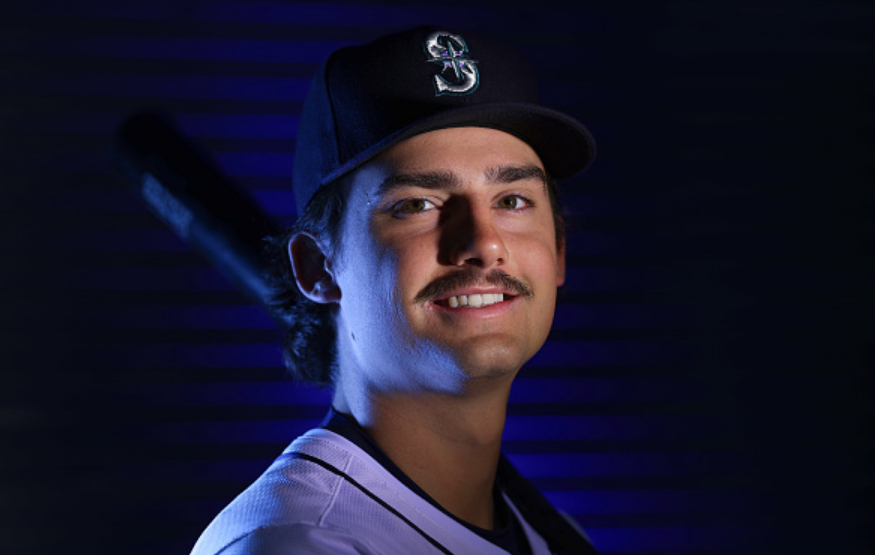
Friday night was at best bittersweet for Mariners fans, to say the least. As the club headed into extra innings in its series opener with the Twins after blowing a 6-3 lead with two outs in the top of the ninth, Daniel Kramer of MLB.com provided a much-needed distraction from the eventual 12-6 loss that occurred, reporting that Seattle is expected to promote one of its top prospects, infielder Cole Young, to its major-league roster ahead of Saturday’s game.
Young’s MLB journey will unfortunately begin at arguably the lowest point of the season for the Mariners, who’ve now dropped out of first place in the American League West standings with 12 losses in their last 20 games — the most brutal, of course, being the most recent. They’re in desperate need of a spark to turn the tides and hope Young’s arrival can help provide that.
This has been a highly-anticipated move for some time now as Young has dominated the Triple-A circuit since the start of May. The 2022 first-round draft pick’s process at the plate, particularly his excellent management of the strike zone, smart swing decisions, and ability to generate consistent quality contact, have been present since Opening Day but the numbers did not follow suit at first, resulting in a dreadful .190/.320/.257 slash line in 125 April plate appearances. For the past month, however, Young has statistically exploded and been one of the most productive bats in the minor leagues, slashing .370/.466/.680 before Friday night with a whopping 18 extra-base hits, including five home runs.
The development of more over-the-wall power has been the biggest takeaway from Young’s breakout — rightfully so considering those five aforementioned bombs equate to more than half of his entire season total, nine, last year in Double-A.
“He made a mechanical adjustment second half of last year that I think helped him in some ways, but also created some other blue zones,” prospect expert Aram Leighton said of Young in an interview with Locked On Mariners on Thursday. “The set-up allowed him to see the ball earlier and we saw the contact rates get better, but he dropped his hands maybe a little bit too low, then you started to see him struggle with some stuff at the top [of the strike zone]. So now he kinda built on that adjustment and this year the hands are a little bit higher, seems like he’s getting into his backside a little bit more easily and staying there, but also you can see the progression of what he’s been working on and now you’re seeing him handle [four-seam fastballs] better, but also more consistently finding the barrel [of the bat] and those contact rates have sustained.”
Per Prospect Savant, which has not yet accounted for Young’s last three plate appearances at the time of this writing, the 21-year old ranks in the 70th percentile in hard-hit rate (44 percent), 68th percentile in barrel percentage (8.6 percent), 63rd percentile in average exit velocity (89.6 miles per hour), 73rd percentile in chase rate (23.4 percent), 84th percentile in contact on pitches inside the strike zone (91.4 percent), and 87th percentile in whiff rate (18 percent). His 92nd percentile placement in strikeout rate may be the most noteworthy, though, as Young has been punched out fewer times (28) than he walked (30) in 244 total Triple-A plate appearances. That includes a ridiculously low 6.8 percent strikeout rate in the month of May, good for a walk-to-strikeout ratio of 1.88.
Young ended what the Mariners hope will be his only time down in Triple-A with a bang, tallying 10 hits over the course of his final four full games, including a five-hit night on Wednesday and a walk-off infield single the following night. As a result, fans took to social media to pound the table for Young’s promotion and even Adam Jude of the Seattle Times published an opinion piece Friday morning that more or less echoed that sentiment. Mariners president of baseball operations Jerry Dipoto was later asked by local media what the organization still needed to see before pulling the trigger on Young’s MLB debut, to which Dipoto simply replied, “Nothing.”
Seattle surely has its reasons, but the timing of Young’s promotion is nevertheless a bit strange, especially if there was “nothing” left for him to prove. Why now and not before Friday’s game against the Twins, which featured arguably the most favorable pitching matchup of the series for Seattle? Why keep him in Tacoma for the day to just take one at-bat and pull him in the fourth inning?
Whatever the case may be, the important thing is Young has officially been added to the mix in Seattle, and it once again could not have come at a better time. The Mariners have significantly regressed as an offense after ranking in the top-10 in nearly every standard statistical category to start the year, which has played a major — but not the only — role in the club’s recent stretch of woes.
With J.P. Crawford written in pen at shortstop, Young will transition to second base, where the Mariners have continuously failed to establish an everyday player since trading Robinson Canó in the winter of 2018. From 2022 to 2024, they spent significant resources via the trade market to bring in veterans Adam Frazier, Kolten Wong, and Jorge Polanco to fill that role, but those moves turned out to be mediocre at their best and absolute disasters at their worst. This past winter, Seattle opted not to address the position from the outside and instead rolled with Ryan Bliss as its Opening Day second baseman. Bliss got off to a decent start but suffered a torn biceps injury that abruptly ended his season 11 games in. From that point forward, second base duties have been split between Miles Mastrobuoni, Dylan Moore, and Leo Rivas.
No corresponding move to make room for Young on Seattle’s 26-man roster has officially been announced, but it’s likely Mastrobuoni or Rivas will be demoted to Triple-A. The switch-hitting Rivas, despite hitting .283 with a .411 on-base percentage in 73 plate appearances, appears to be the likeliest of the two as he’s received just four starts since May 6 with multiple extensive breaks in between appearances. Meanwhile Mastrobuoni has found himself in the lineup with regularity whenever Seattle has faced a right-handed pitcher, including Friday night, and has the ability to play a few more positions than Rivas. Assuming he stays and Rivas goes, expect Mastrobuoni to see his playing time decrease and his opportunities to mostly come at third base and in the outfield with Young due to be stationed at second base almost every day for the foreseeable future.