Best/Worst Case Scenarios For Every 2026 Seahawks Draft Pick
[caption id="" align="alignnone" width="1038"]
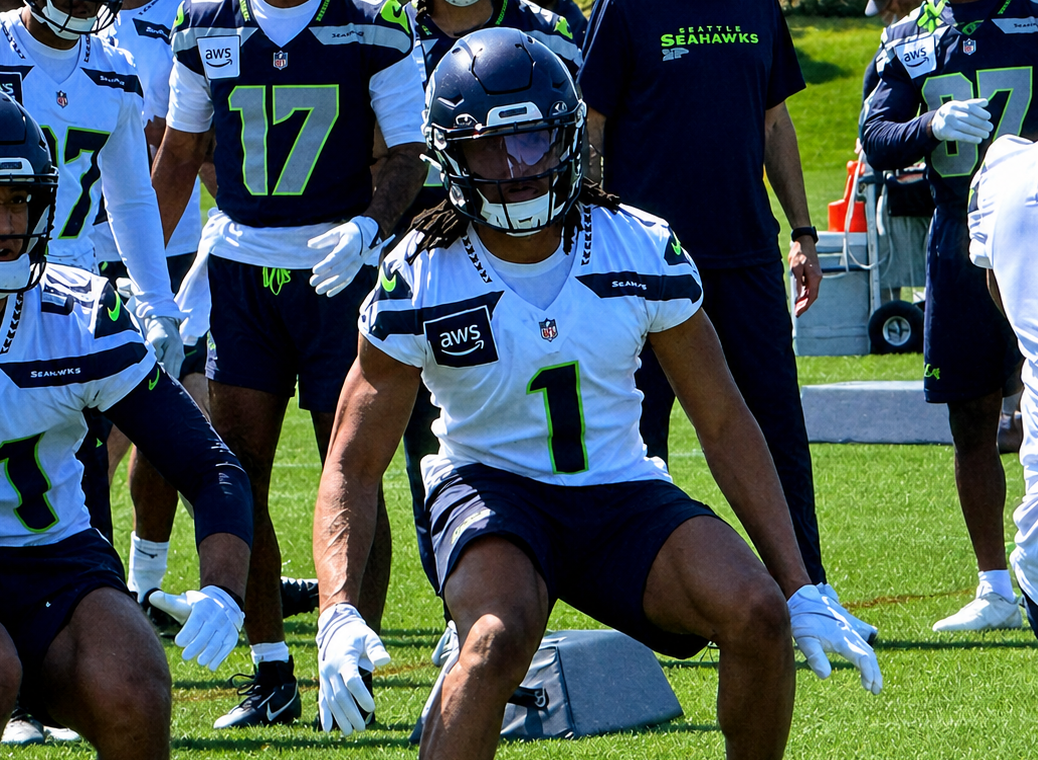
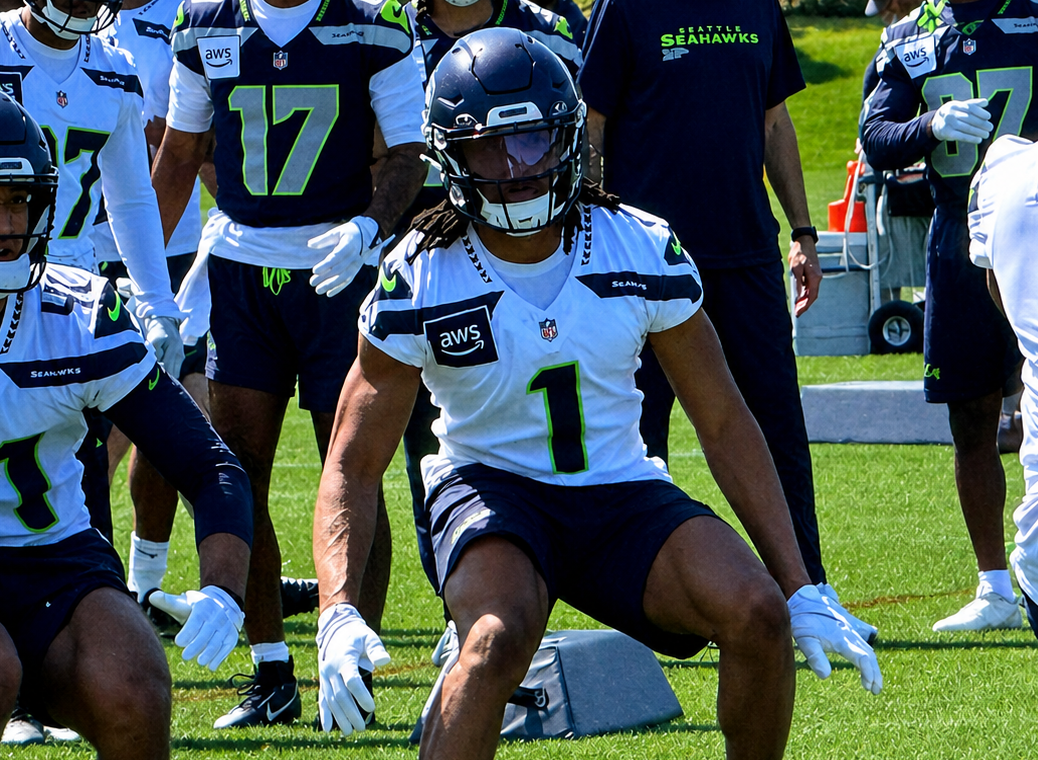
Seattle Seahawks rookie cornerback Julian Neal breaks down to surround a punt returner during a special teams drill at the team’s annual rookie minicamp. Credit: Corbin Smith/Emerald City Spectrum [/caption]
Now officially embarking on their NFL careers, the Seattle Seahawks unveiled their latest draft class for the first time earlier this month at their annual rookie minicamp at the Virginia Mason Athletic Center, providing an opportunity to begin evaluating first-round selection Jadarian Price and the rest of the team's 2026 draft picks before the start of OTAs next week.
While Price and his 2026 draft cohorts won't be playing in game action for several months, it's never too early to prognosticate how they may perform in their first season with the Seahawks. As they prepare to begin competing against veterans in the final phase of the offseason program during OTAs and mandatory minicamp, what can the franchise realistically expect from the third draft class of the Mike Macdonald era?
Looking into the crystal ball, with potential injuries not in consideration, here are best and worst case scenarios for all eight of Seattle's incoming draft picks in 2026:
Jadarian Price
Best Case: No longer in the shadows of Jeremiyah Love, Price showcases his first round pedigree by beating out George Holani and Emmanuel Wilson to become Seattle’s Week 1 starter and immediately picks up where his predecessor Ken Walker III left off. Thriving in Brian Fleury’s zone-centric offense behind a suddenly formidable offensive line, he easily surpasses the 1,000-yard rushing mark, becoming the fourth rookie running back in franchise history to achieve the feat, and maintains hold on the starting role even after Zach Charbonnet returns healthy in late October. Scoring 10 total touchdowns, he silences critics who question whether or not he can make an impact in the passing game as well, finishing with more than 20 receptions and 200 receiving yards as a reliable target for Sam Darnold and steadily improving in pass protection as the season progresses.
Worst Case: In a tight battle with Holani and Wilson throughout the summer and unable to create much separation early in training camp, Price fumbles twice during the preseason and struggles to contribute in the passing game as envisioned, ultimately starting the regular season in a by-committee situation with the two veterans sharing reps. While he flashes his elite burst on occasion in the run game and gradually starts to take on a bigger role by October with a couple big games, Charbonnet’s return around Halloween cuts into his opportunities again, and he closes out the year barely scratching 500 rushing yards with three total touchdowns. Still a work in progress as an all-around back, the jury remains out on whether or not he will live up to first round billing and Seattle decides to re-sign Charbonnet as a result.
Bud Clark
Best Case: Thrown into the fire early as Coby Bryant’s replacement, Clark opens his rookie season in a time share with incumbent Ty Okada before quickly securing a full-time starting role as a hybrid free safety/nickel defender. Utilizing his elite instincts to jump passing lanes as he did at TCU, with quarterbacks challenging him often early due to the talented supporting cast around him, he intercepts four passes and adds seven pass breakups to lead rookie safeties in both categories. Benefiting from Macdonald’s skills as a play caller moving defensive players all over the formation, he generates 54 tackles, two tackles for loss, and a partial sack as a blitzer, closing out a fine campaign as a All-Rookie Team selection and ensuring Seattle’s secondary doesn’t miss a beat.
Worst Case: Quickly learning that he’s no longer in the Big 12, Clark’s aggressiveness in coverage gets him in trouble more often against NFL quarterbacks/receivers than it did in Fort Worth, yielding a handful of big plays in training camp and the preseason. His tackling also proves to be too inconsistent in exhibition games with a couple of bad whiffs on ball carriers. As a result, he begins the season primarily playing special teams with Okada getting the bulk of the third safety snaps on defense next to Julian Love and Nick Emmanwori, and with the veteran continuing to play at a high level, he receives limited opportunities to contribute for most of the season. Finishing with 13 tackles and two pass breakups, he enters his first full NFL offseason with major areas to clean up moving forward.
Julian Neal
Best Case: Armed with a significant advantage having played for Nick Perry, a former assistant under Macdonald, at Arkansas last season, it’s smooth sailing out of the gate for Neal, whose familiarity with the scheme and techniques helps him push Nehemiah Pritchett and newcomer Noah Igbinoghene for immediate playing time as the second boundary cornerback in nickel/dime sets. Impressing in exhibition games with a physical presence against the run and a pair of pass breakups in coverage, the rookie doesn’t have to wait long into the regular season before Seattle cuts him loose, as he usurps Pritchett as the clear No. 3 cornerback as the calendar switches to October. He doesn’t look back, finishing his first season with more than 50 tackles, an interception, and five pass breakups, giving the Seahawks three quality starters at the position under contract for the foreseeable future.
Worst Case: Still relatively raw at the cornerback position as a one-year starter at the college level, Neal’s confidence takes a hit dealing with the likes of Jaxon Smith-Njigba and Rashid Shaheed during training camp, demonstrating that he will need an unofficial “redshirt” year for further development and additional coaching before he’s ready to contribute on defense. While Pritchett and Igbinoghene handle the snaps as third and fourth cornerbacks in sub packages, the rookie makes his mark as a gunner on punt coverage as well as pitching in on several other special teams units, finding a way to make positive contributions for the defending champions even though he doesn’t see any defensive snaps during the regular season beyond a couple mop-up opportunities late in blowout wins.
Beau Stephens
Best Case: As pro ready as any of Seattle’s draft picks after starting the past two seasons for Iowa and garnering All-American honors as a senior, Stephens doesn’t spend much time with the third-team offense before leap-frogging over Christian Haynes and Bryce Cabeldue early in training camp, staking his claim to the backup swing guard role behind starters Grey Zabel and Anthony Bradford. While he doesn’t receive an opportunity to directly compete with Bradford, who will be entering the final year of his rookie contract, for a starting spot, he performs well enough in camp and the preseason to open the season as the main reserve on both sides. Seeing a handful of snaps during the regular season, he positions himself to potentially start at right guard in 2027, depending on Bradford’s future with the team.
Worst Case: Despite having a refined game technique-wise coming into the league, Stephens’ lack of size and length coupled with average athleticism shows up early in camp as he struggles to hold up against Leonard Williams, Byron Murphy II, and the rest of Seattle’s vaunted defensive line. Beaten in pass protection drills far more often than he ever did with the Hawkeyes and not able to finish in the run game as consistently as he did in college, he stays with the third-team offense for most of camp as Haynes and Cabeldue stay ahead of him on the depth chart as the primary backup guard options, leading to him being waived in final roster cuts and re-signing to the Seahawks’ practice squad.
Emmanuel Henderson Jr.
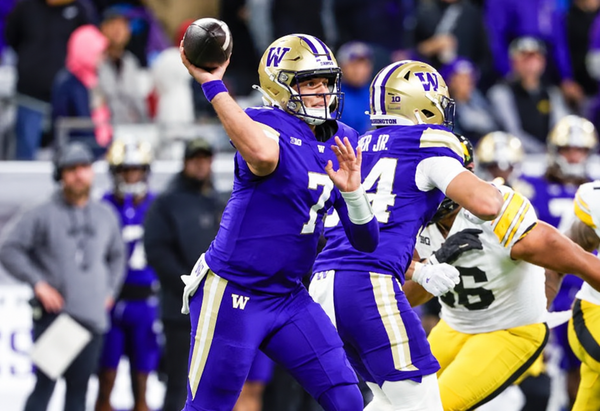
Best Case: Elite speed always gives a player a chance to shine and in the case of Henderson, the former five-star recruit has legitimate track speed that translates well early in his NFL journey. Renowned for his talents as a speedy gunner on punt coverage at Alabama and Kansas, he latches onto a starting job in that key role as Dareke Young’s replacement on Day 1 for special teams coordinator Jay Harbaugh, adding kick return to his duties alongside Shaheed to give Seattle a dynamite duo to strike fear in opponents. As the season progresses, with the former running back continuing to grow as a route runner, Henderson also earns himself a handful of offensive snaps as a reserve receiver at a crowded position group, finishing with three catches for 25 yards to go with nine special teams tackles for a rock solid rookie campaign from a sixth-round pick.
Worst Case: Joining arguably the deepest position group on Seattle’s roster, Henderson finds himself in a back-and-forth battle against returning 2025 seventh-round pick Ricky White III for the final roster spot on the depth chart at receiver, with the competition hanging on special teams performance above all else. Even with his pedigree as a great gunner in college, the rookie isn’t able to stand out in that regard with Neal and returning veterans staying ahead of him in that same role, taking a key feather out of his cap. With White taking a significant step forward on offense and also impressing as a returner in preseason games, the former UNLV standout ends up beating out his rookie counterpart with Henderson getting cut and returning on the practice squad.
Andre Fuller
Best Case: Vastly outperforming his draft position after a strong final season at Toledo, Fuller comes in with a massive chip on his shoulder and manages to push not only Neal for snaps, but also Pritchett and Igbinoghene. Emerging as one of the biggest bright spots in exhibition games with 10 tackles and an interception, though he comes up short of earning an unexpected starting spot next to Devon Witherspoon and Josh Jobe, he secures a roster spot as a core special teams player on kick and punt return units and excels on a variety of teams for Harbaugh. Taking to Macdonald and Karl Scott’s coaching, he sees some defensive action by the tail end of his rookie year, setting the stage for him to potentially break through as a viable NFL cornerback in 2027.
Worst Case: Suffering plenty of welcome to the NFL moments early on, Fuller gets exposed athletically during OTAs and the early stages of training camp, giving up several big plays downfield with the step up in competition proving to be too much for him. While his play starts to even out in the preseason and he finds his footing to an extent as August unfolds, including making some positive impressions as a special teams player, he doesn’t seriously threaten for a roster spot in a new-look cornerback group and the Seahawks cut him before bringing him back on the practice squad as an insurance developmental project.
Deven Eastern
Best Case: Offering unique size and length for a versatile defensive tackle who can play everywhere from the nose position to 5-tech “big” defensive end, Eastern continues to search for improved consistency, but his penchant for disruption jumps out during training camp and the preseason. Pitching in a partial sack and two tackles for loss in exhibition contests while logging snaps at multiple positions, the Seahawks opt to keep him on the 53-man roster over veteran Brandon Pili, worried that they won’t be able to slip him through waivers to the practice squad. Due to a numbers game up front, he isn’t active for a significant chunk of Seattle’s regular season games, but when he does get a chance to suit up, he makes enough positive contributions to suggest a bigger role will be on tap in 2027 and beyond.
Worst Case: Struggling with feast or famine play up front much as he did at times at Minnesota, Eastern’s issues with playing too high and losing the leverage battle along with inconsistent gap integrity as a run defender stand out as substantial problems going up against NFL blockers. His solid pass rushing numbers at the college level don’t necessarily translate either, hurting his value vying for a spot on the bottom of the roster. Even with modest improvements during camp and the preseason, he doesn’t do enough to beat out Pili to make the 53 and the Seahawks release him, re-signing him to the practice squad for further coaching.
Michael Dansby
Best Case: One of several decorated defensive backs entering the league from a stacked Arizona secondary, Dansby shows that allowing under a 37% completion rate as a senior wasn’t a fluke, surprising as an unexpected contestant vying for early playing time in Macdonald’s secondary. Dipping his toes into the water as a nickel corner for the first time after primarily playing on the boundary in college, he demonstrates more than enough quickness and agility to hold up as a two-way defender in coverage while making his share of plays as a willing run defender and special teamer during preseason games, earning a spot on the opening day roster as a reserve with the positional flexibility to line up at multiple spots in sub packages if called upon.
Worst Case: While arguably the most athletic of the three cornerbacks selected by Seattle in April’s draft, Dansby struggles to see much action on the practice field beyond working with the third-team defense as Neal and Fuller see most of the snaps ahead of him as part of a suddenly crowded defensive backfield. Without many chances to show what he can do and an evident learning curve adapting to playing inside in the slot for the first time, the Seahawks cut him in late August before re-signing him to the practice squad with hopes of developing him into a viable nickel defender in time.