Assessing Mariners’ Potentially Problematic Third Base Situation

[caption id="" align="alignnone" width="5414"]
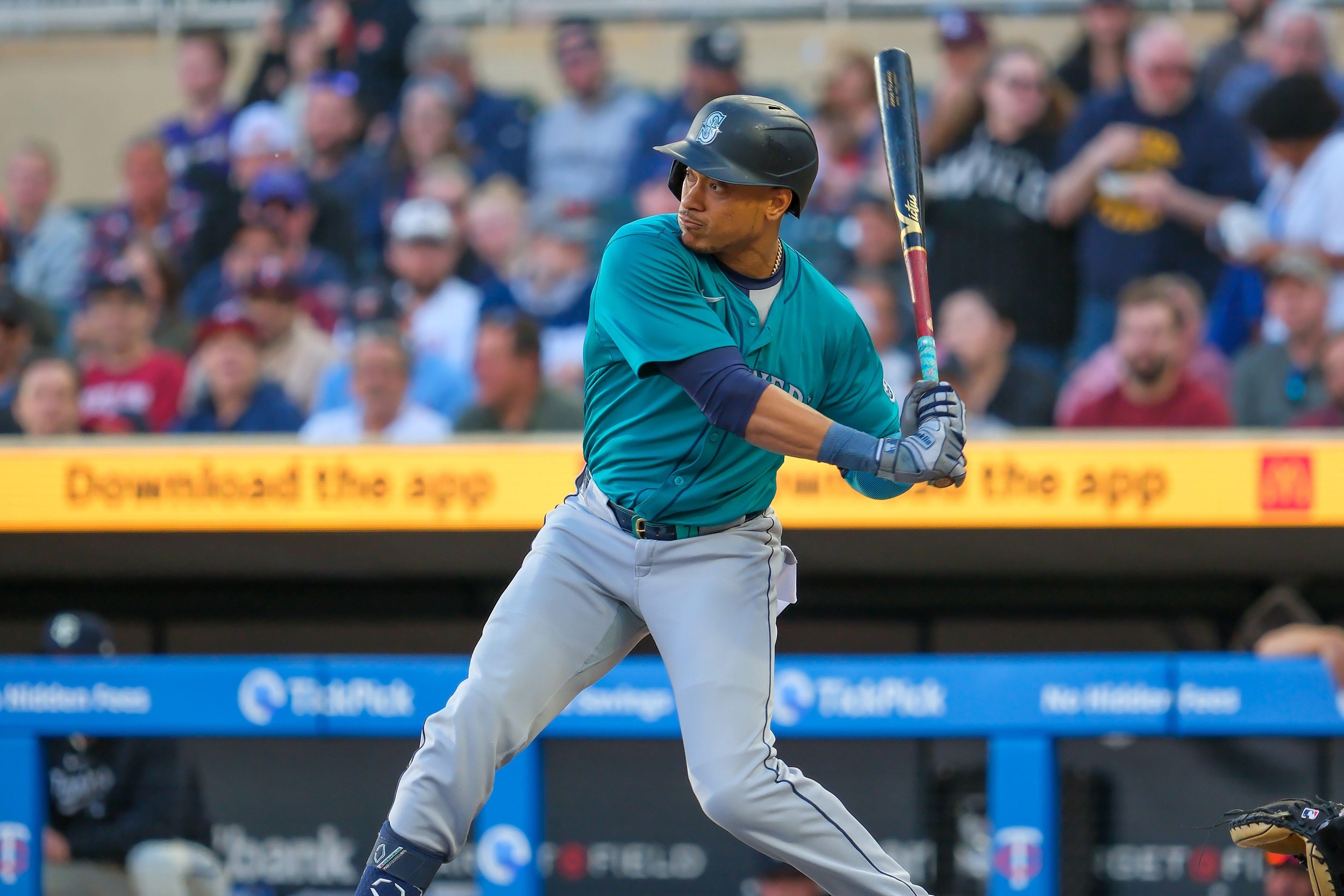
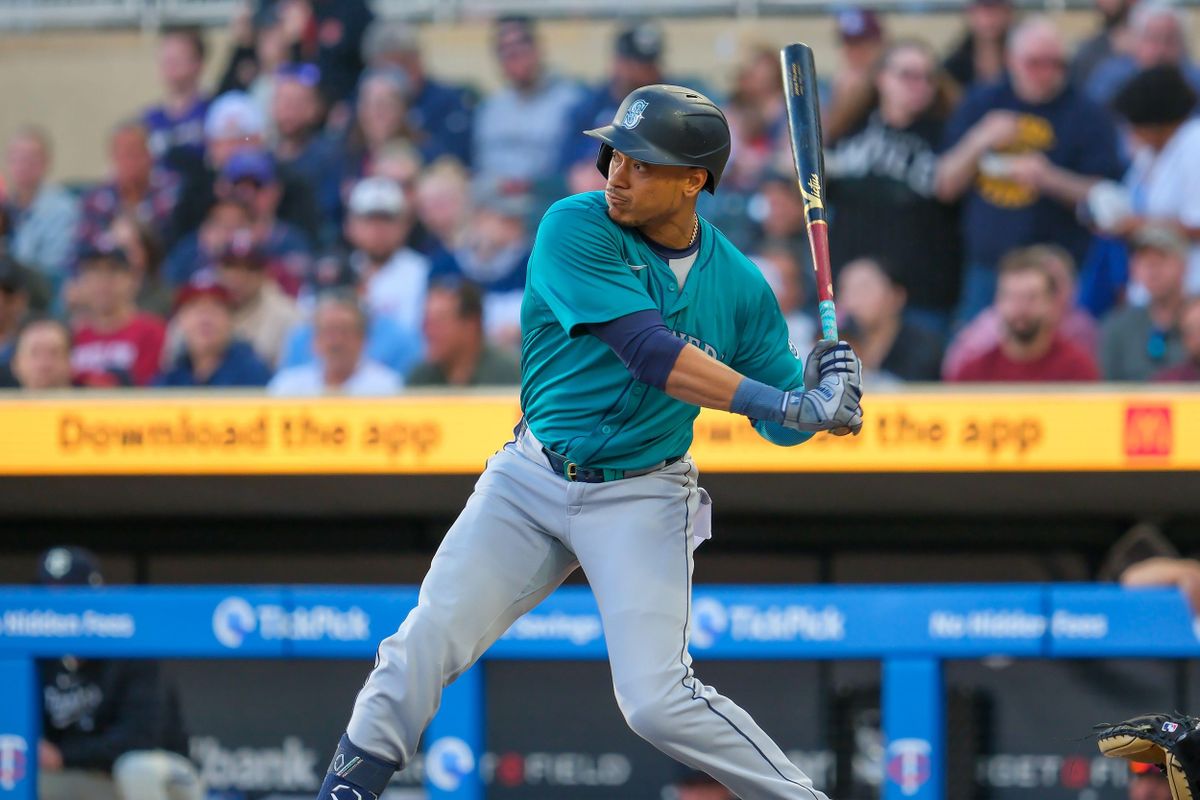
Minneapolis, Minnesota, USA. 6th May, 2024. Seattle Mariners second baseman JORGE POLANCO (7) during a MLB baseball game between the Minnesota Twins and the Seattle Mariners at Target Field. The Twins won 3-1. (Credit Image: © Steven Garcia/ZUMA Press Wire) [/caption]
Third base is the biggest question mark on a Mariners roster riddled with uncertainty. Even second base, another clear area of need for the club this winter, provides a bit more clarity and upside thanks to the likes of Ryan Bliss and eventually Cole Young. Perhaps Ben Williamson, who’s put together an impressive showing in Spring Training thus far, could be the third base equivalent of what Young — or at least Bliss — is to second base as far as 2025 is concerned, but unless the William & Mary product proves capable of hitting for more power, it’s hard to feel confident in his ability to profile as a legitimate everyday option at the hot corner.
It might be a stretch to refer to him as the starter (more on that later), but Jorge Polanco is the presumed primary option for the Mariners at third to begin the 2025 campaign. That said, it’s March 8 at the time of this writing, Opening Day is fewer than 20 days out, and the veteran infielder has yet to play on the dirt this spring. Polanco is still recovering from an offseason procedure that repaired the patellar tendon in his left knee, which contributed at least partly to the struggles he endured during his first year in Seattle, and the Mariners are erring on the side of caution as he ramps back up. He’s expected to be cleared to play in the field in the coming days, but this delayed start has added an extra layer of concern to an already questionable position change.
In his 11 years of major-league service, Polanco has logged just 180 innings at third base. Not only is he being tasked with learning a position that’s largely unfamiliar to him on limited Cactus League reps, but he’ll also aim to do so while simultaneously trying to regain his confidence in the batter’s box — and in the highly suppressive T-Mobile Park for half of his games, no less. The Mariners are placing a lot on his plate, and there are numerous questions they need him to answer in a relatively short amount of time, including, but not limited to, how much workload he can realistically handle at third.
It’s possible the Mariners don’t actually have a definitive starter at third base right now and will instead employ some form of timeshare between Polanco, Donovan Solano, and possibly Dylan Moore. Solano has appeared in four Spring Training games thus far, manning third base in all of them — perhaps a clue as to what the Mariners’ plans are for him. While he, like the rest of Seattle’s in-house options, isn’t an inspiring choice to handle third base duties with regularity, he has nearly four times the amount of experience (715.2 innings) Polanco has at the position and may very well be just as skilled, if not better. Against right-handed pitchers, perhaps the plan is for Solano, a career .276/.336/.373 hitter versus righties, to get the nod at third while Polanco serves as Seattle’s designated hitter rather than the other way around. Polanco would then primarily see his time at third whenever the team faces a lefty on the mound, as Solano would be required to fill in at first for Luke Raley.
As mentioned, Moore could factor into the mix as well, so long as Bliss carries his spring production into the regular season. If Bliss earns the trust of manager Dan Wilson to hold things down at second base, that would free Moore up to maintain his natural role as Seattle’s utility man.
The trio of Polanco, Solano, and Moore is fascinating because each player offers very different benefits from the other two. Moore is by far the most athletically gifted and the best bet to provide defensive value; Polanco has the highest upside to produce at a level truly befitting of a third baseman; and Solano is the likeliest to hit for a high average, although he’s 37 years old and the cliff could come at any time. It’s a potentially not-so-fun game of “Choose Your Adventure” for Wilson on the surface, but odds are the group will sort itself out in due time — hopefully, for Seattle, in a positive context.
The Mariners are still very clearly feeling the effects of their decision to trade Eugenio Suárez to the Diamondbacks roughly 16 months ago and they’re already left with virtually nothing to show for it. One half of the return for Suárez, Seby Zavala, is no longer with the team and the other, Carlos Vargas, appears likely to be designated for assignment in the coming weeks due to his lack of minor-league options. Trading Suárez netted Seattle $13.2 million in savings when factoring in the guarantee tied to his 2025 buyout, but while clearing the veteran third baseman’s salary was certainly a motivating factor for the deal, the club also believed his offensive capabilities were well on the decline following a regressive 2023 campaign.
In fairness, they were right… until they weren’t.
Suárez’s first three months in Arizona were abysmal, resulting in a .196/.279/.312 slash line with a 29.2 percent strikeout rate in 315 plate appearances. Then he went Super Saiyan from July 1 until the end of the regular season, slashing .312/.357/.617 (162 wRC+) with 24 home runs, 18 doubles, and 69 runs batted in. Meanwhile in Seattle, the Mariners finished the season fifth in MLB in third base fWAR (4.5), two spots ahead of Suárez and the Diamondbacks, but this was almost exclusively driven by the near-elite defensive production of Josh Rojas, who was worth a stellar nine outs above average on the year.
Rojas’ bat found itself on the opposite end of the spectrum, however, despite a red-hot first month of the season in which he put up a 175 wRC+ with a .408 on-base percentage. From May onward, he slashed a lousy .208/.285/.301 and that all but sealed his fate heading into the offseason. Rojas was projected by MLBTradeRumors.com to earn $4.3 million in arbitration this winter, but the Mariners opted to non-tender him due in large part to his offensive shortcomings. Suárez’s monster second half, on the other hand, made picking up his $15 million club option for this upcoming season a no-brainer of a decision for the Diamondbacks.
Infield options both in the trade and free-agency markets were limited this offseason and the Mariners’ self-imposed budget of reportedly $16 million made an already small needle to thread that much smaller. It quickly became apparent that if they were going to upgrade their offensive output at third base, they would have to sacrifice at least some defensive value. They certainly accomplished the latter and then some, but whether they fulfilled the purpose of doing so or not is entirely up in the air.
Coming off a brutal season with the Mariners in which he posted the third-lowest wRC+ (92) of his entire career, Polanco has quite the uphill climb to get back to being the offensive player he was with the Twins. At the very least, he claims to feel much healthier than he did in 2024, and while the Mariners offered him the most money this winter, it’s worth mentioning that he chose to take a second crack at T-Mobile Park rather than hit in the much friendlier confines of the Yankees or Astros’ home ballparks. After all, Polanco’s season will have major ramifications on his future earning potential, so not only are the Mariners taking a dangerous bet on him, but so is he.
In the event both parties are wrong, Seattle will have to hope either Moore, Solano, Williamson, or some combination of the three, can keep things afloat — at least until the trade deadline approaches. But even then, the current state of third base play in MLB is in rough shape, and the Mariners, assuming they’ll be in a position to buy, will surely be far from the only teams looking for help in that department. This is the bed they ultimately made when they decided to trade Suárez, and now they have to lay in it and hope for the best.