Analysis: 5 Areas Seahawks Must Improve to Maintain NFC Lead, Win Division

[caption id="" align="alignnone" width="6314"]
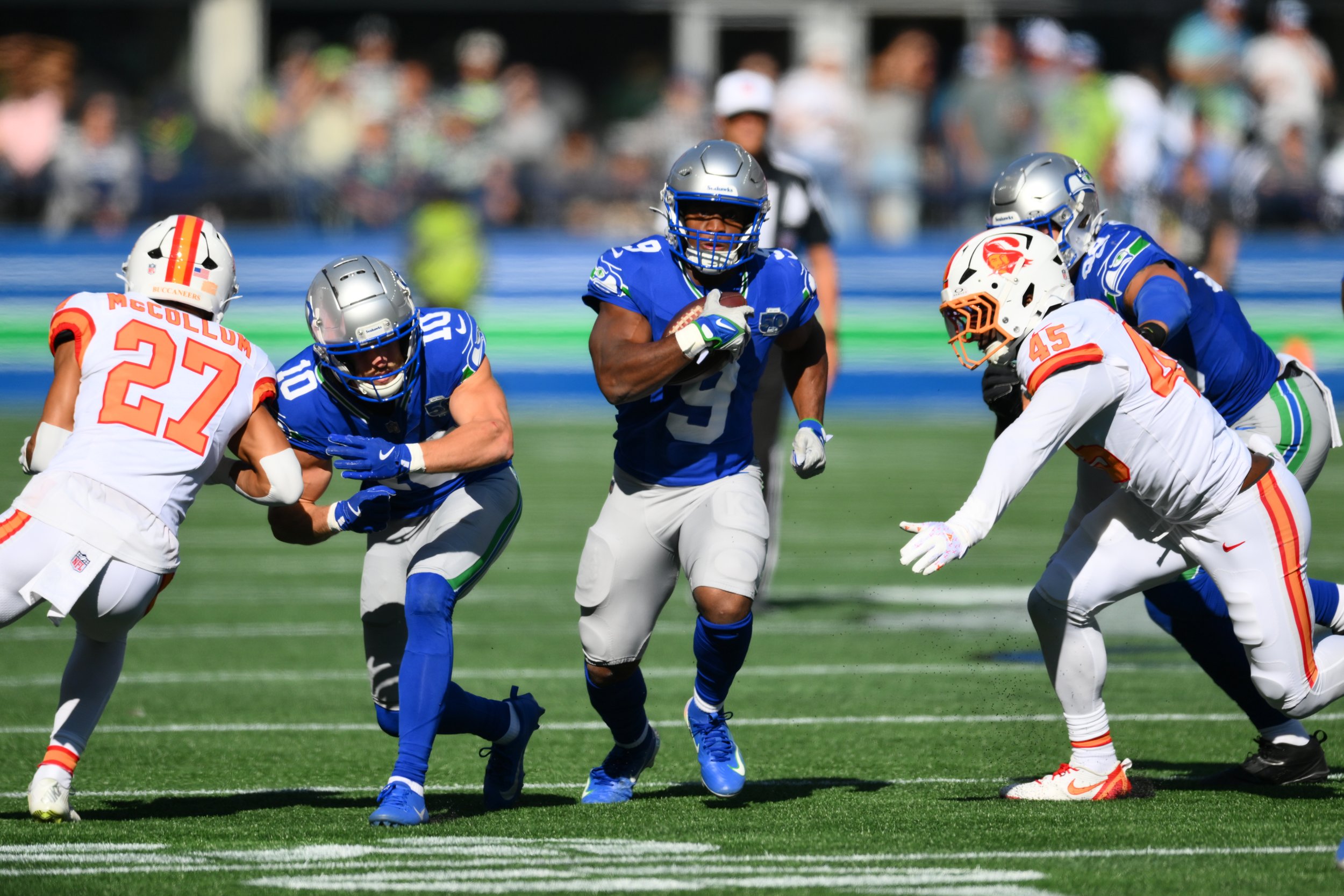
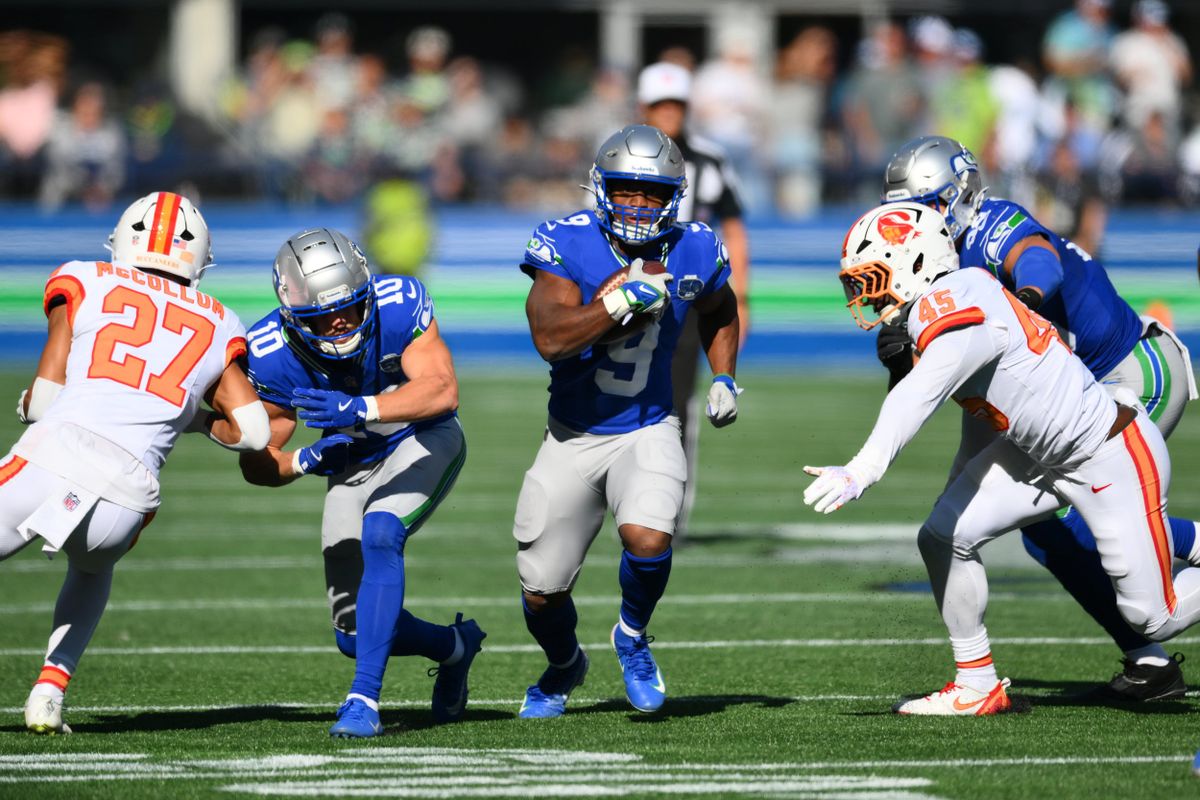
Seattle Seahawks running back Kenneth Walker III (9) carries the ball against the Tampa Bay Buccaneers during the second half at Lumen Field. Credit: Steven Bisig-Imagn Images [/caption]
Returning to action following their bye week, the Seattle Seahawks (5-2) will hit the practice field and begin preparation for a tough Sunday Night Football road matchup with the Washington Commanders as the new top dog in the NFC West.
So far, the Seahawks have looked the part of a contender in the wide open NFC, currently ranking fifth in points per game and sixth in points per game allowed. But with 10 games still remaining, there’s a ton of football left to be played with only half a game separating three teams atop the division, so staying on top will not be an easy task for coach Mike Macdonald’s squad as the calendar closes in on November.
Looking back at the first seven games and peering towards the second half of the season, where must Seattle demonstrate the most improvement to have a real shot at winning the NFC West for the first time since 2020?
1. Fewer negative plays in the run game, particularly on early downs that put the offense behind the sticks.
The Seahawks have been a peculiar team to evaluate running the football, to say the least. On the negative side of the coin, the team currently ranks 21st in rushing yards per game (106.1), 31st in yards per carry (3.7), and 24th in EPA per designed rush (-0.11), far from the potent ground attack promised under new coordinator Klint Kubiak. But oddly enough, per TruMedia, while the volume stats have not been good at all, they currently rank eighth in 20-plus yard runs (six), 13th in explosive rushes (14), and 10th in rushing touchdowns (eight), signs that they have not only been able to generate consistent chunk plays, but also finish in the red zone.
What’s behind the Jekyl and Hyde stats with Seattle’s run game? Nothing has held back Kubiak’s offense more than plays being blown up in the backfield at an alarming rate, as Ken Walker III and Zach Charbonnet have been met by opposing defenders right after receiving the handoff far too often this season. Even with one fewer game than most teams, the Seahawks have produced a league-worst 28 negative rushes, three more than the Eagles to form a significant gap from the rest of the NFL. This issue has been problematic on all downs, but 23 of those plays came on first and second down, which equates to a whopping 13.5 percent of their total early down runs and a league-worst 3.29 negative runs per game.
Thus far, the Seahawks have been able to skate by with a feast-or-famine rushing attack that has remained just effective enough to keep defenses honest and open up shot play opportunities for the play action pass. But if the abundance of negative run plays isn’t curbed significantly with better blocking off the snap and more consistent reads from running backs, that trend won’t continue against top teams down the stretch and it will be far tougher sledding for Darnold and company.
2. Increased efficiency bringing down ball carriers in space, including on receivers after the catch.
Ranked sixth in points allowed and near the top of the league in run defense as well as sacks and pressure rate, even given the attrition in the secondary to this point, it’s not easy to find kinks in Seattle’s armor on defense. But if there’s been a silver bullet for Macdonald’s crew, much to the coach’s chagrin, they have been one of the worst units in the league at leaving tackles on the field. Through eight weeks, according to Pro Football Reference, the team ranks second behind only a dreadful Cincinnati defense with 56 missed tackles, or an average of eight missed tackles per game.
Sometimes, missed tackle problems can be pinpointed on one position group or one level of the defense. But that hasn’t been the case for Seattle, as the whiffs have been contagious contaminating the play of the entire unit from front to back. Per Pro Football Focus charting, at least six players already have five missed tackles this season, including cornerback Riq Woolen and linebacker Drake Thomas, who each rank in the top three at their respective positions with missed tackle rates ballooning north of 26 percent. When healthy, safety Julian Love and cornerback Devon Witherspoon haven’t been immune either, with the former having an ugly 21 percent miss rate and the latter having three whiffs in just two games.
If there’s a silver lining, since Macdonald called out his team for subpar tackling after a 38-35 loss to the Buccaneers in Week 5, the Seahawks have done a better job in their previous two games corralling ball carriers. Still, eight missed tackles in a Monday Night Football win over the Texans remains higher than the staff expects. If the team wants to be taken seriously as a true contender, the onus will fall on the players to improve wrapping up running backs, receivers, and tight ends and limiting both yards after contact and yards after the catch moving forward.
3. Moderate growth from Sam Darnold, receivers in non-play action passing game.
As hinted earlier, Darnold has been absolutely lethal off play fakes this season, posting outstanding numbers across the board on play action pass concepts. While he sits in the middle of the pack with a 65.8 percent completion rate, he ranks first in yards per attempt (13.7), first in Big Time Throws (nine), second in yards (711), and 10th in touchdowns (four) off play action, regularly torching opponents with deep balls to Jaxon Smith-Njigba and the rest of the skill players in his arsenal. Not surprisingly, he’s tied for first in EPA per drop back on such plays (0.45), equaled only by Lions starter Jared Goff.
But considering much of Darnold’s damage on play action has come via the deep ball, it wouldn’t be shocking - if not expected - that those numbers would regress a bit towards the mean in the second half, especially given the aforementioned inconsistencies of Seattle’s run game. Though he has still been a top-10 quarterback in many metrics without play fakes to hold the defense at the second level, for the offense to keep humming at as a top five or even top-10 caliber unit, the veteran gunslinger and the supporting cast around him will have to be better on traditional drop backs, where he currently ranks 13th in EPA per play (0.08), 18th in touchdown passes (eight), and 26th in first down passes (50).
Those aren’t necessarily terrible numbers, but for the Seahawks to be able to move the ball on the best defenses in the heat of a playoff push, Darnold will need to be a bit sharper both with accuracy and decision making when he isn’t selling a run fake.
4. More variety in the turnover department and an emphasis on finishing in coverage.
With nearly their entire defense returning from a year ago and quality newcomers in Demarcus Lawrence and Nick Emmanwori ready to further bolster the group, many expected the Seahawks to take a big step forward creating turnovers in 2025 after ranking 16th in that category last season. To an extent, that has been somewhat true, as the team already has eight interceptions, tied for fifth-most in the NFL and more than halfway to their total of 13 from a year ago.
But overall, even with one of the league’s fiercest pass rushes in terms of sacks and pressure rate, Seattle hasn’t moved up the pecking order manufacturing turnovers compared to the 2024 campaign. Stunningly, Macdonald’s defense now stands as the only one out of 32 teams yet to force a single fumble, a number that has been hurt by a few strip sacks that were cancelled out by penalties in the secondary in earlier games. Dropped interceptions have also contributed to ranking only 15th in turnovers forced, as cornerbacks Josh Jobe and Derion Kendrick rank among league leaders with two dropped picks according to PFF charting.
Much like the missed tackles, the Seahawks haven’t been able to capitalize fully on their opportunities to finish plays that could have resulted in turnovers, whether via strip sacks, punching the ball out of a running back’s hand, or intercepting the quarterback. Elite defenses don’t leave that many plays between the lines and for Macdonald’s squad to be able to carry the burden of steering the team to an NFC West title, they will have to cash in on more of those chances in the second half to swing close games in their favor.
5. Better success sustaining drives and moving the chains on crucial third down situations.
When the Seahawks have managed to drive down to the opposing red zone, few teams have been better at putting the football into the end zone, as their 68 percent touchdown rate inside the 20-yard line ranks eighth in the NFL. Interestingly, they have also ranked inside the top 10 in red zone attempts per game, so Kubiak’s offense has been high volume and high efficiency in such situations. But those numbers could be even better if the unit could sustain drives at a higher clip, as they have punted an average of 3.7 times per game, tied for 13th most in the league.
How has Seattle been so good at finishing drives and yet struggled to consistently move the football? Such a factoid may seem like an oxymoron, but the Seahawks have lived and breathed on explosive plays for much of this season, not often orchestrating long, time-chewing possessions. Darnold and company have converted only 33.33 percent of their third down opportunities this year, tied for 27th overall out of 32 teams, while posting negative EPA metrics via both the pass (-0.01) and run (-0.03). Behind these struggles, Seattle has averaged 7.5 yards to go per third down, tied for 25th overall, in part a result of the poor run game productivity on early downs.
Boasting one of the best downfield passing teams thus far has helped the Seahawks compensate for generally poor third down play, and allowing only nine sacks in the first seven games has allowed them to be able to succeed with that formula. But moving the sticks on only a third of third down opportunities isn’t going to suffice against better competition in the heat of a division title race and the offense as a whole will have to find a way to create more ideal third down situations with improved early down production and improve to at least the middle of the league in conversion rate to emerge as a contender.