Analysis: How Does Zach Charbonnet Injury Impact Seahawks’ Offseason Game Plan?

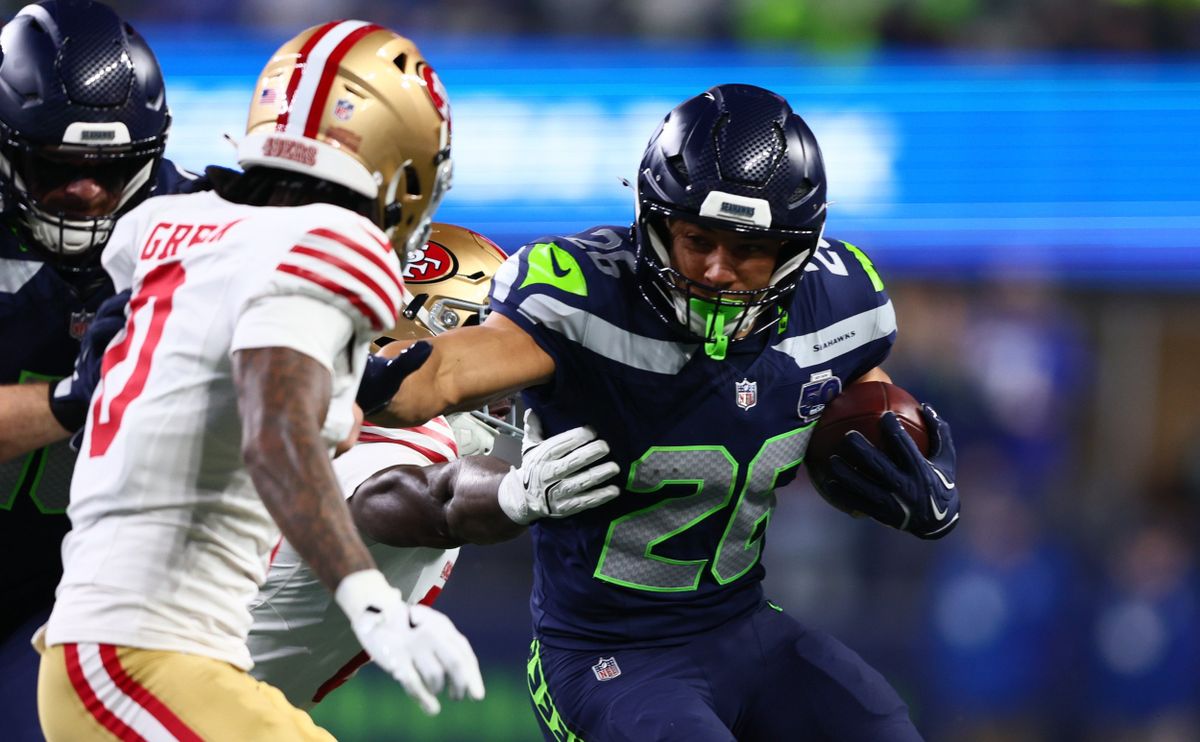
[caption id="" align="alignnone" width="3769"]
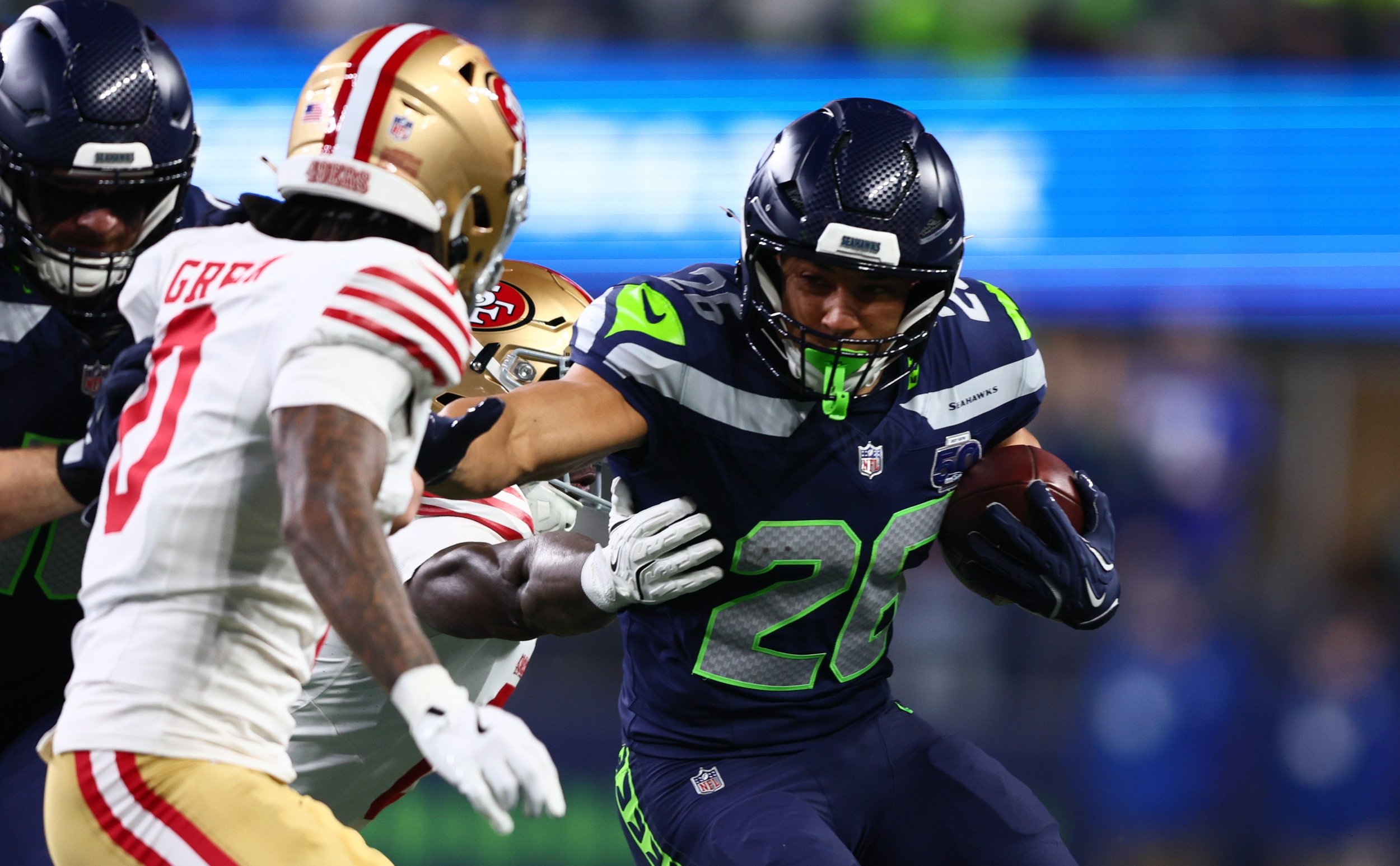
Seattle Seahawks running back Zach Charbonnet (26) carries the ball against the San Francisco 49ers during the first half in an NFC Divisional Round game at Lumen Field. Mandatory Credit: Kevin Ng-Imagn Images [/caption]
Winning the Super Bowl in the NFL requires a talented roster and strong coaching. But teams that make it all the way to the mountaintop also need good fortune, particularly when it comes to injuries.
Capturing the Lombardi Trophy for the second time in franchise history earlier this month, the Seattle Seahawks checked off all three of those boxes. General manager John Schneider assembled the deepest, most talented roster in the league with coach Mike Macdonald and a fantastic staff maximizing on that talent, and health-wise, the team suffered far fewer significant injuries than other playoff teams.
With that said, the Seahawks didn’t escape the season without a substantial injury happening in the playoffs as they orchestrated their run to the Super Bowl, as standout running back Zach Charbonnet suffered a torn ACL in a 41-6 Divisional Round beatdown of the 49ers. There’s never a good time for such an injury to occur, but in the case of Charbonnet, blowing out his knee so late in the season creates a conundrum that the organization will have to navigate heading into free agency and the upcoming NFL draft.
If Seattle had starting running back Ken Walker III under contract in 2026, the timing of Charbonnet’s misfortune wouldn’t be quite as big of a deal. However, the injury coincided with “K9” going off with a historic postseason performance rushing for 313 yards and four touchdowns in three playoff wins that culminated in a Super Bowl LX MVP, as he bolstered his market at the perfect time and created plenty of leverage for himself heading into free agency.
Given that blazing finish by Walker, if he has a chance to test the market when the new league year opens on March 11, it’s not out of the question another team could roll out a massive multi-year contract beyond the Seahawks’ willingness to pay. But that maximum price point may be higher than general manager John Schneider originally may have desired, in part because Charbonnet didn’t undergo surgery to repair his ACL until February 20, more than a month after he injured the knee.
#Seahawks RB Zach Charbonnet just posted on Instagram that he underwent surgery for torn ACL.
It's not uncommon for such a surgery to happen several weeks after the injury occurred. But this pushes his recovery clock even further into the 2026 season. pic.twitter.com/QvP0QohSGO— Corbin K. Smith (@CorbinSmithNFL) February 20, 2026
Since Charbonnet tore up his knee on January 17, with the recovery timetable typically taking nine-plus months, he already would have been facing improbable odds to be ready for the start of the 2026 regular season. But going under the knife more than four weeks later pushes that timeline back even further, especially if the delay happened due to suffering another injury such as a sprained MCL on the non-contact play last month that required additional time to heal before the ligament could be fixed.
Per Dr. Jesse Morse of Injury Expertz, Charbonnet likely will miss the first half of the 2026 season at minimum, and it’s possible he could wind up missing the entire season as a result of how late he had the ACL repaired and/or additional damage that needed fixed that could prolong his rehabilitation. It remains unknown at this point if he simply had the ligament repaired or needed full reconstructive knee surgery, which would impact the timeline of recovery significantly.
Regardless, even if Charbonnet makes a rapid recovery similar to former teammate Jordyn Brooks, who came back in eight months to start Seattle’s season opener in 2023, he would not be back in action until mid-October at the earliest. This would all but ensure opening the season on the Physically Unable to Perform (PUP) list, missing at least four games and likely more.
Considering the best case scenario with Charbonnet’s recovery, the Seahawks would currently open the new season with George Holani, Kenny McIntosh, Cam Akers, Velus Jones Jr., and Jacardia Wright as the only healthy running backs under contract. From that group, only Akers - who didn’t have a single carry last season - has previous NFL starting experience from that group, while McIntosh will be coming back from a torn ACL of his own that cost him the entire 2025 season.
With Charbonnet set to miss extensive time and minimal experience on the roster, a strong argument can be made that Walker belongs at the top of Seattle’s priority list to re-sign in free agency, even above dynamic receiver/return specialist Rashid Shaheed and cornerback Riq Woolen. But as is always the case, particularly at a running back position known for short shelf lives, money will be the deciding factor on whether or not he returns.
Now three weeks away from free agency, reports have indicated the Seahawks won’t use the franchise tag on Walker, which would have been $14.56 million fully guaranteed on a one-year deal. This isn’t surprising given Schneider’s track record, as he has only used the tag twice previously, doing so with kicker Olindo Mare (2010) and defensive end Frank Clark (2019).
But if Seattle doesn’t intend to tag Walker, two questions remain: How much would Schneider be willing to pony up to re-sign the Super Bowl MVP by conventional means via an extension? And would that offer be good enough to keep the running back from testing the market?
Undervalued compared to most positions as the NFL has trended towards being a pass-heavy league, only nine backs currently make north of $10 million per year. Last week, the Cowboys re-signed Javonte Williams on a three-year, $24 million after he rushed for more yards and touchdowns than Walker did in 2025, which could bode well for the Seahawks to bring him back on a similar deal.
At the same time, however, Williams had never been a 1,000-yard rusher prior to last season and Walker has hit that mark twice in four NFL seasons. The latter also nearly hit 1,400 rushing yards with his postseason production while forcing 61 missed tackles in the regular season, the fifth-most in the league. Additionally, he had seven more runs of 10-plus yards (33), five more designed runs of 15-plus yards, and a breakaway rating more than 10% higher than Williams in comparison.
Keeping those numbers in mind, the 25-year-old Walker and Aura Sports Group, who represents him, may be seeking closer to the $10 million per year range, if not higher. That’s where things get complicated from Seattle’s perspective. Where does Schneider draw the line where he isn’t willing to budge any further in negotiations? When does he decide to take the risk and let Walker test his value with other teams offered the opportunity to sign him?
On the surface, the Seahawks have enough financial flexibility to be able to sign Walker on a three or even four-year deal worth $9-10 million annually. With north of $60 million in true cap space, per OverTheCap.com, such a deal could fit into the team’s long-term plans without taking up too big of a piece of the pie and would be justifiable with his production as well as the team’s shaky backfield without Charbonnet expected to be ready for the start of next season.
But anything above that price would put more strain on Seattle’s cap paying a non-premium position, and with Schneider needing to extend the likes of All-Pro receiver Jaxon Smith-Njigba, cornerback Devon Witherspoon, and defensive tackle Leonard Williams along with other in-house free agents that need to be re-signed next month, that space will evaporate quite quickly. Going above $10 million may be the pivot point for the organization to look at other free agent options and/or use the draft to shore up the backfield instead.
On the free agent front, Breece Hall - who the Jets drafted shortly before Walker in the 2022 NFL Draft - would be the other big fish to potentially try to reel in. Schneider would be more likely to seek a bargain, however, and 49ers backup Brian Robinson, Buccaneers starter Rachaad White, and veteran JK Dobbins could all be up for consideration. Robinson played for new offensive coordinator Brian Fleury last season behind Christian McCaffrey, while White has excelled as a zone runner and Dobbins would be a high-risk, high-reward alternative with his lengthy injury history and quality production when healthy.
If those options don’t entice Schneider, the draft could be the best bet to supplement Seattle’s backfield if Walker doesn’t return, though this year’s class isn’t near as deep as a year ago and the team has only four picks currently. Notre Dame star Jeremyiah Love likely will be off the board long before the team picks 32nd overall in the first round, but Nebraska’s Emmett Johnson, Washington’s Jonah Coleman, and Indiana’s Roman Hemby could all be viable options on Day 2 that would fit Fleury’s scheme well and could take on large roles right away. Finding difference makers on Day 3 will be tougher.
With the NFL combine coming up next week in Indianapolis, the Seahawks will be able to ramp up their scouting on this year’s running back class while partaking in discussions with Walker’s representatives as they try to figure out what direction they will go in the backfield. At this stage, it’s anyone’s guess how those negotiations will play out and if a deal could be struck before free agency begins a few weeks later.
How those dominos fall will undoubtedly have a ripple effect on how Seattle handles the rest of the offseason, as a lucrative extension for Walker may make it more difficult to sign the likes of Shaheed, Woolen, cornerback Josh Jobe, or one of the team’s other big name free agents. If he isn’t re-signed and the Seahawks don’t make any other signings in free agency to help fill the void, a great deal more pressure will fall on finding a replacement in the upcoming draft with limited capital at Schneider’s disposal as well as needing McIntosh or Holani to be ready for a much bigger role.
Either way, even if Walker isn’t in line for the largest contract Seattle may offer a player this offseason, there isn’t another looming contract negotiation that carries more short and long-term ramifications. What Schneider and company ultimately choose to do will be a key first domino for the rest of the team’s plans coming into focus over the next few months.