Analysis: What to Watch as Seahawks Kick Off OTAs
[caption id="" align="alignnone" width="7000"]
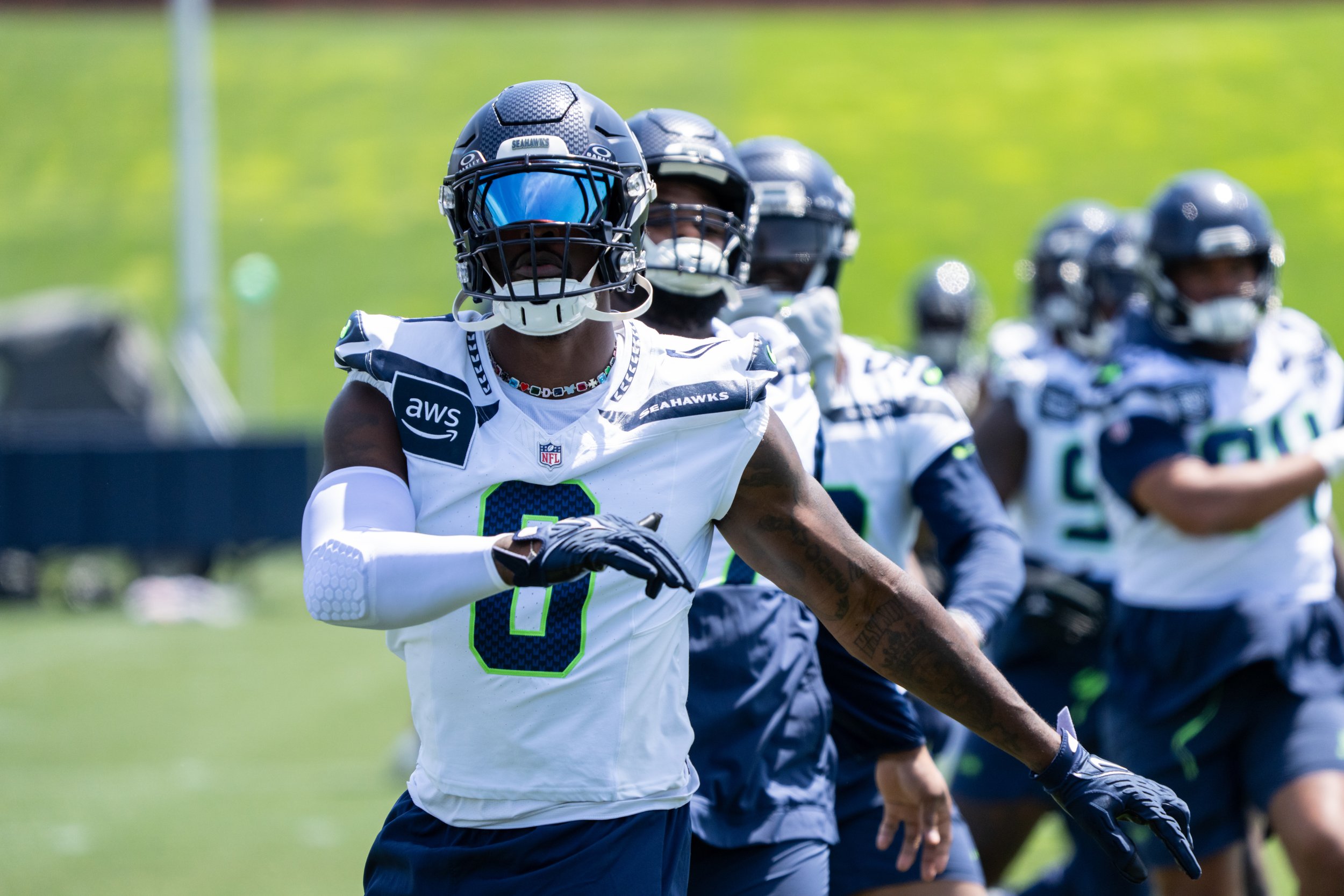
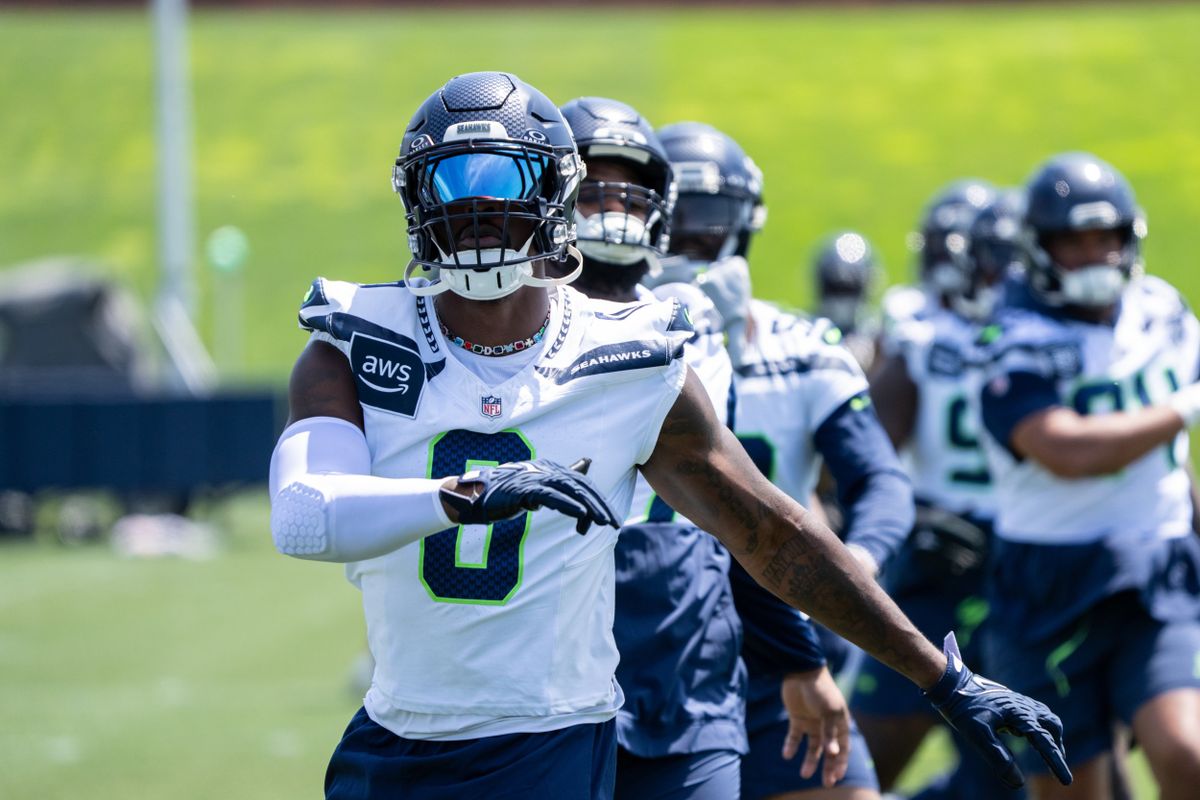
Seattle Seahawks defensive end DeMarcus Lawrence (0) takes part in drills during mini-camp at Virginia Mason Athletic Center. Mandatory Credit: Stephen Brashear-Imagn Images [/caption]
Taking the next step towards a new season, the Seattle Seahawks will open the final phase of their offseason program with the start of OTAs, partaking in the first open session to media on May 26.
With three open sessions and 10 total practices scheduled in the next two weeks before mandatory minicamp in mid-June, here are five storylines to watch heading into OTAs at the Virginia Mason Athletic Center:
1. Brian Fleury begins his journey as a first-time play caller with massive shoes to fill.
This time last spring, after dismissing Ryan Grubb just one day after missing the playoffs in 2024, the Seahawks handed the keys to their offense to Klint Kubiak, who held previous experience as an NFL play caller with the Vikings and Saints. That courtship ended up being a home run for the franchise and the coach, as Seattle finished in the top five in the league in points scored and set a team record for points scored in a single season. That success ultimately led to Kubiak being hired as the new coach of the Las Vegas Raiders in February, and while nobody could have reasonably expected such a triumphant one-and-done scenario to play out, there were signs that his scheme would bring out the best in quarterback Sam Darnold and company in OTAs.
One year later, in quite the contrast to Kubiak, the Seahawks replaced the departing offensive coordinator with a former colleague in Fleury, who spent the past seven seasons with the NFC West rival 49ers on Kyle Shanahan’s staff and has never called plays on offense or defense at any level previously. Given his indoctrination to Shanahan’s offense serving as a tight end coach from 2019 to 2024 and jumping into the run game coordinator role for San Francisco last season, his system should have plenty of carryover from the one Kubiak deployed last season, including a heavy emphasis on wide and split zone concepts.
With that said, Fleury told reporters in his introductory press conference back in February that his offense would look to grow upon Kubiak’s scheme, supplementing what worked well during last year’s Super Bowl run with some new wrinkles with the goal of taking the unit to another level. That may boil down to a simple variance in personnel grouping usage such as using more multi-tight end sets rather than two-back sets or it could be more noticeable with conceptual expansion in the pass/run game. OTAs certainly won’t provide all of the answers on that front, but it will be the first opportunity to start to see what subtle differences emerge compared to his predecessor.
2. Meshing with veterans in their first OTA practices, all eyes will be on Seattle’s latest rookie class.
Even if the vast majority of Seattle’s veterans fly into town for voluntary practices as they did last season, these sessions will always carry the most importance for the newest members of the NFL fraternity who are still trying to get their feet grounded after a whirlwind pre-draft process. From grasping a new playbook to learning the ins and outs of being a pro on and off the field, rookies get a ton thrown at them this time of year, which can make OTAs feel like quite the grind in the first go around.
Offensively, nobody will be under the microscope more than first round pick Jadarian Price, who the Seahawks invested their 32nd overall selection in as a replacement for Ken Walker III. Without defenders actually allowed to wrap him up or tackle him, the rookie running back won’t be able to show off his full arsenal of tools, but he should have plenty of opportunities to pluck passes out of the air as a receiver and flash his elite speed/burst with the ball in his hands in non-contact sessions. Guard Beau Stephens and receiver Emmanuel Henderson Jr. will also have their first chances to impress as they jump into competitions for key backup spots.
On the defensive side of the football, the Seahawks used four of their eight draft picks on defensive backs, starting with TCU safety Bud Clark at No. 64 overall. Clark played both safety spots as well as nickel cornerback for the Horned Frogs, offering the type of versatility coach Mike Macdonald craves. It will be interesting to see how Seattle’s coaching staff deploys him initially and how quickly he starts to spread his wings playing different roles in Macdonald’s system. The other three cornerbacks - Julian Neal, Andre Fuller, and Michael Dansby - likely will be playing on the boundary, while seventh round pick Deven Eastern will get early run as a nose tackle and 3-tech defensive tackle seeking an early rotational role.
3. Entering a post-Ken Walker III reality, establishing a backfield pecking order will take center stage.
Being an increasingly rare first round pick at the running back position, whether fair or not, Price will kick off his rookie season with incredibly high expectations. Rookie backs in general tend to be more pro ready than most other positions, even in the case of a player like Price who never was a starter at Notre Dame behind star Jeremiyah Love. By the time the season arrives, fans will want to see the dynamic playmaker installed as a Day 1 starter getting a significant workload to offset Walker’s departure for Kansas City.
But while Price may very well achieve that goal of becoming a Week 1 starter as a rookie, the Seahawks won’t be giving him the starting job based on draft pedigree alone. He will have to earn the gig over the next couple of months and even with Zach Charbonnet recovering from a torn ACL that likely will leave him sidelined until October, the first rounder will have plenty of game competition to fend off in a running back stable featuring a wide array of ball carriers stylistically, including returning third down back George Holani and punishing free agent addition Emanuel Wilson.
Drawing much deserved praise on multiple occasions this offseason, Holani stepped up admirably after Charbonnet’s injury late in the playoffs, providing a handful of clutch catches in the passing game and delivering in blitz pickup protecting Sam Darnold in the NFC Championship Game and Super Bowl. Highly regarded by the coaching staff and front office, those efforts likely will grant him a legitimate opportunity to battle for the top spot, providing a viable candidate to push Price with his three-down capabilities. The 230-pound Wilson runs with a bruising, downhill style that contrasts the rest of the backfield group, making him the ideal replacement for Charbonnet in short yardage and goal line situations at minimum.
Both Holani and Wilson stand to benefit from extensive reps on the practice field during OTAs, but Kenny McIntosh may be the biggest wild card. He averaged 5.5 yards per carry in 2024, taking advantage of more chances late in the season, before an unfortunate torn ACL suffered early in training camp last August ended his third season before it started. If he’s back healthy after a long recovery, he could force his way back into the discussion as a surprise option to turn up the heat on Price, and seeing how he has progressed coming back from the injury will be an intriguing storyline to follow over the next few weeks.
4. With a few newcomers in the fold, roles will begin to be defined in a revamped Seahawks secondary.
Despite losing Riq Woolen and Coby Bryant in free agency, the Seahawks still have a talented projected starting lineup with Devon Witherspoon, Josh Jobe, Julian Love, and Nick Emmanwori all returning. Where the questions start is behind those four players, as Macdonald and his staff will be tasked with figuring out the best personnel deployment options to offset the absence of Woolen and Bryant at cornerback and safety, and that mission will be well underway in OTAs.
Picking off 15 passes over the past four seasons at TCU, Clark’s ball-hawking coverage skills closely resemble Bryant, and he’s always been a willing tackler, even if he hasn’t always been consistent bringing down ball carriers. With that said, the Seahawks won’t have to force him into the lineup as a third safety without him outright earning a spot thanks to the return of the reliable Ty Okada, who performed at a high level in 11 starts filling in for Love and Bryant last season. The team also signed former Colts starter Rodney Thomas II and brought back D'Anthony Bell in free agency, ramping up the competition going into OTAs with proven veterans eager to battle for snaps against the rookie.
On the boundary, Witherspoon and Jobe will hold down the top two spots in base looks, but the Seahawks ran more nickel and dime sets than any other team in the NFL last year, so finding a quality third corner to depend on will be critical. As the “incumbent,” third-year defender Nehemiah Pritchett may never have a better shot at carving out a starting role after seeing limited action in his first two seasons. In free agency, the team signed former first round pick Noah Igbinoghene, who offers positional flexibility with previous NFL experience playing on the outside as well as in the slot. Those two veterans likely will get the first crack to win the third spot as OTAs begin.
But Neal may have something to say on that front, especially after playing for Macdonald’s former assistant Nick Perry at Arkansas, bringing a strong understanding in the scheme and technique being coached in Seattle. Fuller and Dansby will also be looking to get off to a fast start as well, with the latter’s potential slot versatility being an X-factor. It will be interesting to see how all three of the rookies handle their first NFL practice work and where they stand on the depth chart heading into the summer break.
5. An opportunity for 2024, 2025 draftees to demonstrate tangible on-field improvements.
Each of the past two seasons, the Seahawks have received excellent contributions from their most recent draft classes, continuing quite an impressive run for general manager John Schneider. Headlining the 2024 group, Byron Murphy II has emerged as one of the premier young defensive tackles in the sport, while tight end AJ Barner belongs in the discussion as a top-10 player at his position. Last year’s class featured guard Grey Zabel and Emmanwori, two Day 1 starters who shined throughout the run to a Super Bowl title.
Still in the early stages of their respective careers, Murphy, Barner, Zabel, and Emmanwori all have a chance to be even better in 2026, but for the Seahawks to be a real contender to repeat, they will need others from those two classes to be able to jump into elevated roles. From the 2024 class, Pritchett has the best opportunity to take a big leap in his third season, as he has the size and speed to fit the bill as a second boundary corner replacing Woolen in nickel and dime sets. Last year’s group offers more intrigue with tight end Elijah Arroyo poised for a bigger role in Fleury’s offense as Barner’s sidekick, receiver Tory Horton coming back from a shin injury, and defensive tackle Rylie Mills fully healthy after missing most of his rookie year coming off a torn ACL.
From that group, Horton and Mills stand out as the greatest curiosities. A scoring maestro in his rookie season before succumbing to injury, Horton found the end zone five times on 13 receptions, becoming one of Darnold’s favorite red zone targets. Seeing him back healthy in OTAs could spark fantasies of an already potent passing game being even more prolific. As for Mills, the ex-Notre Dame standout ended his rookie year with a bang recording a sack in the Super Bowl and with a healthy, normal offseason to accelerate his development, the team has lofty expectations for where he will fit into an already formidable defensive front.