Analysis: Why Did Seahawks Orchestrate Restructured Contracts Post-Trade Deadline?
Almost two weeks after the trade deadline, the Seahawks decided to play salary cap gymnastics by restructuring the contracts of three star veterans. What's behind the sudden desire to open up financial flexibility?

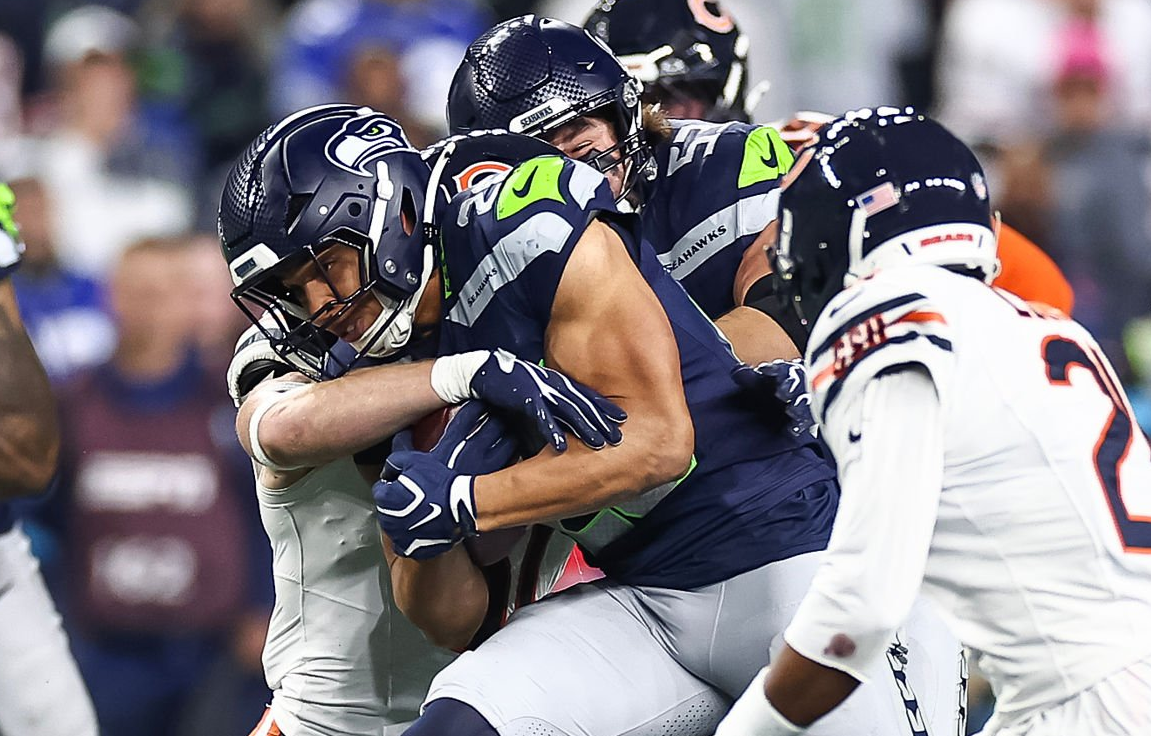
Two weeks ago, if the Seattle Seahawks would have restructured a contract or two as a means for creating salary cap space to engineer a trade before the November 10 deadline, nobody would have batted an eye.
After all, Seattle had less than $4 million in cap space following a deal for guard Quenton Nelson in October, leaving general manager John Schneider limited flexibility to pursue a second trade if he wished to. Creating more wiggle room would have likely been necessary for the franchise to facilitate another move before the deadline earlier this month.
But the 1 PM PT deadline came and went without Schneider pulling the trigger, as the Seahawks chose to sit pat with Nelson as their lone prized addition, providing no reason to kick money down the road with restructured contracts.
And yet, in the midst of a bye week with the trade deadline in the rearview mirror, Seattle signed off on not one, but three restructured contracts, adding void years for quarterback Sam Darnold, linebacker Ernest Jones, and safety Julian Love. Converting $12.35 million into signing bonuses amongst the three players, Schneider opened up nearly $10 million in instant cap space.
Considering the random timing, the moves come as a major surprise. Why would the Seahawks need to manufacture any immediate cap space after the trade deadline had already passed? What is the method behind the madness?
While trades can't happen at this point, Schneider's decision to use restructures as a means to create north of $9 million does offer increased flexibility on other fronts for the organization. Most notably, Seattle's front office now has more firepower for signing a pending free agent or two to an in-season extension.