3 Positives, Negatives From Storm’s 2026 Season

[caption id="" align="alignnone" width="2047"]
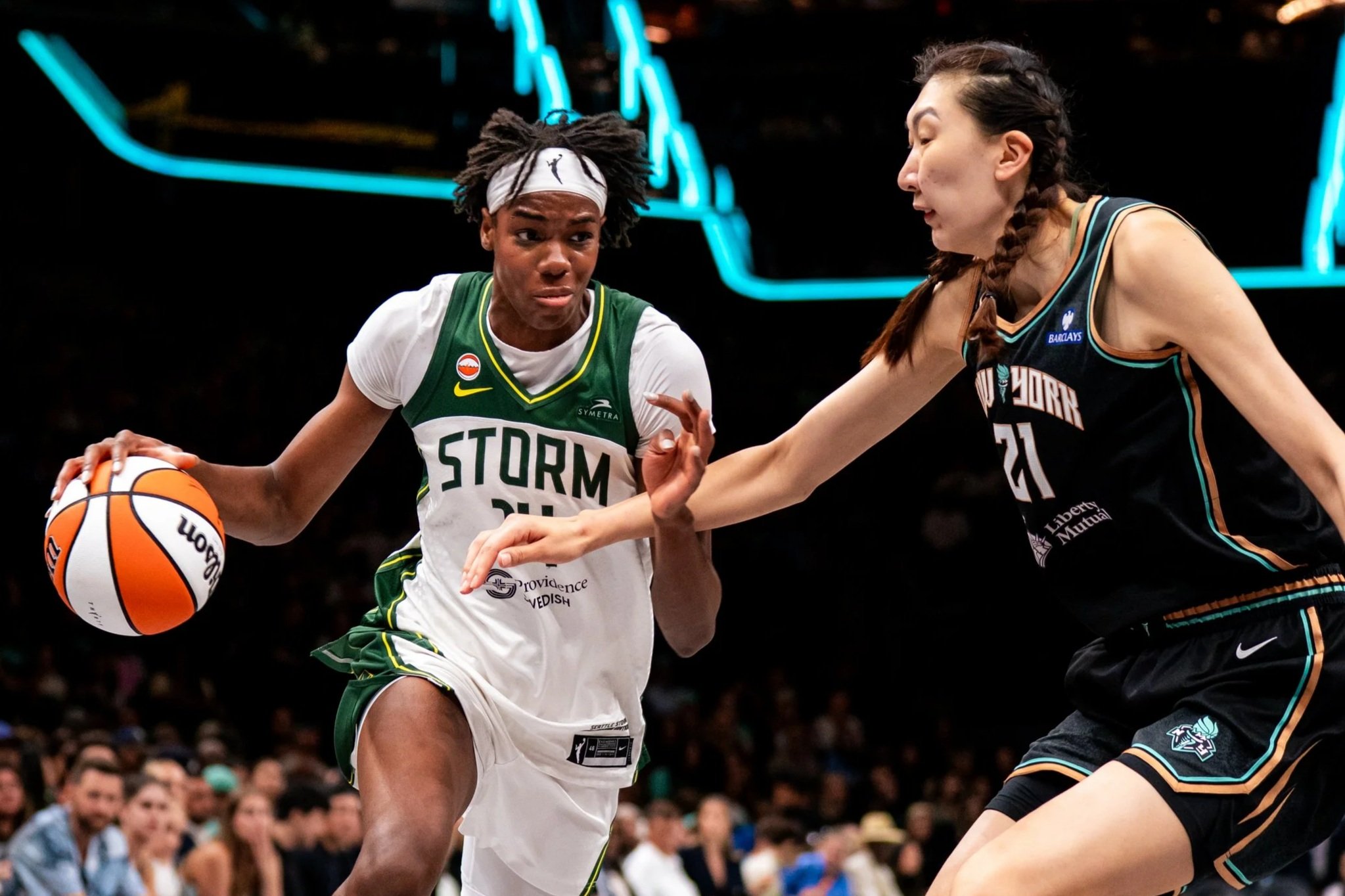
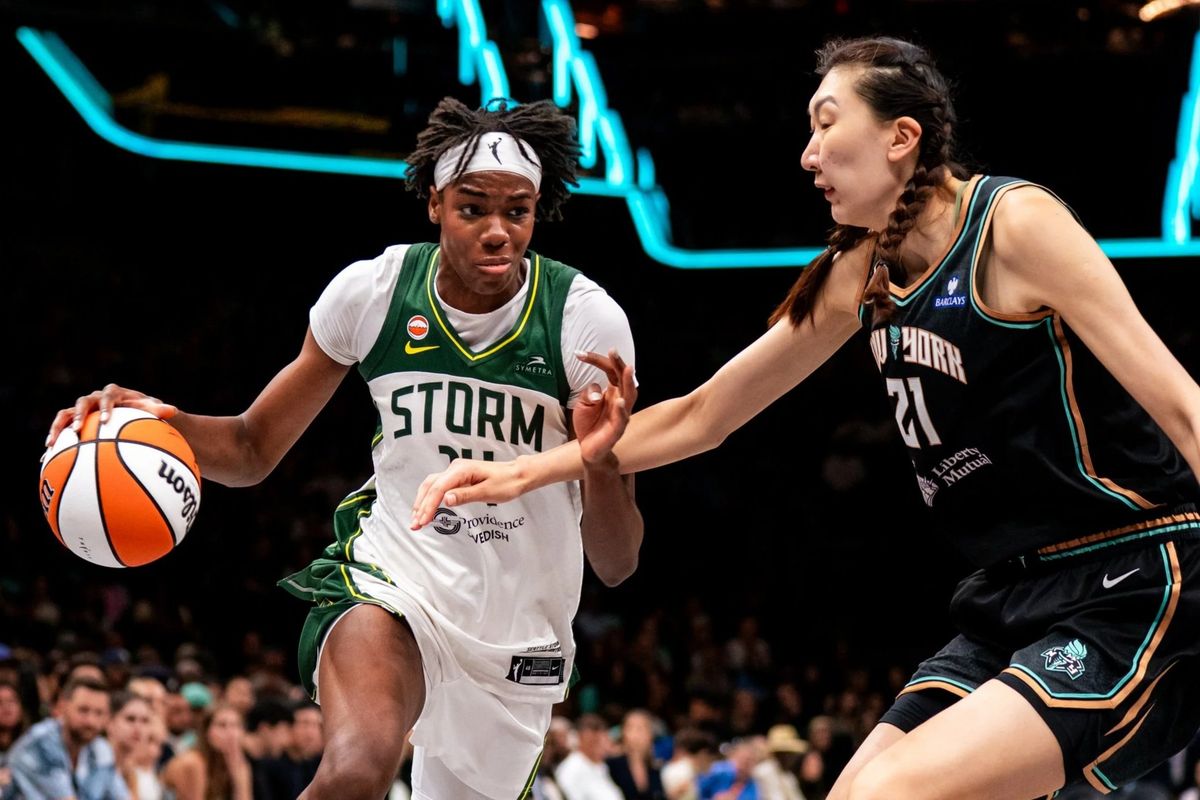
Seattle Storm forward Dominique Malonga drives into the lane against New York Liberty center Han Xu (21) in a 95-83 loss on Monday, Aug. 3, at the Barclays Center. Credit: Courtesy of Seattle Storm [/caption]
The Seattle Storm’s 2026 season has come to an end, and it wasn’t a campaign that will be well-remembered in franchise history — at least not for winning reasons.
Seattle finished 8-36 overall, losing the most games in one season by any team in WNBA history (44-game season only began in 2025) and winning the fewest games since the Storm’s first-ever season in 2000 (6-26 overall).
On the surface, those statistics make it seem like it was all doom and gloom for the Storm in a lost season. But it’s surprisingly the opposite heading into 2027, as this was intentionally a rebuilding year with a new young core of players who will make up the franchise's future.
There were still positives for the Storm in a season where they were far from competitive and consistently fell below expectations. However, as expected, there were also plenty of negatives.
Here are three positive and negative takeaways from 2026 as the Storm head into the offseason.
Positives
Flau’jae, Dom and Awa are the future
Seattle isn’t heading into next season with its tail tucked between its legs, searching for the players who will lead them into the next era of Storm basketball. Even with the poor results, they already have that group.
Dominique Malonga, Flau’jae Johnson and Awa Fam are all first-round picks from the last two years, and they proved that this is their team moving forward. That trio combined for 72 of the Storm’s 91 points in their final game of the season on Wednesday, fittingly concluding a campaign that was supposed to be focused on building for the future instead of immediate success.
They still need a better supporting cast around them, ideally made up of veterans who can play specific roles and have postseason experience. But the foundation is there, and you should expect to see all three of them in Storm jerseys for the long haul.
Connectivity off the court
If there’s anything the postgame press conferences have proved this season, it’s that the current Storm roster is a close-knit group that wants to succeed together. The message has been the same all year from the players and head coach Sonia Raman, even as the losses stacked up.
“I think the main thing with our chemistry is like, we all want to see each other do good,” Johnson said after the Storm’s final game against the Wings. “We pour into each other, and I think that’s the most beautiful thing about this trio that we’ve got — the selflessness, the way that we can push each other and the way that we can talk to each other and be like, ‘That’s not good enough.’”
When asked about their collective 72-point performance in the finale, the group lit up. They are friends before teammates, and that goes a long way when trying to stomach losses en route to improvement.
“It’s a testament to the growth and the work we put in,” Malonga said. “It’s just about the chemistry that we started building, and now we can see it. I said plenty of times that we don’t really care about our record this year; we really know that we grew together and we really improved. If that’s the worst we’re going to look, I’m cool with that.”
Another lottery pick incoming
The Storm will have a top-4 pick for the third straight season. Malonga (No. 2 overall in 2025) and Fam (No. 3 overall in 2026) were the last two selections, and both are on a path to WNBA stardom. Seattle has a chance to add a fourth piece to their current trio.
Even if it’s a player who will primarily come off the bench in 2027, another depth piece who the coaching staff can begin developing will be a major catalyst to the team’s long-term success. The more elite young talent the Storm acquire, the better.
Negatives
Connectivity on the court
Aside from the final game of the season and a few others throughout, the Storm didn’t look comfortable running Raman’s offensive system and were often completely disjointed. Too often, Seattle lived and died by excellent individual plays instead of flourishing within the flow of the offense.
The Storm averaged just 19.2 assists per game (14th in WNBA), and that was apparent in how they played from game to game. It’s also why they struggled to sustain long runs and were streaky the entire season.
It was the same on defense, as the communication often lacked and created massive holes for opponents to exploit. Seattle ranked 10th in points per game allowed (88.9) and 12th in free throws allowed per game (22.3), as they couldn’t regularly play without fouling.
Obviously, more time together on the court will help this. But Raman also has to cater her system to the strengths of her players if she hopes to have more success in 2027.
Horston, Magbegor and Hiedeman late in season
Beginning with the somewhat positive point: Natisha Hiedeman was good for most of the season. In her first 32 games, Hiedeman averaged 16.4 points, 2.7 rebounds, 4.7 assists and 1.2 steals per game. She averaged 7.8 points, 1.5 rebounds, 6.3 assists and 0.5 steals in her final eight games.
Four of those final eight games were before her shoulder injury, and four came after. Regardless, she struggled toward the end of the season and didn’t look like her usual aggressive self offensively.
Horston and Magbegor are different, season-long disappointments. Hopes were high for both players coming into the season, and both fell way short of expectations. Magbegor couldn’t stay healthy after signing the richest contract in Storm history (three years, $3.75 million) and Horston was just ineffective after missing the entire 2025 season with a knee injury.
Raman had Horston in the starting lineup in 23 games (37 total games played), and the former ninth overall pick averaged just 4.5 points, 3.5 rebounds, 1.3 assists and 1.0 steals in 17.5 minutes per game. She went scoreless in three of her final four games despite starting in each of them.
Magbegor came into the season with a foot injury, suffered a facial fracture midway through the season, and then tore her ACL while competing in the 2026 FIBA World Cup. In total, she played just 14 games (nine starts) for the Storm and averaged 6.9 points, 4.0 rebounds, 1.8 assists, 0.8 steals and 1.2 blocks.
Horston is a reserved free agent, but the Storm may let her walk. Magbegor may miss a portion of the 2027 season. Both players should not be expected to be major contributors for the Storm next season, and they may not even be on the roster. Hiedeman could still be a solid contributor, but she may be better off the bench.
Four-quarter play
Comebacks falling short were the running theme of the season for Seattle. The Storm rarely rolled over and allowed themselves to be blown out, generally making games closer than they appeared on the final score. But those comebacks also seldom led to wins, as they would always fizzle out in the last few minutes.
Much of this is a coaching issue. Raman has to find ways to keep her team motivated and in the game for all four quarters. Rotations are a big piece of this as well, but that element never got dialed in when the starting lineup changed so frequently.
The upside is Raman now has a lot of data on her existing players that she can use to build a plan for next season. Year 2 will be make-or-break for Raman as she tries to get the Storm back on an upward trajectory.