2025 MLB Draft: Breaking Down Kade Anderson, Mariners’ Day 1 Selections


[caption id="" align="alignnone" width="1080"]
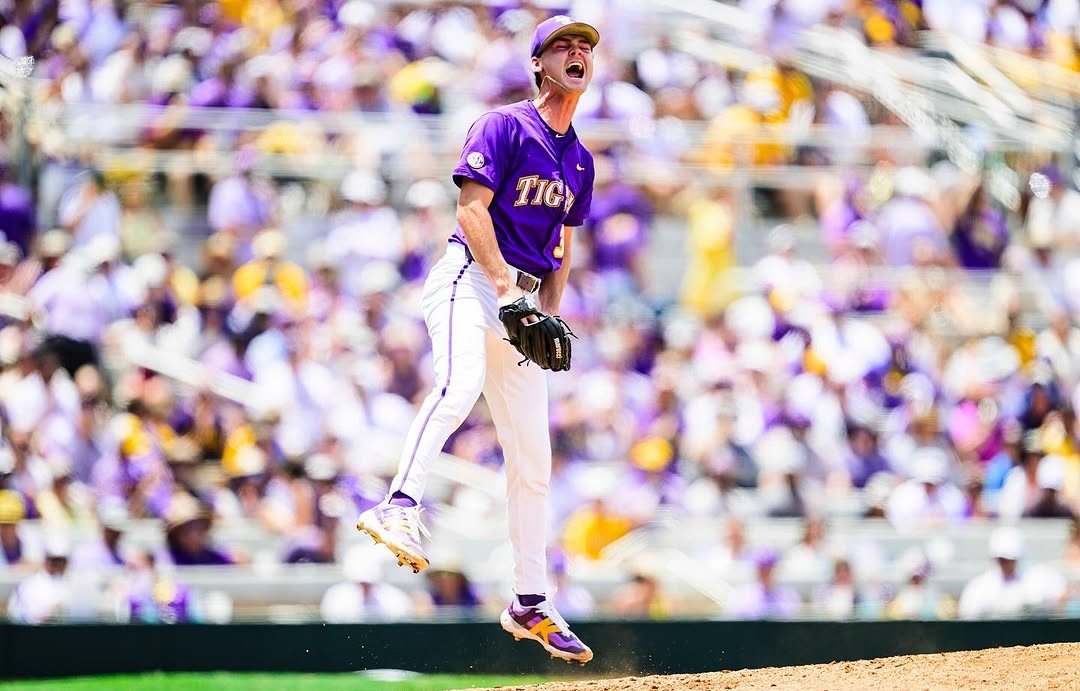
The Seattle Mariners further fortified their pitching arsenal by selecting LSU lefty Kade Anderson with the No. 3 pick in the 2025 MLB Draft. Credit: Kade Anderson/Instagram [/caption]
Hours after completing a sweep of the Detroit Tigers, the Seattle Mariners made four selections on Day 1 of the 2025 MLB Draft, and while we won’t know how things play out for several seasons, you can judge the process immediately.
At least in process, the Mariners’ farm system got a heck of a lot better.
Here’s a look at the four newest members of the Seattle organization -- assuming all four sign, of course -- and how they have a chance to help the big league club in the coming seasons.
No. 3: Kade Anderson, LHP, LSU
If you were very, very quiet and listening closely, you could probably hear the Mariners front-office doing fist pumps when the Nationals selected Eli Willits and the Angels selected Tyler Bremner. There’s nothing against those players and Seattle likely would have considered both if still on the board. But it was not a secret that the Mariners wanted Anderson, and they were able to procure his services with dominos falling their way.
And it’s easy to understand why. Anderson was the top pitcher in college baseball last year, and struck out a whopping 180 hitters over his 119 innings while helping the Tigers win the College World Series. He gets his fastball up to 98 mph, and there’s a good amount of movement on the offering as well. He complements that heater with two above-average breaking balls, with the slider slightly ahead of the curve at this time but both giving hitters trouble. His best pitch, however, is a change that has the same arm-speed as his fastball and offers considerable fade. He throws all of those pitches for strikes, and the command isn’t far behind the control.
Yes, the Mariners passed on some intriguing bats with the third pick, but getting the best pitcher in the draft and one who could be up by the end of 2026 is excellent value. The fact that they’ve already been able to sign Anderson for a below-slot deal? Pretty great.
No. 35: Luke Stevenson, C, North Carolina
I already know what you’re thinking. A catcher? From the team that employs Cal Raleigh? From the team that employs one of the best catching prospects in baseball in Harry Ford? Can teams play more than one catcher? In this economy?
The fact of the matter is Stevenson was one of - if not the - best collegiate bat available, and he’s a player who hit 19 homers with a .965 OPS in his junior year with the Tar Heels. He’s a left-handed hitter with easy plus power in his bat, and he’s a patient hitter who was able to draw 59 free passes in 290 plate appearances. He’s also a strong defender behind the plate who gets good marks for his receiving skills and a plus throwing arm as well.
The question mark here, however, is the hit tool. He struck out a whopping 70 times in 2025, and he hit just .251, a mediocre average at the MLB level. And at the college level? Well, yeah. Still, it’s not hard to see Stevenson develop into a starting catcher who can hit 30 homers in his best years - maybe more - and provide quality defense behind the plate. That’s well worth the 35th pick.
No. 57: Nick Becker, SS, Don Bosco Prep (NJ)
After going collegiate with the first two selections of the day, I figured the Mariners would go upside with pick 57, and they did just that. That’s not to say that Anderson and Stevenson don’t have upside because of course they do, but Becker’s much more projection than realized product.
And that’s no insult to Becker. On the contrary. He’s a 6-4 shortstop who shows a plus hit tool because of his line drive swing and bat-to-ball skills, and he gets rave reviews for his ability to recognize pitches. The power is very much a work-in-progress, but with well above-average bat speed and his frame, there’s no reason to think he shouldn’t be able to provide some pop in his bat as well. He’s also an above-average runner, so he could/should be a threat on the bases if he gets on enough for it to matter.
Becker’s size means he’s not a lock to stick at shortstop, but there’s a pretty good chance he can stay up the middle because of his athleticism, strong throwing arm, and clean actions in the field. This was an outstanding pick for Seattle, and because of their significant allocated fund availability, they should be able to get him in the system without trouble. They wouldn’t have taken him if they couldn’t.
No: 91: Griffin Hugus, RHP, Miami (FL)
The Mariners likely are getting a discount with Hogus, which based on the names we’ve listed above, makes a lot of sense. And Hogus does have a chance to develop into an MLB starter. He has an above-average slider that flashes plus, and he also has three other pitches that get average grades. He’s a 21-year old who was a two-way player in junior college before switching to pitching full-time when he transferred to Cincinnati before moving on to Miami, so there may be a little more upside in his right arm than anticipated. Hugus doesn’t profile to be more than a backend arm, but Seattle has done fantastic work with this type of profile.
Seattle did an excellent job addressing system “need” while not reaching, and one of - if not the - best systems in baseball gets noticeably better. They’ll have a chance to add to that system over the next two days, but this was a heck of a start.